
排序方式
7 这些产品
7 这些产品
Looking for a Caffeine-Free Green Tea Alternative?
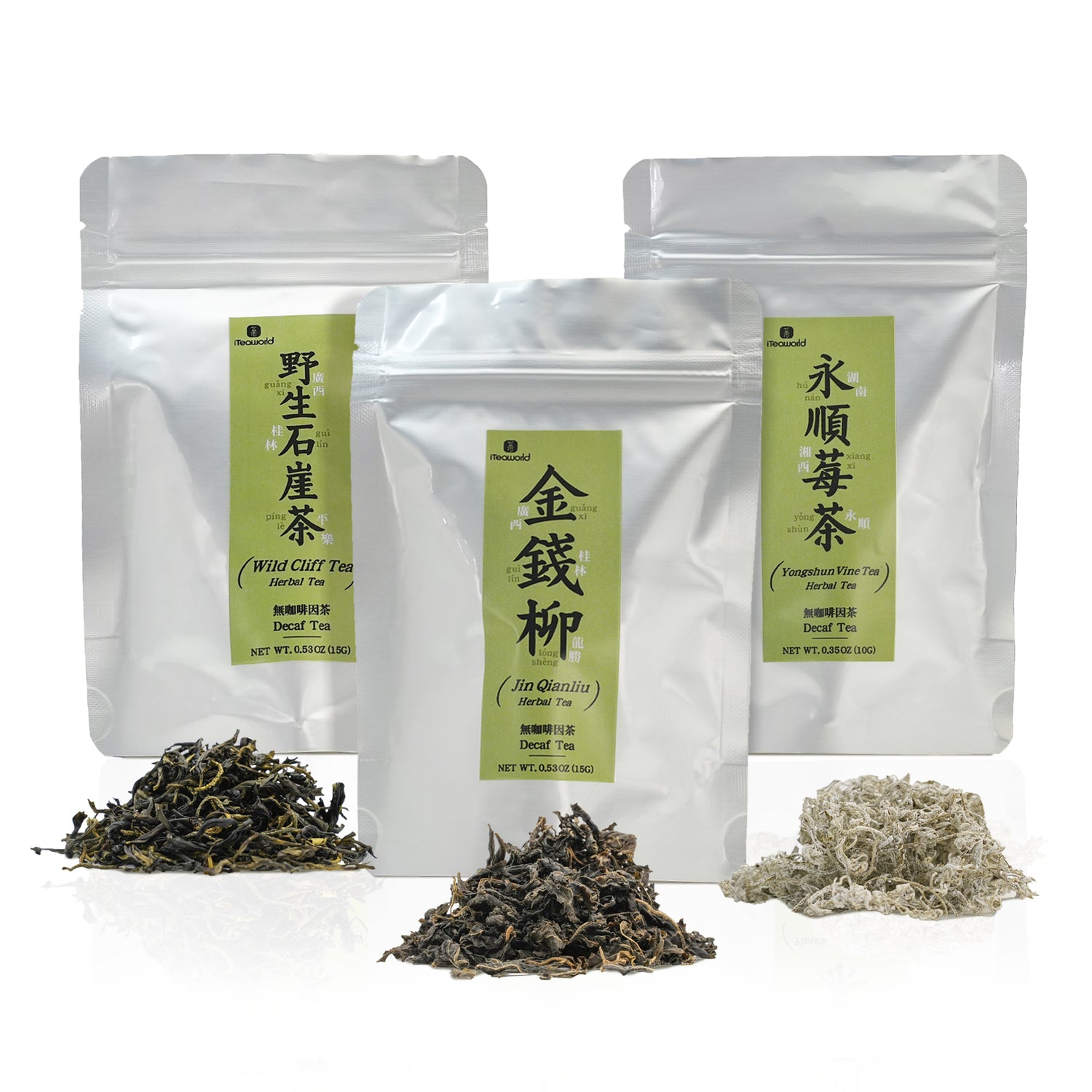
While we don’t offer caffeine-free green tea, we’ve carefully selected three herbal teas processed in a similar way to green tea—offering comparable freshness and aroma. These unique teas have been valued in traditional Chinese tea culture for centuries.
Jin Qian Liu – Sweet Tea Tree (Cyclocarya Paliurus)
Grown in the lush regions of southern China, this naturally sweet herbal tea is made from the leaves of the Cyclocarya Paliurus tree. Its smooth, mellow flavor makes it a perfect choice for anyone looking for a gentle, caffeine-free infusion. Traditionally, it has been appreciated for its balance and calming taste.
Wild Cliff Tea (Shi Ya Cha)
Harvested from wild tea trees on the rocky cliffs of Guangxi, this rare herbal tea delivers a robust, aromatic experience. With a rich profile and sweet finish, it’s known as “tea of the immortals” in local folklore. It is naturally high in flavonoids, which contribute to its full-bodied taste.
Vine Tea – Zhangjiajie Mei Tea (Ampelopsis grossedentata)
Thriving in the misty highlands of Zhangjiajie, Vine Tea is celebrated for its vibrant, refreshing flavor. Known as the “King of Flavonoids,” this herbal infusion contains a naturally high concentration of flavonoids, offering a satisfying, clean finish with every sip.
Meicha (also known as Vine Tea) is a naturally caffeine-free herbal tea made from a wild vine plant of the Ampelopsis genus in the grape family. It originates from the high mountains of the Wuling region in Zhangjiajie, Hunan, at elevations of 400–1,500 meters. Its name comes from the natural layer of flavonoid crystals that form a “white frost” on the surface of the leaves.
Rich in flavonoids, Meicha has long been used in Chinese folk tradition as an antioxidant, or to soothe the throat, relieve fatigue, and support cardiovascular health. Because it contains no caffeine, it can be enjoyed even before bedtime without affecting sleep, making it an ideal choice for tea lovers who are sensitive to caffeine or looking for a caffeine-free beverage.
This tea has a slightly bitter taste at first, quickly giving way to a strong, lasting sweetness with a refreshing sensation. After drinking, even just drinking water tastes subtly sweet for a while. Its aroma combines the freshness of wild mountains with herbal notes, clean and long-lasting. It can be brewed 3–5 times.
Our Meicha comes from Yongshun in western Hunan, a region with a natural environment similar to Zhangjiajie and also part of the Wuling Mountains. With its humid climate, misty landscapes, and excellent natural conditions, Yongshun produces high-quality Meicha with superior flavor and character. It’s the perfect choice for anyone seeking a premium caffeine-free tea.
Origin: Furong Town, Yongshun, Xiangxi, Hunan Province, China
Elevation: Above 780 m
Harvest Date: May 2025
Storage Life: 18 months
Tea Maker: Qin Dajie
How to Brew:
Water Temp: 100°C (212°F)
Brewware: Gaiwan or glass cup
Tea-to-Water Ratio: 1g per 100ml
1–2 infusions: 30-60 sec
Later infusions: Add 30 sec
Total brews: 3-5 times
Jin Qian Liu, also known as Money Tree, is a traditional Chinese herbal tea made from the leaves of the Cyclocarya paliurus tree, a member of the walnut family. It grows mainly in the mountainous regions of southern and eastern China, where the trees thrive in clean, sunny environments.
The leaves are known for their naturally sweet and refreshing taste, with a light herbal aroma and a smooth finish. Jin Qian Liu has long been enjoyed in Chinese folk tradition as a refreshing herbal tea and is naturally caffeine-free, making it a great choice for those who want to enjoy tea throughout the day or in the evening.
Our Jin Qian Liu is carefully selected for its clean taste and distinctive character. If you’re looking for a caffeine-free Chinese herbal tea with a naturally refreshing and slightly sweet flavor, Jin Qian Liu is a great one to discover.
Wild Shiya Tea, also known as Cliff Tea, is a naturally caffeine-free herbal tea from the high-altitude forests of Guangxi, China. It grows naturally on cliffs and steep mountain slopes, which is where its name comes from. With a long history in the region, Shiya Tea was once considered a valuable tribute.
The tea leaves are tight, dark green, and rich in aroma. When brewed, they produce a bright green tea liquor with a fresh, clean taste and a gentle natural sweetness. Its flavor is refreshing and easy to enjoy, with a light herbal character that lingers pleasantly.
Naturally caffeine-free, Wild Shiya Tea is a great choice for tea lovers who want a refreshing tea without caffeine. It can be enjoyed throughout the day, including in the evening.
2014 Aged Shou Mei White Tea is a traditional Fuding white tea that has been naturally aged for over 10 years, allowing time to transform its flavor and character. Made from Fuding Da Bai and Da Hao tea cultivars and crafted through traditional sun-drying methods, this tea develops a deeper aroma, smoother texture, and richer sweetness through years of natural aging.
Compared with fresh white teas that highlight floral freshness and brightness, aged Shou Mei offers a warmer and more mature expression of white tea. Its gentle aged aroma reveals notes of dried herbs, aged wood, and sweet hay, while the tea liquor becomes soft, silky, and mellow with a long-lasting sweet finish.
Pressed into convenient 5g tea cakes, each serving is easy to brew without measuring. Whether enjoyed during a quiet afternoon, after a meal, or as a daily calming ritual, this aged white tea offers a comforting and refined tea experience.
Introduction:
This Ripe Puer Tea is meticulously selected from the autumn harvest of 2020. Plucked from high-altitude tea gardens in Mengku Town, Lincang City, Yunnan Province, at elevations of over 1200 meters, this tea is made from high-quality one-bud-three-leaf material. After three years of aging, it exudes a rich, aged aroma with notes of wood, earth, and smokiness. Its balanced, mellow flavor leaves a lingering sweetness on the palate, accompanied by subtle fruity and floral undertones.
Reasons to Recommend:
- Special Processing Technique: The "wet piling" (wo dui) process is a crucial fermentation step in crafting ripe Puer tea. It involves piling sun-dried tea leaves to a certain height, sprinkling them with water, and covering them with burlap to ferment under warm and humid conditions for about 24 hours. Once the leaves reach the desired level of transformation, they are spread out to dry.
- Three Years of Aging: The aging of Puer tea is a natural process of oxidation and microbial fermentation. During this time, polyphenols, amino acids, and other chemical compounds in the tea gradually transform, developing new aromas and flavors. Ripe Puer tea further develops complex aromas and a smoother texture through aging.
- High-Mountain Tea Gardens: Grown in high-altitude tea gardens at around 1200 meters, this tea thrives in an environment where lush vegetation, organic-rich soil, and extreme daily temperature fluctuations enhance the accumulation of flavorful compounds in the leaves.
Oxidation Level: Fully fermented
Roasting Level: None
Processing Time: Spring 2020
Best Before Date: Suitable for long-term storage
Tea Variety: Yunnan Big Leaf
This 2018 Liubao Dark Tea comes from Liubao Town, Guangxi, one of the most renowned origins of traditional Chinese dark tea. Made from high-quality one-bud-three-leaf material and crafted through classic Liubao tea techniques, it has been naturally aged for years, allowing the tea to gradually develop a deeper and smoother character.
Through years of transformation, the tea has evolved from its original freshness into a more mature expression. Its aroma reveals earthy notes of aged wood, forest floor, and dried herbs, with a subtle sweetness developed through natural aging. The tea liquor is rich yet gentle, offering a smooth texture, mellow fermented depth, and a refreshing cooling sensation that lingers after each sip.
Liubao tea is one of China’s traditional dark teas with a history of hundreds of years. Its unique character comes from the combination of regional terroir, traditional craftsmanship, and time. This 2018 aged Liubao presents the warmth, depth, and refined smoothness that define a well-matured dark tea.