排序方式
6 这些产品
6 这些产品
Meicha (also known as Vine Tea) is a naturally caffeine-free herbal tea made from a wild vine plant of the Ampelopsis genus in the grape family. It originates from the high mountains of the Wuling region in Zhangjiajie, Hunan, at elevations of 400–1,500 meters. Its name comes from the natural layer of flavonoid crystals that form a “white frost” on the surface of the leaves.
Rich in flavonoids, Meicha has long been used in Chinese folk tradition as an antioxidant, or to soothe the throat, relieve fatigue, and support cardiovascular health. Because it contains no caffeine, it can be enjoyed even before bedtime without affecting sleep, making it an ideal choice for tea lovers who are sensitive to caffeine or looking for a caffeine-free beverage.
This tea has a slightly bitter taste at first, quickly giving way to a strong, lasting sweetness with a refreshing sensation. After drinking, even just drinking water tastes subtly sweet for a while. Its aroma combines the freshness of wild mountains with herbal notes, clean and long-lasting. It can be brewed 3–5 times.
Our Meicha comes from Yongshun in western Hunan, a region with a natural environment similar to Zhangjiajie and also part of the Wuling Mountains. With its humid climate, misty landscapes, and excellent natural conditions, Yongshun produces high-quality Meicha with superior flavor and character. It’s the perfect choice for anyone seeking a premium caffeine-free tea.
Origin: Furong Town, Yongshun, Xiangxi, Hunan Province, China
Elevation: Above 780 m
Harvest Date: May 2025
Storage Life: 18 months
Tea Maker: Qin Dajie
How to Brew:
Water Temp: 100°C (212°F)
Brewware: Gaiwan or glass cup
Tea-to-Water Ratio: 1g per 100ml
1–2 infusions: 30-60 sec
Later infusions: Add 30 sec
Total brews: 3-5 times
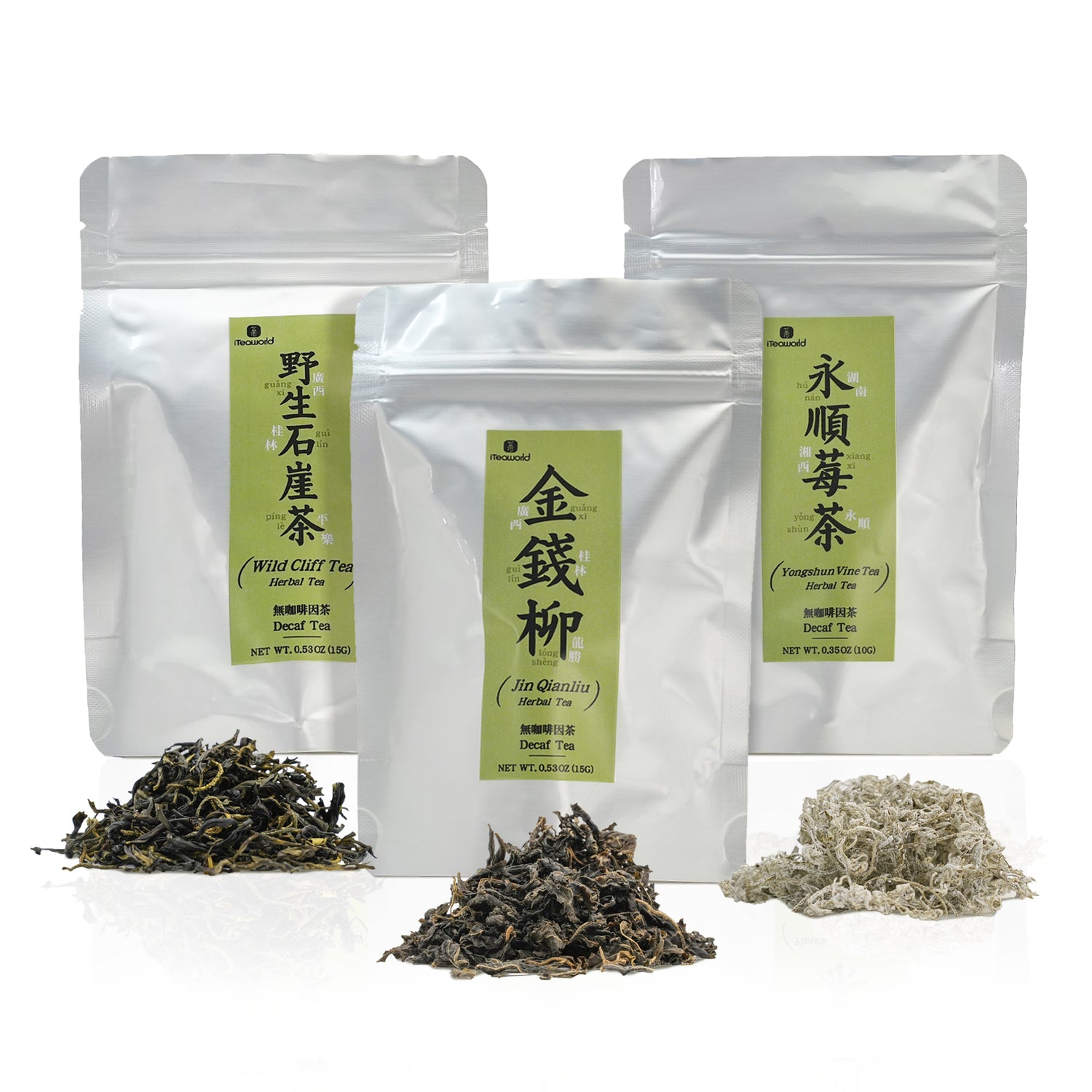
Wild Shiya Tea, also known as Cliff Tea, is a naturally caffeine-free herbal tea from the high-altitude forests of Guangxi, China. It grows naturally on cliffs and steep mountain slopes, which is where its name comes from. With a long history in the region, Shiya Tea was once considered a valuable tribute.
The tea leaves are tight, dark green, and rich in aroma. When brewed, they produce a bright green tea liquor with a fresh, clean taste and a gentle natural sweetness. Its flavor is refreshing and easy to enjoy, with a light herbal character that lingers pleasantly.
Naturally caffeine-free, Wild Shiya Tea is a great choice for tea lovers who want a refreshing tea without caffeine. It can be enjoyed throughout the day, including in the evening.
Jin Qian Liu, also known as Money Tree, is a traditional Chinese herbal tea made from the leaves of the Cyclocarya paliurus tree, a member of the walnut family. It grows mainly in the mountainous regions of southern and eastern China, where the trees thrive in clean, sunny environments.
The leaves are known for their naturally sweet and refreshing taste, with a light herbal aroma and a smooth finish. Jin Qian Liu has long been enjoyed in Chinese folk tradition as a refreshing herbal tea and is naturally caffeine-free, making it a great choice for those who want to enjoy tea throughout the day or in the evening.
Our Jin Qian Liu is carefully selected for its clean taste and distinctive character. If you’re looking for a caffeine-free Chinese herbal tea with a naturally refreshing and slightly sweet flavor, Jin Qian Liu is a great one to discover.
Sweet Tea, also known as Yao Tea, is a naturally sweet, caffeine-free herbal tea made from the young leaves of Lithocarpus litseifolius, a unique plant native to southern China. It has been enjoyed for generations in the mountain regions of Hunan.
What makes this tea special is its natural sweetness. The young leaves are rich in naturally sweet compounds called dihydrochalcones, which give the tea its distinctive sweet taste without added sugar. The leaves are processed using a black tea-style oxidation method, making the tea smoother and more mellow, with a light herbal aroma and a flavor reminiscent of black tea.
The tea has a clear, sweet taste with a smooth finish, and its sweetness remains noticeable even after multiple infusions. Naturally caffeine-free, it is a great choice for tea lovers who enjoy a naturally sweet tea and want something comforting to drink at any time of day, including in the evening.
Looking for a Caffeine-Free Green Tea Alternative?
While we don’t offer caffeine-free green tea, we’ve carefully selected three herbal teas processed in a similar way to green tea—offering comparable freshness and aroma. These unique teas have been valued in traditional Chinese tea culture for centuries.
Jin Qian Liu – Sweet Tea Tree (Cyclocarya Paliurus)
Grown in the lush regions of southern China, this naturally sweet herbal tea is made from the leaves of the Cyclocarya Paliurus tree. Its smooth, mellow flavor makes it a perfect choice for anyone looking for a gentle, caffeine-free infusion. Traditionally, it has been appreciated for its balance and calming taste.
Wild Cliff Tea (Shi Ya Cha)
Harvested from wild tea trees on the rocky cliffs of Guangxi, this rare herbal tea delivers a robust, aromatic experience. With a rich profile and sweet finish, it’s known as “tea of the immortals” in local folklore. It is naturally high in flavonoids, which contribute to its full-bodied taste.
Vine Tea – Zhangjiajie Mei Tea (Ampelopsis grossedentata)
Thriving in the misty highlands of Zhangjiajie, Vine Tea is celebrated for its vibrant, refreshing flavor. Known as the “King of Flavonoids,” this herbal infusion contains a naturally high concentration of flavonoids, offering a satisfying, clean finish with every sip.
China’s herbal tea culture is as diverse as its landscapes. From mountain villages to southern forests, each region has its own treasured botanical infusions, created from generations of local knowledge and a deep connection with nature.
Made from young leaves, tender vines, flowers, and other carefully selected plants, these herbal teas showcase the unique flavors of different regions and the traditional wisdom of Chinese communities.
1. Mei Cha (Vine Tea)
A wild mountain vine from Zhangjiajie, Hunan. It starts slightly bitter, followed by a surprisingly strong, lingering sweetness.
2. Jin Qian Liu
Made from the leaves of a tree found across southern China. Golden in color, with a light natural sweetness and a clean finish.
3. Shi Ya Cha (Cliff Tea)
A wild tea tree growing on cliffs in the forests of Guangxi. Fresh, fragrant, and naturally caffeine-free, with a clean and refreshing taste.
4. Chinese Sweet Tea
Made from the naturally sweet leaves of a mountain tree found in Hunan and Guangxi. Light, smooth, and naturally sweet with a refreshing finish.
5. Bama Sweet Tea
Made from the tender leaves of a thorny Rubus plant from Bama, Guangxi. Naturally sweet with a honey-like taste and a refreshing finish.
Recently viewed products
FAQs
Chinese herbal tea is a traditional botanical drink made from various plants, including leaves, vines, flowers, and tree leaves. Unlike traditional tea made from the Camellia sinensis tea plant, herbal teas are made from different natural plants with unique flavors and regional stories.
Not all of them. Some Chinese herbal teas come from wild vines, trees, or other plants rather than traditional tea bushes. Each plant offers its own unique aroma, taste, and character.
Most Chinese herbal teas are naturally caffeine-free because they do not come from the tea plant (Camellia sinensis).
Each herbal tea has its own flavor profile. Some are naturally sweet, some have fresh floral notes, and others offer a light, refreshing herbal taste. This collection lets you explore the diverse flavors of China’s botanical traditions.
Simply add hot water and steep like a regular tea. Use about 1 tea bag (or 3–5g loose tea) with 8–12 oz of hot water, then adjust steeping time according to your taste.
Many of these plants come from specific regions of China and have been enjoyed by local communities for generations. They represent the connection between people, plants, and the landscapes where they grow.
Chinese herbal teas are commonly enjoyed as part of daily tea routines. As with any beverage made from plants, choose teas that fit your personal preferences and needs.