


Search results
165 results
165 results
Search results


Lingtou Dancong is a Guangdong oolong tea from the Chaozhou region, closely related to Phoenix Dancong. Compared with the intensely aromatic and highly layered style of Phoenix Dancong, Lingtou Dancong is especially prized for its signature “honeyed sweetness” known as mi yun (“honey charm”).
This Premium Lingtou Dancong offers elegant floral notes with a gentle honey-like aroma. The tea liquor is rich, smooth, and naturally sweet, with very low bitterness and a soft lingering finish reminiscent of honey.
Compared with more aggressively aromatic Dancong teas, this style is softer, rounder, and easier to drink, making it especially suitable for those who enjoy sweet, smooth oolong teas with a lighter roast and a comforting finish.


Xiao Qing Gan is a unique Chinese tea made by filling young green mandarin peel with ripe Pu-erh tea. The mandarins come from Pubei, Guangxi, known for high-quality peel, and the Pu-erh is sourced from Yunnan. Produced in 2020 and aged about five years, it develops a smooth, rich, and gently citrusy flavor, where bright mandarin notes blend naturally with the mellow depth of aged Pu-erh.
Easy to brew—one piece per cup—this tea is perfect for cold days, offering a warming cup with gentle citrus aroma and smooth Pu-erh depth.


This Jasmine Piaoxue Green Tea is a refined floral green tea crafted through a traditional four-time scenting process using fresh Jianwei jasmine blossoms and spring-harvested Sichuan small-leaf tea. During scenting, fresh jasmine flowers are layered with tea leaves, allowing the tea to fully absorb the natural fragrance before being carefully dried again.
The result is a tea that is both aromatic and visually elegant. As it steeps, delicate white jasmine petals float gracefully in the cup, creating the signature “Piaoxue” (falling snow) appearance. Light, refreshing, and naturally sweet, it offers a clean floral aroma and a gentle lift that makes it especially enjoyable during busy mornings or work hours. The fresh jasmine fragrance helps create a calm, focused moment, making it a perfect everyday tea to start your day, stay refreshed, and enjoy a naturally uplifting break—whether served hot or cold.


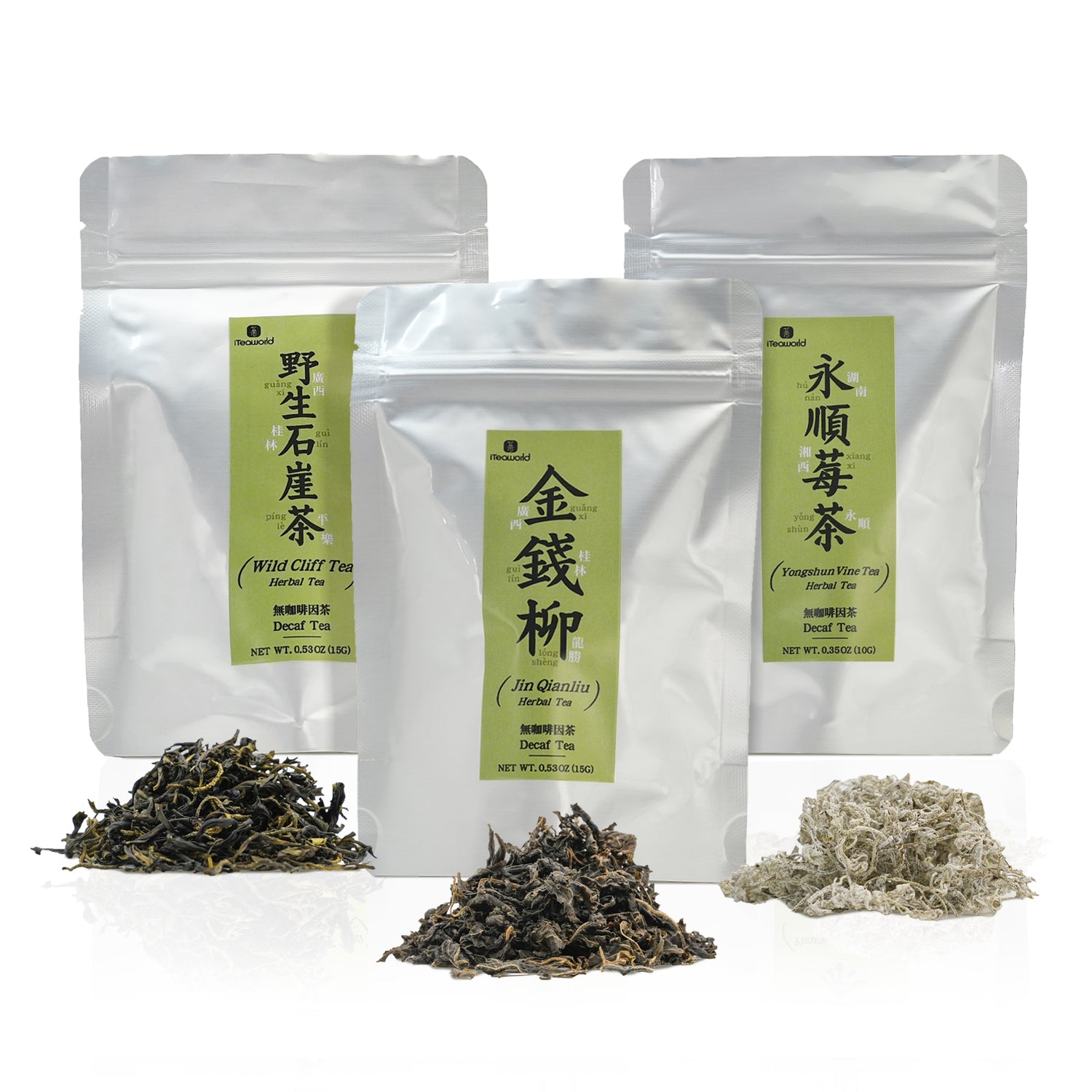
Looking for a Caffeine-Free Green Tea Alternative?
While we don’t offer caffeine-free green tea, we’ve carefully selected three herbal teas processed in a similar way to green tea—offering comparable freshness and aroma. These unique teas have been valued in traditional Chinese tea culture for centuries.
Jin Qian Liu – Sweet Tea Tree (Cyclocarya Paliurus)
Grown in the lush regions of southern China, this naturally sweet herbal tea is made from the leaves of the Cyclocarya Paliurus tree. Its smooth, mellow flavor makes it a perfect choice for anyone looking for a gentle, caffeine-free infusion. Traditionally, it has been appreciated for its balance and calming taste.
Wild Cliff Tea (Shi Ya Cha)
Harvested from wild tea trees on the rocky cliffs of Guangxi, this rare herbal tea delivers a robust, aromatic experience. With a rich profile and sweet finish, it’s known as “tea of the immortals” in local folklore. It is naturally high in flavonoids, which contribute to its full-bodied taste.
Vine Tea – Zhangjiajie Mei Tea (Ampelopsis grossedentata)
Thriving in the misty highlands of Zhangjiajie, Vine Tea is celebrated for its vibrant, refreshing flavor. Known as the “King of Flavonoids,” this herbal infusion contains a naturally high concentration of flavonoids, offering a satisfying, clean finish with every sip.


Shui Xian is one of the most classic Wuyi rock oolongs, traditionally prized in China for its rich, smooth, and mellow character.
This premium Wuyi Shui Xian offers delicate orchid florals layered with gentle woody notes. The tea liquor is smooth, full-bodied, and comforting, gradually revealing subtle forest-like freshness and a light mineral texture through multiple infusions.
Crafted from a Ban Yan area within the Wuyi region, this tea presents a softer and more approachable expression compared with intensely rocky Zheng Yan teas, while still retaining the roasted depth and gentle mineral character that define traditional Wuyi oolong.
An excellent choice for drinkers looking to explore Wuyi rock tea through a balanced, smooth, and less aggressive style.
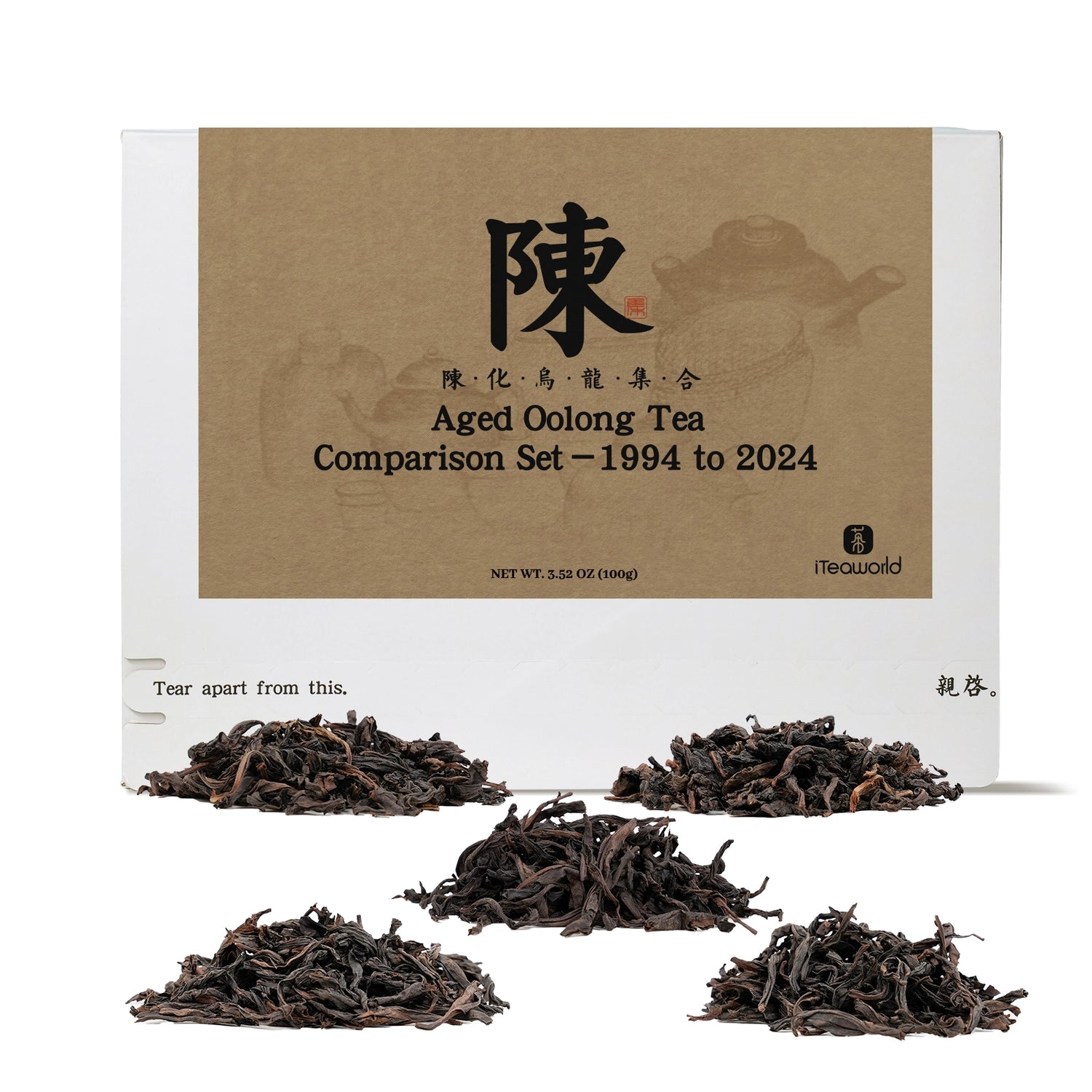
Aged oolong tea reveals a unique dimension of tea character—how time transforms aroma, texture, and depth.
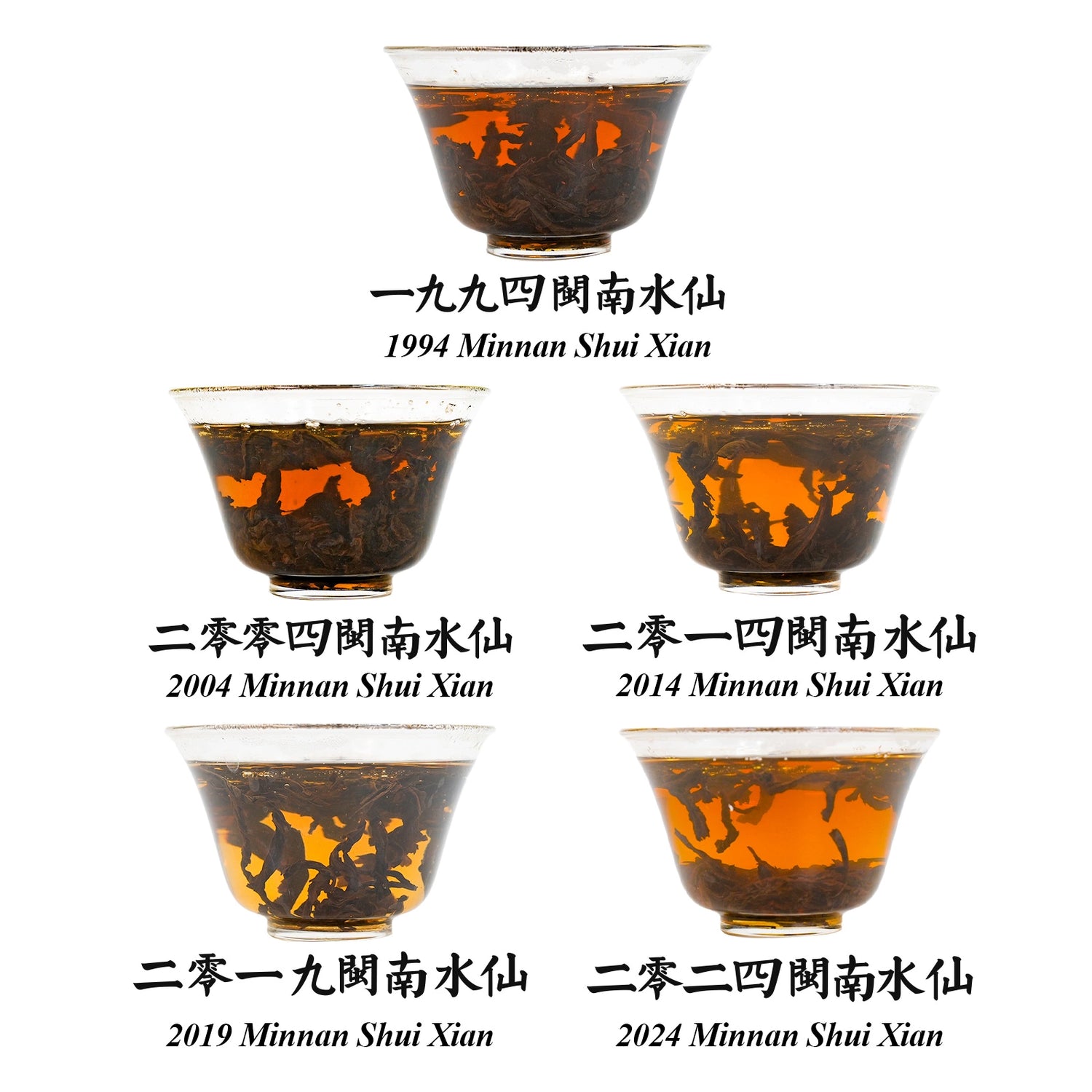
This collection brings together five vintages of traditionally charcoal-roasted Minnan Shui Xian, spanning from 1994 to 2024. All teas come from the same tea-making lineage, allowing time—not origin or craftsmanship—to be the only variable.
Fresh teas express bright orchid aroma and lively sweetness. As the tea ages, floral notes gradually fade, giving way to deeper woody, honeyed, and herbal tones. With decades of transformation, the tea develops a smoother texture, thicker body, and a long, lingering finish.
Rather than a single flavor, this set offers a journey through time—revealing how oolong tea evolves across 30 years of natural aging.
Taste them side by side and experience how time becomes a flavor.
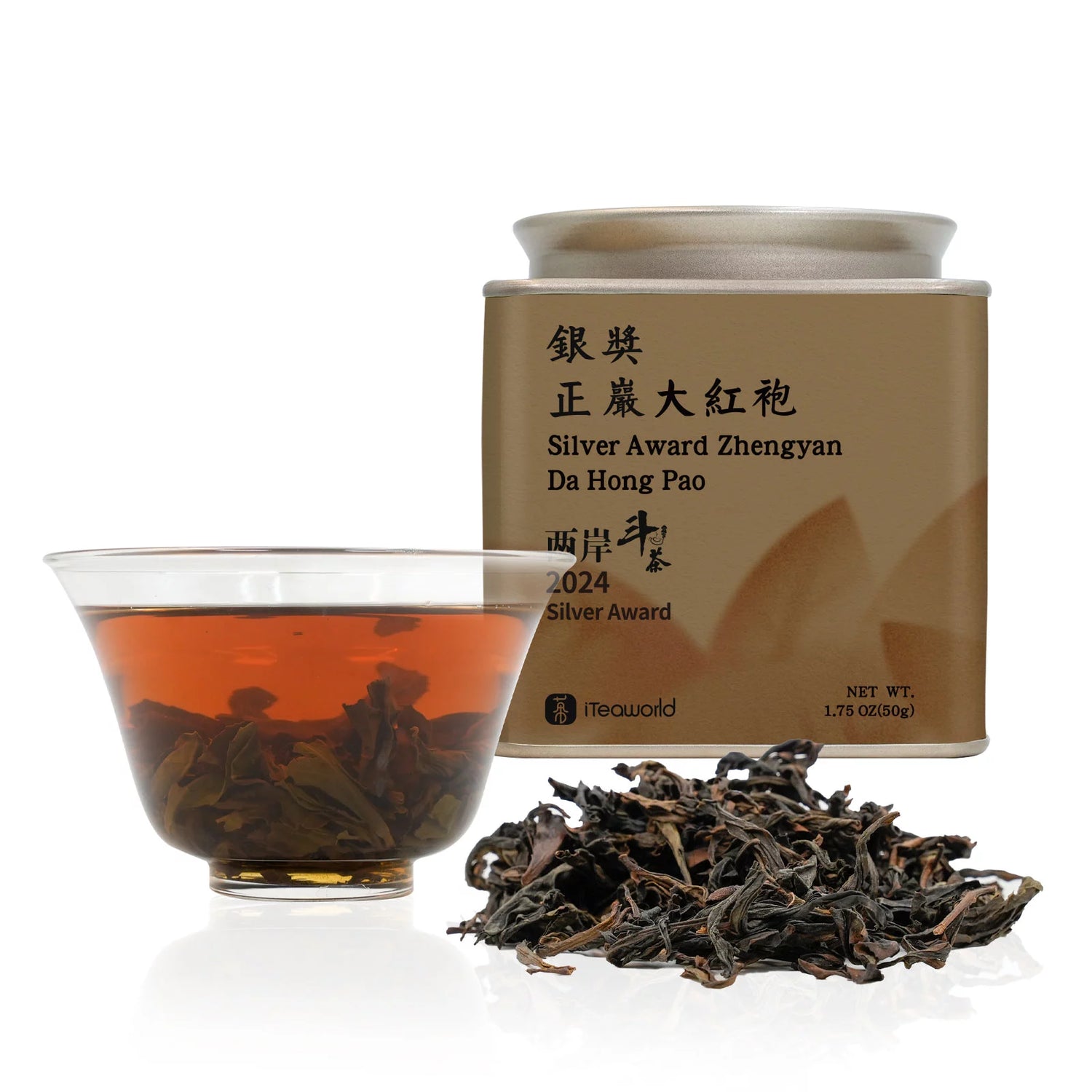

This Top Grade Da Hong Pao is crafted for tea drinkers who enjoy the balance of elegant floral aroma and rich roasted depth in traditional Wuyi rock oolong tea.Compared with many heavily roasted Da Hong Pao teas, this version highlights a more expressive orchid-like fragrance while still preserving the smooth, structured character that defines authentic Yancha.


2014 Aged Shou Mei White Tea is a traditional Fuding white tea that has been naturally aged for over 10 years, allowing time to transform its flavor and character. Made from Fuding Da Bai and Da Hao tea cultivars and crafted through traditional sun-drying methods, this tea develops a deeper aroma, smoother texture, and richer sweetness through years of natural aging.
Compared with fresh white teas that highlight floral freshness and brightness, aged Shou Mei offers a warmer and more mature expression of white tea. Its gentle aged aroma reveals notes of dried herbs, aged wood, and sweet hay, while the tea liquor becomes soft, silky, and mellow with a long-lasting sweet finish.
Pressed into convenient 5g tea cakes, each serving is easy to brew without measuring. Whether enjoyed during a quiet afternoon, after a meal, or as a daily calming ritual, this aged white tea offers a comforting and refined tea experience.
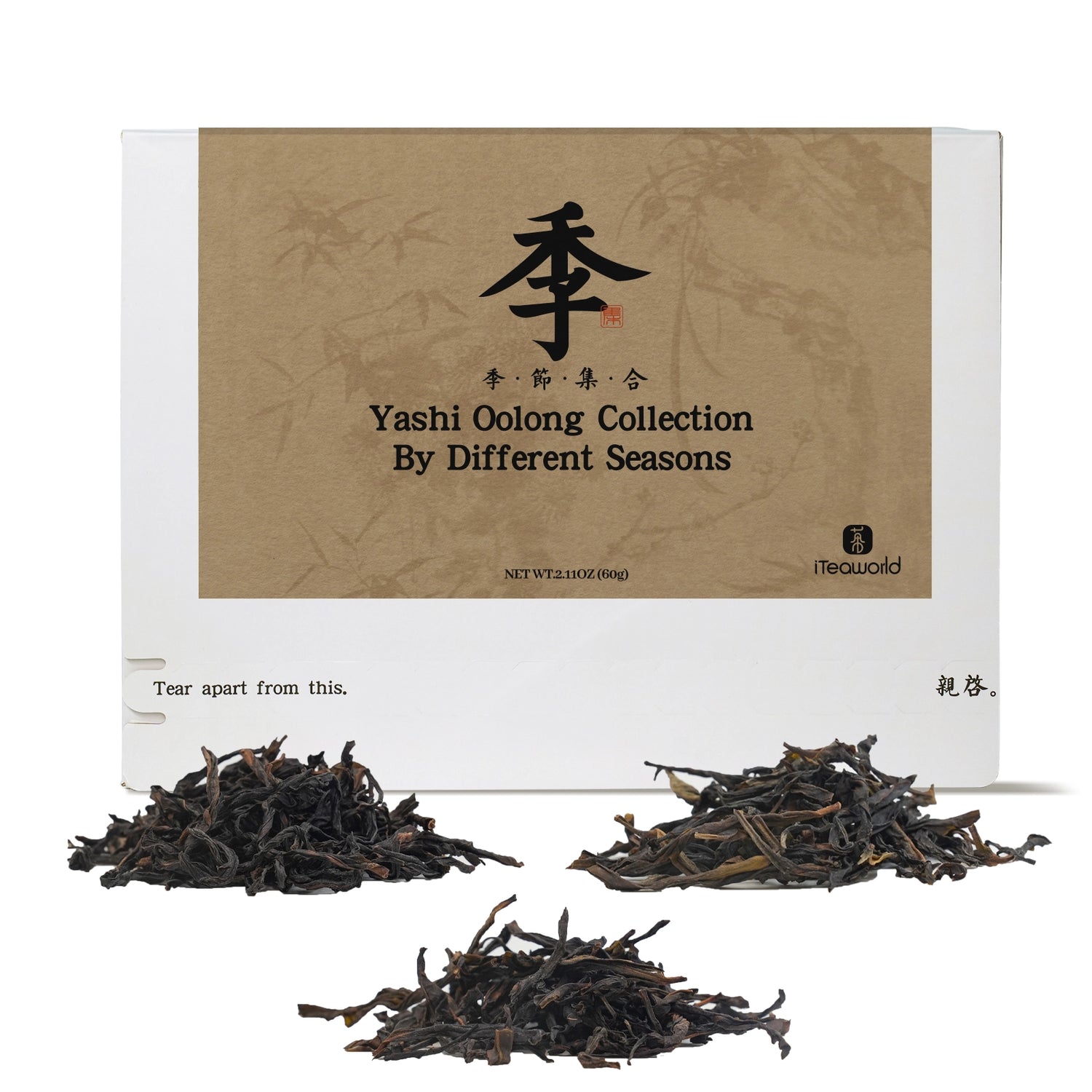
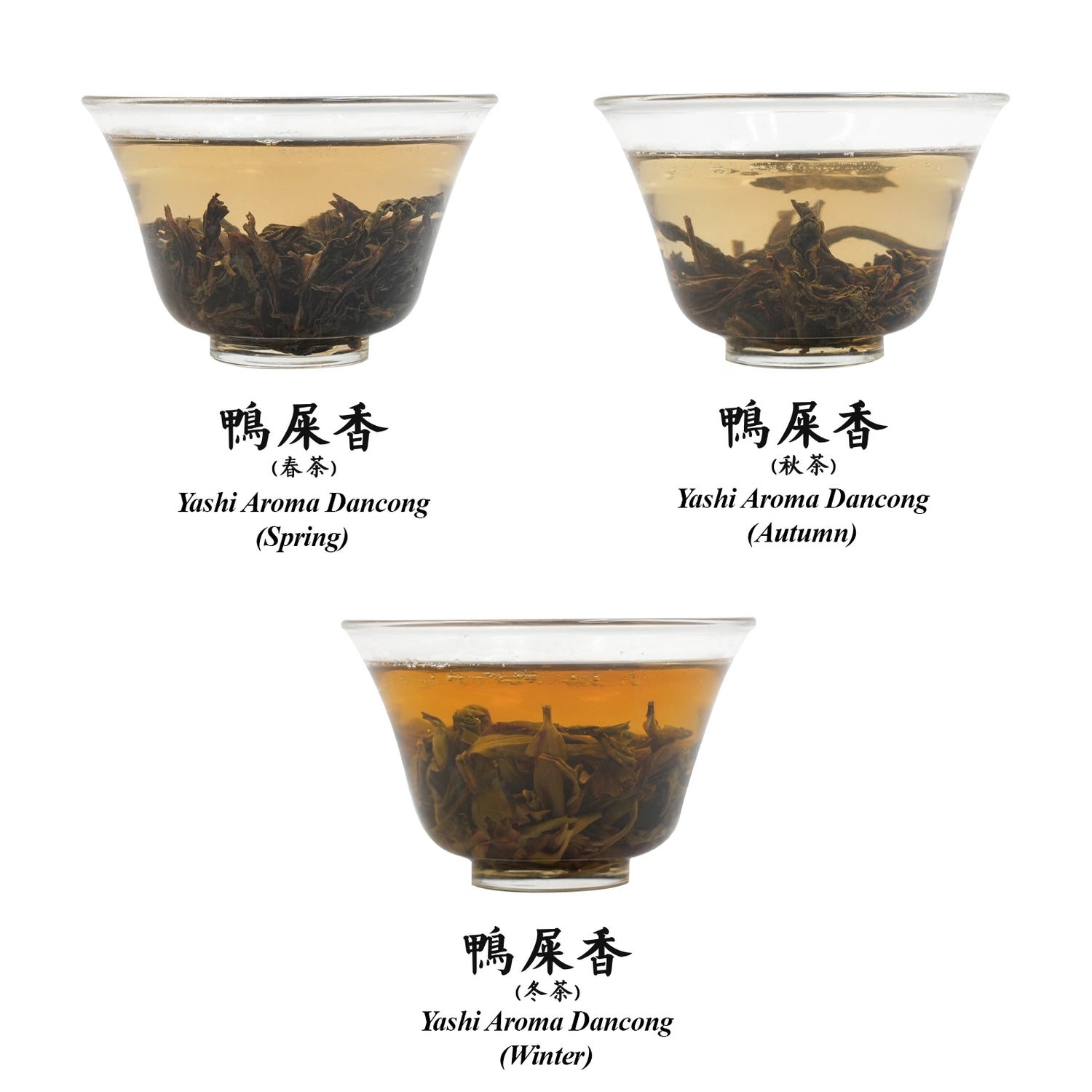
Ya Shi Xiang is one of the most aromatic Dancong oolong teas from the Phoenix Mountains in Chaozhou, China, known for its naturally rich floral fragrance and remarkable aromatic complexity.
This collection invites you to experience how the same tea changes across different harvest seasons. All three teas come from the same village and are crafted by the same tea master, ensuring that only nature—the season of harvest—creates the difference.
Spring, fall, and winter each reveal a unique expression of the same tea. Spring is soft and floral with gentle sweetness. Fall is smooth and rounded with warm aromatic depth. Winter is crisp and vibrant with a clean, lingering finish.
Rather than a single tea, this set offers a guided tasting experience that lets you explore how season shape aroma, texture, and flavor in real time.
Taste them side by side and discover how one tea can express three completely different seasonal personalities.
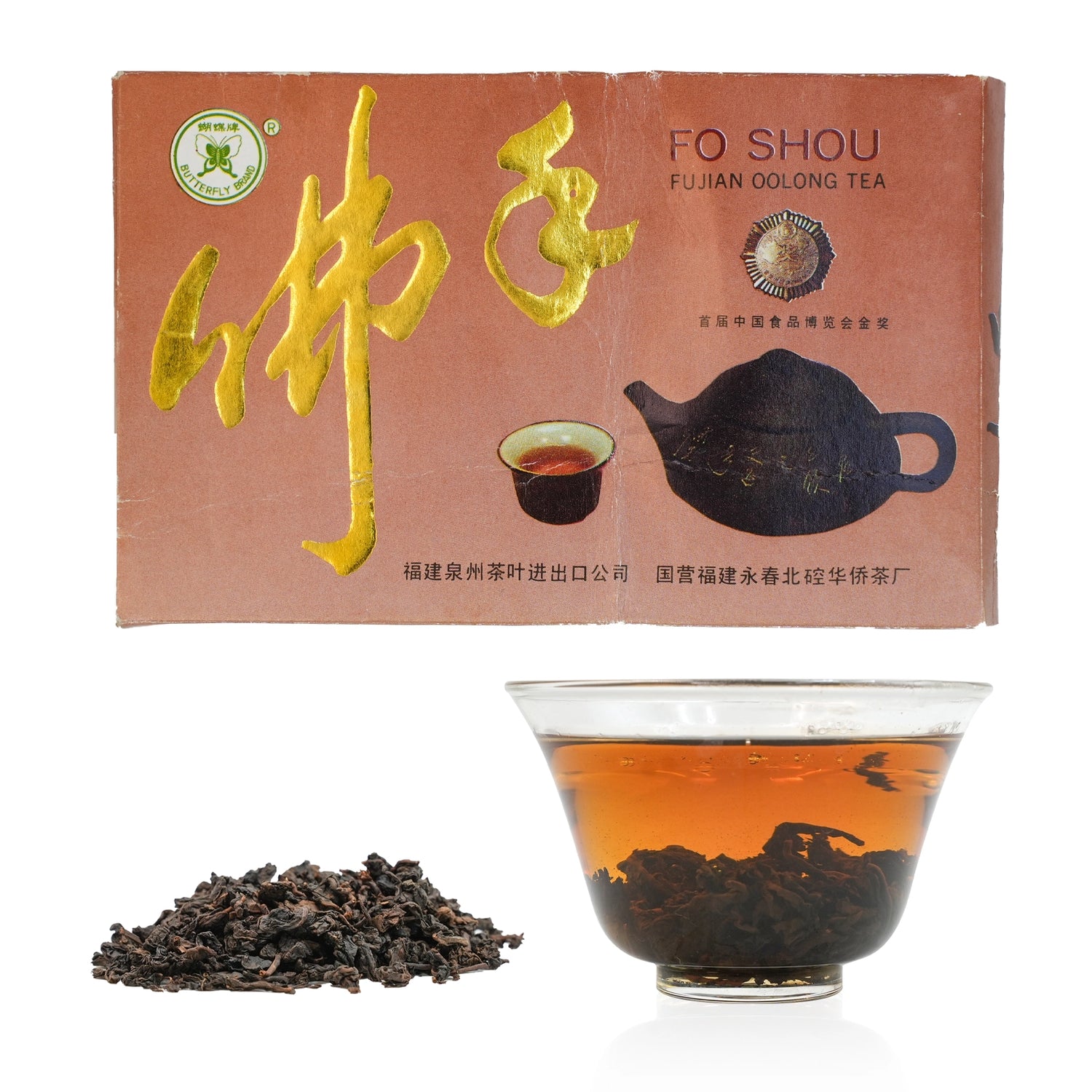
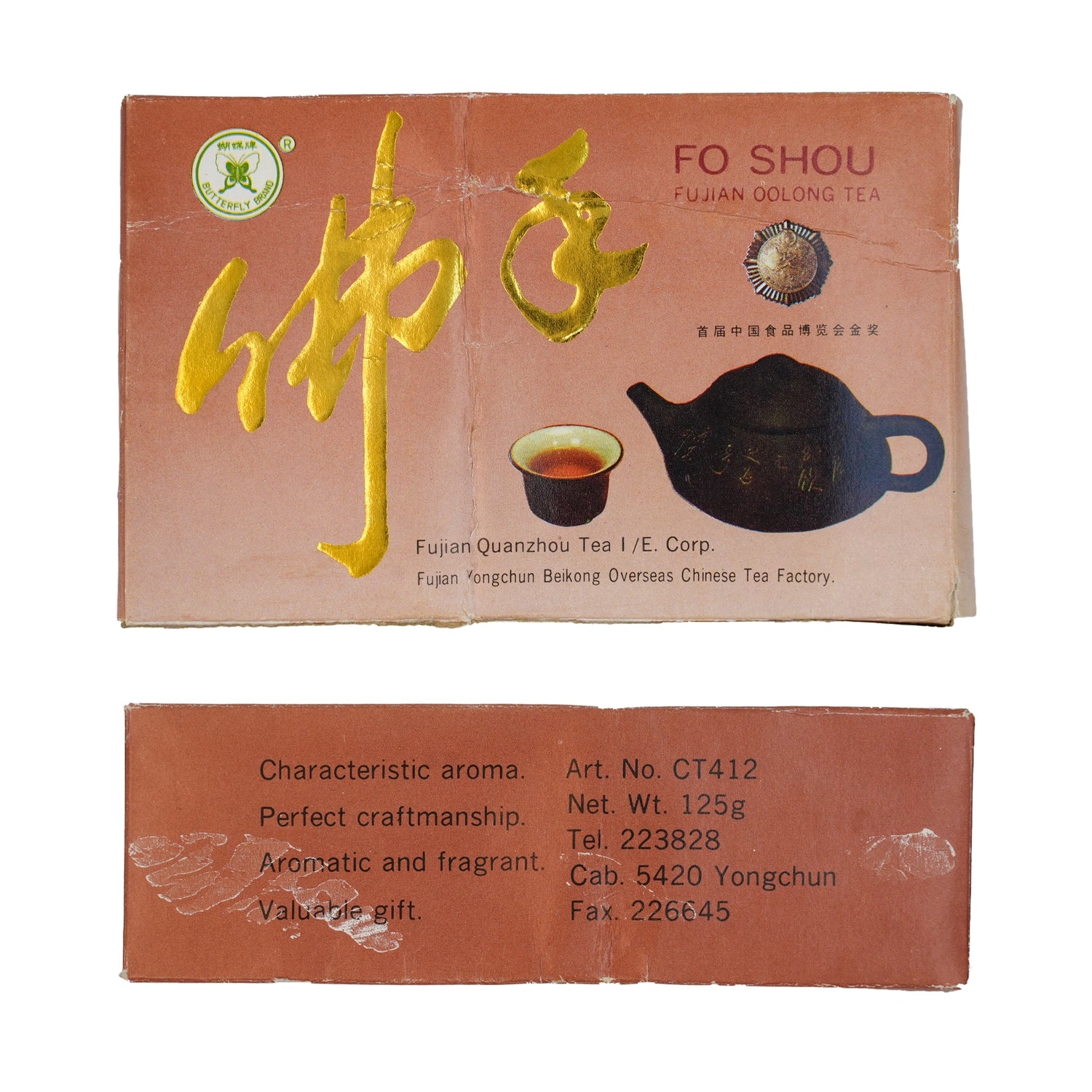
During the aging and transportation process of aged tea, the packaging and the tea itself may get damaged. Please be cautious when purchasing if you mind this.
Recommended Purchase
This Yongchun Fo Shou Oolong tea, produced in 1993 and naturally aged in dry storage for 33 years, is made from the Yongchun Fo Shou variety, a well-known tea type from Yongchun, Fujian Province. It was crafted by the Yongchun Beikong Overseas Chinese Tea Factory, established in 1917. This tea is handcrafted with traditional full-heat roasting and comes in its original packaging. No longer available on the market, it features a unique "aged aroma", rich sweetness and smooth texture, making it a cherished choice for lovers of aged Oolong tea.
Key Details about 1993 Yongchun Fo Shou
- Origin: Yongchun, Fujian Province, China
- Production Date : 1993
- Grade: Special Grade
- Tea Cultivar: Yongchun Fo Shou
- Craftsmanship : Traditional high-fire roasting with medium fermentation, followed by 33 years of natural dry storage in sealed outer box with an inner foil bag.
- Flavor Highlights: Warm "aged aroma" with notes of roasted nuts, complex layers of aged flavors.
What is Yongchun Fo Shou Oolong Tea?
Yongchun Fo Shou, also known as "Buddha’s Hand," is a premium variety of oolong tea grown in Yongchun, Fujian. Named after its leaves that resemble a Buddha’s hand, Yongchun Fo Shou is celebrated for its fragrant aroma, smooth taste, and exceptional aging potential. The tea is lightly twisted into a "dragonfly head" shape, with dark blackish-brown leaves indicative of traditional craftsmanship.
Brewing and Enjoyment Tips
This tea is a testament to the transformative effects of time, offering a rich, smooth, and slightly tangy flavor profile. Best enjoyed with long steeping times or simmering to fully release its aged characteristics.
Recommended Brewing Methods:
-
Gaiwan Brewing:
- 100ml Gaiwan
- 95℃-100℃
- 5-7 times
- 1:15 to 1:25
- 10~20 seconds
-
Thermos Brewing:
- 1g tea per 100ml (3.4oz) water.
- Use boiling water (212°F).
- Steeping Time: 1-2 hours.
- Tool: Insulated thermos.
-
Boiling Method:
- Add 1g tea per 100ml (3.4oz) water.
- Boil for 1-2 minutes, then let sit for 2-3 minutes.
- Rebrew by boiling 3 minutes longer with each steeping.
- Use a ceramic or glass teapot for optimal flavor.
- Enjoy up to 3-4 brews.
Storage Guidelines
Store this tea in a dry, cool environment with a humidity level below 45% and temperature below 25°C (77°F). Keep it away from strong odors, light, and air exposure. Proper storage ensures the tea retains its flavor and continues to age gracefully over time.
Weight
- 4.4oz (125g)
- Packing Type : Sealed Paper Box with Internal Foil Bag
About Yongchun Beikeng Overseas Chinese Tea Factory
Founded in 1917, the Yongchun Beikeng Tea Factory has a rich history of producing high-quality teas. Once a bustling hub of innovation and craftsmanship, the factory was home to over 1,000 tea workers at its peak, producing millions of pounds of tea annually. Its products, including Yongchun Fo Shou, were highly sought after in Hong Kong, Taiwan, Japan, and Southeast Asia.
Just as many state-owned old factories have experienced ups and downs, in the 1990s, the tea factory once fell into a slump, and the once bustling factory area gradually became desolate. The former factory director, Huang Shenghou, who had created its greatest glory and witnessed its decline, was deeply saddened by its decline and took over the factory himself after privatization.
Today, this aged Yongchun Fo Shou tea stands as a flavorful tribute to the factory's storied past and the enduring legacy of traditional Chinese tea-making.


Wuyi Rou Gui is one of the most iconic cultivars of Wuyi rock oolong, well known for its distinctive cinnamon-like aroma and rich, full-bodied character.
This tasting-grade Rou Gui comes from a Ban Yan area (One of Wuyi mountain areas), offering a more rounded and powerful expression. The tea liquor is smooth, dense, and structured, with pronounced cinnamon spice and warm roasted notes that unfold layer by layer.
With multiple infusions, subtle Wuyi rock tea minerality and a gentle mineral-like texture emerge, adding depth and complexity to the overall profile.
Compared with lighter floral oolongs, this Rou Gui delivers a stronger, more warming, and more assertive experience, making it ideal for drinkers who enjoy bold aroma, rich body, and a deeply satisfying rock tea character.


Keemun Black Tea, one of China’s most famous black teas, originates from Qimen County in Anhui Province. Known as the “Champagne of Black Teas,” it has been treasured by tea lovers around the world for its elegant aroma and refined taste.
Made from local Qimen tea trees in the core production area, this tea showcases the signature “Keemun aroma” — a graceful combination of orchid-like floral notes, fresh apple fragrance, and a subtle honey sweetness. The liquor is smooth and mellow, with a silky texture, balanced body, and a clean, lingering finish.
Keemun is also one of the classic Chinese black teas traditionally used as a base for Earl Grey blends. Its naturally elegant fragrance and gentle sweetness make it an ideal choice for enjoying on its own, while also explaining why it has long been appreciated in Western tea culture.


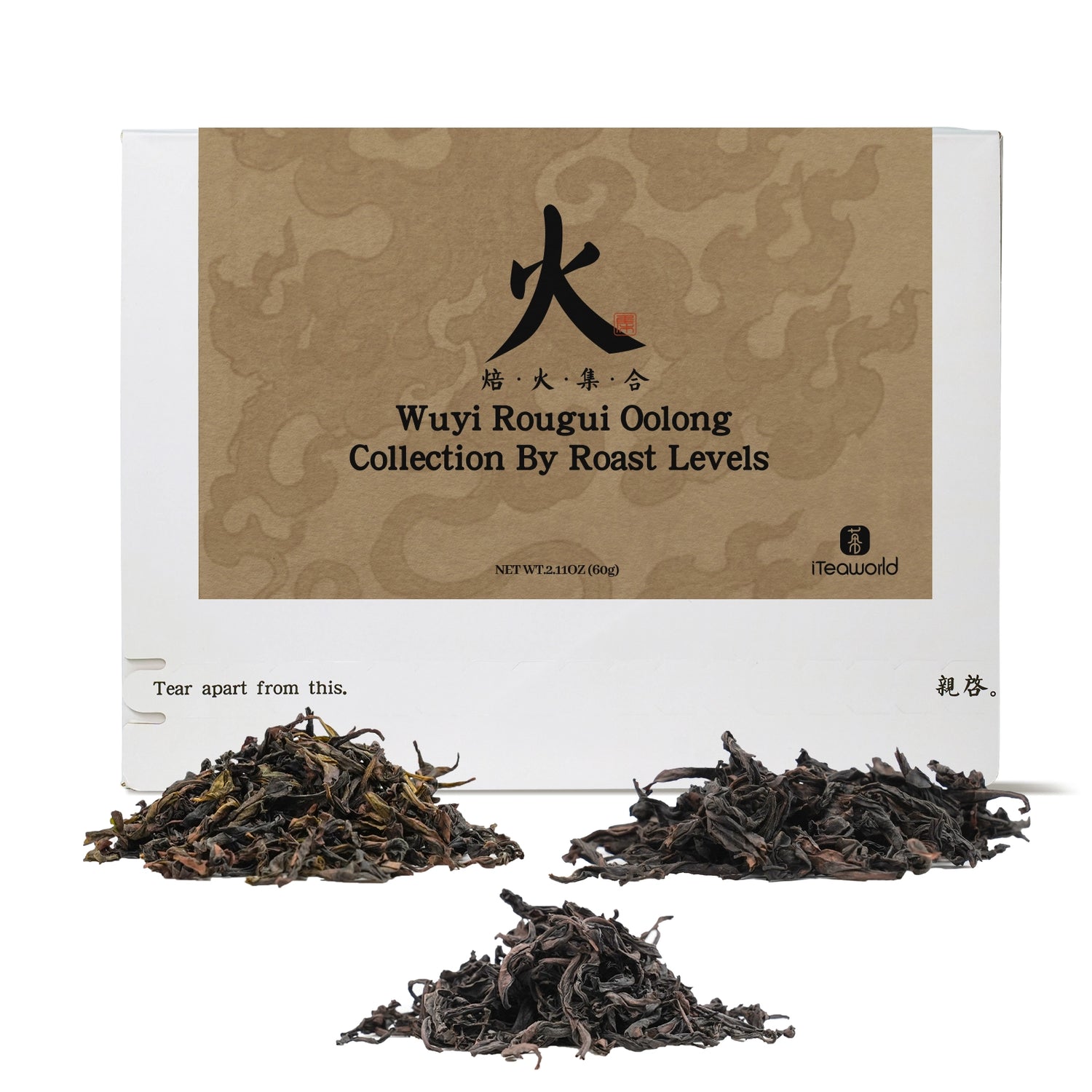
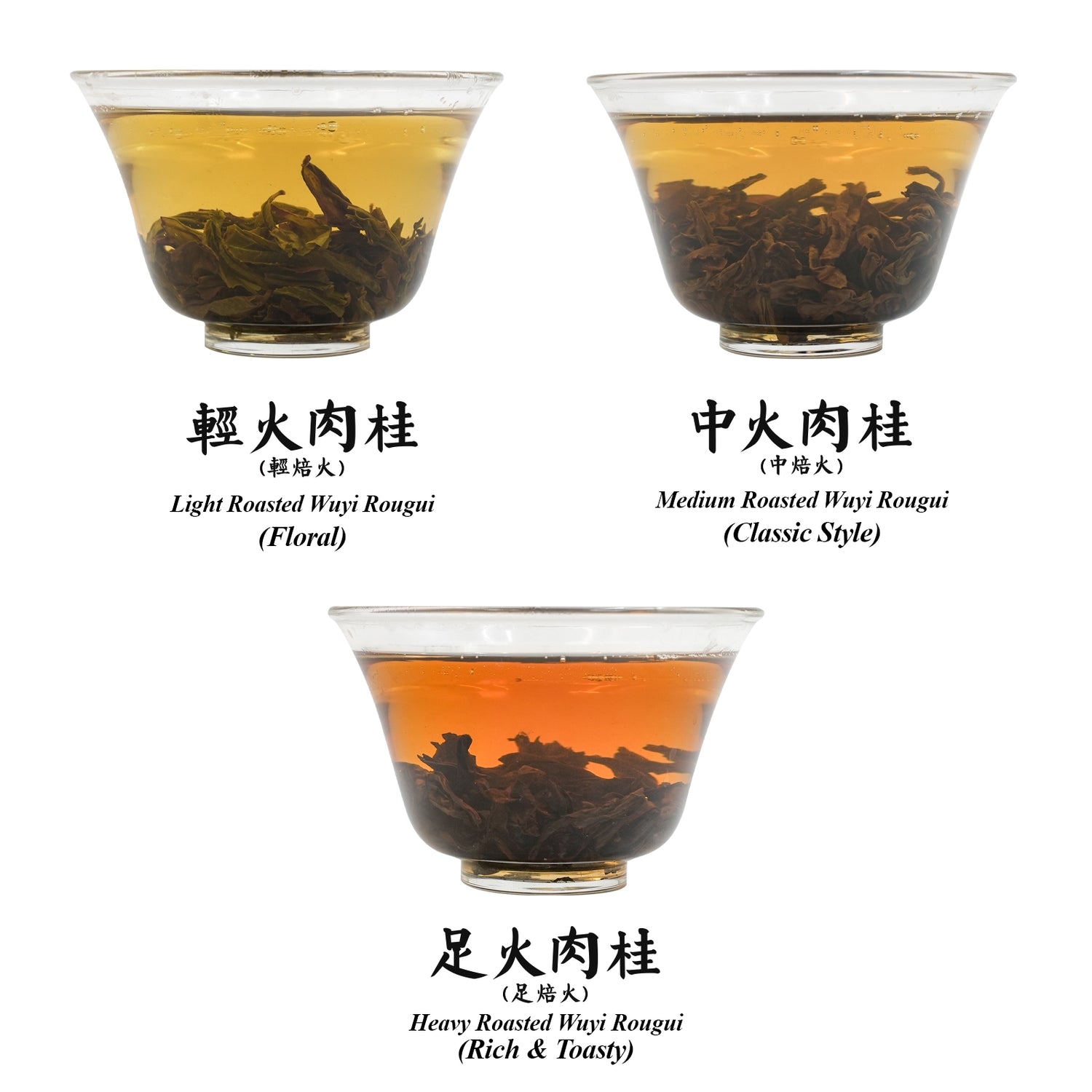
Wuyi Rougui is one of the most iconic rock oolong teas from the Wuyi Mountains in Fujian, China, known for its distinctive cinnamon-like aroma, mineral depth, and rich roasted character.
This collection explores how fire transforms the same tea. All teas are made from the same Rougui cultivar, sourced from the same origin, and crafted using traditional Wuyi rock tea methods—the only variable is roasting level.
Light roast highlights the tea’s floral brightness and mineral clarity. Medium roast brings balance between aroma, body, and roast depth. Heavy roast develops deeper, more intense roasted notes with a richer and more structured finish.
Rather than a single tea, this set offers a side-by-side tasting experience that reveals how roasting shapes aroma, texture, and overall flavor in Wuyi rock tea.
Taste them together and discover how fire defines the personality of Rougui.
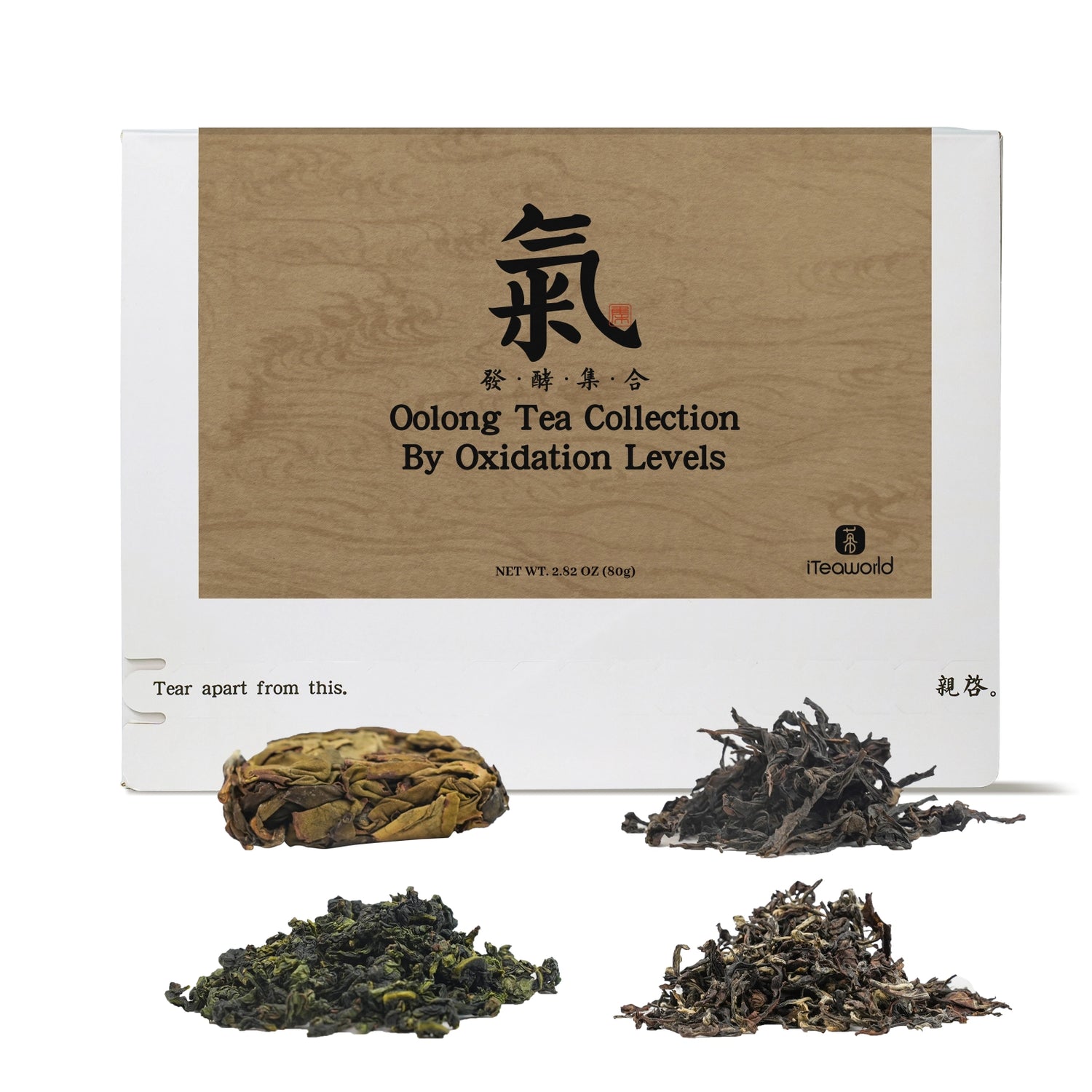
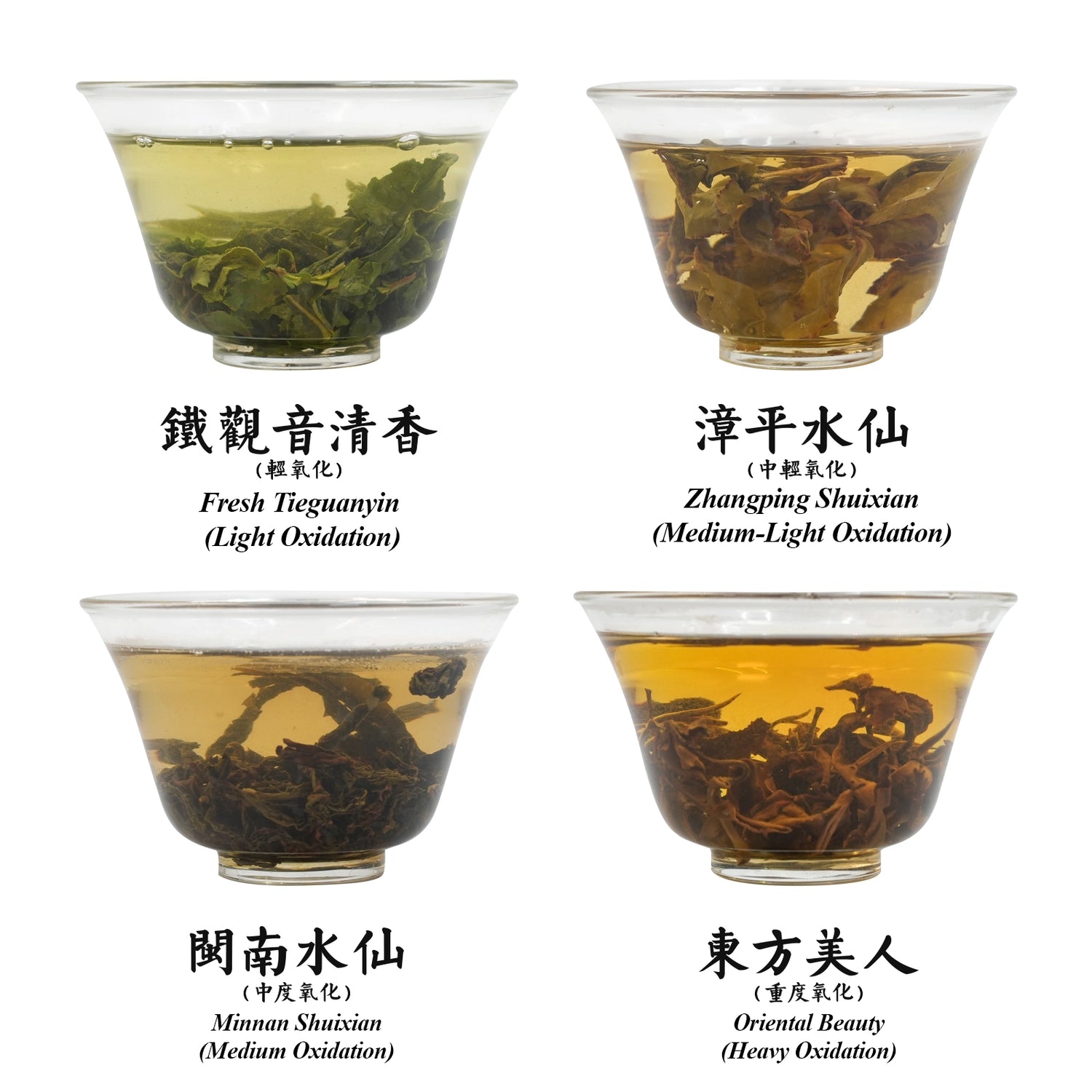
Oolong tea sits between green and black tea, and its character is shaped primarily by oxidation level—a natural process that transforms aroma, flavor, and texture.
This collection explores how oxidation changes the same tea category across four iconic oolongs from Fujian and Guangdong. Each tea represents a different stage of oxidation, from light and floral to rich and fully developed.
Lightly oxidized teas like Tieguanyin highlight fresh floral and fruity notes. Medium oxidation brings balance and complexity. Higher oxidation develops deeper fruit, honey, and roasted characteristics, culminating in the rich, aromatic profile of Oriental Beauty.
Rather than a single style of tea, this set offers a guided tasting experience that reveals how oxidation defines the core identity of oolong tea.
Taste them side by side and discover how natural enzymatic change shape flavor from light to deep.


Fuding White Peony (Bai Mudan) is one of the most beloved styles of Chinese white tea, valued for its elegant floral aroma, gentle sweetness, and refreshing character. Made from the tender buds and first young leaves of the Fuding Da Bai tea variety, it captures the delicate beauty of young tea leaves while offering a fuller flavor than Silver Needle.
Crafted in Fuding, Fujian, the birthplace of white tea, this tea follows traditional sun-drying techniques to preserve the leaves’ natural freshness and purity. The result is a smooth and balanced white tea with soft floral notes, subtle sweetness, and a clean finish. Its approachable yet layered character makes it an excellent choice for those new to white tea and for experienced tea drinkers seeking an authentic Fuding white tea experience.

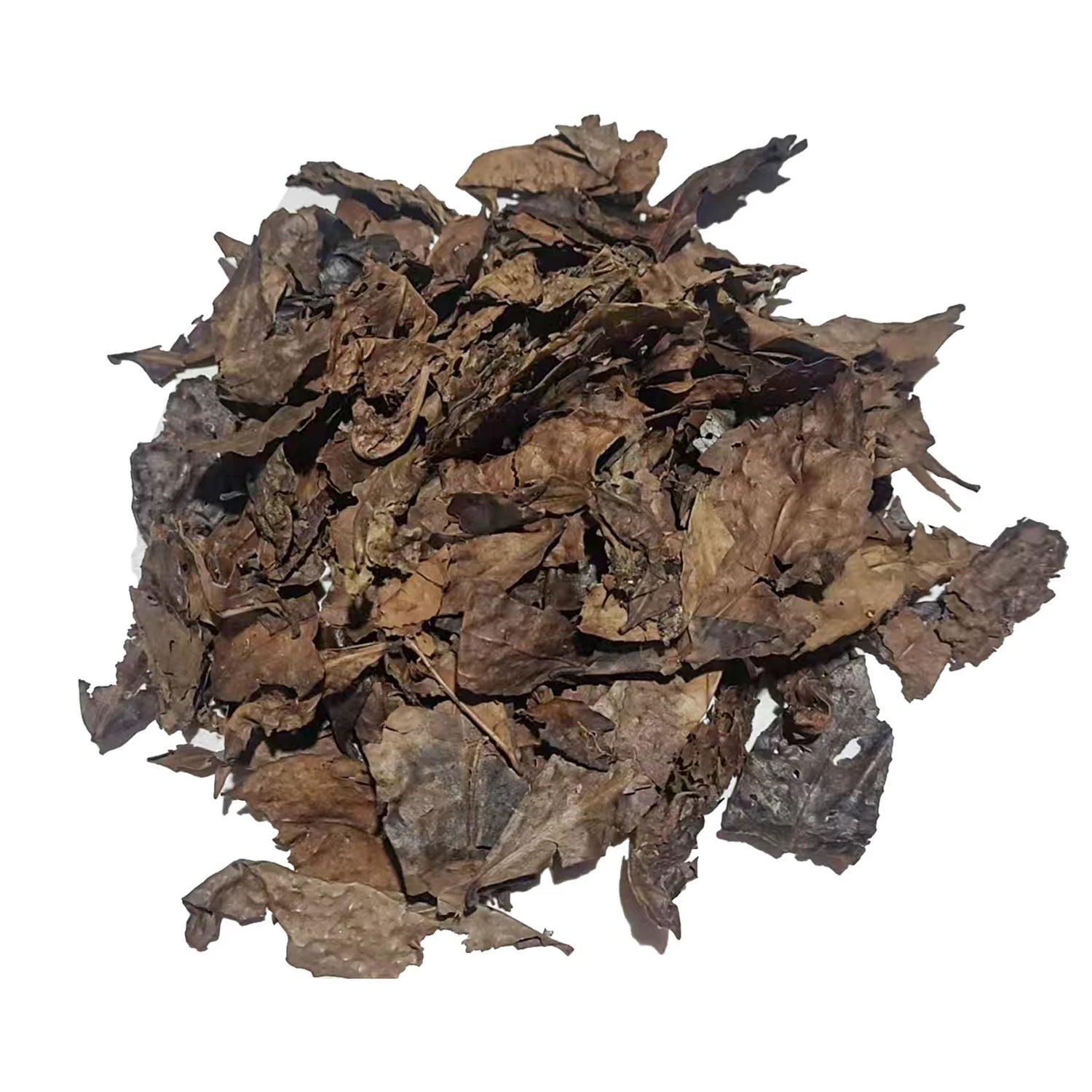
A rich and mellow Liubao tea with a cool herbal aroma, deep body, and long-lasting sweetness. The smooth, full-bodied liquor has a distinctive forest-like character, with a gentle herbal note that lingers pleasantly after each sip.
Perfect for: Tea drinkers who enjoy aged teas, herbal aromas, rich textures, and a deep, lingering finish.
Best for: Slow sipping, quiet evenings, and boiling over a gentle heat to bring out its deeper aroma and sweetness.


Shop with Confidence at iTeaworld

30-Day Return & Satisfaction Policy
Not satisfied? Get a refund within 15 days for taste concerns, or return unopened products within 30 days.

Free tea samples with tea order
Buy 1 get 1 sample. Buy 2 get 2. Buy 3+ get 3 free sample