
Daily Ritual Wellness Tea
Support your daily well-being with naturally functional blends designed to soothe, balance, and nourish the body.
Sort by:
11 products
11 products
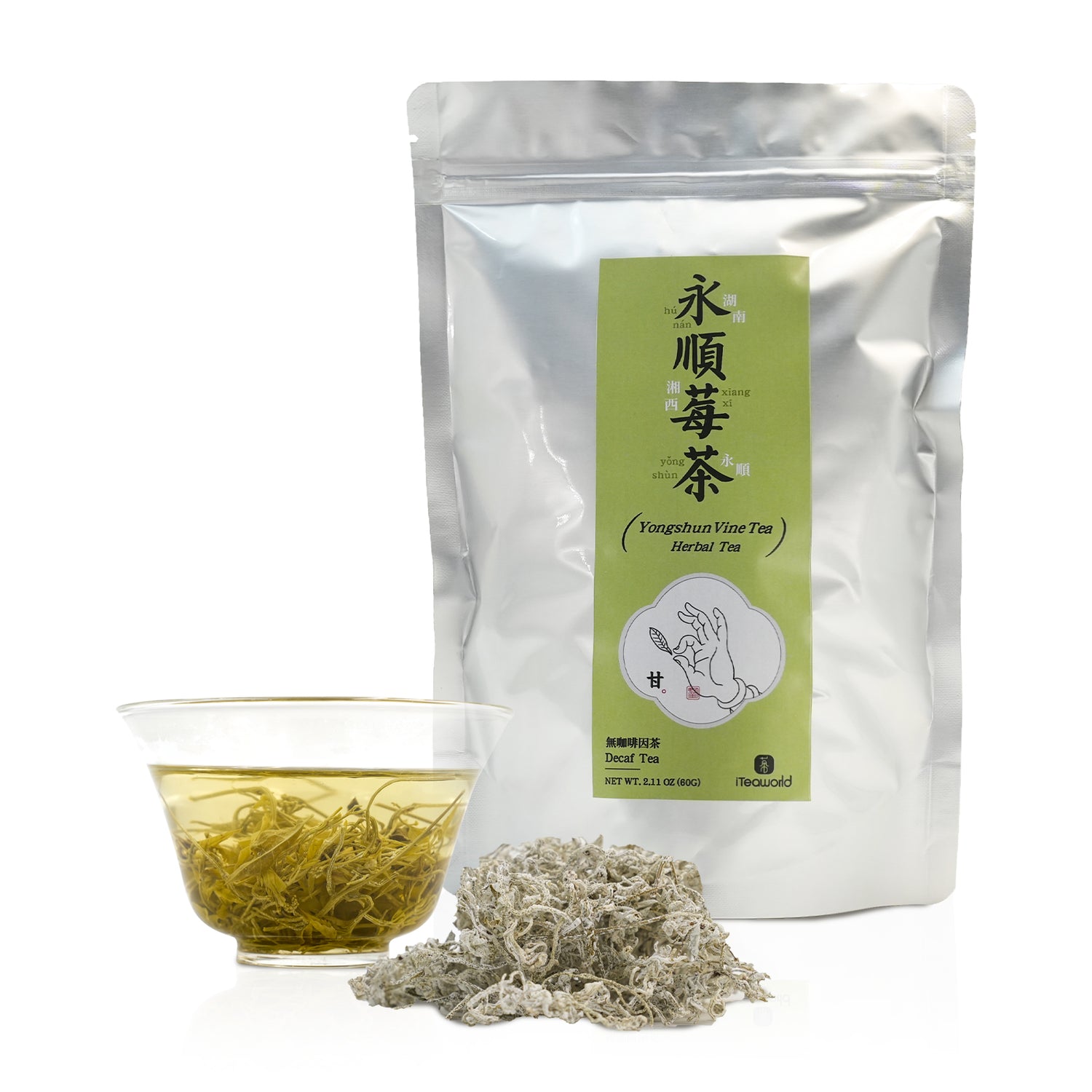
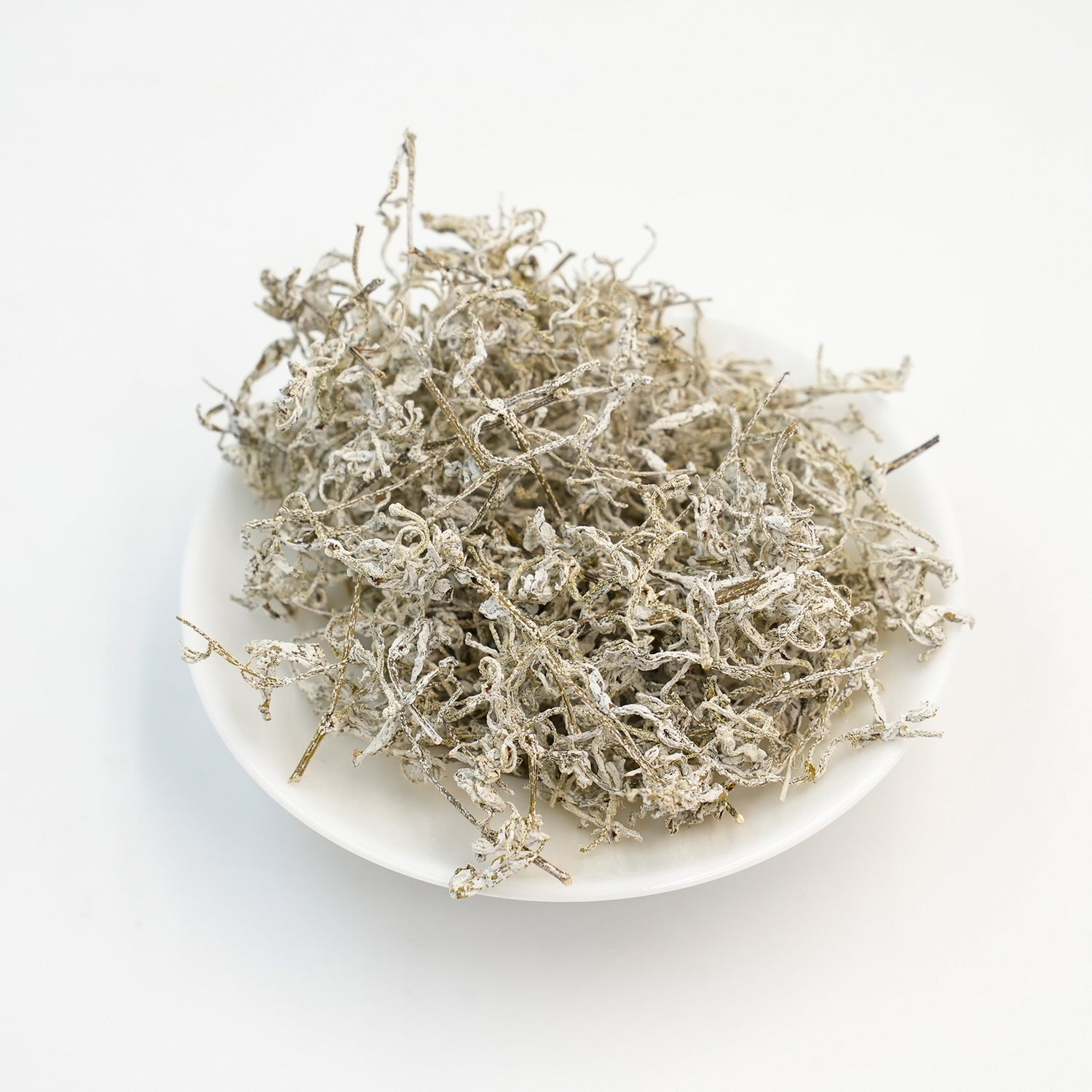
Meicha (also known as Vine Tea) is a naturally caffeine-free herbal tea made from a wild vine plant of the Ampelopsis genus in the grape family. It originates from the high mountains of the Wuling region in Zhangjiajie, Hunan, at elevations of 400–1,500 meters. Its name comes from the natural layer of flavonoid crystals that form a “white frost” on the surface of the leaves.
Rich in flavonoids, Meicha has long been used in Chinese folk tradition as an antioxidant, or to soothe the throat, relieve fatigue, and support cardiovascular health. Because it contains no caffeine, it can be enjoyed even before bedtime without affecting sleep, making it an ideal choice for tea lovers who are sensitive to caffeine or looking for a caffeine-free beverage.
This tea has a slightly bitter taste at first, quickly giving way to a strong, lasting sweetness with a refreshing sensation. After drinking, even just drinking water tastes subtly sweet for a while. Its aroma combines the freshness of wild mountains with herbal notes, clean and long-lasting. It can be brewed 3–5 times.
Our Meicha comes from Yongshun in western Hunan, a region with a natural environment similar to Zhangjiajie and also part of the Wuling Mountains. With its humid climate, misty landscapes, and excellent natural conditions, Yongshun produces high-quality Meicha with superior flavor and character. It’s the perfect choice for anyone seeking a premium caffeine-free tea.
Origin: Furong Town, Yongshun, Xiangxi, Hunan Province, China
Elevation: Above 780 m
Harvest Date: May 2025
Storage Life: 18 months
Tea Maker: Qin Dajie
How to Brew:
Water Temp: 100°C (212°F)
Brewware: Gaiwan or glass cup
Tea-to-Water Ratio: 1g per 100ml
1–2 infusions: 30-60 sec
Later infusions: Add 30 sec
Total brews: 3-5 times
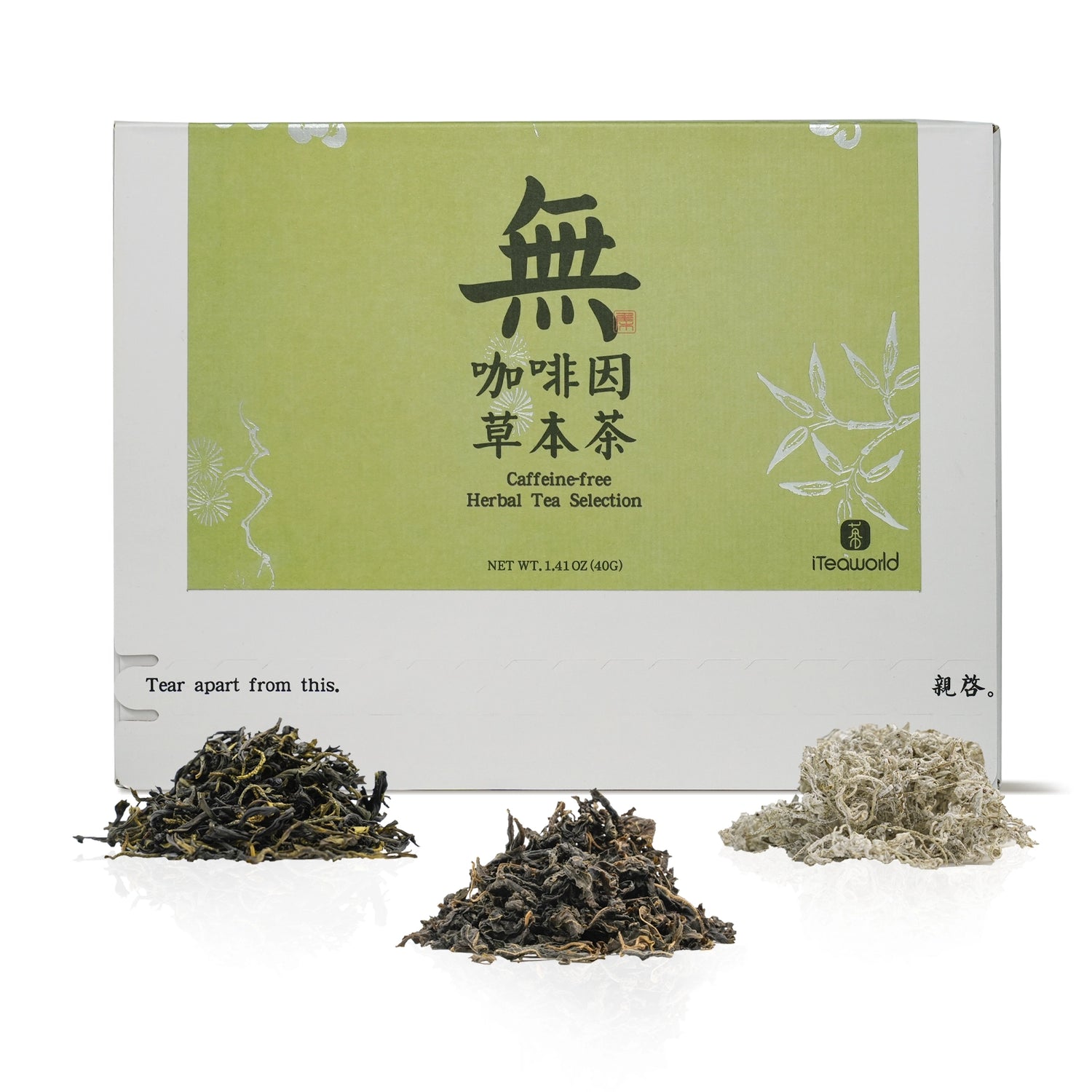
Looking for a Caffeine-Free Green Tea Alternative?
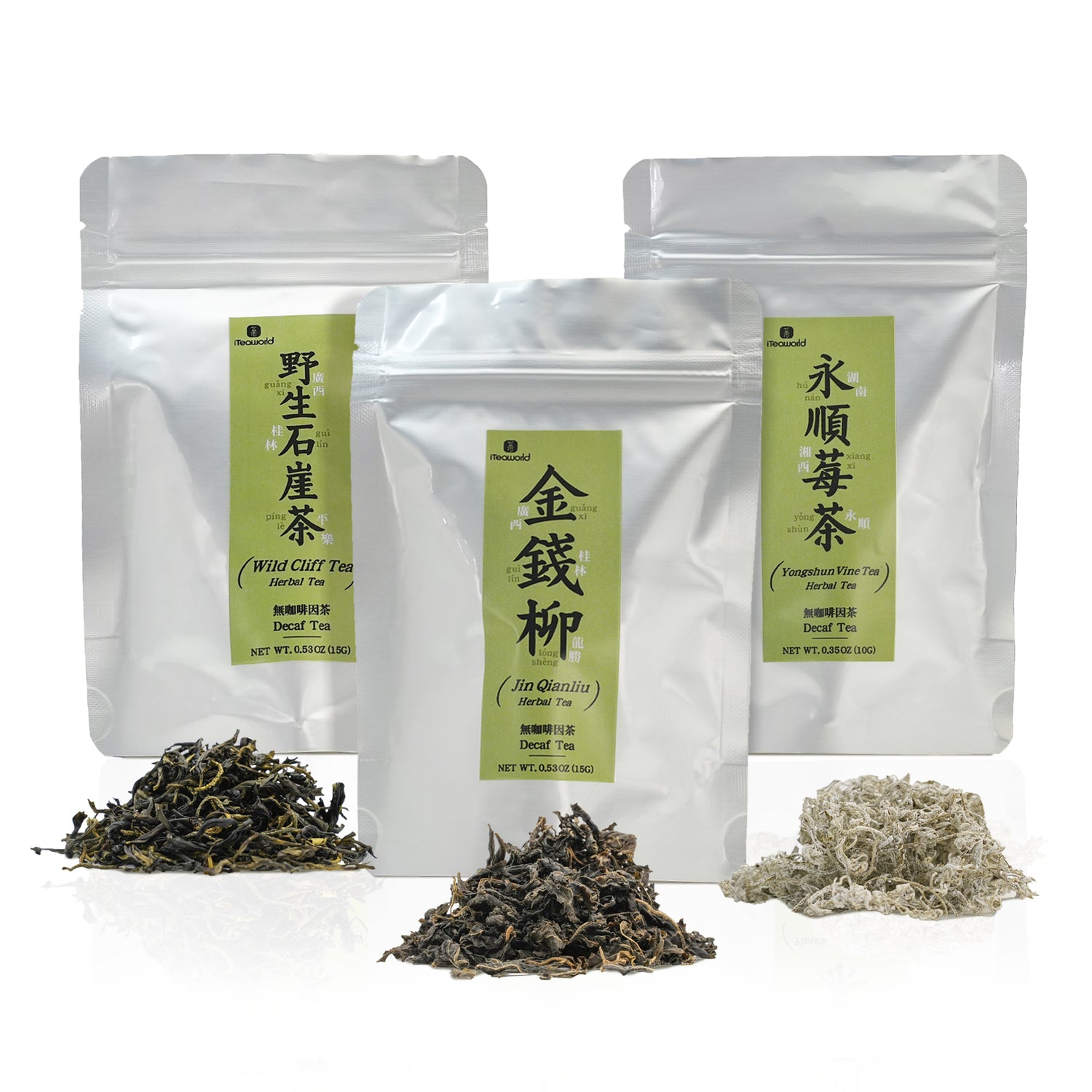
While we don’t offer caffeine-free green tea, we’ve carefully selected three herbal teas processed in a similar way to green tea—offering comparable freshness and aroma. These unique teas have been valued in traditional Chinese tea culture for centuries.
Jin Qian Liu – Sweet Tea Tree (Cyclocarya Paliurus)
Grown in the lush regions of southern China, this naturally sweet herbal tea is made from the leaves of the Cyclocarya Paliurus tree. Its smooth, mellow flavor makes it a perfect choice for anyone looking for a gentle, caffeine-free infusion. Traditionally, it has been appreciated for its balance and calming taste.
Wild Cliff Tea (Shi Ya Cha)
Harvested from wild tea trees on the rocky cliffs of Guangxi, this rare herbal tea delivers a robust, aromatic experience. With a rich profile and sweet finish, it’s known as “tea of the immortals” in local folklore. It is naturally high in flavonoids, which contribute to its full-bodied taste.
Vine Tea – Zhangjiajie Mei Tea (Ampelopsis grossedentata)
Thriving in the misty highlands of Zhangjiajie, Vine Tea is celebrated for its vibrant, refreshing flavor. Known as the “King of Flavonoids,” this herbal infusion contains a naturally high concentration of flavonoids, offering a satisfying, clean finish with every sip.
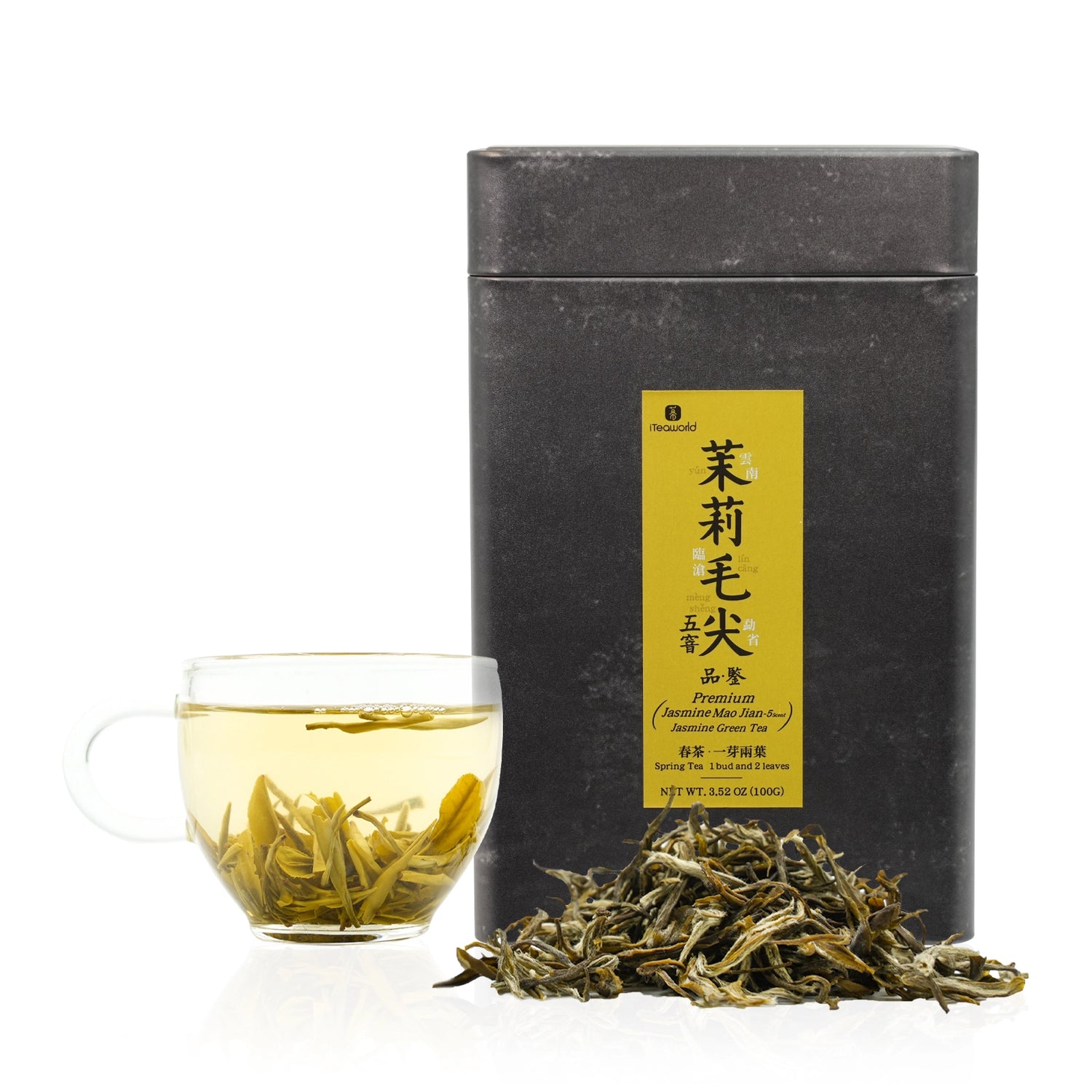
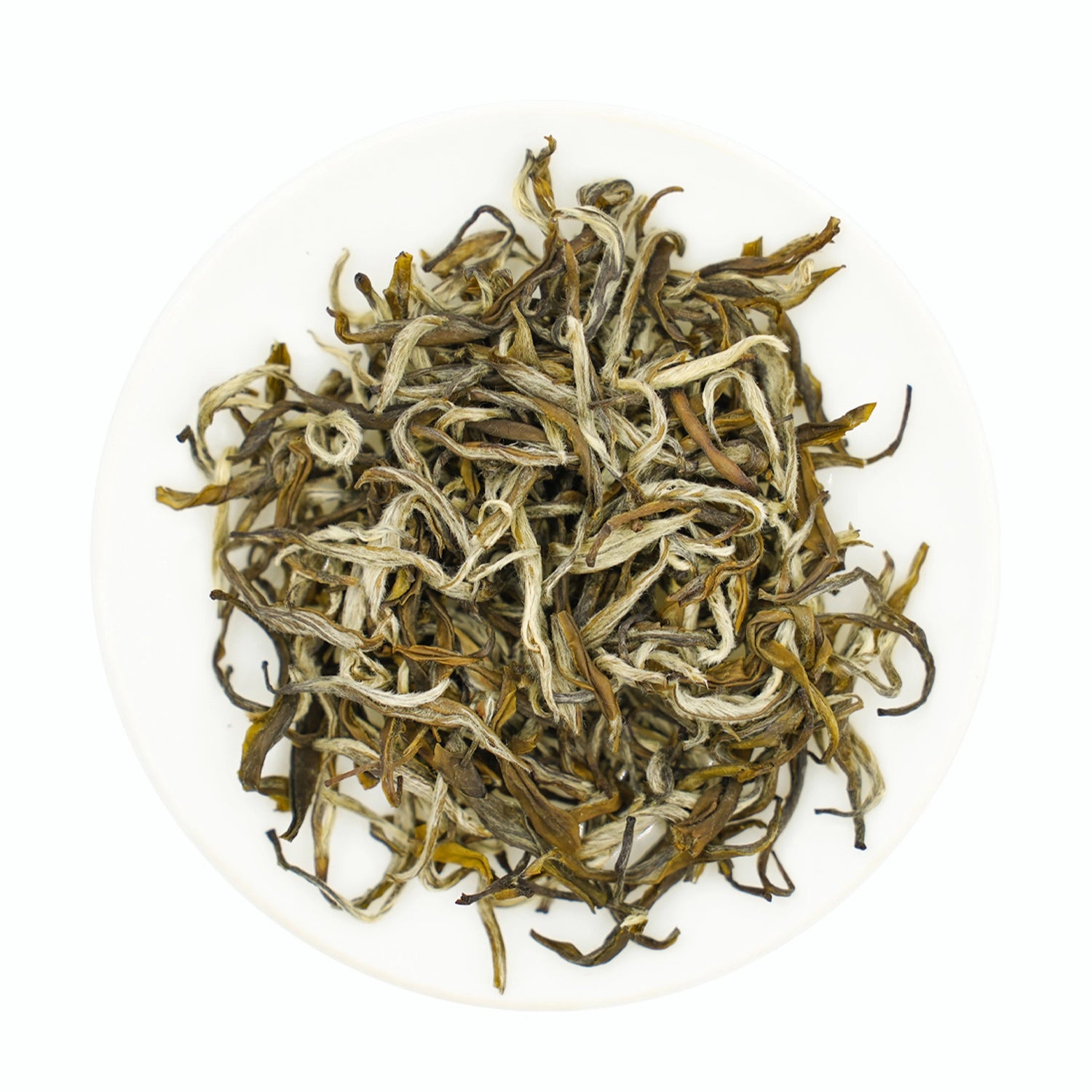
Introduction:
This Jasmine Maojian tea is meticulously selected from the spring harvest of 2023. Plucked from high-altitude tea gardens in Lincang, Yunnan Province, at elevations of approximately 1000 meters, the exceptional growing conditions impart a refreshing taste and rich, layered flavors to this jasmine tea. The plucking standard of primarily one bud and two leaves, combined with five scenting processes, ensures a pure floral aroma, a sweet and mellow taste, and a refreshing, lingering aftertaste.
Reasons to Recommend:
- Core Production Area: Grown in Mengsheng Town, Yunnan Province, where the unique microclimate features an average annual temperature of 21.9°C and annual precipitation of 1270.5 mm. The fertile soil, rich in organic matter, is ideal for tea cultivation.
- Scenting Process: High-quality green tea serves as the base, while jasmine flowers from Hengzhou, Guangxi, are used for scenting. The traditional scenting process is repeated five times, resulting in a tea where the floral aroma dominates and infuses into the liquor. The fragrance is pronounced but not overpowering, and the tea liquor is refreshing yet clear.
- High-Mountain Tea Gardens: Since ancient times, high mountains shrouded in mist have produced premium teas. This tea thrives in such environments, where lush vegetation and organic-rich soil, combined with extreme daily temperature fluctuations, enhance the accumulation of flavorful compounds in the leaves.
Oxidation Level: None
Roasting Level: None
Processing Time: September 2024
Best Before Date: 18 months
Tea Variety: Guangxi Group Variety


Chinese Aged Citrus Peel Tea Collection | Digestive Support & Soothing Warmth
$29.90 USD
Unit price perChinese Aged Citrus Peel Tea Collection | Digestive Support & Soothing Warmth
$29.90 USD
Unit price perChinese Aged Citrus Peel Tea Collection is crafted for tea lovers who want a warm, comforting cup during the cold season — without any fuss.
In traditional Chinese tea culture, special varieties of Aged Mandarin Peel are paired with mild, winter-friendly teas such as Pu-erh, Liu Bao, and aged white tea. These blends are celebrated for being gentle, stomach-warming, easy to digest, and soothing, making them the go-to digestive tea for southern China during winter.
One thing these teas have in common: they are delicious however you brew them — whether in a thermos, a mug, or simmered on low heat, the flavor is never bitter or harsh. Perfect for sipping anytime, the way you like.


Wild Cliff Tea Herbal Tea: Also known as Shiya Tea, it’s a caffeine-free green tea from the high-altitude forests of Guangxi, China. Named for its unique growing environment—cliffs and steep slopes—this tea has a long history and was once a valuable tribute. It has a tight, heavy appearance, dark green color, and rich aroma. When brewed, it produces a bright green liquor with a fresh and sweet taste. Shiyan Tea is high in flavonoids, polyphenols, and amino acids, offering anti-inflammatory, detoxifying, and blood pressure-lowering benefits. It’s caffeine-free, making it suitable for those concerned about sleep.


Herbal Tea Jin Qian Liu: Also known as the “Money Tree,” this deciduous tree belongs to the walnut family and is found in several Chinese provinces, including Anhui, Jiangsu, and Zhejiang. It thrives in sunny environments, has deep roots, and grows quickly. Its wood is used for furniture, and its bark can be used to make tannin. The leaves can be made into health tea that helps lower blood pressure, blood sugar, and cholesterol. This tea is valued for its unique benefits in boosting immunity, offering antioxidant properties, and combating aging.


Three cups a day, blended for the season.
Traditional Chinese herbal flower teas inspired by centuries of wellness wisdom—crafted to help you stay balanced, relaxed, and in tune with nature.


Xiao Qing Gan is a unique Chinese tea made by filling young green mandarin peel with ripe Pu-erh tea. The mandarins come from Pubei, Guangxi, known for high-quality peel, and the Pu-erh is sourced from Yunnan. Produced in 2020 and aged about five years, it develops a smooth, rich, and gently citrusy flavor, where bright mandarin notes blend naturally with the mellow depth of aged Pu-erh.
Easy to brew—one piece per cup—this tea is perfect for cold days, offering a warming cup with gentle citrus aroma and smooth Pu-erh depth.


Daidai flower comes from a small evergreen citrus tree and carries an aroma similar to lemon peel and orange blossom. It’s traditionally used both as food and herbal medicine, and is often made into essential oils, scented teas, herbal remedies, or even cooked in porridge. Jinhua in Zhejiang is one of the main producing regions. In traditional Chinese medicine, Daidai flower is known for supporting digestion, easing constipation, and relieving stress.
This Daidai Flower Tea is produced in Jinhua, Zhejiang. It uses early spring tea buds—ranging from single buds to one-bud-one-leaf—as the base, scented with freshly harvested Daidai flowers. The flowers add a gentle sweetness to the green tea, softening its bitterness and creating a more rounded, balanced cup. The liquor tastes fresh and lively, with a clear sweet finish and layered notes of citrus, florals, and green tea aroma. The fragrance is rich and long-lasting.
This tea is effective for aiding digestion and relieving constipation. Those with weak or cold stomachs should drink it with caution. One cup per day (about 400 mL) is recommended, as excessive consumption may cause diarrhea.
Origin:Zhucun Village, Xinfan Township, Wucheng District, Jinhua City, Zhejiang Province.
Tea Base / Number of Scenting Rounds:Biluochun,Second scenting
Tea Master: Wu Jinxiang (吴金香)
Processing Date:June 2025
Shelf Life:18 months
Brewing
Water: Purified, 80 °C | 176 °F
Gaiwan: 2g per 100ml · 10–15 sec · add 5–7 sec each steep · up to 7 infusions
Glass cup: 1g per 100ml · 1st: 40s | 2nd: 60–90s | 3rd: 90–150s


A seasonal tea collection crafted for spring.
Discover six unique herbal and flower teas, designed for three cups a day—morning, afternoon, and evening.
Inspired by traditional seasonal wellness wisdom, each cup brings a moment of freshness, balance, and gentle renewal.


Winter invites us to enjoy richer, heartier meals and cozy comforts. But these indulgences can often leave us feeling heavy and sluggish. Now, more than ever, your body craves a gentle aid to restore balance and lightness.
The "After-Meal Digestive Picks" collection is your essential winter wellness ritual. We've curated seven teas renowned in Chinese tradition for their digestive benefits. Instead of simply ending a meal, let these teas be your warm, soothing companion to ease discomfort, cut through richness, and leave you feeling comfortably light and settled.
Why These Teas Are Perfect for Winter
Winter's hearty diets and less active lifestyle make mindful digestion key. This collection is rooted in centuries of Chinese culinary wisdom, focusing on two categories celebrated as natural digestive aids:
1. Rock Oolongs: The Natural "Grease Cutter"
Featured Teas: Wuyi Rou Gui (Ban Yan), Wuyi Rock Tea 'Golden Peony', Wuyi Rock Tea 'Rui Xiang 305'.
The Winter Reason: In regions like Fujian, a pot of robust, warmed Rock Oolong is the traditional answer to rich, celebratory winter feasts. Their baking process creates a toasty, warm character that perfectly complements the season, while their complex profiles are known to help metabolize fats and relieve that overstuffed feeling.
2. Dark Teas & Aged White Tea: The Soothing "Gut Harmonizer"
Featured Teas: Liupao Dark Tea, Ripe Pu-erh, Anhua Dark Tea, Jasmine Liupao, 2014 Aged Shou Mei.
The Winter Reason: In Northern China and border regions where winter diets rely on meat and rich foods, Dark Tea (Pu-erh, Liupao, Anhua) is a daily staple for good reason. Through post-fermentation, these teas become exceptionally mellow and warming. They are prized for gently soothing the stomach and aiding digestion, making them ideal for managing heavier winter meals. The 2014 Aged Shou Mei, having matured into a warm and sweet profile, offers similar gentle comfort. The Jasmine Liupao adds a unique floral lift, cutting through winter's richness with a refreshing aroma.
In summary, this collection focuses on teas that are warming, smooth, and traditionally used to support digestion. They are not just a beverage, but a practical and comforting wellness practice for the winter season, helping you feel your best even while enjoying the coziness of the season.
Recently viewed products
Shop with Confidence at iTeaworld

Not satisfied? Get a full refund within 30 days — no return needed

Free tea samples with tea order
Buy 1 get 1 sample. Buy 2 get 2. Buy 3+ get 3 free sample