
Sort by:
222 products
222 products


A naturally aged ripe Pu-erh from Menghai, Yunnan, offering a smooth, warming cup with rich depth and a clean aged aroma.
Made from Yunnan large-leaf tea and crafted as ripe Pu-erh, this tea has been naturally aged since 2003 in Menghai, one of the most renowned Pu-erh regions in China.
Over two decades of aging have transformed its flavor, removing the youthful fermentation notes and creating a refined aged character with hints of old wood, dried fruit, and a deep, mellow aroma.
The tea brews into a rich amber liquor with a smooth, silky texture and a warm, full-bodied taste. With very little bitterness or astringency, it remains balanced and enjoyable through many infusions.
A great choice for those who enjoy bold flavors, aged teas, or are looking for a comforting alternative to coffee.


A refreshing floral green tea infused with fresh gardenia flowers, offering a bright aroma and a clean, crisp taste.
A popular summer tea in China, Gardenia Green Tea is loved for its fresh floral character and refreshing finish. It’s a perfect choice for those who enjoy jasmine tea or light, naturally fragrant teas.
Made with fresh gardenia flowers and spring green tea from Sichuan, this tea is carefully scented through five rounds of traditional floral infusion. The process creates a beautiful balance between gardenia’s sweet floral notes and the fresh, lively taste of green tea.
Light, smooth, and refreshing, it can be enjoyed hot or cold. Cold brewing brings out its delicate floral aroma and crisp, cooling character—making it an ideal summer tea.


Summer Refresh Tea Box – Six Teas for a Cool & Balanced Summer Ritual
A seasonal tea collection crafted for July–August.
Discover six unique teas designed for three cups a day—morning, afternoon, and evening. From refreshing daytime sips to calming evening brews, each blend helps you embrace summer with a sense of coolness, balance, and seasonal renewal, inspired by traditional wellness wisdom.


This Zhuni teapot was crafted by Chaozhou Zhuni master Cai Songkai, using Zhuni clay as the primary material. The form is based on the classic Half-Moon teapot.
The design draws from the poetic line “to ascend the heavens and embrace the moon.” This teapot design won a Gold Award at the 2020 Guangdong (Chaozhou) Arts & Crafts Fine Works Exhibition.
Shaped like a Half-Moon, the teapot has a compact, flattened body.
It has a small, flattened body, and the handle is shaped like an inverted sickle, as if drawing the moon into its embrace—reflecting the maker’s spirit of exploration and progress.
The maker’s name or surname is carved inside the lid and on the handle.
This type of teapot is suitable for brewing high-aroma teas, especially oolong teas such as Phoenix Dancong, Tieguanyin, and Dong Ding oolong.
Capacity: 150 mL
What is a Zhuni Teapot?
Zhuni is a type of zisha clay, belonging to the “red clay” family, and is regarded as the finest and most delicate among them — often considered the “noble” or “gem” of zisha clay.
It has a low sand content and a fragile texture, making it prone to deformation or cracking during firing. Because of this, the yield rate is very low, and teapots made from it are known as Zhuni teapots.
Chaozhou Zhuni Master — Cai Songkai
Cai Songkai is a senior arts and crafts artist of Guangdong Province, a Chaozhou arts and crafts master, and a renowned folk ceramic artist.
With years of dedication to Zhuni pottery, he has developed a distinctive style that combines precise structure, smooth lines, and refined craftsmanship. His teapots are widely admired by collectors both in China and abroad, earning him a strong reputation in the field of Zhuni teapot making. His works have won multiple gold awards in major competitions.


This Zhuni Teapot was handcrafted by Cai Songkai, a renowned Zhuni teapot master from Chaozhou.
The design follows the “Shuiping” (Level) teapot concept, first created by Ming dynasty artisans. The idea centers on perfect balance — a rounded, full body with a stable center of gravity, allowing the teapot to remain level whether it floats or sinks when filled with water. This reflects the Eastern philosophy of harmony and balance — “peace through equilibrium, virtue through harmony.”
Structurally, the spout, lid rim, and handle top all align on the same horizontal plane, with the spout, lid, and handle forming a straight line. This precise geometry prevents external water from entering the teapot and ensures stability when placed in a bowl — hence the name “Shuiping Teapot.”
The artist’s surname or signature is engraved on the inside of the lid and the handle.
This teapot shape is particularly suitable for high-aroma teas, especially Oolong teas such as Phoenix Dancong, Tieguanyin, and Dong Ding Oolong.
Capacity: 80 mL
What is a Zhuni Teapot?
Zhuni is a type of zisha clay, belonging to the “red clay” family, and is regarded as the finest and most delicate among them — often considered the “noble” or “gem” of zisha clay.
It has a low sand content and a fragile texture, making it prone to deformation or cracking during firing. Because of this, the yield rate is very low, and teapots made from it are known as Zhuni teapots.
Chaozhou Zhuni Master — Cai Songkai
Cai Songkai is a senior arts and crafts artist of Guangdong Province, a Chaozhou arts and crafts master, and a renowned folk ceramic artist.
With years of dedication to Zhuni pottery, he has developed a distinctive style that combines precise structure, smooth lines, and refined craftsmanship. His teapots are widely admired by collectors both in China and abroad, earning him a strong reputation in the field of Zhuni teapot making. His works have won multiple gold awards in major competitions.


This Zhuni Teapot was handcrafted by Chaozhou master potter Cai Songkai, using Zhuni clay as the primary material. The teapot’s shape resembles an eggplant, inspired by the fruits and vegetables of the countryside — hence its name, Qiegua Hu (“Eggplant Teapot”). The artist’s surname or signature is engraved on the inside of the lid and the handle.
This teapot shape is ideal for brewing high-aroma teas, especially Oolong teas such as Phoenix Dancong, Tieguanyin, and Dong Ding Oolong.
Capacity: 80 mL
What is a Zhuni Teapot?
Zhuni is a type of zisha clay, belonging to the “red clay” family, and is regarded as the finest and most delicate among them — often considered the “noble” or “gem” of zisha clay.
It has a low sand content and a fragile texture, making it prone to deformation or cracking during firing. Because of this, the yield rate is very low, and teapots made from it are known as Zhuni teapots.
Chaozhou Zhuni Master — Cai Songkai
Cai Songkai is a senior arts and crafts artist of Guangdong Province, a Chaozhou arts and crafts master, and a renowned folk ceramic artist.
With years of dedication to Zhuni pottery, he has developed a distinctive style that combines precise structure, smooth lines, and refined craftsmanship. His teapots are widely admired by collectors both in China and abroad, earning him a strong reputation in the field of Zhuni teapot making. His works have won multiple gold awards in major competitions.


Experience the perfect harmony between the bright, zesty aroma of sun-dried citrus and the deep, grounding soul of fermented dark tea. This 2021 vintage blend pairs premium Liu Bao tea with authentic Chenpi (aged citrus peel) from 30-year-old trees. It’s a comforting, "living" tea that grows smoother and sweeter with time—designed for those who seek a moment of calm in a busy day.


This tea mat is crafted in Fujian, China, and features an overall soft light-green tone.
Both sides are embroidered with delicate light-green daisy motifs, bringing a natural and lively elegance to the design.
In traditional Chinese culture, the chrysanthemum is one of the “Four Gentlemen” among flowers, symbolizing integrity, refinement, and deep emotional meaning.
Small daisies usually bloom in early spring, when all living things begin to awaken. They represent new beginnings and hope, resilience of life, and optimism for the future, offering a gentle yet uplifting sense of positivity.
The tea mat’s refined color palette is calm and tasteful. It is made from thick, durable fabric with fine, dense stitching, making it well-suited for placing various tea utensils or enhancing the atmosphere of a tea room.
Size:
Length 49.5 cm × Width 24.5 cm
* Due to manual measurement, slight variations of ±0.5 cm may occur.


This lid rest is handcrafted in Jingdezhen, China’s renowned “porcelain capital.”
Each piece features traditional Chinese floral motifs painted using the famille rose (fencai) enamel technique.
A lid rest is used to hold the lid of a teapot or gaiwan during brewing, keeping it off the table.
It helps maintain cleanliness, prevents accidental bumps or heat damage to the surface, and reflects the brewer’s care and respect for tea preparation and teaware.
Material: Porcelain
Size: Height 3.3 cm, Diameter 3.3 cm
What is Tuanhua?
Tuanhua, also known as “ball-flower patterns,” doesn’t refer to any specific flower. Instead, it’s a decorative style where flowers, fruits, and geometric elements are arranged within a circular outline, forming a compact “ball-like” motif.
The earliest versions date back to the Shang dynasty, appearing on bronze and white pottery. By the Yongzheng period of the Qing dynasty, tuanhua became widely used in imperial porcelain—especially in famille-rose ware—and later spread to folk kilns, becoming a beloved decorative style.
Tuanhua designs are known for their lively, free layouts. Circles of different sizes are arranged in seemingly casual yet harmonious compositions—sometimes single, sometimes overlapping in pairs or groups of three.
Often paired with colors like white, black, and celadon white, they create a light, balanced visual effect. These motifs are commonly used on porcelain, clothing, and furniture, symbolizing reunion, prosperity, and completeness, carrying blessings of good fortune.


This ceramic master cup is made in Dehua, China, using raw mineral clay fired at high temperatures. It features a classic blue-and-white glaze paired with colorful tuanhua (round floral motifs). The overall look is vibrant yet refined, showcasing an elegant traditional Chinese aesthetic. Suitable for personal use or as a thoughtful gift.
Material: Ceramic
Capacity: 70 mL
Size: 8 cm (width), 4.3 cm (height)
What is Tuanhua (团花)?
Tuanhua, also known as “ball-flower patterns,” doesn’t refer to any specific flower. Instead, it’s a decorative style where flowers, fruits, and geometric elements are arranged within a circular outline, forming a compact “ball-like” motif. The earliest versions date back to the Shang dynasty, appearing on bronze and white pottery. By the Yongzheng period of the Qing dynasty, tuanhua became widely used in imperial porcelain—especially in famille-rose ware—and later spread to folk kilns, becoming a beloved decorative style.
Tuanhua designs are known for their lively, free layouts. Circles of different sizes are arranged in seemingly casual yet harmonious compositions—sometimes single, sometimes overlapping in pairs or groups of three. Often paired with colors like white, black, and celadon white, they create a light, balanced visual effect. These motifs are commonly used on porcelain, clothing, and furniture, symbolizing reunion, prosperity, and completeness, carrying blessings of good fortune.


This gaiwan comes from Jingdezhen, the porcelain capital of China, and is fully handcrafted. Its surface is decorated with various traditional Chinese tuanhua motifs (Tuanhua) using the famille-rose (falangcai) enamel technique. The gaiwan itself is shaped like a traditional ingot, and the wide-rimmed design makes it comfortable to hold without burning your fingers. The overall look is refined and graceful, showcasing the beauty of Chinese porcelain craftsmanship.
Material: Ceramic
Capacity: 150 mL
Size: Height 9 cm, Width 9 cm
What is Tuanhua (团花)?
Tuanhua, also known as “ball-flower patterns,” doesn’t refer to any specific flower. Instead, it’s a decorative style where flowers, fruits, and geometric elements are arranged within a circular outline, forming a compact “ball-like” motif. The earliest versions date back to the Shang dynasty, appearing on bronze and white pottery. By the Yongzheng period of the Qing dynasty, tuanhua became widely used in imperial porcelain—especially in famille-rose ware—and later spread to folk kilns, becoming a beloved decorative style.
Tuanhua designs are known for their lively, free layouts. Circles of different sizes are arranged in seemingly casual yet harmonious compositions—sometimes single, sometimes overlapping in pairs or groups of three. Often paired with colors like white, black, and celadon white, they create a light, balanced visual effect. These motifs are commonly used on porcelain, clothing, and furniture, symbolizing reunion, prosperity, and completeness, carrying blessings of good fortune.
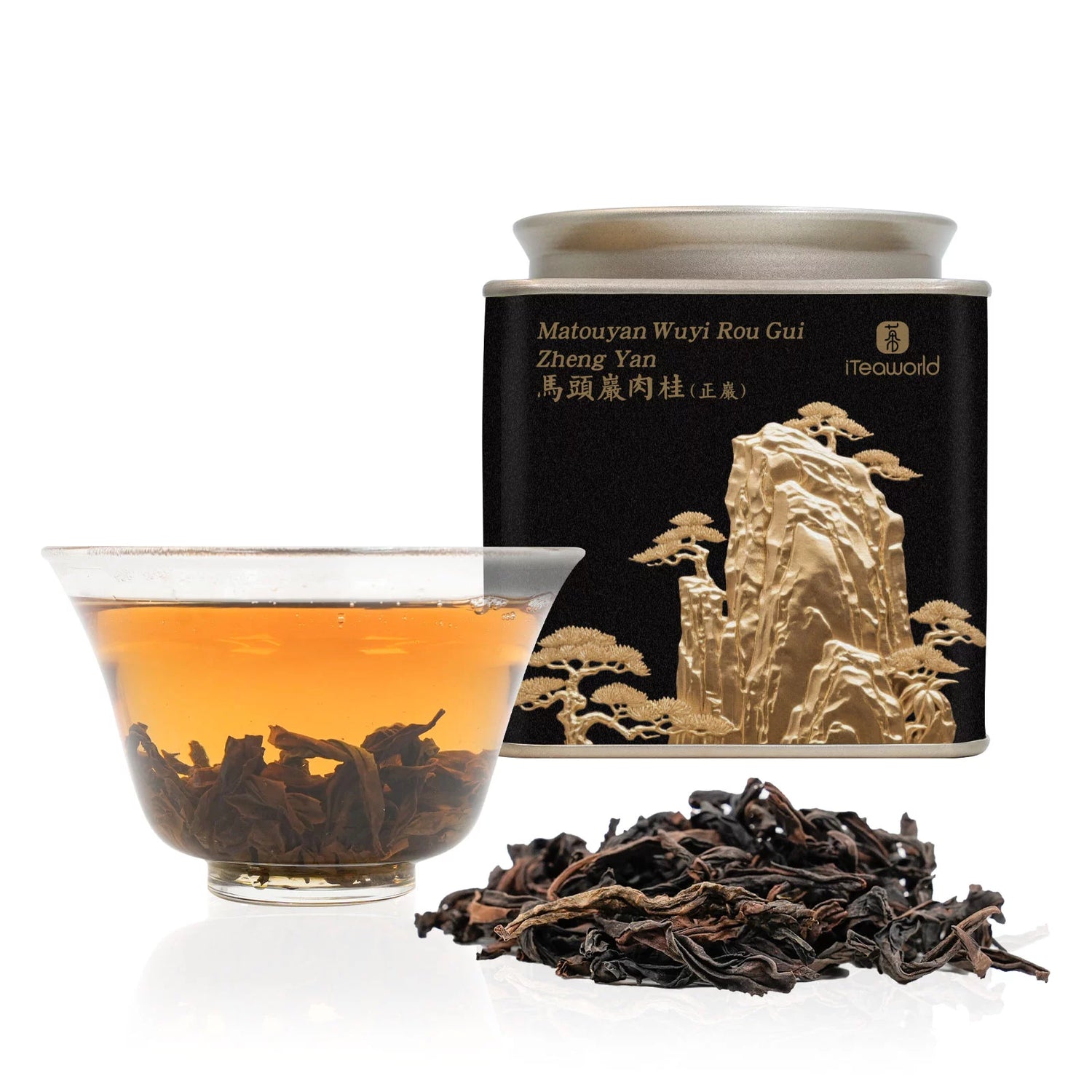
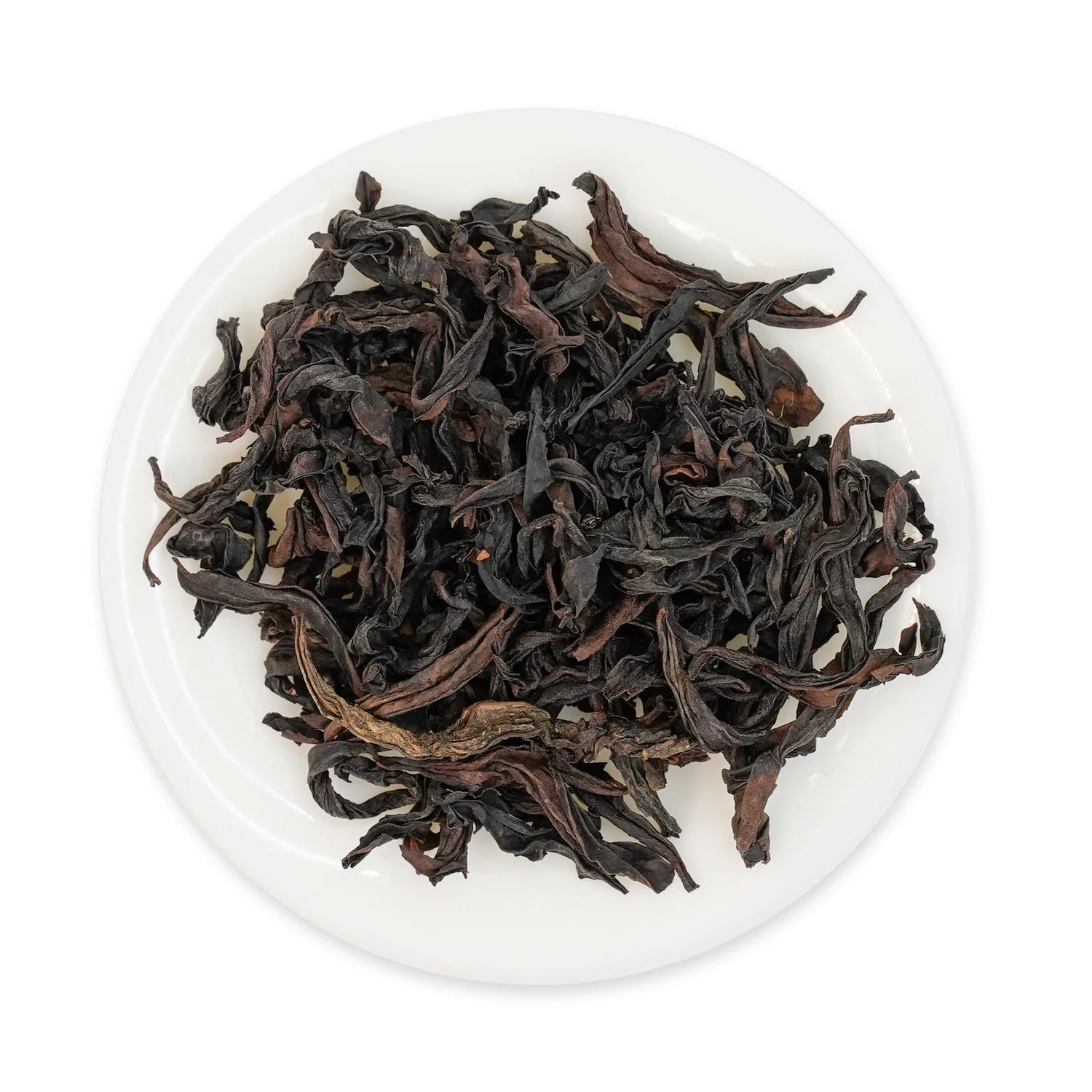
This Top Grade Rou Gui comes from Matouyan, one of the most celebrated terroirs within the core Zhengyan region of Wuyi Mountain. Renowned for producing rock teas with exceptional depth, structure, and mineral character, Matouyan is considered one of the finest origins for premium Wuyi rock tea.
This tea showcases the signature cinnamon-spice aroma that has made Rou Gui one of the most sought-after Wuyi cultivars. The dramatic canyon landscape, rocky cliffs, and unique microclimate of Matou Yan contribute to the tea's distinctive mineral-rich character and remarkable complexity.
The liquor is rich, full-bodied, and powerfully structured, with pronounced roasted notes balanced by lasting mineral depth and a long, satisfying finish. Bold yet refined, this Rou Gui delivers the commanding presence and layered character that experienced Yancha drinkers seek.
Ideal for those who appreciate traditional Wuyi rock teas with strong cinnamon aroma, robust body, pronounced roast, and the distinctive mineral character of top-tier Zhengyan terroir.


Yongchun Fo Shou is a distinctive Southern Fujian oolong tea from Yongchun County, prized for its bergamot-like fruity aroma and smooth, rich tea liquor.
This premium Fo Shou combines bright citrusy fruit notes with elegant floral aromatics, creating a highly recognizable and refreshing flavor profile. The tea liquor is silky, mellow, and naturally sweet, offering a smooth and comforting drinking experience.
Compared with more purely floral oolongs, Yongchun Fo Shou stands out for its unique citrus character reminiscent of bergamot and Buddha’s hand fruit, making it especially appealing to drinkers who enjoy fruit-forward oolong teas.
Local tea folklore tells of 17th-century monks inspired by fragrant citrus plants when cultivating this unique tea variety, adding a touch of legend to its distinctive personality.
Suitable for both hot brewing and cold brewing. An excellent choice for those who enjoy fruity, floral, and smooth oolong teas.
Recommended Purchase
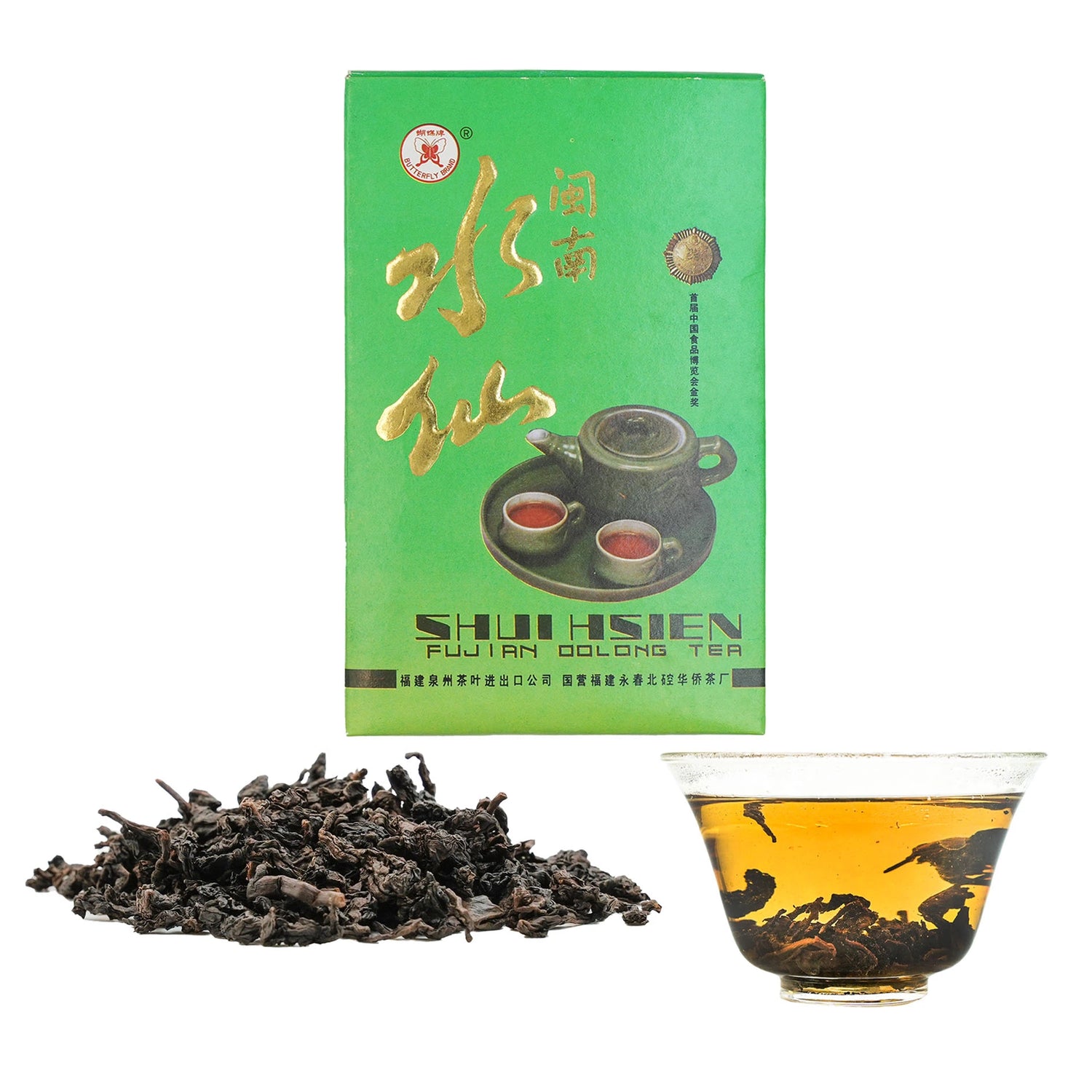
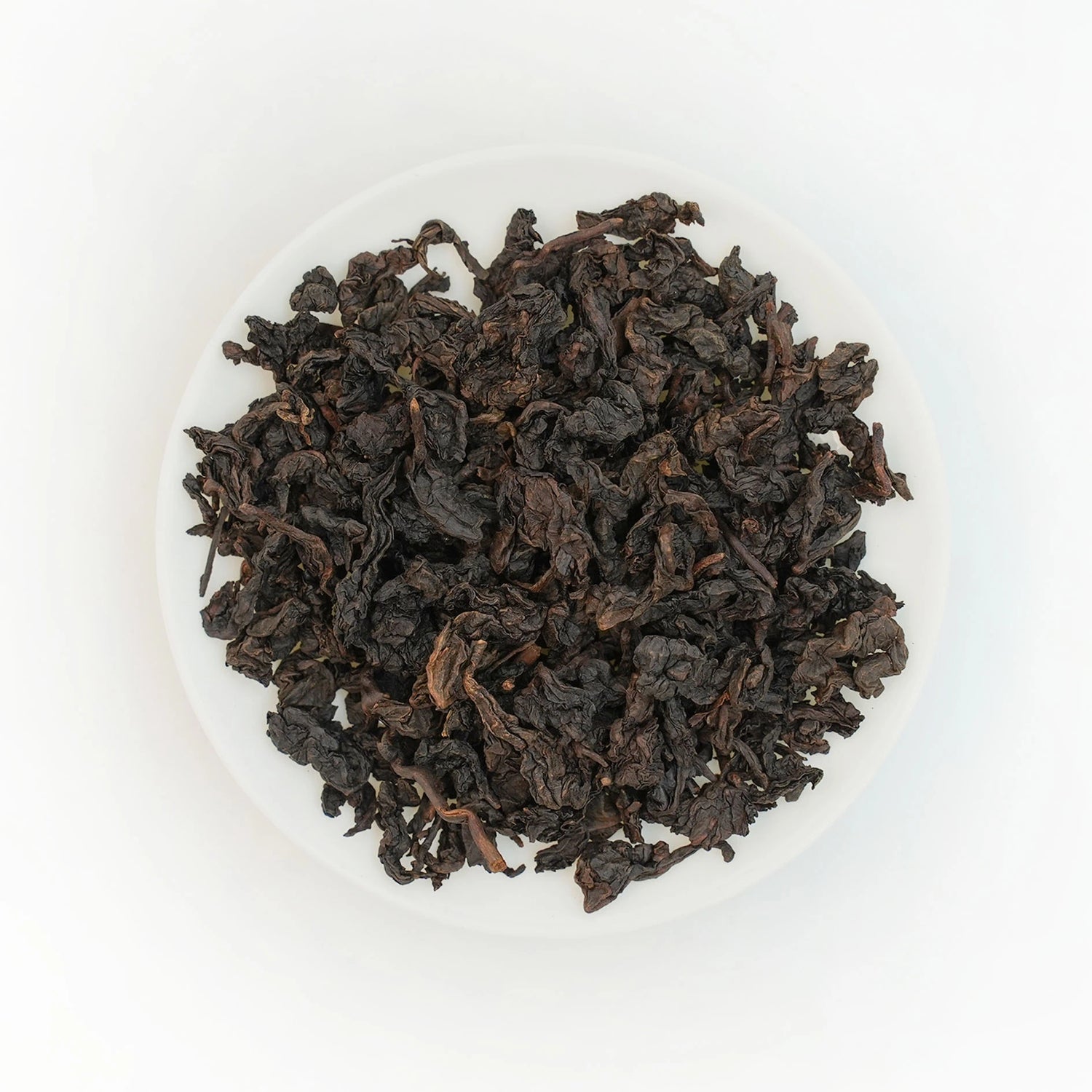
This Southern Fujian Shui Xian Oolong Tea, produced between 1993 and 1995 and aged for over 30 years in a dry warehouse under sealed conditions, is made from the Shui Xian (Narcissus) varietal sourced from Yongchun, Fujian—the birthplace of this tea. It was jointly produced by Quanzhou Tea Import & Export Company and the State-Owned Yongchun Kong Overseas Chinese Tea Factory in Fujian.
Processed using the Yongchun Shui Xian method, this tea is a classic example of Oolong tea, preserved in its original packaging. It is no longer available on the market. The tea exhibits a distinct aged aroma, accompanied by a subtle medicinal fragrance, with a sweet, mellow flavor and a smooth texture. Its excellent aging results make it a treasured choice for enthusiasts of aged Oolong tea.
Key Details about Southern Fujian Shui Xian
- Origin:Yongchun, Fujian Province, China
- Production Date:1993-1995
- Grade: First grade
- Tea Cultivar:Shui Xian
- Craftsmanship:This tea is processed into oolong tea using the Yong Chun Shui Xian method, with moderate fermentation. It has been naturally aged in a dry storage environment for over 30 years. The tea is packaged in its original sealed cardboard box, with an inner aluminum foil layer for additional protection.
- Flavor Highlights :The tea exhibits a distinct aged aroma, accompanied by a subtle medicinal fragrance. Its flavor is sweet and mellow, with a smooth texture, showcasing excellent aging effects.
What is Southern Fujian Shui Xian Tea?
Southern Fujian Shui Xian Tea originated in Northern Fujian and was introduced to Yong Chun during the Daoguang period of the Qing Dynasty. Over time, its processing techniques evolved by blending the characteristics of Northern and Southern Fujian oolong teas, resulting in a unique method that enhances the tea's durability for multiple infusions, intensifies its orchid-like aroma, and produces a bright yellow liquor with a sweet, mellow, and refreshing flavor. Beyond its exceptional taste, Southern Fujian Shui Xian Tea offers numerous health benefits, such as activating the autonomic nervous system, reducing stress, enhancing energy metabolism, breaking down fats, and lowering cholesterol, making it a cherished choice for both tea enthusiasts and health-conscious individuals.
Brewing and Enjoyment Tips
This tea showcases the unique transformation brought by time. The first infusion can be used as a "tea awakening" step to activate the tea's inner qualities, resulting in a richer, smoother texture and a more pronounced sweet aftertaste. For the best experience, we recommend using longer steeping times or boiling methods to fully unlock its aged characteristics.
Recommended Brewing Methods
Gaiwan Brewing :
- Capacity:110ml Gaiwan
- Water Temperature:100℃
- Brewing Times:5-7 times
- Tea Water Ratio:1:22
- Brewing Time Once:For brewing, begin with a quick rinse (1-2 seconds) and discard the liquid. For the first three infusions, steep the tea for just a few seconds and pour out immediately. After that, gradually extend each subsequent infusion by 5-10 seconds to adapt to the evolving flavor profile.
Storage Guidelines
To ensure the best quality of tea, the ideal way to store it is in vacuum-sealed packaging, kept in a cool, dark, and dry place. Avoid exposure to strong odors and air. For sealed storage, using a tin can or a double-lidded metal can is recommended. For even better results, you can store the sealed tea in the refrigerator or a dry storage container.
Weight & Packaging:
Weight : 4.4oz (125g)
Packing Type : Original paper box sealed packaging, inner aluminum film sealed packaging
About Yongchun Beikeng Overseas Chinese Tea Factory
Established in 1958, the state-owned Fujian Yongchun Beikeng Overseas Chinese Tea Factory carries a rich history and cultural heritage of tea production. At its peak, the factory was a bustling hub of innovation and craftsmanship, employing over 1,000 tea workers and producing millions of pounds of tea annually. Its teas, including Tieguanyin, were exported to Hong Kong, Taiwan, Japan, and Southeast Asia, earning widespread acclaim and becoming a shining symbol of Fujian's tea culture.
However, by the 1990s, the factory fell into decline, and its once-vibrant grounds grew quiet. Unable to bear seeing his life's work fade away, the veteran factory director, Huang Shenghou, took over after its privatization, dedicating himself to reviving the factory and preserving its tea-making legacy.
Today, the factory's aged Tieguanyin not only embodies decades of tea-making expertise but also continues to showcase the timeless charm of Yongchun's Tieguanyin. The story of the Fujian Yongchun Beikeng Overseas Chinese Tea Factory reflects the dedication and innovation of generations of tea artisans, and its aged Tieguanyin carries forward this remarkable legacy.


Recommended Purchase :
This Hei Zhuan Tea (Black Brick Tea), produced in 2011 and aged for 14 years in a dry northern warehouse, is made from authentic Gao Ma Er Xi dark raw tea through a process of steaming and compression. It is produced by Hunan Jiuyang Tea Co., Ltd. and meticulously crafted through steps including crushing, sifting, fermentation, steaming, machine pressing, and drying. This tea is no longer available on the market.
The brick features a smooth surface, clear patterns, well-defined edges, uniform thickness, and a glossy dark brown color. After years of aging, it develops a distinct aged aroma accompanied by woody notes, offering a rich, mellow flavor and a smooth, refined texture.This Hei Zhuan Tea was awarded the Special Gold Medal at the 2009 Shanghai Tea Expo, making it a classic masterpiece from Jiuyang Tea Factory.
Key Details about Hei Zhuan Tea Dark Tea :
- Origin:Anhua County, Hunan Province, China
- Production Date:2011
- Grade : First Grade
- Tea Cultivar :Gao Ma Er Xi Original Group Variety
- Craftsmanship :This Hei Zhuan Tea (Black Brick Tea) is made using Anhua dark raw tea as its base material. After the raw tea arrives at the factory, it undergoes a series of processes, including sifting, winnowing, crushing, and blending, to create a semi-finished product that meets strict standards for uniformity and purity. The semi-finished product is then further processed through steaming, pressing, roasting, and packaging to produce the final Black Brick Tea.
- Flavor Highlights :The tea exhibits a distinct aged aroma, accompanied by woody notes, with a rich, mellow flavor and a smooth, refined texture.
What is Hei Zhuan Tea Dark Tea?
Hei Zhuan Tea (Black Brick Tea) is named for its use of dark raw tea (Hei Mao Cha) as the primary material, which gives the tea its dark, glossy color, and its brick-like shape when compressed. The raw material is sourced from high-quality dark raw tea produced in tea factories in Anhua and other counties.
In the past, the raw material was divided into two types: surface tea (higher quality) and inner tea (lower quality). During compression, the lower-quality tea was pressed inside, while the higher-quality tea was used on the surface. However, since the early 1970s, the labor-intensive and time-consuming traditional process was streamlined. The tea is now blended in the appropriate ratio of surface and inner tea and compressed in a single step.
During production, the raw material is first sifted, shaped, winnowed, and cleaned. It is then blended in specific proportions. For machine pressing, the tea is sterilized using high-temperature steam, compressed under high pressure, inspected and trimmed, and slowly dried before being packaged into the final brick form.
When brewed, Hei Zhuan Tea yields a liquor the color of amber, with a rich, mellow flavor and a pure, clean aroma. Long-term consumption of this tea is believed to aid digestion, regulate metabolism, and provide health benefits and preventive effects for the body.
Brewing and Enjoyment Tips :
This tea embodies the unique transformation brought by time. The first infusion can serve as a "tea awakening" to activate the tea's inner qualities, enhancing its flavor profile. Hei Zhuan Tea (Black Brick Tea) is shaped like a brick. Before brewing, use a specialized brick tea knife or tea pick to gently break the brick into appropriately sized pieces. Avoid using excessive force to prevent damaging the tea leaves.
Recommended Brewing Methods :
Gaiwan Brewing :
- Capacity:100ml Gaiwan
- Water Temperature:100℃
- Brewing Times:5-7 times
- Tea Water Ratio:around 1:20(Adjust according to your own taste)
- Brewing Time Once:2-3 minutes(Adjust according to your own taste),The first time as a wake-up tea can take 3-5 seconds.
Boiling Method :
To brew Hei Zhuan Tea (Black Brick Tea), start with 10–15 grams of tea and 500 milliliters of water. Heat the water until it reaches a rolling boil, then add the tea. Once the water comes back to a boil, lower the heat to a gentle simmer and let it cook for 2 minutes. Turn off the heat, strain out the tea leaves, and serve it hot. If you prefer a lighter flavor, you can adjust the ratio to 1 part tea to 15 parts water (for example, 10 grams of tea to 150 milliliters of water) and follow the same steps.
For a Central Asian-inspired milk tea, brew the tea as described above. Then, mix the strained tea with milk in a 1:5 ratio (1 part milk to 5 parts tea). Add a pinch of salt to taste, stir well, and enjoy this creamy, savory drink.
Storage Guidelines :
To ensure the best quality of tea, the ideal way to store it is in vacuum-sealed packaging, kept in a cool, dark, and dry place. Avoid exposure to strong odors and air. For sealed storage, using a tin can or a double-lidded metal can is recommended. For even better results, you can store the sealed tea in the refrigerator or a dry storage container.
Weight & Packaging:
Weight : 35.3oz (1000g)
Packing Type : Original paper box sealed packaging, inner packaging made of kraft paper
About Hunan Jiuyang Tea Factory :
Hunan Jiuyang Tea Co., Ltd., founded in 1985, is rooted in Youzhou Ancient Town, the birthplace of Anhua Dark Tea. As a leading enterprise in Hunan's dark tea industry, Jiuyang has been dedicated to the dark tea sector for nearly four decades without interruption. Its headquarters is now located in Jiangnan Town, the birthplace of Qian Liang Tea (Thousand Taels Tea), and boasts over 5,000 acres of high-altitude organic tea gardens on glacial rock soil and a standardized production facility spanning more than 20,000 square meters.
Guided by the core philosophy of "heritage and innovation," Jiuyang has preserved the traditional craftsmanship of "Three Bricks" (e.g., Fu Brick, Hei Brick, Hua Brick), "Three Tips" (e.g., Tian Jian, Gong Jian, Sheng Jian), and Qian Liang Tea, while also developing over 100 modern dark tea products. The company has won numerous international and domestic quality awards and is committed to producing "premium dark tea" as a testament to its dedication to excellence. Jiuyang continues to promote Anhua Dark Tea culture on the global stage.


This fairness cup (gong dao bei) is fully handcrafted in Jingdezhen, China’s famed “porcelain capital.”
Its surface is decorated with traditional Chinese floral motifs, painted using the famille rose (fencai) enamel technique.
A fairness cup is used to control consistency when serving tea.
After pouring from a teapot or gaiwan, the liquor is gathered and mixed in the cup before being served to each guest.
This ensures that everyone enjoys tea with the same strength, flavor, and temperature.
The name “fairness cup” carries the idea of equality and respect—every guest is treated the same.
Material: Porcelain
Capacity: 200 mL
Dimensions: Height 7.7 cm; Max diameter at top: 9 cm
What is Tuanhua?
Tuanhua, also known as “ball-flower patterns,” doesn’t refer to any specific flower.
Instead, it’s a decorative style where flowers, fruits, and geometric elements are arranged within a circular outline, forming a compact “ball-like” motif.
The earliest versions date back to the Shang dynasty, appearing on bronze and white pottery.
By the Yongzheng period of the Qing dynasty, tuanhua became widely used in imperial porcelain—especially in famille-rose ware—and later spread to folk kilns, becoming a beloved decorative style.
Tuanhua designs are known for their lively, free layouts.
Circles of different sizes are arranged in seemingly casual yet harmonious compositions—sometimes single, sometimes overlapping in pairs or groups of three.
Often paired with colors like white, black, and celadon white, they create a light, balanced visual effect.
These motifs are commonly used on porcelain, clothing, and furniture, symbolizing reunion, prosperity, and completeness, carrying blessings of good fortune.


This tea mat features Chinese traditional tuanhua (round floral motifs). The pattern is elegant, with subtle flower-shaped embossing on the surface. The fabric feels soft and comfortable, and the edges are smooth, neat, and durable. Both sides can be used. The material is treated to be water-repellent, so spills do not seep in; a quick wipe leaves no tea stains. It fits easily into any setting and adds a touch of vintage luxury to the space.
Size: 65 cm (L) × 34 cm (W)
What is Tuanhua (团花)?
Tuanhua, also known as “ball-flower patterns,” doesn’t refer to any specific flower. Instead, it’s a decorative style where flowers, fruits, and geometric elements are arranged within a circular outline, forming a compact “ball-like” motif. The earliest versions date back to the Shang dynasty, appearing on bronze and white pottery. By the Yongzheng period of the Qing dynasty, tuanhua became widely used in imperial porcelain—especially in famille-rose ware—and later spread to folk kilns, becoming a beloved decorative style.
Tuanhua designs are known for their lively, free layouts. Circles of different sizes are arranged in seemingly casual yet harmonious compositions—sometimes single, sometimes overlapping in pairs or groups of three. Often paired with colors like white, black, and celadon white, they create a light, balanced visual effect. These motifs are commonly used on porcelain, clothing, and furniture, symbolizing reunion, prosperity, and completeness, carrying blessings of good fortune.


This Zhuni Teapot was handcrafted by Cai Songkai, a renowned Zhuni teapot master from Chaozhou. Made primarily from Zhuni clay, the teapot features an egg-shaped body, hence the name “Dragon Egg Teapot.”
In traditional Chinese culture, the egg symbolizes the origin of life and the primordial state of the universe — representing vitality and endless possibility. The dragon, on the other hand, is a symbol of good fortune and auspicious power. Together, the concept of the “Dragon Egg” conveys a blessing for prosperity, renewal, and good luck.
The artist’s name is engraved inside the lid and on the handle.
This teapot shape is ideal for high-aroma teas, especially Oolong teas such as Phoenix Dancong, Tieguanyin, and Dong Ding Oolong.
Capacity: 110 mL
What is a Zhuni Teapot?
Zhuni is a type of zisha clay, belonging to the “red clay” family, and is regarded as the finest and most delicate among them — often considered the “noble” or “gem” of zisha clay.
It has a low sand content and a fragile texture, making it prone to deformation or cracking during firing. Because of this, the yield rate is very low, and teapots made from it are known as Zhuni teapots.
Chaozhou Zhuni Master — Cai Songkai
Cai Songkai is a senior arts and crafts artist of Guangdong Province, a Chaozhou arts and crafts master, and a renowned folk ceramic artist.
With years of dedication to Zhuni pottery, he has developed a distinctive style that combines precise structure, smooth lines, and refined craftsmanship. His teapots are widely admired by collectors both in China and abroad, earning him a strong reputation in the field of Zhuni teapot making. His works have won multiple gold awards in major competitions.
Recently viewed products
Shop with Confidence at iTeaworld

Not satisfied? Get a full refund within 30 days — no return needed

Free tea samples with tea order
Buy 1 get 1 sample. Buy 2 get 2. Buy 3+ get 3 free sample