Sort by:
200 products
200 products
This gaiwan comes from Jingdezhen, the porcelain capital of China, and is fully handcrafted. Its surface is decorated with various traditional Chinese tuanhua motifs (Tuanhua) using the famille-rose (falangcai) enamel technique. The gaiwan itself is shaped like a traditional ingot, and the wide-rimmed design makes it comfortable to hold without burning your fingers. The overall look is refined and graceful, showcasing the beauty of Chinese porcelain craftsmanship.
Material: Ceramic
Capacity: 150 mL
Size: Height 9 cm, Width 9 cm
What is Tuanhua (团花)?
Tuanhua, also known as “ball-flower patterns,” doesn’t refer to any specific flower. Instead, it’s a decorative style where flowers, fruits, and geometric elements are arranged within a circular outline, forming a compact “ball-like” motif. The earliest versions date back to the Shang dynasty, appearing on bronze and white pottery. By the Yongzheng period of the Qing dynasty, tuanhua became widely used in imperial porcelain—especially in famille-rose ware—and later spread to folk kilns, becoming a beloved decorative style.
Tuanhua designs are known for their lively, free layouts. Circles of different sizes are arranged in seemingly casual yet harmonious compositions—sometimes single, sometimes overlapping in pairs or groups of three. Often paired with colors like white, black, and celadon white, they create a light, balanced visual effect. These motifs are commonly used on porcelain, clothing, and furniture, symbolizing reunion, prosperity, and completeness, carrying blessings of good fortune.
Scented tea isn’t made only with fresh flowers—aromatic leaves can be used as well. Sticky Rice Aroma Black Tea is a unique specialty from Yunnan, created by scenting Dianhong black tea with sticky rice aroma leaves.
These leaves carry a strong, natural sticky-rice fragrance. In Yunnan, they are often dried and used for tea, seasoning, or traditional remedies. Ethnic groups such as the Dai and Hani use them to clear heat and support digestion. Paired with black tea, which is known for warming the stomach, this blend is especially friendly for those with weak digestion.
This Sticky Rice Aroma Black Tea brings together the sweetness of Dianhong and the comforting sticky-rice fragrance of the leaves. Once brewed, you’ll first notice the rich, natural sticky-rice aroma. The tea tastes smooth, sweet, and full, without bitterness or roughness. The liquor is thick, silky, and a glowing orange-red, offering a warm and soothing feeling—perfect for autumn and winter.
Origin:Fengshan Township, Fengqing County, Yunnan Province
Tea Base / Number of Scenting Rounds:Yunnan Black Tea (Dianhong)/Second scenting
Tea Master:Zhang Guo‘an张国安
Processing Date:June 2025
Shelf Life:24 months
Brewing
Vessel: Porcelain gaiwan / glass cup / mug
Water: Purified, 95-100°C | 203-212°F
Gaiwan / Teapot:
5g per 100ml · 1-3 steeps:10-15 sec , add 5-7 sec after · Up to 7 infusions
Mug Brew:
1g per 100ml · 1st: 40s | 2nd: 60–90s | 3rd: 90–150s
Product Description:
This tea set is a Jun porcelain stemmed teacup, shaped like a wine glass, with a kiln-transmuted glaze in a starry-sky blue hue. The thick ceramic body provides thermal insulation, ideal for tea tasting.
Note: Each piece is handmade. The glaze result is unpredictable, ensuring no two pieces are exactly alike.
Key Information:
Artisan: Cui Xiaoning (崔小宁)
Dimensions: Mouth Width 6.9cm × Height 6.2cm
Capacity: 60ml
Weight: 77g
Jun Ware:
Jun ware is a rare Chinese ceramic art, once reserved for emperors. Its magic lies in kiln transmutation—each piece develops unique, unpredictable shades of blue, purple, and red during high-temperature firing. No two are ever alike, making every piece a one-of-a-kind masterpiece of fire and craftsmanship.
Recommended purchase:
For tea lovers: a handcrafted teaware that elevates the tea drinking experience.
For art collectors: a unique masterpiece that will never be replicated.
For interior design: an upgrade to any modern or classic space.
Artisan Profile:
Xiaoning Cui is a key inheritor of contemporary Jun porcelain craftsmanship. Born into a family of porcelain artisans in Shenhou Town, the heart of Jun porcelain, he was immersed in its culture from an early age. Trained under Yinjian Zhong, a Henan Provincial Ceramic Art Master, Cui spent over a decade systematically mastering traditional techniques such as wheel throwing and glazing. After further refining his skills at Huajin Jun Kiln, he gained comprehensive expertise in Jun porcelain firing. In 2019, he founded Qiande Jun Kiln, where he serves as Artistic Director, focusing on Jun porcelain teaware. His work blends classical kiln transmutation artistry with modern aesthetics, renowned for its elegant forms and vibrant glaze variations. Particularly in teaware design, he has developed a distinctive style. As both a practitioner and advocate of Jun porcelain’s intangible heritage, Cui continues to invigorate its tradition through kiln operation and technical innovation, ensuring its enduring legacy and evolution.
【 One of a Kind】Handmade Jun ware-purple blue glaze dragon head teapot-200ml
$109.99 USD
Unit price per【 One of a Kind】Handmade Jun ware-purple blue glaze dragon head teapot-200ml
$109.99 USD
Unit price perProduct Description:
This tea set is a Jun porcelain "Dragon Head" teapot. The handle of the teapot is shaped like a dragon, and the lid handle is designed in the form of a dragon’s head. The design is inspired by the dragon motifs found in the Hongshan culture, dating back to 6500-5000 BC. The color features a beautiful kiln change effect, resembling meteorites falling, with a blue-green base and a reddish-purple top. The bottom of the teapot is engraved with the "Jun Shang Yuan" logo.
Note: Each piece is handmade. The glaze result is unpredictable, ensuring no two pieces are exactly alike.
Key Information:
Studio: Shangyuan Jun
Artist: Yang Pengfei
Dimensions: Mouth width 3.8 cm(1.5in), height 10.6 cm(4.1in), length 12.5 cm(4.9in)
Capacity: 200 ml
Weight: 220 g(7.76oz)
Jun Ware:
Jun ware is a rare Chinese ceramic art, once reserved for emperors. Its magic lies in kiln transmutation—each piece develops unique, unpredictable shades of blue, purple, and red during high-temperature firing. No two are ever alike, making every piece a one-of-a-kind masterpiece of fire and craftsmanship.
Recommended purchase:
For tea lovers: a handcrafted teaware that elevates the tea drinking experience.
For art collectors: a unique masterpiece that will never be replicated.
For interior design: an upgrade to any modern or classic space.
Artisan Profile:
Pengfei Yang, a Henan Province Ceramic Art Master and Xuchang Arts and Crafts Master, is a leading figure in contemporary Jun porcelain teapot artistry and a distinguished representative of Central China's teapot culture.Trained under Kong Xiangqing, a Chinese Master of Arts and Crafts, Yang has dedicated over 20 years to perfecting Jun porcelain craftsmanship. In 2011, he founded Shangyuan Jun Kiln, pioneering the "Form-Glaze Integration" concept to revolutionize Jun porcelain teapot making. He overcame the traditional challenges of clay shrinkage and developed the unique "Square-Inch Kiln Transmutation" technique. By incorporating cultural elements from Liangzhu jade artifacts and Han-Wei bronzes into his teapot designs, he created masterpieces such as "Renhe Teapot" and "Han Tile Teapot," which have repeatedly won national honors like the China Arts and Crafts "Hundred Flowers Award."Yang advocates for a creative philosophy of "Function as the foundation, aesthetics as the expression," driving Jun porcelain’s transformation from display pieces to lifestyle art. Recognized as the "Innovator of Central China's Teapot Art," he seamlessly bridges millennia-old kiln traditions with modern tea culture, allowing Jun porcelain to shine with contemporary brilliance within the delicate space of a teapot.
Product Description:
This tea set is a Handmade Jun Ware Chinese Minimalist Kungfu Teapot, featuring a turquoise glaze with scattered yellow oil-drop patterns and a rounded, compact, and adorable design.
Note: Each piece is handmade. The glaze result is unpredictable, ensuring no two pieces are exactly alike.
Key Information:
Studio: Shangyuan jun
Author: Yang Pengfei
Size: mouth width 3.8cm, overall height 9cm, length 12.8cm
Capacity: 185ml
Weight: 214g (7.5oz)
Jun Ware:
Jun ware is a rare Chinese ceramic art, once reserved for emperors. Its magic lies in kiln transmutation—each piece develops unique, unpredictable shades of blue, purple, and red during high-temperature firing. No two are ever alike, making every piece a one-of-a-kind masterpiece of fire and craftsmanship.
Recommended purchase:
For tea lovers: a handcrafted teaware that elevates the tea drinking experience.
For art collectors: a unique masterpiece that will never be replicated.
For interior design: an upgrade to any modern or classic space.
Artisan Profile:
Pengfei Yang, a Henan Province Ceramic Art Master and Xuchang Arts and Crafts Master, is a leading figure in contemporary Jun porcelain teapot artistry and a distinguished representative of Central China's teapot culture.
Trained under Kong Xiangqing, a Chinese Master of Arts and Crafts, Yang has dedicated over 20 years to perfecting Jun porcelain craftsmanship. In 2011, he founded Shangyuan Jun Kiln, pioneering the "Form-Glaze Integration" concept to revolutionize Jun porcelain teapot making. He overcame the traditional challenges of clay shrinkage and developed the unique "Square-Inch Kiln Transmutation" technique. By incorporating cultural elements from Liangzhu jade artifacts and Han-Wei bronzes into his teapot designs, he created masterpieces such as "Renhe Teapot" and "Han Tile Teapot," which have repeatedly won national honors like the China Arts and Crafts "Hundred Flowers Award."
Yang advocates for a creative philosophy of "Function as the foundation, aesthetics as the expression," driving Jun porcelain’s transformation from display pieces to lifestyle art. Recognized as the "Innovator of Central China's Teapot Art," he seamlessly bridges millennia-old kiln traditions with modern tea culture, allowing Jun porcelain to shine with contemporary brilliance within the delicate space of a teapot.
Tea Towel for Gongfu Tea Ceremony – Soft Cloth for Teapot and Teacup Cleaning
From $6.99 USD
Unit price perTea Towel for Gongfu Tea Ceremony – Soft Cloth for Teapot and Teacup Cleaning
From $6.99 USD
Unit price perThe tea towel, usually square or rectangular, is an important cleaning tool during tea preparation. It’s used to wipe the teapot, teacups, or any water stains on the tea mat, keeping the tea space neat and graceful.
Sizes:
Solid Color Tea Towel:
Square: 28 × 28 cm
Rectangular: 38 × 11 cm
*All sizes are measured by hand, and a margin of error of ±1 cm may occur.
Jingdezhen Blue and White Teacup – Hand-Painted Peach Pattern – Only One Available (80ml)
$46.99 USD
Unit price perJingdezhen Blue and White Teacup – Hand-Painted Peach Pattern – Only One Available (80ml)
$46.99 USD
Unit price perProduct Description:
This tea set is a Jingdezhen hand-painted pastel peach tea cup, which uses fine brushwork and has a fine quality. The porcelain is thin, smooth and transparent, and can well present the color of the tea soup.
Key Information:
Origin: Jingdezhen
Size: 6cm wide, 5cm high
Capacity: 80ml
Weight: 47g
Blue-and-white porcelain:
Blue-and-white porcelain (Qinghauci), a gem of Chinese ceramic art, boasts a history spanning over a thousand years, originating in the Tang Dynasty and reaching its zenith during the Yuan, Ming, and Qing dynasties. Crafted on a white porcelain base with cobalt-blue pigments to create intricate patterns, it stands as one of China’s most iconic ceramics.
Renowned domestically and globally, blue-and-white porcelain graces museums and luxury art markets. Its distinctive designs—from floral motifs to landscape scenes—carry auspicious symbols of harmony. Each blue-and-white tea set transcends utility, embodying artistic mastery and the profound cultural heritage of traditional Chinese craftsmanship.
Recommended purchase:
For tea lovers: a handcrafted teaware that elevates the tea drinking experience.
For art collectors: a unique masterpiece that will never be replicated.
For interior design: an upgrade to any modern or classic space.
Jingdezhen Blue & White Porcelain Teapot – Hand-Painted – Only One in Stock (140ml)
$169.99 USD
Unit price perJingdezhen Blue & White Porcelain Teapot – Hand-Painted – Only One in Stock (140ml)
$169.99 USD
Unit price perProduct Description:
This tea set is an antique Jingdezhen teapot. It is hand-painted with a picture of a pine tree admiring the moon, with detailed carvings, and the bottom is carefully polished to avoid damaging the countertop. It is handwritten and signed, and the quality is guaranteed. It is fired at high temperature, with a uniform and translucent glaze, thick glaze, and a simple and elegant overall look.
Key Information:
Origin: Jingdezhen
Size: Width 11.5cm, Height 9.5cm
Capacity: 140ml
Weight: 153g
Blue-and-white porcelain:
Blue-and-white porcelain (Qinghauci), a gem of Chinese ceramic art, boasts a history spanning over a thousand years, originating in the Tang Dynasty and reaching its zenith during the Yuan, Ming, and Qing dynasties. Crafted on a white porcelain base with cobalt-blue pigments to create intricate patterns, it stands as one of China’s most iconic ceramics.
Renowned domestically and globally, blue-and-white porcelain graces museums and luxury art markets. Its distinctive designs—from floral motifs to landscape scenes—carry auspicious symbols of harmony. Each blue-and-white tea set transcends utility, embodying artistic mastery and the profound cultural heritage of traditional Chinese craftsmanship.
Recommended purchase:
For tea lovers: a handcrafted teaware that elevates the tea drinking experience.
For art collectors: a unique masterpiece that will never be replicated.
For interior design: an upgrade to any modern or classic space.
Jin Mudan (Golden Peony) was developed by the Tea Research Institute of Fujian Academy of Agricultural Sciences between 1978 and 2002 through hybridization of Tieguanyin (female parent) and Huang Ti (Huang Jingui, male parent). Its name comes from the dark, glossy appearance of the dry leaves and the golden color of the leaf buds. Jin Mudan combines the “flavor” of Tieguanyin and the “fragrance” of Huang Jingui.
This Jin Mudan features a vivid, rich aroma with floral notes blending orchid and honey fragrance, which lingers even in a cold brew. The liquor is full-bodied, smooth, and delicate, with a distinct mineral taste ( rock rhyme ) and a long-lasting finish. It is often used to enhance the aroma when blending Da Hong Pao or enjoyed as a high-fragrance single-origin tea.
Origin: Jingshui Village, Xingcun Town, Wuyishan City, Fujian Province, China
Category: Ban Yan (mid-mountain, 400–600 m)
Soil: Gravel soil
Variety: Jin Mudan
Producer: Chen Hui
Harvest Time: November 2024
Shelf Life: 36 months
Brewing Guide
-
Water Temperature: 100°C (212°F)
-
Brewware: Gaiwan, Yixing clay teapot
-
Tea-to-Water Ratio: 5–7 g per 100 ml
-
1st–3rd Infusions: 8–15 seconds
-
Later Infusions: Add 5–10 seconds each time
Wuyi Rougui is one of the most famous varieties of Wuyi Rock Tea, named for its sharp, cinnamon-like aroma.
This Wuyi Rougui is medium charcoal-roasted. While its aroma and complexity are slightly less pronounced than core Zhengyan Rougui, the cinnamon fragrance is sharp and direct, filling the nose with the first infusion. The flavor is rich and full-bodied, with a slightly stimulating character and a touch of bitterness in the liquor. The sweet aftertaste and mouthwatering effect appear quickly, accompanied by a noticeable mineral character.
Compared to core Zhengyan Rougui, this Wuyi Rougui is an excellent choice for beginners exploring Rock Tea. It offers high value while retaining the distinctive features of Wuyi Rock Tea.
Origin: Jingshui Village, Xingcun Town, Wuyishan City, Fujian Province, China
Category: Ban Yan (mid-mountain)
Soil: Gravel soil
Variety: Wuyi Rou Gui
Producer: Chen Hui
Harvest Time: November 2024
Shelf Life: 36 months
Phoenix Lang Cai Oolong | The Hidden Hermit of Guangdong Teas
A bold and rare oolong born in the misty peaks of Phoenix Mountain, Guangdong.
Phoenix Lang Cai (浪菜), literally meaning “tossed greens,” is a traditional and lesser-known style of Chaozhou oolong tea. Crafted at altitudes above 600 meters from heirloom Phoenix Shui Xian tea trees, this tea bridges the flavor spectrum between high-fragrance Dancong and lighter Phoenix Shui Xian.
Tasting Notes
Expect an aromatic profile built on woody base notes, layered with wild honey, moss, and a distinct mineral “rock rhyme” (岩韵). The liquor is bright amber-orange. First sips are sweet and powerful, followed by a long, smooth aftertaste with a hint of wildflower nectar. This is not a delicate tea—it is bold, rustic, and grounding, with a raw mountain energy.
Origin: Phoenix Mountain, Chaozhou, Guangdong, China
Cultivar: Phoenix Shui Xian group cultivar
Elevation: 600–800m
Crafting: Hand-tossed “Lang Qing” + medium charcoal roast
Storage: Best within 36 months in cool, dry conditions
What Makes Lang Cai Special?
In Chaozhou tea-making, “Lang Cai” refers to the traditional process of “Lang Qing”—gently tossing the tea leaves during oxidation to stimulate natural fermentation. This labor-intensive process lasts 8–12 hours and is done entirely by hand, often at night. Lang Cai teas sit between:
-
Dancong (highly aromatic, single-bush teas)
-
Phoenix Shui Xian (mild, lightly oxidized teas)
Lang Cai retains traditional craft elements—nighttime processing, hand-tossing, and charcoal roasting—all of which deepen its flavor complexity.
Why You’ll Love This Tea
-
If you enjoy teas with character – Lang Cai offers an earthy, grounding experience unlike the floral lightness of other oolongs.
-
If you're exploring the Guangdong oolong spectrum – This tea is a must-try, offering a “middle ground” between delicate and robust.
-
If you appreciate craft and terroir – Lang Cai reflects the minerals, mists, and time-honored methods of Phoenix Mountain more directly than any other style.
“Dancong is for aroma, Lang Cai is for structure, Shui Xian is for clarity.” – Chaozhou tea saying
Brewing Recommendations
Traditional Gongfu Style (Recommended):
-
Teaware: Gaiwan or small teapot (100–150ml)
-
Tea Amount: 5g
-
Water Temperature: 95–100°C (203–212°F)
-
Rinse: Quick rinse to awaken the leaves
-
Infusions: 6–8+ steeps, starting at 10 seconds
This method will bring out the layered aroma and long-lasting finish.
Western-style Brewing:
-
Teapot or infuser mug: 2g per 200ml
-
Temperature: 95°C / 203°F
-
Steep Time: 1-3 minutes
-
Suitable for 2–3 infusions
Who Is It For?
-
Intermediate to advanced tea drinkers looking to deepen their understanding of Chinese oolongs
-
Dancong lovers who want something more grounded and robust
-
Wuyi rock tea fans seeking a Guangdong counterpart with similar mineral complexity
-
Explorers of terroir and traditional craft
-
Recommended Purchase
This Yunnan Pu'er Tuo Tea, produced in 2003 and aged for 22 years in a dry northern warehouse, is crafted from Yunnan large-leaf tea varietals harvested in the region's primary tea-growing areas. It is a premium Tuo Tea produced by Menghai Tea Factory in Yunnan Province, renowned for its exquisite material selection and meticulous craftsmanship. This tea is no longer available on the market.
The tea has a unique bowl-shaped appearance, with a distinct aged aroma and a rich, complex profile. Its flavor is mellow, refreshing, and smooth, with a sweet, velvety texture and a long-lasting aftertaste. This rare and highly sought-after tea is a classic early Dayi (Menghai) masterpiece, cherished by collectors and connoisseurs alike.
Key Details about Yunnan Pu'er Tuo Tea 2003
- Origin:Xishuangbanna, Yunnan Province, China
- Production Date:2003
- Grade: First grade
- Tea Cultivar:Yunnan Large-Leaf Varietal
- Craftsmanship:Using handpicked tea leaves as the raw material, the fresh leaves are processed through withering, fixing, rolling, and sun-drying to create sun-dried tea. The sun-dried tea is then steamed and pressed into the shape of Pu'er Tuo Tea. Finally, the tea undergoes 22 years of natural aging in a dry storage environment, allowing it to develop its unique character and depth.
- Flavor Highlights :The tea exhibits a distinct aged aroma, with a rich and complex profile. Its flavor is mellow, refreshing, and smooth, with a velvety texture, high sweetness, and a long-lasting aftertaste.
What is Yunnan Pu'er Tuo Tea?
Yunnan Pu'er Tuo Tea is a traditional and distinctive tea from Yunnan Province, known for its unique shape, resembling a thick-walled bowl with a concave center. It is tightly compressed and neatly formed, made from Pu'er tea as the raw material.
Dark Tea Tuo Tea is further divided into two types:
Raw Tuo (Sheng Tuo): Compressed directly from sun-dried raw tea leaves, featuring a dark, glossy color, a fresh aroma, and a sweet aftertaste.
Ripe Tuo (Shou Tuo): Fermented through artificial pile fermentation, resulting in a reddish-brown color and a rich, mellow flavor.
Pu'er Tuo Tea has a long history, with records dating back to the Ming Dynasty in the book "Dian Lue." In 1986, the 100-gram Tuo Tea produced by Yunnan Xiaguan Tea Factory won the Golden Rooster Award in Paris, France.Modern research has confirmed its significant health benefits. Clinical trials by French and Chinese medical institutions have shown that it can reduce blood lipids and cholesterol, and assist in treating obesity, hypertension, and arteriosclerosis.The tea's liquor is known for its enduring color, aroma, and flavor, combining cultural heritage with health-promoting properties. It has gained international acclaim for its unique qualities.
Brewing and Enjoyment Tips
This tea embodies the unique transformation brought by time. The first infusion can serve as a "tea awakening" to activate the tea's inner qualities, enhancing its flavor profile.Tuo Tea is a type of compressed tea. Before brewing, use a specialized tea knife or tea pick to gently break the Tuo Tea into appropriately sized pieces. Avoid using excessive force to prevent damaging the tea leaves.
Recommended Brewing Methods
- Capacity:100ml Gaiwan
- Water Temperature:90-100℃
- Brewing Times:7-8 times
- Tea Water Ratio:around 1:20(Adjust according to your own taste)
- Brewing Time Once:10-20 seconds(Adjust according to your own taste),The first time as a wake-up tea can take 3 seconds.
Storage Guidelines
To ensure the best quality of tea, the ideal way to store it is in vacuum-sealed packaging, kept in a cool, dark, and dry place. Avoid exposure to strong odors and air. For sealed storage, using a tin can or a double-lidded metal can is recommended. For even better results, you can store the sealed tea in the refrigerator or a dry storage container.
Weight & Packaging
Weight : 3.5oz (100g)/8.8oz(250g)
Packing Type : Kraft paper packaging
About Menghai Tea Factory
Menghai Tea Factory is a benchmark enterprise in the Pu'er tea industry. Established in 1940 in Menghai County, Xishuangbanna, Yunnan—the birthplace of tea trees and a core production region for Pu'er tea—it is the oldest professional tea company in Yunnan. The factory integrates cultivation, processing, and sales, and its flagship brand, "Dayi," offers hundreds of varieties, including Pu'er tea, black tea, and green tea. Its representative products, 7572 Ripe Cake and 7542 Raw Cake, are widely recognized as the gold standard for Pu'er tea quality.
The factory has made outstanding contributions to the modern development of Pu'er tea: it pioneered and first applied artificial post-fermentation aging technology, driving innovation in Pu'er tea processing. It also led the large-scale production of Yunnan Seven Sons Cake Tea, establishing a classic form in the industry. Today, the factory owns a 380-acre modern processing facility and two 10,000-acre eco-tea garden bases in Bada and Bulang Mountain, creating a comprehensive industry chain.
With its deep historical roots and technological innovation, Menghai Tea Factory continues to lead the development of the Pu'er tea industry. Its products are highly valued for both drinking and collecting, earning global acclaim from consumers.
Recommended Purchase
Key Details about Yiwu Raw Cake Tea
- Origin:Yiwu, Yunnan Province, China
- Production Date:2010
- Grade: First grade
- Tea Cultivar:Yunnan Large-Leaf Varietal
- Craftsmanship:This tea is made from sun-dried raw tea leaves of the Yunnan large-leaf varietal, processed through traditional methods including withering, rolling, kneading, pressing, and high-temperature steaming, to create a refined product. It is then naturally aged in a dry storage environment for 15 years, allowing it to develop its unique character and depth.
- Flavor Highlights:The tea offers a high, enduring aroma, a rich and mellow flavor, a sweet and refreshing aftertaste, and excellent durability for multiple infusions.
What is Yiwu Raw Cake Tea ?
Yiwu Raw Cake Tea is a classic masterpiece in the world of Pu'er tea. It is crafted from sun-dried raw tea leaves harvested from ecological arbor tea trees in the Yiwu tea region during the early spring season, with raw materials sourced from premium growing areas. The tea cake features a dark green to black color, with a moderate compression level, clearly visible tea strands, and a thick, soft, and evenly vibrant brewed leaf.
Yiwu Raw Cake Tea inherits generations of traditional tea-making craftsmanship, combining a delicate yet robust character with the potential to improve with age, becoming more fragrant over time. It is a timeless classic, shaped by both the passage of time and the dedication of skilled tea artisans.
Brewing and Enjoyment Tips
This tea embodies the unique transformation brought by time. The first infusion can serve as a "tea awakening" to activate the tea's inner qualities, enhancing its rich and mellow flavor. For the best experience, it is recommended to use traditional brewing methods to fully release its aged characteristics.
Recommended Brewing Methods
Gaiwan Brewing
- Capacity:100ml Gaiwan
- Water:Mineral Water or Purified Water
- Water Temperature:100℃
- Brewing Times:7-8 times
- Tea Water Ratio:Around 7:100(Adjust according to your own taste)
- Brewing Time Once:Around 5 seconds(Adjust according to your own taste)It is recommended to discard the first two infusions and start drinking from the third infusion.
Storage Guidelines
To ensure the best quality of tea, the ideal way to store it is in vacuum-sealed packaging, kept in a cool, dark, and dry place. Avoid exposure to strong odors and air. For sealed storage, using a tin can or a double-lidded metal can is recommended. For even better results, you can store the sealed tea in the refrigerator or a dry storage container.
Weight & Packaging
Weight : 12.6oz (357g)
Packing Type : Paper packaging
Recommended Purchase
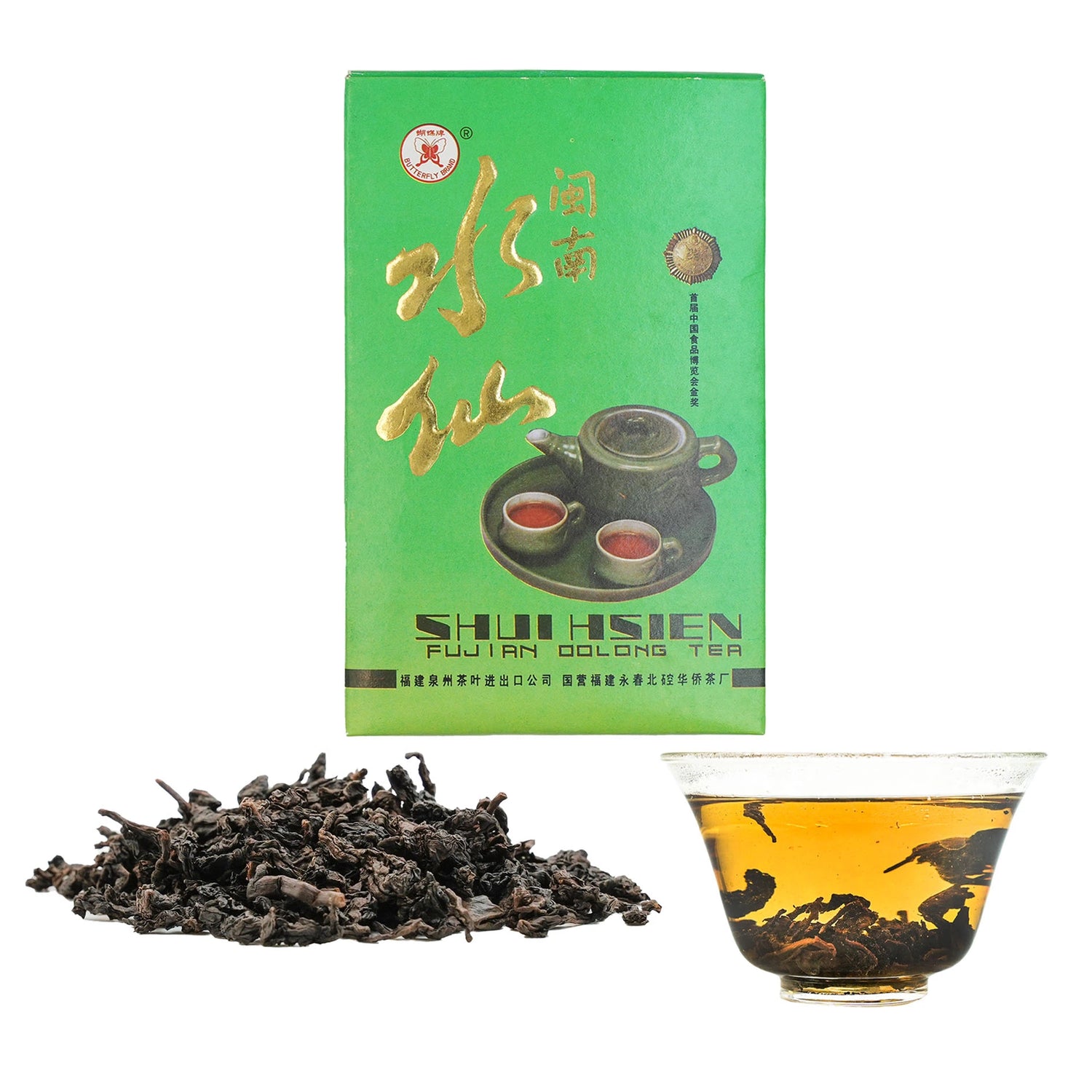
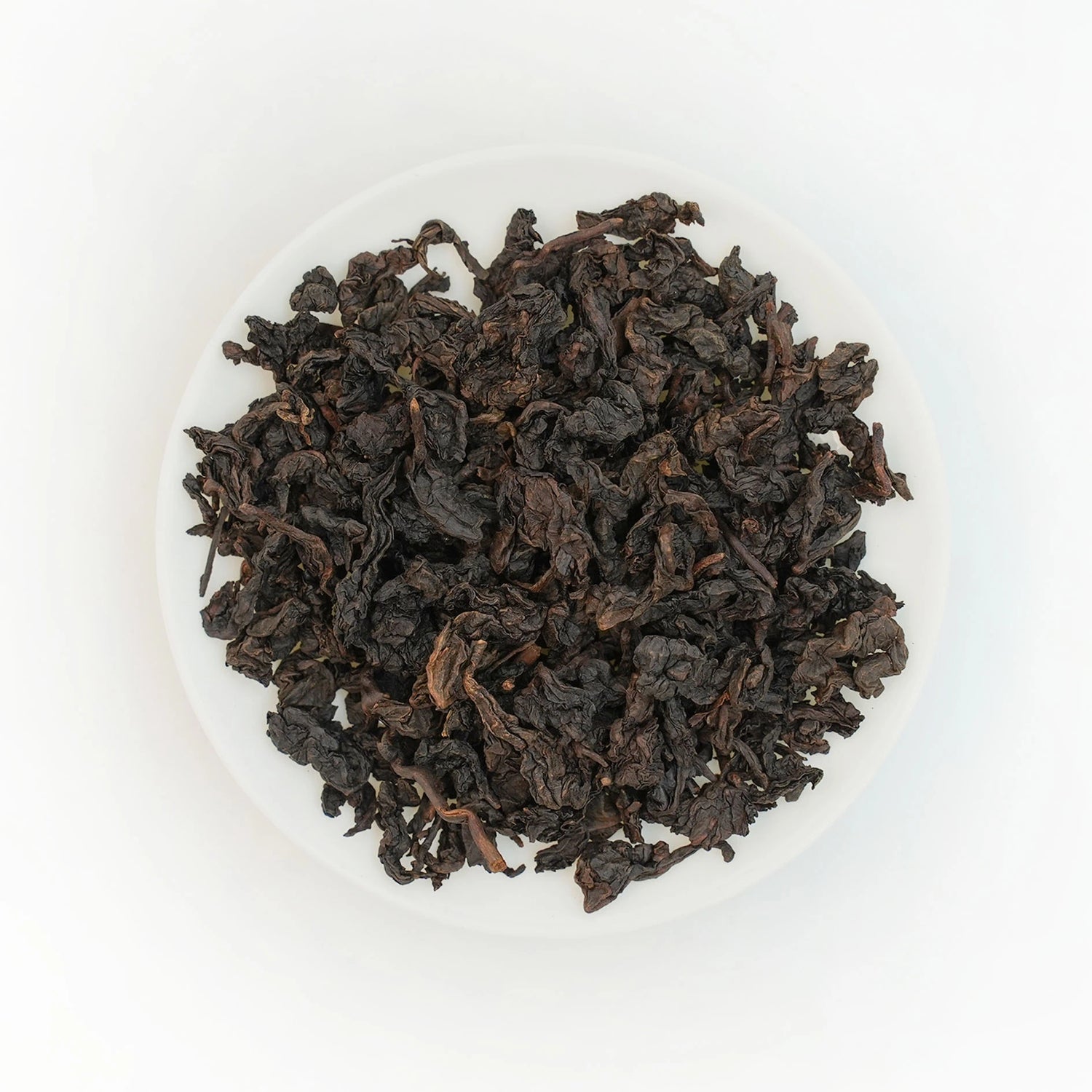
This 1993 Aged Min Nan Shui Xian Oolong Tea is crafted from the Shui Xian tea cultivar, grown in Fujian, China. Produced by the renowned Yongchun Beikeng Overseas Chinese Tea Factory, which was established in 1917. This tea has been naturally aged in dry storage for 33 years, developing a unique blend of sweet aged aroma and medicinal fragrance. With a smooth, thick mouthfeel and a lingering sweetness, it is ideal for those who appreciate the depth of aged teas. The traditional high-temperature roasting and medium oxidation enhance its warming characteristics. This product is in its original packaging and is no longer in circulation on the market.
Key Details about 1993 Aged Min Nan Shui Xian
Origin: Yongchun, Fujian Province, China
Production Date: 1993
Grade: Second Grade
Tea Cultivar: Shui Xian
Craftsmanship: Traditional high-fire roasting, medium oxidation, light rolling
Flavor Highlights: Sweet aged aroma with medicinal fragrance, thick and smooth taste, long-lasting aftertaste
Storage: Naturally dry-aged, sealed packaging for optimal preservation
What is Min Nan Shui Xian Oolong Tea?
Min Nan Shui Xian is a Southern Fujian-style Oolong tea, known for its rich fragrance, mellow body, and lasting sweetness. Compared to Wuyi Shui Xian, it undergoes less oxidation, resulting in a softer and smoother profile. After decades of aging, this 1993 batch has developed an aged sweetness, medicinal notes, and a thick, velvety texture, making it a highly sought-after selection among aged tea connoisseurs.
Recommended Brewing Methods:
Gaiwan Brewing:
100ml Gaiwan
95℃-100℃
5-7 times
1:15 to 1:25
10~20 seconds
Thermos Brewing :
1g tea per 100ml (3.4oz) water.
Use boiling water (212°F).
Steeping Time: 1-2 hours.
Tool: Insulated thermos.
Boiling Method :
Add 1g tea per 100ml (3.4oz) water.
Boil for 1-2 minutes, then let sit for 2-3 minutes.
Rebrew by boiling 3 minutes longer with each steeping.
Use a ceramic or glass teapot for optimal flavor.
Enjoy up to 3-4 brews.
Storage Guidelines
Store this tea in a dry, cool environment with a humidity level below 45% and temperature below 25°C (77°F). Keep it away from strong odors, light, and air exposure. Proper storage ensures the tea retains its flavor and continues to age gracefully over time.
Weight & Packaging
Net Weight: 100g (3.5oz)
Packing Type: Original sealed paper box with inner aluminum foil bag
About Yongchun Beikeng Overseas Chinese Tea Factory
Founded in 1917, the Yongchun Beikeng Tea Factory has a rich history of producing high-quality teas. Once a bustling hub of innovation and craftsmanship, the factory was home to over 1,000 tea workers at its peak, producing millions of pounds of tea annually. The factory's products, including Min Nan Shui Xian, were highly sought after in Hong Kong, Taiwan, Japan, and Southeast Asia.
Just as many state-owned old factories have experienced ups and downs, in the 1990s, the tea factory once fell into a slump, and the once bustling factory area gradually became desolate. The former factory director, Huang Shenghou, who had created its greatest glory and witnessed its decline, couldn't bear to see it and took over the factory personally after its privatization.
Today, this aged Min Nan Shui Xian Oolong tea stands as a flavorful tribute to the factory's storied past and the enduring legacy of traditional Chinese tea-making.
Recommended Purchase :
This product, originating from 2003, is a type of brick tea known as Mi Zhuan Tea, which has been stored in a dry warehouse in the north for 22 years. It is made from high-quality black tea through a process of steaming and pressing. Produced by the renowned Zhao Li Qiao Tea Factory in Hubei Province, it is meticulously crafted according to traditional processing techniques. The tea leaves used as raw material are as fine as grains of rice, hence the name "Mi Zhuan" (Rice Brick). This tea is no longer available on the market. The brick surface exhibits a dark, glossy color with exquisite patterns and distinct edges. The brewed tea presents a deep red, bright liquor with a pronounced medicinal aroma and a mellow, harmonious flavor, making it a coveted choice for enthusiasts of aged dark tea.
Key Details about Mi Zhuan Tea Dark Tea :
- Origin : Chibi City, Hubei Province, China
- Production Date :2003
- Grade : Special Grade
- Tea Cultivar :Yichang large leaf tea
- Craftsmanship : Mi Zhuan Tea is produced following the manufacturing principles of Qing Brick Tea, using finely broken black tea leaves as raw material. The process involves screening, blending, compressing, demolding, inspecting, drying, and packaging. This tea has been naturally aged for 22 years in a dry warehouse environment and is wrapped in paper packaging.
- Flavor Highlights :It exhibits a prominent medicinal aroma, with a rich, deep red liquor. The taste is mellow and smooth, offering complex and layered flavors.
What is Mi Zhuan Tea Dark Tea?
Mi Zhuan Tea (Rice Brick Tea) is a unique compressed tea produced in Yangloudong, an ancient town in Chibi City, Hubei Province, known as the "Hometown of Chinese Brick Tea." It is a type of compressed tea—specifically, a brick tea. The tea leaves used as raw material are as fine as grains of rice, hence the name "Mi Zhuan" (Rice Brick Tea).
The finished product is visually striking, with well-defined edges, elegant surface patterns, and a glossy, dark surface. When brewed, the tea yields a deep red liquor with a pure, mellow aroma and a rich, full-bodied flavor.
Traditionally, Mi Zhuan Tea was consumed by people living in cold climates due to its high vitamin content, which helps compensate for the lack of fresh fruits and vegetables during winter. It is primarily sold in Xinjiang and North China, with some exports to Russia and Mongolia. In recent years, small quantities have also made their way to Europe and America, making it a distinctive and exceptional red brick tea among Chinese brick teas.
Brewing and Enjoyment Tips
This tea embodies the unique transformation brought by time. The first infusion can serve as a "tea awakening" to activate the tea's inner qualities, enhancing its flavor profile. Mi Zhuan Tea (Rice Brick Tea) is shaped like a brick. Before brewing, use a specialized brick tea knife or tea pick to gently break the brick into appropriately sized pieces. Avoid using excessive force to prevent damaging the tea leaves.
Recommended Brewing Methods :
Gaiwan Brewing
- Capacity:100ml Gaiwan
- Water Temperature:95℃-100℃
- Brewing Times:5-7 times
- Tea Water Ratio:around 1:25(Adjust according to your own taste)
- Brewing Time Once:10~20 seconds(Adjust according to your own taste),The first time as a wake-up tea can take 3-5 seconds.
Boiling Method
Place the broken pieces of Mi Zhuan Tea (Rice Brick Tea) into a tea infuser and add them to a tea kettle. Use a tea-to-water ratio of approximately 1:150, starting with cold water. Bring the water to a boil, then let it steep for 1 to 2 minutes before drinking. Remove the tea infuser from the kettle to prevent the tea from becoming overly strong.
For subsequent infusions, follow the same method. One tea infuser can be used for 3 to 4 brews.
Storage Guidelines :
To ensure the best quality of tea, the ideal way to store it is in vacuum-sealed packaging, kept in a cool, dark, and dry place. Avoid exposure to strong odors and air. For sealed storage, using a tin can or a double-lidded metal can is recommended. For even better results, you can store the sealed tea in the refrigerator or a dry storage container.
Weight & Packaging:
Weight : 35.3oz (1000g)
Packing Type : Paper packaging
About Hubei Zhaoliqiao Tea Factory
Zhao Li Qiao Tea Factory in Hubei Province is a leading enterprise in China’s border-sale tea (brick tea) industry, with an annual production capacity exceeding 10,000 tons. Its history dates back to the Xianfeng period of the Qing Dynasty (1861), when its predecessor, Yangloudong Brick Tea Factory, gained fame for its "Dong Tea." In 1953, the factory relocated to Zhao Li Qiao Town in Chibi City and adopted its current name.
As a "Time-Honored Chinese Brand" and a "National Benchmark Enterprise," the factory has preserved centuries-old craftsmanship. It specializes in producing distinctive brick teas such as Qing Zhuan, Mi Zhuan, Fu Zhuan, and Lü Zhuan . Renowned for its high-quality raw materials and meticulous processing techniques, its products are valued for their ability to aid digestion, warm the body, and boost energy. These teas have become essential to the daily lives of ethnic minorities in regions like Inner Mongolia and Xinjiang, and are exported to countries including Russia, Mongolia, the Middle East, Europe, and the Americas.
The factory benefits from its strategic location near key transportation hubs, such as the Beijing-Guangzhou Railway, giving it a significant logistical advantage. Its products have won numerous awards at both the provincial and national levels, including gold, silver, and bronze medals at the First China Food Expo. In 2020, it was recognized as part of the Fourth Batch of National Industrial Heritage, highlighting its historical significance and social contributions to the tea industry.
As a benchmark in the tea industry, blending traditional heritage with modern capabilities, Zhao Li Qiao Tea Factory continues to promote the preservation and global dissemination of Chinese brick tea culture.
During the aging and transportation process of aged tea, the packaging and the tea itself may get damaged. Please be cautious when purchasing if you mind this.
Recommended Purchase
This 1996 Aged Dancong Shui Xian Oolong Tea is crafted from Shui Xian tea cultivars grown in the famous Wuyi Mountain region of Fujian, China. Produced by the Wuyi Mountain Tea Factory, this tea has been naturally aged in dry storage for 30 years. It is known for its rich, sweet aroma with notes of roasted sweet potato and fruit, and the distinctive floral fragrance of orchids. The tea liquor is a vibrant, deep orange, and the taste is thick, with a noticeable acidity that gives way to a refreshing aftertaste. This product is in its original packaging and is no longer in circulation on the market.This tea is ideal for those who appreciate the complexity of aged Wuyi rock teas and are looking for a bold, full-bodied flavor.
Key Details about 1996 Aged Dancong Shui Xian
- Origin: Wuyi Mountain, Fujian Province, China
- Production Date: 1996
- Grade: Special Grade Dancong
- Tea Cultivar: Shui Xian
- Craftsmanship: Medium roasting, medium oxidation, light rolling
- Flavor Highlights: Sweet aroma with roasted sweet potato, fruit, and floral orchid notes, thick and refreshing taste with acidity
- Storage: Naturally dry-aged, sealed packaging for optimal preservation
What is Dancong Shui Xian Oolong Tea?
Dancong Shui Xian is a type of Wuyi rock tea, known for its intense, complex flavor profile. Shui Xian is one of the most well-known cultivars in Wuyi Mountain and is prized for its unique floral and fruit-like aroma. The tea undergoes a moderate level of oxidation and is roasted to bring out its robust flavor. Aged Shui Xian Oolong offers even deeper complexity, with the floral, fruity notes mellowing into more nuanced, savory characteristics. This makes it a perfect choice for tea connoisseurs who appreciate both freshness and the depth of aged tea.
Brewing and Enjoyment Tips
Aged Shui Xian tea is best enjoyed using Gongfu brewing or boiling methods, which can bring out the full range of aromas and flavors. The tea has excellent durability, so it can withstand multiple brews.
How to Brew 1996 Aged Dancong Shui Xian Oolong Tea
- Gongfu Brewing Method
-
- Tea-to-Water Ratio: 6g tea per 100ml water
- Water Temperature: 95-100°C (203-212°F)
- Steeping Time: 10-15 seconds for the first brew, increase time for each subsequent brew
- Recommended Tool: Porcelain Gaiwan or Yixing Clay Teapot
- Tea-to-Water Ratio: 6g tea per 100ml water
- Boiling Method
- Tea-to-Water Ratio: 3g per 100ml water
- Process: Boil the tea for 3-5 minutes, then simmer for 2-3 minutes
- Rebrewing: Extend boiling time by 2-3 minutes for each subsequent brew
- Recommended Tool: Glass or ceramic teapot
- Tea-to-Water Ratio: 3g per 100ml water
Storage Guidelines for Aged Shui Xian Oolong Tea
To preserve the tea's aging qualities, store it in a cool, dry environment, away from direct light and strong odors. Keep the tea sealed in an airtight container to minimize exposure to air and moisture. Proper storage will allow the tea to continue aging gracefully.
Weight & Packaging
- Net Weight: 125g (4.4oz)
- Packing Type: Original sealed paper box with inner aluminum foil bag
This fairness cup (gong dao bei) is fully handcrafted in Jingdezhen, China’s famed “porcelain capital.”
Its surface is decorated with traditional Chinese floral motifs, painted using the famille rose (fencai) enamel technique.
A fairness cup is used to control consistency when serving tea.
After pouring from a teapot or gaiwan, the liquor is gathered and mixed in the cup before being served to each guest.
This ensures that everyone enjoys tea with the same strength, flavor, and temperature.
The name “fairness cup” carries the idea of equality and respect—every guest is treated the same.
Material: Porcelain
Capacity: 200 mL
Dimensions: Height 7.7 cm; Max diameter at top: 9 cm
What is Tuanhua?
Tuanhua, also known as “ball-flower patterns,” doesn’t refer to any specific flower.
Instead, it’s a decorative style where flowers, fruits, and geometric elements are arranged within a circular outline, forming a compact “ball-like” motif.
The earliest versions date back to the Shang dynasty, appearing on bronze and white pottery.
By the Yongzheng period of the Qing dynasty, tuanhua became widely used in imperial porcelain—especially in famille-rose ware—and later spread to folk kilns, becoming a beloved decorative style.
Tuanhua designs are known for their lively, free layouts.
Circles of different sizes are arranged in seemingly casual yet harmonious compositions—sometimes single, sometimes overlapping in pairs or groups of three.
Often paired with colors like white, black, and celadon white, they create a light, balanced visual effect.
These motifs are commonly used on porcelain, clothing, and furniture, symbolizing reunion, prosperity, and completeness, carrying blessings of good fortune.
This lid rest is handcrafted in Jingdezhen, China’s renowned “porcelain capital.”
Each piece features traditional Chinese floral motifs painted using the famille rose (fencai) enamel technique.
A lid rest is used to hold the lid of a teapot or gaiwan during brewing, keeping it off the table.
It helps maintain cleanliness, prevents accidental bumps or heat damage to the surface, and reflects the brewer’s care and respect for tea preparation and teaware.
Material: Porcelain
Size: Height 3.3 cm, Diameter 3.3 cm
What is Tuanhua?
Tuanhua, also known as “ball-flower patterns,” doesn’t refer to any specific flower. Instead, it’s a decorative style where flowers, fruits, and geometric elements are arranged within a circular outline, forming a compact “ball-like” motif.
The earliest versions date back to the Shang dynasty, appearing on bronze and white pottery. By the Yongzheng period of the Qing dynasty, tuanhua became widely used in imperial porcelain—especially in famille-rose ware—and later spread to folk kilns, becoming a beloved decorative style.
Tuanhua designs are known for their lively, free layouts. Circles of different sizes are arranged in seemingly casual yet harmonious compositions—sometimes single, sometimes overlapping in pairs or groups of three.
Often paired with colors like white, black, and celadon white, they create a light, balanced visual effect. These motifs are commonly used on porcelain, clothing, and furniture, symbolizing reunion, prosperity, and completeness, carrying blessings of good fortune.
Recently viewed products
Chat with fellow tea lovers, ask questions, and share your tea moments.