Guide

All About Da Hong Pao: Types, Origins, and How to Brew

All About Da Hong Pao: Types, Origins, and How to Brew

Also known as Dahongpao, this iconic Wuyi rock tea (Yancha) is famed for its charcoal roast, cliff-grown terroir and layered aroma. This guide explains the name’s legends, why it’s famous, terroir grades (Zhengyan/Banyan/Zhoucha), varieties like Qidan vs. commercial blends, picking, roasting, and craftsmanship—with the original long-form details available below and all videos collected at the end. Authentic Wuyi origin Charcoal-roasted Cliff-grown terroir Shop Rock Tea Collection › What Is Da Hong Pao (Dahongpao)? Watch related video ↓ Da Hong Pao is the most representative Wuyi rock tea (Yancha) from Fujian, China. It belongs to Chinese oolong tea. Within oolong, northern Fujian Wuyi styles are called rock tea for their cliffside terroir and mineral-tinged taste. It’s long regarded as the “king” of Wuyi teas and among China’s most famous teas. Why Is It Called “Da Hong Pao” (Big Red Robe)? Watch related video ↓ Long ago, during the Ming Dynasty, a young scholar was hurrying to Beijing to take the all-important imperial exam. As he made his way through the winding paths of the Wuyi Mountains, he suddenly collapsed near Tianxin Temple, stricken with sharp stomach pains. A kind abbot saw the scholar’s suffering and offered him a cup of tea brewed from the temple’s treasured bushes. After drinking it, the scholar’s pain faded, and his strength returned. With gratitude in his heart, he pressed on to Beijing. When the results were announced, he had earned the highest honor—first place in the imperial exam, a title that came with a brilliant red robe. Remembering the tea that had saved his life, he journeyed back to Tianxin Temple. Standing before the tea bushes, he removed his robe and draped it over the plants as a gesture of deep respect. From that day forward, the tea became known as “Da Hong Pao”—the Big Red Robe. Of course, this is not the only tale. Some say the scholar later offered the tea to the emperor himself. The empress, who was gravely ill, drank the tea and soon recovered. The emperor, overjoyed, gifted the scholar a red robe, which he laid over the original tea bushes. And then there is the lighthearted “monkey-picking” legend, where clever monkeys were said to climb the cliffs and pluck the precious leaves from places humans could not reach. These stories differ, but they all share a common theme: Da Hong Pao is a tea so extraordinary that people wove legends around it. Why Is Da Hong Pao So Famous in China? Watch related video ↓ There are two main reasons why Da Hong Pao holds such a legendary status in China: Its unique natural growing environment, which gives the tea an extraordinary quality. The extreme rarity of the original “mother trees.” The mother trees of Da Hong Pao grow in a place called Jiulong Pavilion, near Tianxin Temple in the Wuyi Mountains of Fujian Province. Nestled between sheer rock walls, six ancient tea bushes thrive in this protected niche. The terrain provides an ideal balance of sunlight and shade. In the morning, the bushes receive direct sunshine, but by midday the surrounding cliffs block the harshest rays—just as ancient tea texts describe: “The finest tea grows in the shade of high mountains, kissed by morning sun.” Modern tea cultivation also echoes this wisdom, often using shade trees to protect leaves from scorching light. Here, the cliffs themselves act as nature’s shade. Another gift of this location is the mountain stream that flows past the tea bushes. The stream continuously nourishes the soil, carrying minerals from weathered rocks. As the Classic of Tea records: “The best tea grows on weathered rock, medium-grade tea on gravel, and inferior tea on loess.” The mother trees of Da Hong Pao embody this perfect environment, which is why their leaves produce such unmatched quality. But beyond the environment, scarcity is key. Only six original Da Hong Pao trees exist—three believed to be over 400 years old and the others more than 200 years old. Together, they yield less than a single pound of tea per year. This rarity has made the tea a cultural treasure. In China, when people speak of the very best Da Hong Pao, they mean the leaves from these mother trees. It is hailed as the “King of Wuyi Rock Tea,” recognized among China’s top ten famous teas, and even presented as a national gift. Da Hong Pao (Classic) Type: Commercial/Blended Aroma & Taste: Incense-like roast, balanced, approachable Best For: Everyday Yancha, first-time DHP $19.99   Shop Now Qidan Da Hong Pao Type: Purebred (closer lineage)Aroma & Taste: Deeper focus, darker fruit, long finishBest For: Enthusiasts, varietal clarity $69.99  Shop Qidan › Da Hong Pao as a National Gift (1972) Watch related video ↓ One of the most famous diplomatic stories about Da Hong Pao comes from President Nixon’s historic visit to China in 1972. At the time, Chairman Mao Zedong regarded Da Hong Pao as so rare and precious that he chose it as a national gift. He presented Nixon with a small jar of tea leaves from the original mother trees. Nixon was puzzled. China was the world’s leading producer of tea, so why was he being given such a tiny amount? Sensing his doubt, Premier Zhou Enlai offered a witty explanation. He said, “Mr. President, Chairman Mao has already given you half of our country. How can you still not be satisfied?” Nixon was taken aback and asked what he meant. Zhou then explained: the mother trees of Da Hong Pao were imperial tribute tea for generations, and their total annual yield was only eight taels (about 300 grams). The jar presented to Nixon contained four taels—literally half of the yearly harvest. The story quickly became legendary, symbolizing both the extraordinary rarity of Da Hong Pao and its place in Chinese cultural diplomacy. Classification of Da Hong Pao 1. The Mother Trees Watch related video ↓ When people talk about Da Hong Pao, the first distinction to make is between the legendary Mother Tree Da Hong Pao and the later cultivated varieties. The Mother Trees are the six ancient tea bushes growing on the cliffs of Jiulong Pavilion in the Wuyi Mountains. They are over 300 years old and so rare that almost no one has the chance to taste their leaves. In fact, during the Wuyi Mountain Spring Tea Festival in 2005, just 20 grams of authentic Mother Tree Da Hong Pao sold for more than 200,000 yuan (about $30,000 USD)—a price recorded in official documents. But rarity comes at a cost. By the early 2000s, the centuries-old trees had grown fragile, and their survival was at risk. In 2006, the Chinese government issued an official ban on harvesting leaves from the Mother Trees in order to protect them. This means that since 2006, no matter who you are—wealthy or ordinary—you can no longer drink tea made directly from the Mother Trees. What remains are carefully preserved samples in museums and history books, while the reputation of Da Hong Pao continues through cultivated varieties propagated from those original bushes. 2. Qidan Da Hong Pao (Purebred Da Hong Pao)Watch related video ↓ After the original Mother Trees were declared off-limits for harvesting, scientists worked to preserve their lineage. In the 1980s, the Fujian Provincial Tea Research Institute took cuttings from the second and sixth Mother Trees and propagated them through asexual reproduction. These seedlings, later planted widely in Wuyi Mountain, became known as Qidan. From a varietal perspective, Qidan is the closest genetic match to the Mother Trees, which is why it is often referred to as “purebred Da Hong Pao.” 3. Commercial/Blended DahongpaoWatch related video ↓ As Wuyi rock tea regained popularity in the 1990s, consumer demand for Da Hong Pao far exceeded what Qidan alone could supply. Tea masters responded by creating blended versions—what we now call Commercial Da Hong Pao. These blends usually combine Qidan with other Wuyi rock teas such as Shui Xian (Narcissus), Rou Gui (Cinnamon), or cultivar “105.” The guiding principle is that the final tea should not taste distinctly like any single ingredient; instead, it should achieve a balanced, harmonious flavor unique to Da Hong Pao. The best commercial blends often feature Qidan combined with Shui Xian or Rou Gui, sometimes producing distinctive notes such as an osmanthus-like fragrance. Lower-grade versions, however, may contain little or no Qidan at all, relying entirely on other cultivars like Shui Xian, Rou Gui, 105, or even White Cockscomb Tea. From the perspective of varietal authenticity, commercial Da Hong Pao is the furthest removed from the original Mother Trees. But from a market perspective, it is by far the most widely available form of Da Hong Pao today—and the one most tea drinkers are familiar with. Type Origin Key Features Availability Mother Tree Da Hong Pao Six ancient tea bushes at Jiulong Pavilion, Wuyi Mountain Over 300–400 years old, imperial tribute tea, legendary status No longer harvested since 2006 (protected) Qidan Da Hong Pao (Purebred) Propagated in the 1980s from cuttings of the 2nd & 6th Mother Trees Genetically closest to the Mother Trees, stable quality Limited but available; considered the most authentic Commercial Da Hong Pao (Blended) Created in the 1990s using blends of Qidan + other Wuyi rock teas (e.g., Shui Xian, Rou Gui, 105) Balanced flavor, sometimes osmanthus-like fragrance; furthest from the original in variety Widely available; the type most people drink today Picking Standards & Leaf Handling Watch related video ↓ The art of picking Da Hong Pao centers on three goals: strong aroma, rich flavor, and visual beauty. To achieve this, the leaves must be harvested at just the right level of maturity. Leaf Maturity Stages Tea leaves go through a clear growth cycle—from tiny buds, to one bud with two leaves, and finally to fully opened leaves. Growers classify the harvest stage as: Small Open-Face: the new bud has unfolded, but the young leaf is still less than half the size of the next leaf. Medium Open-Face: the new leaf is more than half but not yet equal in size to the second leaf. Large Open-Face: the new leaf has grown to the same size as the second leaf. Among these, small open-face picking is considered the finest. It produces leaves with concentrated aroma and balanced flavor, though it requires the most skill and favorable weather conditions. Handling Fresh Leaves Once picked, fresh leaves are extremely delicate. They must be kept in a well-ventilated place to breathe naturally, almost as if they were still on the tree. Using nylon bags or stacking leaves too high can cause them to smother or bruise. When pressure damages the internal water channels of the leaves, moisture release becomes uneven, which lowers tea quality. Why It Matters The care taken during harvest—choosing the right maturity and ensuring gentle handling—directly determines the final quality of Da Hong Pao. Every detail, from the timing of picking to the way fresh leaves are stored, preserves the tea’s unique character. Wuyi Terroir Grades: Zhengyan / Banyan / Zhoucha / Wai Mountain Watch related video ↓ Many tea lovers know the concept of Wuyi Rock Tea.What is the evaluation system of Wuyi Dahongpao?The answer is that according to the growing area of the tea tree, it is categorized into Zheng Yan, Ban Yan, Zhou Cha, and Wai Mountain.Zheng Yan produces the best oolong tea, the others are second best. Zhengyan: Zheng Yan tea is grown in the Wuyi Mountain scenic area. Core scenic area; deepest “rock rhyme”. Banyan: Planted on a large scale outside of the Wuyi Mountain Scenic Area, but still within Wuyi Mountain. Zhoucha: Planted in large areas of the plains around Wuyi Mountain. Wai Mountain: outside Wuyi. Compare terroirs: our Rock Tea Collection features core Zhengyan, Zhengyan, Banyan and Zhoucha for side-by-side tasting. Explore › Rock Tea Collection Type:Sampler (Core Zhengyan/Zhengyan/Banyan/Zhoucha)Aroma & Taste: Terroir side-by-side comparisonBest For: Exploration, gifting $69.99   Explore Set › Why Pick in Spring and Bake in Autumn?Watch related video ↓ Da Hong Pao follows a unique production rhythm: picking in April/May, roasting in September/October. This has to do with the two types of water inside tea leaves: Free water: evaporates easily during the first roasting. Bound water: locked inside the leaf cells, harder to remove. If roasted only once, the inner water remains, leaving a green, raw taste. That’s why Da Hong Pao undergoes two stages of roasting: First roasting – removes surface moisture. Second roasting (after ~6 months) – allows internal moisture to redistribute, then removes it completely, while also softening any harsh “fire” notes. This slow, patient process means that the best Da Hong Pao is not ready until late autumn or the following year. As people in Wuyi Mountain say: “Every family sells tea from the next year.” Fresh tea may taste sharp and overly roasted, but after months of resting, it develops the smooth, mellow aroma Da Hong Pao is famous for. Why Do Some Lots Smell "Baked" or Toasty? Watch related video ↓ Da Hong Pao is processed in two stages; a second charcoal roast (Sep/Oct) reduces moisture (<6%) and refines aroma. Over-high temperature can yield stronger “baked” notes; with rest, fresh “fire” softens. Craftsmanship of Dahongpao Watch related video ↓ Signature Steps Withering: two sun / two dry Make Green (Zuo Qing): shake → rest → hand work (red-edged leaves) Double fry & roll Charcoal roasting (often twice, months apart) Taste & Brewing Quick Guide Taste Profile Incense-like aromatics, mineral “rock rhyme”, cocoa/stone-fruit hints, clean roasted finish. Zhengyan often shows the deepest resonance. Brewing (Gongfu / Mug) Gongfu: 6–8 g / 100 ml, 95–100 °C, 8–15 s infusions; many steeps. Mug/Teapot: 2–3 g / 250–300 ml, 95 °C, 2–3 min; re-steep 2–3×. Tip: If freshly roasted, decant and air briefly to let “fire” soften. Niche Yancha picks: consider a bundle featuring Rougui (cinnamon spice), Shuixian (orchid/mineral), and rarer cultivars for deeper exploration. See bundle › Ready to taste authentic Wuyi rock tea? Compare terroirs with our Rock Tea Collection, or go straight for Qidan or a classic Da Hong Pao. Shop Rock Tea Collection › Back to top ↑ Da Hong Pao – Video Library Explore all related clips in one place. Tap a thumbnail to play. What’s your tea today? Dahongpao Why is it called Dahongpao? Why is it well-known? Mao & Nixon anecdote Mother-tree Dahongpao Qidan (purebred) Commercial/Blended DHP Picking standards Origin & terroir Baked/toasty notes Pick & bake timing Craftsmanship (process) Enjoy authentic Da Hong Pao at home Shop Now  
Tieguanyin & Minnan Narcissus Detailed Guide

Tieguanyin & Minnan Narcissus Detailed Guide

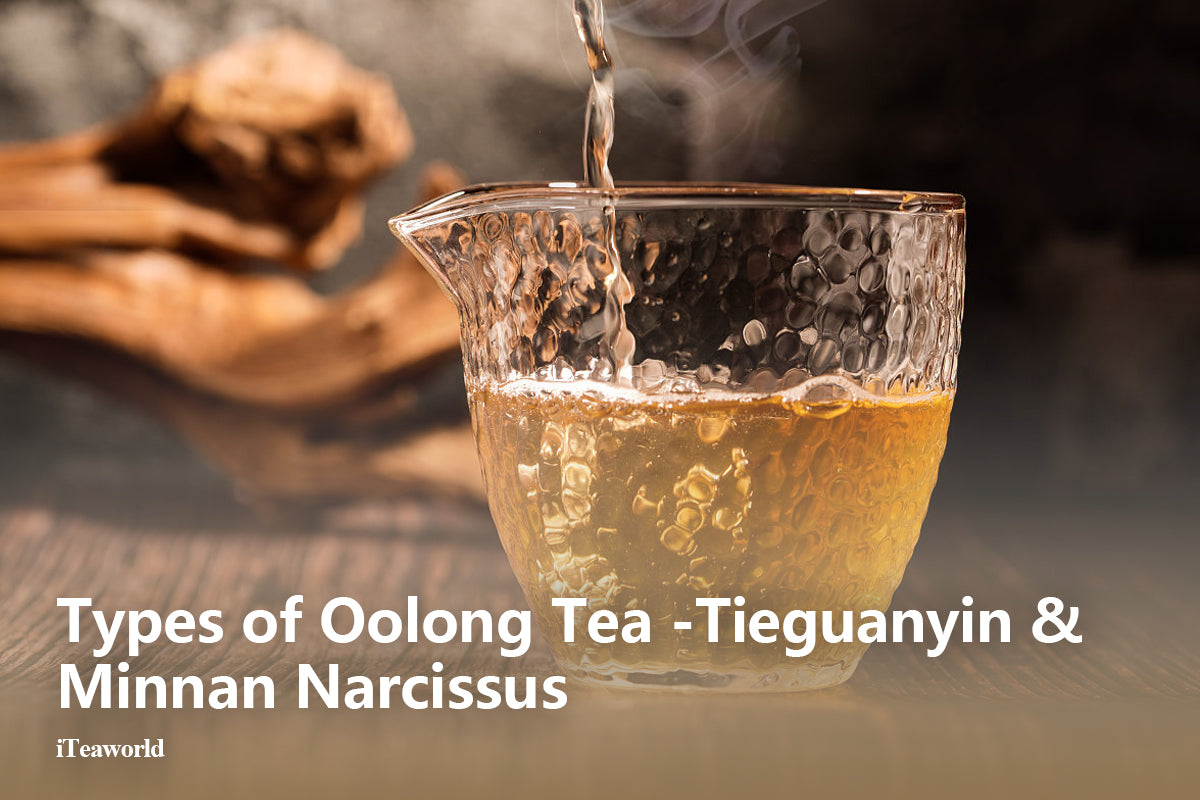
  There are two typical representative teas of Minnan Oolong, let's compare these two teas today! 1. Tieguanyin 2. Minnan Narcissus In China, there are three major production areas of Oolong tea Northern Fujian Oolong Minnan Oolong Guangdong Oolong Taiwan Oolong   Today we mainly talk about Minnan oolong.Among them, Tieguanyin is the most typical representative of Minnan Oolong and is also the most widely recognized.Apart from Tieguanyin, Minnan Narcissus, Yongchun fo shou, and Zhangping Shui Xian are also well-known varieties of Minnan Oolong.Why did iTeaworld choose Tieguanyin and Minnan Narcissus?It is because they are both well-known teas with good quality and have a long history.   Why is this tea called Tieguanyin?     At the beginning of the 18th century, there was a local tea farmer in Anxi who believed in Buddhism, and he made tea offerings to Guan Shiyin Bodhisattva every dayOnce when he went out to inspect the tea plantation, he found a tree in a cave. The leaves were large and shiny, it was a very special leaf, so he took it home to process it into oolong teaAfter making it, he found that the flavor of oolong tea made from this leaf was very different.So he transplanted the tea tree back and propagated it with plugs.The tea grower thought that this tea was given to him by the Bodhisattva Guanshiyin, and because the color of the tea is very similar to the color of iron, which is "tie" in Chinese, it was named tieguanyin tea.   Types of Tieguanyin     There are two types of Tieguanyin tea, one is the traditional charcoal roasted Tieguanyin tea and the other is the modern craft Tieguanyin tea.Traditional Tieguanyin tea: sandy green in color.Modern Tieguanyin tea: bright green color in appearanceModern Tieguanyin has a similar taste to green tea.iTeaworld chose this Anxi Tieguanyin tea for two main reasonsFirst, it is from the authentic Anxi High Mountain tea plantation.Secondly, it is a traditional charcoal-roasted tea.This allows people to experience the different charms of traditional Chinese craftsmanship.   How to brew Tieguanyin tea?     Tieguanyin is a low-fermented tea, so more attention should be paid to its aromaTherefore, it is best to brew in a wide-mouth bowl, so that the tea leaves can fully unfold in the tea brothIt is also recommended to choose the "high brewing" method, that is, pouring hot water into the tea cups from a higher distance, to better stimulate the aroma of Tieguanyin.   About "Guanyinyun" of Tieguanyin tea   About "Yun" Many of our famous Chinese teas have the word "yun".For example, Tieguanyin tea has "Guanyin Yun", Minbei Oolong tea has "Smoke Yun", and Monocotyledon tea has "Alpine Yun".Tea with "yun" is beyond ordinary tea.Tea that can be called "yun" can not only give you material enjoyment but also bring spiritual pursuit.It can make people happy   About "Guanyin Yun"   "Guanyin Yun" is a unique quality characteristic of Tieguanyin tea. It is a bit mysterious to say, what will change with the different feelings of the tea tasters In my opinion, I understand that "Guanyin yun" refers to the throat after drinking arrogant, there is a kind of alpine tea unique sense of coolness! And the sweetness of Tieguanyin will make you feel the "yun" of the unusual!Ordinary tea can seldom give you such a rich and multi-layered feeling! Only the core production area and the superior traditional craftsmanship can produce the "Guanyin yun" Tieguanyin tea.   Differences between Minnan Narcissus and Tie Guanyin     The core difference lies in the difference in the degree of oxidation, i.e. the different processing techniques, with Tieguanyin having a much lower degree of oxidation.Oolong tea is a semi-fermented tea, known in Western terminology as oxidized tea, with a degree of oxidation between completely unoxidized green tea and fully oxidized black teaDifferent varieties of tea and different origins of tea masters may allow the tea to oxidize to different degrees again during processing.Tieguanyin is a very low-oxidized tea, and tea masters feel that a low level of oxidation can be more conducive to the development of its characteristics and advantagesMinnan Narcissus has no advantage over Tieguanyin in terms of aroma, but its taste is more mellow and rich.Therefore, the tea master will make it oxidized to a higher degree, to oxidize the tea polyphenols into theaflavin or thearubigin, which further enhances the mellowness of the tea broth.  Characteristics of Minnan Narcissus     The characteristics of Minnan Narcissus tea are weak aroma, but rich in water and mellow taste.Minnan Narcissus tea is a semi-tree tea with a trunk.iTeaworld's Minnan Narcissus tea is selected from Yongchun Tea Factory.Yongchun Tea Factory is a decades-old tea factory founded by the Indonesian Chinese.The raw material for our Minnan Narcissus tea comes from tea trees planted in the 1950s and 1960s.It's basically 70, 80 years old now or more   Why did iTeaworld choose this Minnan Narcissus? Because older tea trees are sweeter and the tea broth is more mellow.And the production process of the old tea factory is more traditionalIt allows people to experience the real traditional Minnan Narcissus tea.   What is the aroma of Minnan Narcissus tea?     There are two kinds of aromas of Minnan Narcissus tea.One kind of aroma is a variety of aromas (orchid)The other is the aroma of the dancong aromas, which is the aroma that will appear only when the tree is older, similar to the aroma of rice dumpling leaves.Compared with the common Minnan Narcissus, iTeaworld's Minnan Narcissus has unique dancong aromas.And due to the old age of the trees, this tea has a mellow flavor and good sweetness!There is a sweetness in your throat when you drink it, and it will be sweet back, which is unique to old tree tea.   Comparison of brewing methods between Tieguanyin and Minnan Narcissus tea   Tea set: Minnan Narcissus tea should be brewed in purple sand pots or thick teacups.Tieguanyin tea is light and elegant, suitable for thin-lid teacups, and better able to set off its aroma   Water temperature: Tieguanyin's oxidization degree is relatively low, the brewing water temperature can be a little lower.For Minnan Narcissus, the water temperature must be high!   Tea water ratio: Tieguanyin's tea-to-water ratio is 1:30The ratio of tea to water for Minnan Narcissus is 1:35.   Brewing time: Tieguanyin's brewing time is shorter, and Minnan Narcissus's brewing time is longer.The brewing time for Minnan Narcissus can be 10 seconds, and Tieguanyin can be 8 or 7 seconds.  Drinking Time Suggestion     I like to drink Tieguanyin in the summer or in the morning, it makes me feel more happy and elegant.As for Minnan Narcissus, I would drink this tea in winter or in the eveningOld tree tea is very strong and mellow, and very calm after drinking it   Preservation Method   The preservation of oolong tea is the same as black tea and green tea, it must be sealed.Storage environment temperature should be below 25 degrees and humidity below 65 degrees.No odor, no light, no strong light, such an environment will be betterAs Tieguanyin has a low level of oxidation, after one year or 36 months, its taste will deteriorate with oxidation and become very unpleasant to drink.Minnan Narcissus is made by the traditional oolong tea process, with deeper fermentation, and tastes better when stored for 5 or 10 yearsI have seen many people on the internet say that old oolong tea tastes good, but the premise is that the process needs to be traditional oolong tea processThe deeper the fermentation, the longer the tea is stored, the better the flavor. The tea-drinking atmosphere and the pursuit of tea aesthetics in China are very different from other countries.I think everyone should not be fixed in a certain area, but try more and compare more.So that the understanding of tea will be clearer.
Yunnan Black Tea Guide: Everything You Wanted To Know

Yunnan Black Tea Guide: Everything You Wanted To Know

About Yunnan Black Tea Yunnan black tea is one of the late but very famous black teas.As the technology slowly matured, Yunnan black tea began to be well-known.Yunnan black tea is a large-leaf variety. Large-leaf varieties have high polyphenol content and relatively low ester content, so Yunnan black tea will have a strong flavor.In the 1980s and 1990s, Yunnan black tea was the State Council's foreign guest tea or national gift tea. iTeaworld's  Yunnan Black Tea   The origin of the Yunnan black tea we drink today is in the core production area of Fengqing.This place is called Dawangtian, and the tea factory is also called Dawangtian Tea Factory, which was formerly known as the old Fengqing Tea FactoryThe reason why we choose this Yunnan black tea for our customers is mainly because of its cost-effectiveness.After many comparisons, we finally chose this Yunnan black tea.This Yunnan black tea has two major advantages, one is the strong aroma and the other is the mellow flavor.The ecological environment and altitude of the tea plantation are very good, and the grade is one bud and two leaves.iTeaworld black tea is priced at only US$9.90/100g, which is perfect for milk tea! This is a memorable loose leaf black tea that will suit most people's tastes How to brew Yunnan Black Tea?   1. Thick Gaiwan 2. Infuse water to a fixed point of the cup from a lower height Tea Set Options: Thicker white porcelain bowl Brewing Method: For teas that are known for their flavor, we recommend using the "low point brewing" method when filling with water.This method means "filling the tea cup with water from a lower height to a fixed point".This brewing method brings out the best flavor of Yunnan black tea. This method is also suitable for strong-flavored black teas such as Yingde Black Tea and Wild Souchong Black Tea. Tea Pitching Amount: The amount of tea thrown is similar to other black teas.In the case of a gaiwan, for example, we will use the classic method, which is 1/3 of the volume of the gaiwan.If using other vessels, we remember that the ratio of tea to water should be between 1:20 and 1:35.Because Yunnan black tea is slightly more concentrated, it can be adjusted to a lower amount than the tea water, 1:20 or 1:15 is sufficientIf the amount of tea is too much, i.e. the ratio of tea to water is too high, the concentration will tend to be offensive and the bitterness and astringency will be more pronounced.   Characteristics of Yunnan Black Tea   The greatest characteristic of Yunnan black tea is its unique honey flavor.Because of the high altitude raw materials used, it has a sweet and mellow flavor with a sweet aftertaste.Secondly, the number of times Yunnan black tea is brewed should be the most except for wild tea and ancient tree tea.Therefore, Yunnan black tea has a strong tea flavor and is most suitable for brewing milk tea. How Does it compare to foreign black teas?   If you compare Yunnan black tea with them, the difference is not that bigWhat is the only difference between us and them?It is the way Chinese people drink tea is different from the way other countries drink tea.Chinese people drink tea by tasting, to savor the difference between this tea and that tea.In addition to the basic flavors we have already talked about, we need to talk about the flavor of the tea and what cultural attributes this tea has.Broken black tea is particularly popular in Europe and the United States, why is broken black tea particularly popular? Because the substances inside the broken black tea are easily precipitated when it is chopped, and the more they are precipitated, the stronger the flavor of the tea.If you compare it with black tea from Assam, Darjeeling, and other European and American countries.From the excellence of raw material origins to the research and development of processing technology, to the accumulation of innovation, I think China's tea still has a great advantage!China needs to slowly make the aesthetic logic of tea clear and share with everyone why we drink tea the way we do!I believe that our tea culture will be understood by more people, and I believe that we can let the people of the world recognize China's unique tea culture! Explore the Chinese New Year Sale Now >>
types-of-loose-leaf-tea-black-tea-souchong-black-tea

All About Souchong Black Tea: Origin, Production, Brewing Method

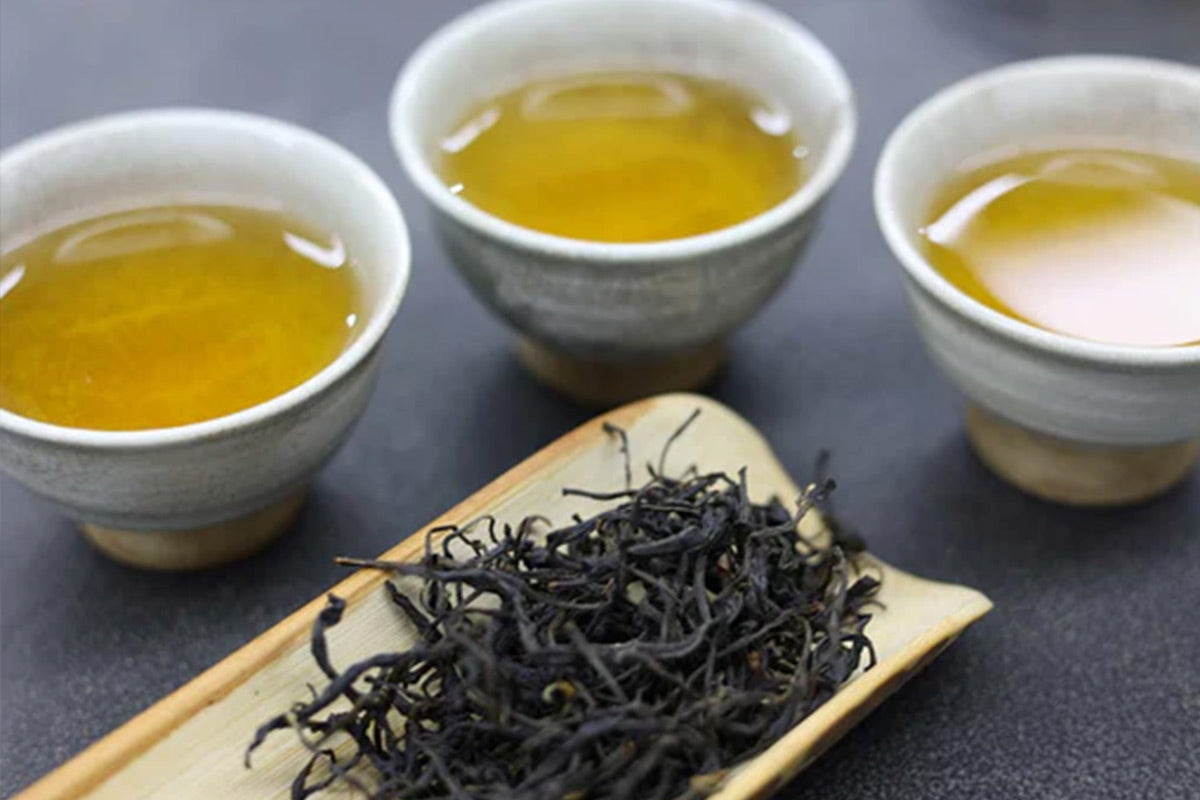
Souchong Black Tea  What is Souchong Black Tea? Where did Souchong Black Tea come from? How many types of Souchong Black Tea are there? How to Brew Souchong Black Tea? How to Choose Souchong Black Tea? Preservation Methods for Souchong Black Tea Price of Souchong Black Tea Tongmuguan Black Tea Brands What is Souchong Black Tea? Souchong Black Tea is the earliest black tea in China and the world.Because it is produced in Tongmuguan, it is also known as Tongmuguan Souchong Black Tea.Souchong Black Tea was the most famous black tea exported from China to England at that time. Where did Souchong Black Tea come from? It all started by chance, the origin of Souchong Black Tea was accidental.In ancient China, during the late Ming and early Qing dynasties, the Qing army attacked Wuyi Mountain in Fujian Province and came to Tongmuguan.As soon as the tea farmers saw the army coming, they left the tea leaves they were processing and ran to the mountains to hide.The Qing army came to this village and ate, drank, and lived there. Many Qing troops slept on the tea leaves.The next day the Qing army withdrew, after the withdrawal the people back, to see the tea leaves and fresh leaves have turned red, it was too late to do other processing, so they rushed to use pine firewood to dry, and then knead tea.After the tea was made, they began to taste it and found that the tea made in this way had a great change from the previous, before it was green tea broth, and now the brewed tea broth is red!Tea farmers don't want to waste the tea leaves and bring this tea to the tea market to sell.Many customers have drank this tea and feedback that the flavor is delicious! Later they optimized this tea process.This is the origin of Tongmuguan Souchong Black Tea. How many types of Souchong Black Tea are there? Two types of processes 1. Traditional craft (pine smoke aroma)2. Modern craft (floral flavor) There are generally two types, one with traditional craftsmanship and one with modern craftsmanship. Traditional processes: Traditional Souchong Black Tea has pine wood drying in the production process, which gives it a unique pine smoke aroma.The soup color of souchong black tea of traditional craft is slightly darker, with the unique aroma of pine smoke.The Wild Souchong Black Tea offered by iTeaworld is made using traditional techniques.Wild Souchong Black Tea is made from wild tea trees and has a pine-smoke aroma. Modern processes: The modern process is basically based on nectar flavor.The biggest characteristic is that the tea soup is orange-yellow in color, with an obvious floral aroma and no pine smoke aroma.iTeaworld's Souchong Black Tea is made using modern techniques and has a floral aroma with a hint of sweetness. How to Brew Souchong Black Tea? Choice of Tea Set Usually, you should choose an open bowl.You can use a glass or porcelain gaiwan for brewing.The tea leaves can fully unfold in this open bowl, which is more conducive to the release of tea leaves. Brewing Temperature Loose Leaf Black Tea is usually brewed in water between 80 and 90 degrees Celsius.We are now choosing this traditional crafted Souchong Black Tea, which is pure wild tea and wild alpine tea.For high mountain tea or wild tea, it is recommended to use 100 degrees of water. Brewing Time The first three brews are usually 10 seconds.Between three and seven brews, we can add about 5 seconds in turn.In traditional Chinese Kung Fu tea, if using a gaiwan, add 1/3 of the amount of tea (1/3 of the capacity of the gaiwan).Compared with Yunnan Black Tea or Yingde Black Tea, the amount of tea for Souchong Black Tea is appropriately less because it is relatively less oxidized. How to Choose Souchong Black Tea? New tea lovers: We recommend choosing a modern refined Souchong Black Tea.Because it is just pure nectar flavor that suits most people's taste. Senior tea lovers/people who like traditionally crafted tea: We suggest choosing traditionally crafted Souchong Black Tea.Drinking traditional Souchong Black Tea warms the body and has the effect of replenishing the pancreas.The traditional craftsmanship of Souchong Black Tea is drying with pine wood and then charcoal, the overall feeling is very mellow and rich.The modern process is a bit cleaner. Preservation Methods for Souchong Black Tea Whether it is a traditional or modern craft, try to keep it sealed, The black tea should not oxidize too fast and do not absorb moisture.You can use self-sealing bags, or use tinplate boxes, and tinplate cans, or use tinplate cans.Keep it sealed in a place where the temperature is below 25 degrees Celsius and the humidity is below 65%. Shelf life of black tea China's regulation should be 24 months to 36 months.After the 1990s, tea drinking has become more popular and the aesthetic dimension of tea drinking has been rising.Then there are also many people who found that in some traditional small-breed black tea, the longer the preservation of the tea, the more flavorful it is. Price of Souchong Black Tea First of all, distinguish whether it is inside or outside Tongmuguan.Tea inside Tongmu Pass is definitely more than twice as expensive as in other places.Please note that even inside Tongmuguan, there are high mountain tea and wild tea.Tongmuguan inside the real old tree wild tea to a few thousand dollars per catty, so there is no way to clarify the purchase price!The second needs to clarify the origin of its raw materials and its process characteristics.On the basis of the same raw materials, the same process, and flavor, choose the one with better cost performance.This is a suitable method, but it is difficult for consumers.Over the years, we have also been honing our skills to understand what type of tea fits what price point.iTeaworld insists that customers can get better quality for the same price. Tongmuguan black tea brands Nice brand 1. ZhengShanTang Tea 2. YuanZheng Tea 3. Junde Tea Tongmuguan black tea is in a small category, there have been a few brands that do very well.One is Mr. Jiang Yuanxun, the founder of Tongmuguan black tea, who founded ZhengShanTang.He has two brands, Zhengshantang is his premium brand and Yuanxun is his mid-range tea brand.The other one is the founder of Jin Jun Mei tea handmade, which is Mr. Liang Jun de with his brand Junde.Basically, if you buy the Tongmuguan black tea from Junde, Zhengshantang, and Yuanzheng, you will know what it tastes like.Apart from trying the authentic Tongmuguan Souchong Black Tea.You can also buy iTeaworld's Souchong Black Tea online to try it out.iTeaworld's two types of Souchong Black Tea are very good in terms of both raw materials and craftsmanship and are priced at a very reasonable price, making them cost-effective.
oolong-tea-Benefits

Oolong Tea Benefits | Do You Really Know About Oolong tea?

Oolong tea is a unique type of organic tea in China, and is highly sought after for its unique taste and health benefits. Oolong tea offers the advantages of both green tea and black tea, with the mellowness of black tea but stronger astringency than black tea, and the freshness of green tea but without the astringency of green tea. Read on to discover the benefits of drinking oolong tea! Benefits of Oolong Tea Facilitate Weight Loss Refreshing and Relaxing Antibacterial and Anti-inflammatory Protect Teeth Benefits of Oolong Tea Oolong tea contains a variety of nutrients, including tea polyphenols, plant alkaloids, proteins, amino acids, vitamins, pectin, organic acids, lipopolysaccharides, sugars, enzymes, pigments, etc. Regular consumption of oolong tea has specific benefits for the human body. Facilitate Weight Loss If you want to lose weight, try drinking Loose Leaf Oolong Tea. Oolong tea has the effect of dissolving fat. Because the main component in tea - tannic acid, has a close relationship with fat metabolism. Oolong tea can lower blood cholesterol levels. Compared with black tea and green tea, oolong tea can not only stimulate the activity of pancreatic lipolytic enzymes, reduce the absorption of sugar and fatty food, but also accelerate the increase of body heat, promote fat burning, and reduce the accumulation of abdominal fat. Refreshing and Relaxing If you are tired of drinking coffee, drinking oolong tea is also a good choice for energy in the morning. The caffeine in oolong tea can promote the excitement of the central nervous system, can enhance the excitement process of the cerebral cortex, and then play a refreshing role in eliminating fatigue. Antibacterial and Anti-inflammatory Oolong tea contains a large amount of tea polyphenols, which can effectively inhibit the reproduction of pathogenic bacteria and viruses, and have antibacterial and anti-inflammatory effects. Protect Teeth The effect you can't think of is that oolong tea can also protect teeth! Oolong tea has a high fluorine content, of which 10 mg to 15 mg per 100 grams of dry tea, a large part of which is water-soluble. Drinking oolong tea can increase the intake of fluorine, so as to achieve the best tooth protection. Recommended Oolong Tea iTeaworld offers a wide range of oolong teas of good quality at the right price.For example, Tie Guanyin, Minnan Narcissus, Dahongpao, and Fenghuang Dancong.These are all well-known Chinese Oolong teas.In addition to this, iTeaworld also offers an Oolong Tea Sampler.It contains the four teas mentioned above. You can experience them all at once! Tieguanyin Tieguanyin--This is an oolong tea famous for its light flavor. The tea leaves are curlyWhen you take the first sip you will feel a light creamy texture. There is no astringency at all and the taste is smooth and freshGreat for those who are trying oolong tea for the first timeMinnan NarcissusMinnan Shuixian--This is one of iTeaworld's highly acclaimed teas. The floral natural sweetness is perfectly balanced and the rich roasted flavor excites the taste buds. This is a perfect morning cup of tea!Fenghuang DancongEvery tea lover will be satisfied with Fenghuang Dancong. There are no bad reviews!Very strong peach flavor hits the nose. The taste is delicate and smooth with a sweet flavorThis is a great milanxiang Fenghuang Dancong!DahongpaoDahongpao is a very well known oolong tea from China. It has a dense, creamy texture and a sweet, mineral taste that will give you a rocky tea experienceThe above four oolong loose leaf teas are all selected by iTeaworld, synthesizing the taste evaluations and tea quality judgments from several 20+ years old tea lovers. Perfect for tea lovers who want to savor a variety of Chinese Oolong teas at once. If you are interested in Oolong tea, why don't you try them out and experience the special taste of Oolong tea and its efficacy together!
The Rich Flavors of Yingde Black Tea: A Detailed Guide

The Rich Flavors of Yingde Black Tea: A Detailed Guide

There are very many types of black tea, and in China, Yingde black tea is renowned as one of the top three types of black teas. Follow the founder of iTeaworld to get to know this famous black tea!
Selection Principles of Tea Trees Used in Traditional Chinese Medicine Tea Therapy

Selection Principles of Tea Trees Used in Traditional Chinese Medicine Tea Therapy

In traditional Chinese medicine, tea leaves are used as medicinal herbs for treatment. For tea therapy, the tea tree must have good therapeutic effects, and the selection of tea leaves with therapeutic properties should primarily consider wild tea trees and ancient tea trees growing in the dense mountains of southern China, with minimal human intervention. Many such tea trees can be found in China, and authentic wild and ancient tree teas can be purchased online at iTeaworld.
Amazing Tea Benefits : Make Your Tea Drinking Healthy

Amazing Tea Benefits : Make Your Tea Drinking Healthy

1 The Aromatic Substances in Tea Can Help People Relax 2.1 Tea Can Help to Diminish Inflammation 2.2 Green Tea Has a Good Effect of Removing Dark Circles Under Your Eyes 2.3 It Is Easy to Think That the Newly-Made Tea Is of Better Quality People like tea for various reasons. Many people choose tea as their daily drink because they have experienced the magical benefits of tea. Tea is like a kind of safe elixir in our life. It can help us to cure and relieve minor problems of our body. Meanwhile, we don’t have to suffer from the side effects of drugs.  In this article, we'll explore some of the best loose leaf teas, including loose leaf oolong tea and loose leaf black teas, as well as classic tea collection packs to reveal their health benefits. 1. The Aromatic Substances in Tea Can Help People Relax Aromatic substances have effects on mood and emotion. It is beneficial to reduce anxiety and release pressure. Aromatic substances are usually used in emotive therapy and emotion enhancement. Flower tea (jasmine tea, rose tea, osmanthus tea, etc.) contains high levels of aromatic substances and the effects of flower tea are the best. The reason why aromatic substances can help people relax is that aromatic substances have very small molecules. The small scale of these substances makes them easy to be transported to the “emotional brain” by olfactory cells. The “emotional brain”, also called the cerebral limbic system, is the place that has the most profound effects on people’s emotions and memories. The psychological and emotional states of a person are decided and controlled by the cerebral limbic system. 2. Besides Calming the Heart and Comforting the Soul, There Are Some Other Magic Things About Tea 2.1 Tea Can Help to Diminish Inflammation The tea, with a feature of one leaf on one leaf bud, which is picked before March or April, has an immediate effect on esophagitis. The tea polyphenol can effectively control and kill germs, so it has an obvious anti-inflammatory effect. The tea made by tender one-leaf bud contains the highest level of tea polyphenol. 2.2 Green Tea Has a Good Effect of Removing Dark Circles Under Your Eyes If you apply brewed green tea bags around your eyes at night, the effect would be better. 2.3 It Is Easy to Think That the Newly-Made Tea Is of Better Quality In contrast, some tea, such as Pu’er tea, Liubao tea, white tea, Hunan dark tea, and Sichuan Tibetan tea, is better when their age is older. Tea stored for many years is rare and quite valuable. 3. Health Benefits of Loose Leaf Oolong Tea Loose leaf oolong tea is a tea with a unique taste and a variety of benefits, here are the benefits of loose leaf oolong tea1. Weight control:Oolong tea is rich in tea polyphenols, which help increase metabolism, which allows you to accelerate fat burning for weight loss.2. Enhance heart health:A large number of studies have argued that oolong tea can lower cholesterol levels, thereby reducing the risk of cardiovascular disease.3. Refreshing:Oolong tea contains caffeine, which can replace coffee to provide you with caffeine, which is healthier than coffee to make you refreshed!Drinking a cup of oolong tea in the morning has the same effect as drinking a cup of coffee.4.Recommended Oolong Tea:We highly recommend Fenghuang Dancong, which is a tea with a very strong peach aroma. It has a smooth taste with a sweet flavor. Very suitable for most people's tasteWe also recommend Dahongpao Oolong Tea. This is a well-known Chinese oolong tea with a unique flavor and is a famous rock tea. It is an oolong tea that is well worth trying Health benefits of loose leaf black tea The health benefits of loose leaf black tea, which has a rich flavor and is also rich in a variety of benefits, include:1. Elevates mood:Black tea is rich in theanine, an amino acid unique to tea, which helps to soothe the body and mind, reduce stress and make you feel better.2. Maintaining bone health:Black tea is rich in minerals such as manganese and potassium, which are good for maintaining bone health.3. Promotes digestion:Black tea is mild and can be consumed by people with weak spleen and stomach. If there is a loss of appetite, you can also drink black tea in moderation, can make people appetite, promote digestion and absorption, but also able to relieve grease. 4.Recommended black tea: Yingde black tea is highly recommended. Yingde black tea is China's national gift tea, once used to entertain the British Prime Minister. It has a strong taste and sweet flavor, which is very suitable for people who are new to drinking tea.Guangxi old tree black tea is also recommended. This is a very special black tea from iTeaworld, the tea leaves come from hundred years old trees, full of the feeling of nature. The amazing benefits of tea are not only limited to these, but there are many other benefits, such as improving concentration, improving skin health, protecting teeth, and so on.Therefore, tea is the perfect choice for your daily drink. There is a wide variety of choices and all of them can bring you health benefits!Try various types of loose leaf teas and experience the amazing benefits of tea. Make tea a part of your daily life.
old-tree-loose-leaf-tea

Do You Know What is Wild Tree Tea And Old Tree Tea?

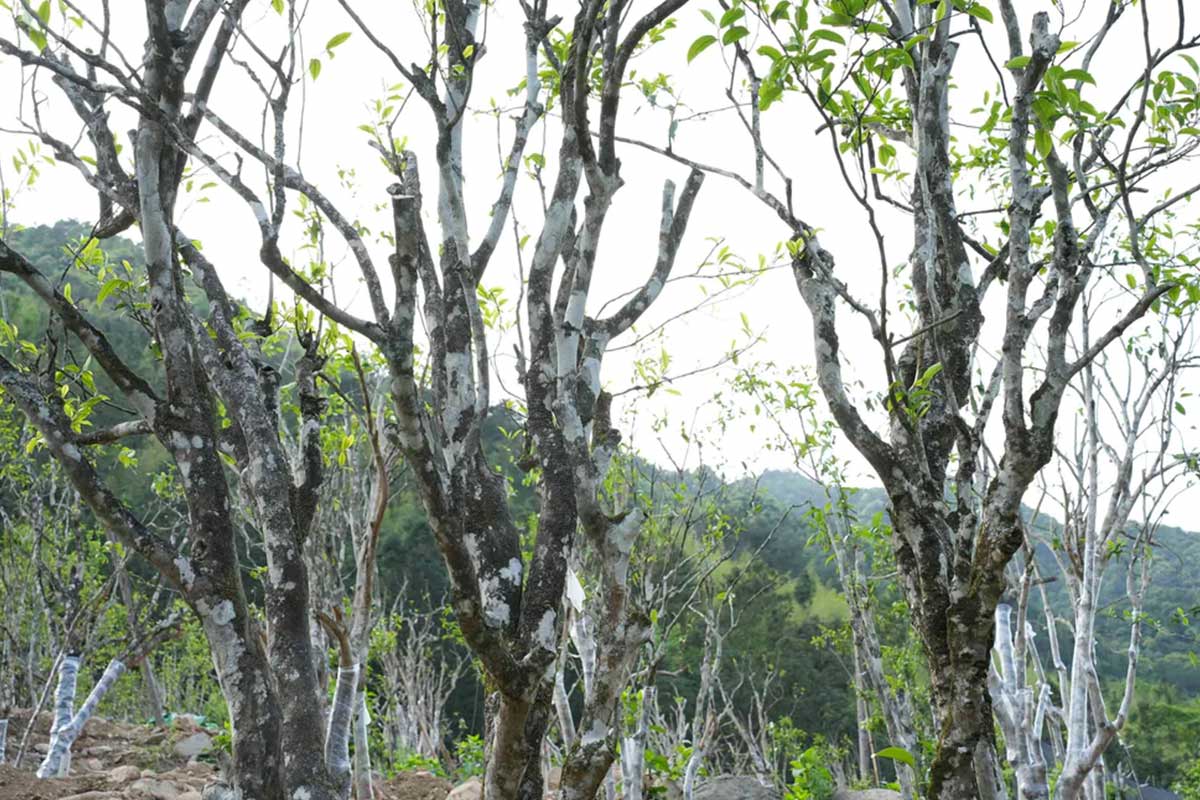
There are old tea trees of hundreds of years, or even thousands of years, in regions like Yunnan Province, Guizhou Province, and Guangxi Province in China. Since 2015, iTeaworld has been working on the conservation and management of old tea trees in Guilin, Guangxi Province. Now, iTeaworld has developed more than 100 mu old tree tea gardens and has managed more than 2000 old tea trees over 100 years old. Meanwhile, iTeaworld has developed and managed more than 6000 mu ecologically wildly-growing tea gardens. In these sexually wildly growing tea gardens, tea trees grow together with other colonies of animals and plants. Tea produced from these tea trees contains natural and abundant tea substances and keeps better flavors. The Wild Tea and Old Tree Tea in iTeaworld product series use fresh leaves of wild tea trees or old tea trees. The features of Wild Tea products and Old Tree Tea products are as follows: 1. Wild Tea and Old Tree Tea belong to sexual tea, which uses seeds to reproduce. This kind of tea is also called group species. Compared with asexual tea trees, sexual group tea trees have obvious main roots and the root system is well-developed. This kind of root system is advantageous for tea trees to absorb mineral substances deep in the soil. Consequently, sexual group tea tree species have richer flavors. It can be proved by the higher level of water extract substances and amino acids in the tea. Meanwhile, there are various species in sexual group tea trees. It means that this kind of tea has leaves of different tea tree species. It is a natural blend of more abundant flavors. 2. The management of wild tea trees and old tea trees uses traditional farming methods. Compared with modern tea gardens (terrace tea gardens) management, the main feature of traditional farming methods is the low planting density (one tea tree in an area of 6-8 m²). In this condition, tea trees grow in a relatively natural environment. The shapes of the tea trees are larger and the tea yield is lower. Tea produced by traditional farming methods has richer flavors and the bitterness is not obvious. In contrast, terrace tea under modern management is planted densely. The root system of terrace tea is under-developed. The shapes of the tea trees are small and the tea yield is high. Such kind of tea is insipid and tasteless and the bitterness is very obvious. 3. Wild Tea and Old Tree Tea are only picked once every year in spring. Generally, wild tea trees and old tree tea trees are located in the deep mountains and forests at high altitudes. The weather is cold and the temperature varies widely from day to night. There is a long growing cycle of tea trees and the germination rate is low. As a result, the tea is only picked once in spring. In summer and autumn, tea cannot be picked because of the low production, which is due to the lack of manual intervention and fattening. In contrast, the terrace tea trees are pruned every spring to enhance the germination rate. Also, fertilizers are added to the trees to enhance growth. Therefore, terrace tea can be picked in four seasons in a year. When other conditions are the same, yield is inversely proportional to quality. That’s one of the reasons why Wild Tea and Old Tree Tea have better tastes. 4. Wild tea gardens and old tree tea gardens have a more diverse ecological environment. Compared with terrace tea gardens, there are two advantages of wild tea gardens and old tree tea gardens. First, in wild tea gardens and old tree tea gardens, tea trees grow together with other animals and plants, which results in a more balanced ecological environment. Meanwhile, abundant fallen leaves, animal feces, and microorganisms help to create more nutritious soils. Second, growing on the slopes and under the shades of other plants, tea trees in wild tea gardens and old tree tea gardens are in obvious diffused light conditions. Such conditions bring higher levels of amino acids in Wild Tea and Old Tree Tea. Thus, Wild Tea and Old Tree Tea are more fragrant and less bitter. The following old tree loose leaf teas are available from iTeaworldThese tea trees are 100 years oldPurchase and enjoy the natural, organic centennial teas! Fenghuang Dancong The most aromatic oolong tea from old tea trees is over 100 years old. Guangxi Old Tree Black Tea Made from fresh leaves of old tea trees over 100 years old. Minnan Narcissus Oolong Tea From 60 years old tea plantation, resistant to brewing, high sweetness More than half of the teas from the old tea plantations have a better taste than other modern tea gardens, and more than half of the teas from the old tea plantations have a better flavor.If you haven't tried old tree tea, we highly recommend you try it!You will experience a very different taste!Old Tree Tea is sweeter and mellow.I believe you will fall in love with old tree tea
Protecting Wild Old Tea Trees Is Difficult, But It’s Worth It.

Protecting Wild Old Tea Trees Is Difficult, But It’s Worth It.

There are many wild old tea trees growing on Longsheng Mountain. Nowadays, these old tea trees are faced with many difficulties. In this video and subsequent videos, we will share our experiences in conserving these old tea trees, and what we have learned from them about the wisdom of living in harmony with nature.
guangxi-guilin-old-tree-tea

In Guangxi, Guilin, There Are Some Old and Unique Wild Tea Trees…

In Guangxi, with its distinct seasons and abundant rainfall, there are some wild old tea trees, scattered in the red soil of mountainous areas…
What’s Dark Tea? Mysterious Tea?

What’s Dark Tea? Mysterious Tea?

In the west the tea is called Dark Tea because Black Tea is being used to identify what is known in China as Red Tea. Instead of trying to rewrite the history of the tea terminology in the west, the tea is simply called Hei Cha, Dark Tea, allowing all other western tea terms to stay in place…for now. Dark tea refers to many different types of teas originating from various regions in China. The commonality between all dark tea is that they are all post fermented, green teas of the large leaf varieties. The method of processing dark tea is as old as that of processing green tea. There is literary evidence of both green tea and dark tea being produced in China starting from the late Tang dynasty (618- 907). The two processing methods initially appear to be similar except for 2 points: First, dark tea must be produced from large leaf tea tree varieties; most green tea comes from small leaf varieties. Second, dark tea must be dried outdoors in the sun after processing; most green teas are dried with applied heat indoors. There is a legend of dark tea. On the ancient Silk Road, tea caravans encountered rain. The tea moistened by rain, grew mildew and became worthless. Tea merchants abandoned the tea along the road. The following year, an outbreak of dysentery caused many deaths in the village. As there was no food to be found for the people, tea merchants gave the mildewed tea to the poor families. A miracle occurred. The sick people recovered from their illnesses thanks to the fermented teas. The main types of dark tea are Liu Bao Tea, Liu An Tea, Fu Brick Tea, Heaven Tips Tea, etc. Liu Bao Tea Liu Bao Tea is named after Liu Bao village of Guangxi Province, Wuzhou District, where it was first produced. Liu Bao dates to the Tang Dynasty (618 – 907). During the Qing Dynasty (1644 – 1912), it was one of the highest prized teas. More recently Liu Bao was exported to parts of Malaysia and Hong Kong where it was mostly consumed by mine workers. Only recently has it started getting more recognition by tea connoisseurs around the world and gaining the appreciation it deserves. Liu Bao production methods have changed over time in response to industry production standards and increasing levels of demand from tea drinkers worldwide. Historically a large quantity of Liu Bao tea was exported to Malaysia. Malaysia had a large tin mining industry, and the Chinese workers in the mines would be offered Liu Bao Tea as a dietary supplement that would help refresh them, energize them, and alleviate sicknesses caused by the tough conditions in the mines. This led to the managers of the mines ordering Liu Bao Tea in wholesale quantities to keep costs down. The lower grades would be given to the workers, and the higher grades would be reserved for the owners and managers of the mines. Liu An Tea Liu An Tea is a famous tea originating in Anhui Province, China. Liu An Tea is produced using the later harvest of a maofeng cultivar. Liu An Tea is a much sought-after favorite among tea connoisseurs. It is a tradition to brew a piece of the bamboo wrapping with the tea together. Liu An Tea peaked during the late Ming and early Qing Dynasties. Liu An Tea’s popularity declined during the reign of the Guangxu Emperor, the last emperor of the Qing Dynasty, who reigned around the turn of the century. It continued to be sold up until the 1930’s but due to a period of unrest, beginning with the Sino-Japanese war in the 1930s & 1940s, production became practically nonexistent after the 1940’s. From the 1940’s to the 1970’s, the demands of Liu An Tea were fulfilled by Macau-made, and some Hong Kong made Liu An Tea. Production of Liu An Tea was revived by tea lovers in the 1980’s. Fu Brick Tea Fu Brick Tea is a dark tea from Hunan Province and Shaanxi Province, China. Traditionally, it was harvested in Anhua, Hunan Province and transferred to Jingyang, Shaanxi Province to process because of the difficulties and complexity of the production. Fu Brick Tea is the most complex and unique dark tea. Today, Anhua tea producers have learned how to produce Fu Brick Tea and today’s Fu Brick Tea is mostly from Anhua, Hunan Province. After undergoing processing, including ‘piling’, in which the leaves are encouraged to wither and ferment, it is compressed into brick form. “Golden Flowers” are the unique characteristic of Fu Brick Tea. Probiotic microorganisms mingle with the leaves, changing their aroma, flavor, and appearance. It is full-bodied, with an earthy aroma and a lightly sweet, floral, smooth taste. Heaven Tips Tea Heaven Tips Tea originates from Anhua, Hunan Province, China. The two critical production steps for making Heaven Tips Tea are pile-fermenting and the drying of the leaves over pine wood. The pile-fermenting is milder than for fermented Pu’er tea. The step of drying gives Heaven Tips Tea its signature pine and smokey taste. Heaven Tips Tea is the most loosely compressed of the compressed teas. The leaves are steamed and pressed into woven bamboo baskets weighing 1-5 kilos each. Light compression allows for good aging by promoting an environment conducive to the development of micro-organisms which will add their own contribution to the tea during the fermentation process.   Some text and pictures are from other sources. If there is any infringement, please contact us.
how-to-brew-different-kinds-of-tea

How to Brew Different Kinds of Tea? There Are Easy Formulas!

Some text and pictures are from other sources. If there is any infringement, please contact us.
Do You Know the History of Black Tea and Famous Black Tea?

Do You Know the History of Black Tea and Famous Black Tea?

1. Souchong Black Tea 2. Kung Fu Black Tea 3. Broken Black Tea Research has concluded that the earliest black tea was produced in the early 16th century. In 1610, Lapsang Souchong black tea was produced in Wuyishan City, Fujian Province in China and it was transported from Shanghai to the Netherlands for the first time. It was the preclude of production and trade of black tea in the world. In the second half of the 19th century, black tea production techniques were innovated and kung fu black tea of more refined techniques was produced. The kung fu black tea sold well in the international market. In the 1920s, broken black tea was developed in India. Then the broken black tea gradually replaces kung fu black tea and becomes the mainstream of black tea. 1. Souchong Black Tea Souchong black tea is a unique type of tea in Fujian Province, China. It is the originator of black tea. Souchong black tea was produced in Tongmu Area, Wuyishan City. According to the differences of production places and production techniques, Souchong black tea is divided into 2 types: Lapsang Souchong (core production areas) and Waishan Souchong (surrounding production areas). During the baking stage, pine wood is used to smoke and dry the tea. As a result, Souchong black tea has a smoky pine fragrance and a longyan flavor. Typical Souchong black tea is Lapsang Souchong, Jinjunmei, Yinjunmei and Tongjunmei. A Typical Representative—Jinjunmei Jinjunmei is the top tea of Souchong black tea. The reason why Jinjunmei is so valuable is that it is produced by the first batch of leaf buds picked in spring. These tea trees are only picked once every year. Also, only tea trees in Wuyi Mountain National Nature Reserve can produce authentic Jinjunmei. Jinjunmei is hand-made by tea makers. Every 500g Jinjunmei needs raw materials of tens of thousands of fresh leaf buds. 2. Kung Fu Black Tea The representative of Chinese black tea is kung fu black tea. Kung fu black tea gets its name from the elaborated tea-making techniques. During the production, buds and leaves are kneaded and twisted to form strip shapes, while the integrity of the buds and leaves is kept. Consequently, Kung fu black tea not only looks neat and beautiful, but also has an elegant quality and flavor. A Typical Representative—Keemun Black Tea Keemun black tea is produced in the branch ranges of Yellow Mountain in Anhui Province. Keemun black tea, Assam black tea, Darjeeling black tea and Ceylon highland black tea are the four great black tea in the world. In 2022, Keemun black tea was included in the UNESCO’s Representative List of the Intangible Cultural Heritage of Humanity. The fragrance of Keemun black tea is clean and high, which lasts for a long time. The fragrance is like fruit fragrance or orchid fragrance. In the international tea market, the unique fragrance of Keemun black tea is called Keemun fragrance. The tea soup of Keemun black tea is red and transparent. After being mixed with milk, the mellow flavor of the tea is still obvious. 3. Broken Black Tea During the production of broken black tea, the fresh tea leaves are broken into small grains, slices, etc. Broken black tea is produced all over China and the majority of the tea is exported overseas. Broken black tea can be divided into 4 types: leaf black tea, shredded black tea, slice black tea and powder black tea.  Some text and pictures are from other sources. If there is any infringement, please contact us.
Why High Mountain Tea is The Choice of Tea Lovers?

Why High Mountain Tea is The Choice of Tea Lovers?

China is the origin of tea and also the first country to drink tea. China has a history of making tea for more than 2,000 years. In the long history of tea development, various kinds of tea have been created in China. According to statistics, only in the categories of green tea and black tea, there are hundreds of kinds of tea. Every kind of tea from our Modern High Mountain Tea Gardens has a unique flavor. They are famous Chinese tea and authentic high mountain tea. High mountain tea gardens produce teas that excel in taste compared to their counterparts grown at lower elevations. Here's why:   Since ancient times, high mountains in mist are good places to produce high-quality tea. First, the vegetations on high mountains are lush and overgrown. The soils contain high level of organic matters and have adequate nutrition. Second, the air humidity in this kind of environment is high. It is beneficial to keep the softness of leaf buds. Third, the solar radiation on high mountains, which has abundant diffused and short-wave light, is different from solar radiation on plains. This sunlight condition is beneficial to the metabolism of nitrogen in tea trees, which promotes the accumulation of amino acids in tea leaves. Forth, there is a large temperature difference between day and night in high mountains. The high temperature in daytime promotes the photosynthesis, which helps to accumulate organic matters. The low temperature at night inhibits respiration and decreases energy consumption. It is useful to the accumulation of tea substances.   Collectively, these factors contribute to the exceptional taste of teas sourced from high mountain tea gardens.Below, you'll find a selection of teas meticulously chosen from iTeaworld's collection of modern high mountain tea garden teas. 1. Tea with unique flavors is selected according to the differences in core tea-making techniques.  Based on the degree of fermentation (light, medium, and high) and the differences in the growing environment, 3 kinds of high mountain Loose Leaf Black Tea are selected. Based on the degree of fermentation, the degree of baking, and differences in tastes and fragrances, 3 kinds of high mountain Loose Leaf Oolong Tea are selected. 2. Each type of tea, which is carefully selected, is famous Chinese tea.  They have a long history and have been widely praised over the years. For black tea, we have carefully selected Souchong (black tea originator), Yunnan Black Tea (a typical example of kung fu black tea), and Yingde Black Tea (one of the three famous black tea). For Oolong tea, we have carefully selected Tie Guanyin (a typical example of Minnan oolong tea with a 300-year history), Fenghuang Dancong (a typical example of Guangdong oolong tea), and Dahongpao (a famous national gift tea with a 300-year history). Souchong Tea black tea originator   Yunnan Black Tea a typical example of kung fu black tea     Yingde Black Tea one of the tree famous black tea     Tie Guanyin a typical example of Minnan oolong tea with a 300-year history     Fenghuang Dancong a tpyical example of Guangdong oolong tea     Dahongpao a famous national gift tea with a 300-year history    
What’s the Codes of Tea Colors?

What’s the Codes of Tea Colors?

    The colors of tea leaves and tea soup are decided by natural substances. For example, black tea has different degrees of fermentation, which results in different ratios of theaflavins, thearubigins and theabrownins. The different ratios of these substances lead to various colors of black tea soup. Lightly fermented tea has more theaflavins and the color of the tea soup looks more like gold. Highly fermented tea has more thearubigins and the color of the tea soup looks more like red.   Theaflavin is one of the oxidation products of polyphenol substances. Pure theaflavins are orange yellow and needle-like crystals. The water solution of theaflavins is bright orange yellow. Theaflavin is the main factor of the brightness of tea soup. In tea soup, the taste of theaflavins is strongly stimulating, sweet after taste and astringent. Thearubigin is a kind of complicated reddish-brown phenolic compound. The water solution of thearubigins is brown and red. Thearubigin is the main factor of the redness of tea soup. In tea soup, the taste of thearubigins is weakly stimulating. Thearubigins have a strong influence on the flavor, density and color of tea soup. Theabrownin is a kind of water-soluble, non-permeable and hyperpolymeric brown substance. The main components of theabrownins are polysaccharide, proteins, nucleic acids and polyphenol substances. Theabrownins are further oxidative and polymerized products of theaflavins and theaflavins. The color of theabrownin is dark brown. Theabrownin is the main factor of the darkness of tea soup. In tea soup, the taste of theabrownins is flat, slightly sweet and astringent. How to Determine the Type of Tea by Tea Broth Color? Green Tea: Loose Leaf Green tea is unoxidized tea leaves, and its tea broth is usually bright green, or sometimes it may be light yellow.Yellow Tea: Yellow tea usually presents a pale yellow to light orange tea broth. It is a slightly oxidized tea, and the color of the tea broth is between green tea and oolong tea.White Tea: White tea is a very slightly or unoxidized tea with a pale yellow or light green color, reflecting the natural state of the tea leaves.Oolong tea: Loose leaf oolong tea is a semi-oxidized tea, the color of the tea broth can range from light yellowish brown to dark reddish brown, depending on the production process and the degree of fermentation of the tea leaves.Black Tea: Loose leaf black tea usually has a reddish color and is sometimes referred to as black tea. This is because black tea is fully fermented. Dark Tea: The tea soup of dark tea usually has a dark reddish or brown color, which is usually deeper than black tea. The color of Ripe Pu-erh, a famous type of dark tea, may change depending on how long it has been stored. It should be noted that the color of tea broth may vary among different brands, origins and grades of tea in the same category. Therefore, when using the color of tea broth as an indicator of tea tasting, it is best to consider it in conjunction with other factors, such as aroma, taste and leaf base. Tea tasting is a complex process, and it is best to develop sensitivity to the color of tea broth by trying different teas based on an understanding of the tea category.     Some text and pictures are from other sources. If there is any infringement, please contact us.
What’s the Classification of Tea Gardens?

What’s the Classification of Tea Gardens?

Modern Terrace Tea Garden High Mountain Tea Garden Traditional Farming Tea Garden Wild Tea Garden Old Tree Tea Garden 1. Modern Terrace Tea Garden Modern Terrace tea gardens are tea gardens which are under modern management and aim at high yield. Tea trees of modern terrace tea gardens are densely planted in lines on slopes or mountains. From a distance, the tea tree groups look like steps. Most modern terrace tea gardens use asexual cutting propagation methods. This unique dense and high-yield tea planting method was created by English merchants and was originally used in India and Sri Lanka. Later it was introduced to China. Among modern terrace tea gardens, there are low altitude tea gardens and high mountain tea gardens. High Mountain Tea Garden Since ancient times, high mountains in mist are good places to produce high-quality tea. First, the vegetations on high mountains are lush and overgrown. The soils contain high level of organic matters and have adequate nutrition. Second, the air humidity in this kind of environment is high. It is beneficial to keep the softness of leaf buds. Third, the solar radiation on high mountains, which has abundant diffused and short-wave light, is different from solar radiation on plains. This sunlight condition is beneficial to the metabolism of nitrogen in tea trees, which promotes the accumulation of amino acids in tea leaves. Forth, there is a large temperature difference between day and night in high mountains. The high temperature in daytime promotes the photosynthesis, which helps to accumulate organic matters. The low temperature at night inhibits respiration and decreases energy consumption. It is useful to the accumulation of tea substances.There are two features of high mountain tea: 1. The most unique feature is the abundant amino acids in high mountain tea. Thus, high mountain tea has a high fragrance and a sweet and fresh flavor. 2. High mountain tea contains high level of tea substances and can be brewed for several times. 2. Traditional Farming Tea Garden Besides modern and densely planted terrace tea gardens, there is also a kind of traditional farming tea gardens. Compared with modern terrace tea gardens, the main feature of traditional farming gardens is the low planting density (one tea tree in an area of 6-8 m²). In this condition, tea trees grow in a relatively natural environment. The shapes of the tea trees are larger and the tea yield is lower. Tea trees in traditional farming tea gardens are sexual tea trees. These tea trees do not grow from tea tree branches. They grow from seeds. Among traditional farming tea gardens, there are wild tea gardens and old tree tea gardens. Due to little human intervention, wild tea and old tree tea are only picked once every year in spring. Wild Tea Garden There are wild tea trees grow on high mountains. For the convenience of tea pick, tea growers transplant the wild tea trees to their own tea gardens. This kind of tea garden is called wild tea garden. Old Tree Tea Garden Old tree tea gardens consist of tea trees more than 100 years old. These old tea trees have obvious main roots.