

In China, there’s a remarkable herbal tea known as Mei Cha, also called Mei Tea or Vine Tea. This naturally caffeine-free Chinese herbal tea is loved for its clean taste, gentle sweetness, and impressive flavonoid content.
For many tea drinkers, Mei Cha tea has become a soothing daily drink, especially for those looking for a natural, caffeine-free tea with potential wellness benefits. So, what is Mei Cha, and what makes Vine Tea so special? Let’s explore its flavor, origin, benefits, and brewing method together.
1. What Is Mei Cha Tea (Vine Tea)? Flavor, Origin, and Craftsmanship
1.1 What Is Mei Cha Tea? Mei Cha, Mei Tea, and Vine Tea Explained
Mei Tea, scientifically known as Ampelopsis grossedentata, is a wild vine from the grape family. Its leaves are naturally covered with a soft white frost (actually fine crystals of flavonoids), which gives it a beautiful silver-green color and a slightly velvety appearance.
Harvest usually takes place from April to October, focusing on the tender tips (one bud with two young leaves). The processing follows methods similar to green tea: fixing, rolling, and drying.
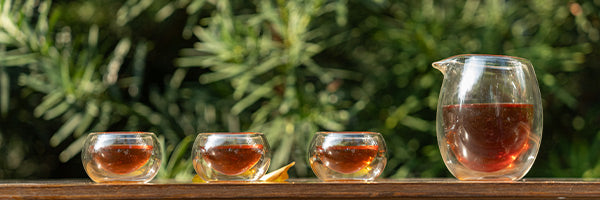
At first sip, Mei Tea might taste a little bitter, but within seconds, that bitterness melts into a pleasant, long-lasting sweetness. The sweetness lingers so much that even when you drink plain water afterward, you can still sense the gentle sweet aftertaste.

Note: Mei Cha is also commonly referred to as Mei Tea, Vine Tea, or sometimes by its botanical name, Ampelopsis grossedentata. These names often refer to the same caffeine-free herbal tea made from the tender leaves of the vine plant.
1.2 Zhangjiajie Mei Cha: A High-Flavonoid Vine Tea from the Mountains
The heartland of Mei Tea is Zhangjiajie, in Hubei Province, known as the hometown of Mei Tea and the world’s golden production zone. Here, the tea grows in the red sandstone mountains at altitudes of 800 to 1,500 meters, surrounded by mist and nourished by mineral-rich soil. These natural conditions result in exceptionally high flavonoid content and a clean, refreshing flavor.
Other well-known producing areas include Yongshun in Xiangxi, Hunan, and Enshi in Hubei, both part of the Wuling Mountain range. Their climates are similar to Zhangjiajie's, producing equally fine teas.

2. Mei Cha Tea Benefits: Why Vine Tea Is Called the “King of Flavonoids
Scientific studies show that tender Mei Tea leaves contain an average of 26% total flavonoids, while the buds can reach as high as 43.78%, far beyond most plants known today. Thanks to this, Mei Tea is often called “The King of Flavonoids.” Mei tea's therapeutic efficacy and unique health benefits are attracting global interest. For example, WorldTeaNews once featured an article about Mei Tea(vine tea).
In traditional Chinese medicine, Mei Tea is known for its antioxidant, anti-inflammatory, and cardiovascular-protective qualities. It’s also believed to soothe the throat, protect the liver, reduce fatigue, and strengthen the immune system.
Many people find it especially helpful for easing throat discomfort, dry cough, or tiredness from long hours in front of a computer.
That said, those who are pregnant, breastfeeding, or have low blood pressure, low blood sugar, cold stomach, or allergies should drink it with care.
While Mei Tea offers excellent health support, it is not a substitute for medical treatment. Always follow your doctor’s advice when needed.

3. How to Brew Mei Cha / Vine Tea
One of the most relaxing things about Mei Tea is that it’s naturally caffeine-free so you can enjoy it any time of the day, even before bed.
There are two common ways to prepare it:
(2) Simple Brewing
Teaware: Glass cup or mug
Ratio: 1g of tea per 100mL of water
How to brew:
Pour hot water (100°C) over the tea leaves and let them steep for about 60 seconds.
Remove the leaves and extend the steeping time by 30 seconds with each additional brew. The leaves can be brewed 3–5 times.
(1) Gentle Boil Method
Place the 2-3g tea leaves in a pot, cover them with 500 mL of cold water, bring it to a boil, then simmer on low heat for about 2 minutes.
This method draws out a deeper, richer flavor—perfect for cozy winter evenings.
If you’re new to Mei Tea, we recommend starting with the brewing method to experience its clean sweetness, and later try the boiling method for a stronger taste.

4. Other Naturally Caffeine-Free Chinese Herbal Teas Similar to Mei Cha
If you enjoy caffeine-free teas, there are a few more that are worth discovering.
(1) Jinqianliu
Known as the “panda of the plant world,” this rare species belongs to the walnut family. Its tender leaves are made into a naturally sweet tea, rich in polysaccharides and flavonoids.
It’s believed to help regulate blood sugar, lower cholesterol, and support heart health, making it an excellent everyday drink for those who want to maintain balance and wellness.

(2) Shiya Tea (Rock Leaf Tea)
A regional treasure from Guangxi, Shiya Tea is made from the leaves of a plant in the holly family.
It was once offered as a tribute tea and is sometimes called “Monkey-Picked Tea” because of its steep growing environment in the cliffs, where monkeys were said to help with the harvest. This tea grows in the wild in Guangxi, Guangdong, and Guizhou, usually at altitudes between 500 and 1,000 meters.
Its leaves are packed with natural active compounds. Among the Zhuang, Yao, Miao, and Dong ethnic communities, it has been used for generations to clear internal heat, detoxify, and aid digestion.

A Gentle Cup for a Balanced Life
Whether you’re drawn to Mei Tea for its natural sweetness, its health-boosting properties, or simply for a quiet moment of calm, it’s a beautiful reminder that nature has its own way of nurturing us.
At iTeaworld, we source Mei Tea from trusted mountain farmers who handpick only the finest young leaves.
Each cup delivers a refreshing taste and the gentle comfort that only true herbal tea can bring.
If you’re looking for a caffeine-free tea that supports wellness and relaxation, Mei Tea is a wonderful place to start.
Try a cup, take a breath, and let the sweetness unfold slowly, it might just become your new daily ritual.

If you want to enjoy all three varieties at once, you can click to explore our Herbal Tea Sampler>>
Frequently Asked Questions About Mei Cha Tea (Vine Tea)
1. What is Mei Cha tea?
Mei Cha tea, also known as Mei Tea or Vine Tea, is a naturally caffeine-free Chinese herbal tea made from the tender leaves of Ampelopsis grossedentata. It is known for its slightly bitter first taste, quick sweet aftertaste, and high flavonoid content.
2. Is Mei Cha the same as Vine Tea?
Yes. Mei Cha, Mei Tea, and Vine Tea are commonly used to refer to the same type of Chinese herbal tea. “Vine Tea” is the more descriptive English name, while “Mei Cha” is closer to the Chinese name.
3. What are the benefits of Mei Cha tea?
Mei Cha tea is often enjoyed for its natural sweetness, caffeine-free comfort, and high flavonoid content. In traditional Chinese tea culture, it is commonly associated with soothing the throat, supporting daily wellness, and offering a refreshing, calming drink. It should not be used as a substitute for medical treatment.
4. Does Mei Cha tea have caffeine?
No. Mei Cha tea is naturally caffeine-free, which makes it a good choice for people who are sensitive to caffeine or looking for a gentle herbal tea to drink in the evening.
5. How do you brew Mei Cha or Vine Tea?
For simple brewing, use about 1 gram of Mei Cha tea for every 100 mL of hot water. Steep for around 60 seconds, then extend the steeping time slightly for later infusions. For a stronger taste, Mei Cha can also be gently boiled for about 2 minutes.


