Guide

Chinese scent tea

Top 10 Chinese Scented Teas Every Beginner Should Try

Scented tea is a type of tea found only in China. It is not simply tea mixed with flowers. Through a traditional scenting process, fleeting floral aromas are gently absorbed into tea leaves, giving the tea a completely new aromatic character and flavor expression. China has a rich variety of scented teas. Jasmine, rose, Daidai blossom, pearl orchid, osmanthus, and many other flowers have long been used in this craft. In this guide, we introduce ten of the most common and beginner-friendly Chinese scented teas. We hope this overview helps you better understand Chinese floral teas and appreciate the quiet charm they carry. 1. Gardenia Black Tea The use of gardenia flowers in scented tea dates back to the Southern Song Dynasty, as recorded in Tiaobian Leiben. At that time, this tea was enjoyed mainly among scholars and literary circles. In modern tea making, the traditional gardenia scenting technique has been paired with Yunnan black tea(Dianhong), giving rise to what is now known as Gardenia black tea. This tea brings together the fresh, expressive aroma of gardenia and the natural sweetness of Dianhong. On the first sip, floral notes open gently on the palate, followed by the mellow sweetness and soft fruit tones of black tea. The finish feels clean and refreshing, with a pleasant returning sweetness in the throat. After drinking, the floral fragrance lingers, while the tea offers both palate-cleansing and gently uplifting qualities. If you’re interested in Gardenia Black Tea, feel free to click the image or the link to learn more>> 2. Pearl Orchid Green Tea (Zhulan) Pearl orchid, also known as tea orchid, has a long history in Chinese scented tea. According to the She County Gazetteer, its use began during the Daoguang period of the Qing Dynasty. By the late 19th century, pearl orchid tea had become one of China’s major scented teas. Together with jasmine, it gave rise to the saying “jasmine in the south, pearl orchid in the north,” and was regarded as a refined tea among scholars and cultural figures. This pearl orchid green tea comes from She County in Anhui Province. High-quality Huangshan Maofeng is used as the tea base and scented twice with fresh flowers. The pearl orchid softens the flavor, leaving the liquor light and clean, without the bitterness often found in green tea. A gentle sweetness emerges instead. The aroma feels calm and understated, carrying a cool, slightly sweet floral note reminiscent of orchids growing in a quiet mountain valley. Compared with jasmine tea, it is more restrained, yet its fragrance lasts long in the cup. If you’re interested in Pearl Orchid Green Tea, feel free to click the image or the link to learn more>> 3. Daidai Blossom Green Tea Daidai blossom comes from a variety of bitter orange. Its flowers carry a bright aroma reminiscent of fresh lemon peel, layered with soft orange blossom notes. Traditionally, daidai blossom has been used both as a medicinal ingredient in Chinese herbal practice and as a flower for scented tea. In Bencao Shiyi, it is described as helping ease tension, support digestion, and regulate the stomach. By the Qianlong period of the Qing Dynasty, tea scented with daidai blossom had already become a tribute tea served to the imperial court. This Daidai blossom green tea is produced in Jinhua, Zhejiang Province. Spring-picked tea ranging from single buds to one-bud-one-leaf is used as the base. The addition of Daidai blossom brings a gentle sweetness that softens the bitterness often associated with green tea, creating a more balanced and layered profile. The liquor tastes fresh and lively on the palate, with a clear sweetness emerging in the finish. Citrus fruit notes blend with floral fragrance and the natural freshness of green tea, forming a rich and long-lasting aroma. It is especially enjoyable after meals. If you’re interested in Daidai Blossom Green Tea, feel free to click the image or the link to learn more>> 4. Pomelo Blossom Oolong Tea Pomelo blossom oolong was born from an unexpected discovery. Tea master Zhang Guoxiong once scattered fresh pomelo blossoms over oolong tea by chance. After resting overnight, the brewed tea revealed an intense and surprisingly elegant pomelo blossom aroma. This moment sparked years of focused experimentation, and in 2007, the first batch of pomelo-scented Qilan Oolong was successfully produced on a larger scale. Pomelo blossoms bloom for only 15 to 20 days each year, which makes this tea particularly rare. This pomelo blossom oolong uses Baiya Qilan from Pinghe County as the tea base, scented twice with fresh pomelo blossoms. Bright citrus fruit notes of pomelo blossom intertwine with the natural orchid fragrance of Baiya Qilan, creating a layered and harmonious aroma. The liquor feels smooth and lively, with a light sweetness developing mid-palate. After swallowing, a clear returning sweetness rises in the throat, followed by a long, gentle finish. The overall impression is soft and well balanced, carrying a calm, grounded character reminiscent of mountain landscapes. Suitable for all seasons, this tea works especially well as an everyday companion. If you’re interested in Pomelo Blossom Oolong Tea, feel free to click the image or the link to learn more>> 5. Sticky Rice Aroma Black Tea  Fresh flowers are not the only ingredients used in the scenting tradition. Aromatic leaves also play an important role. Sticky rice aroma black tea is a lesser-known specialty from Yunnan, made by scenting black tea with nuomi xiang leaves. Among ethnic groups such as the Dai and Hani, these leaves have long been used in cooking, herbal remedies, and tea making. This sticky rice aroma black tea is scented with nuomi xiang leaves and Dianhong black tea. Once brewed, a warm and natural sticky rice fragrance rises from the cup, clean and comforting rather than overpowering. On the palate, the tea feels smooth and rounded, with the gentle sweetness of black tea unfolding without bitterness or rough edges. The liquor has a rich texture and a bright orange-red color, creating a sense of warmth and ease. It is especially well-suited for drinking during autumn and winter. If you’re interested in Sticky Rice Aroma Black Tea, feel free to click the image or the link to learn more>> 6. Osmanthus Black Tea The pairing of osmanthus and tea dates back to the Song Dynasty, when it was already enjoyed among the imperial court and scholars. Over time, osmanthus became one of the most widely used flowers in the scented tea tradition. This Osmanthus black tea is scented with fresh baoxin osmanthus, often called the “royalty of osmanthus” for its exceptional quality. Compared with common osmanthus, these blossoms are larger, thicker, and more aromatic, with a fragrance that lasts longer. Only one round of scenting is needed for the floral aroma to fully infuse the tea. In the cup, the rich body of black tea blends seamlessly with the soft sweetness of osmanthus. The flavor lingers gently after each sip, offering a clear returning sweetness and a comforting warmth. This tea is particularly enjoyable during cooler seasons, warming both the body and the stomach. If you’re interested in Osmanthus Black Tea, feel free to click the image or the link to learn more>> 7. Osmanthus Oolong Tea Osmanthus pairs beautifully not only with black tea, but also with oolong. This Osmanthus oolong uses a roasted, aroma-forward Tieguanyin as the tea base and undergoes three rounds of scenting. Through this process, the floral fragrance becomes deeply integrated into the tea. From the first sip, the rich aroma of Osmanthus fills the cup and the palate. The liquor feels smooth and rounded, while the character of Tieguanyin gradually unfolds, adding structure and depth. As the tea moves toward the finish, a gentle roasted note appears, leaving a warm and lingering aftertaste. The overall profile feels balanced and full, with both floral sweetness and oolong complexity working in harmony. If you’re interested in Osmanthus Oolong Tea, feel free to click the image or the link to learn more>> 8. Rose Black Tea The combination of rose and tea can be traced back to the Ming Dynasty, when roses were first paired with tea, most often green tea at the time. As black tea production techniques developed, rose black tea gradually became more widespread, especially in Guangdong and Fujian. It later grew into an important export tea and came to symbolize refined urban living in cities such as Shanghai. This rose black tea uses Dianhong as its base. The depth and body of the black tea balance the natural sweetness of the rose. On the palate, the tea feels smooth and full, with the mellow richness of black tea appearing first, followed by gentle floral sweetness spreading through the mouth. The aftertaste is long and elegant, combining warmth with a light, graceful floral lift. It is a comforting choice for those who enjoy naturally sweet and aromatic teas. If you’re interested in Rose Black Tea, feel free to click the image or the link to learn more>> 9. Jasmine Liubao Tea Jasmine Liubao is a relatively recent style within Chinese scented teas. The aged, grounding character of Liubao tea meets the fresh, expressive aroma of jasmine, creating a surprising and harmonious contrast. A sip brings together warmth and brightness, offering an experience that feels both familiar and new. Compared with traditional Liubao, this jasmine-scented version lacks heavy storage notes or earthy tones. What remains is a soft jasmine fragrance layered over the mellow sweetness of Liubao tea. The liquor feels smooth and gentle, making it especially enjoyable after rich or oily foods, when the palate benefits from something clean and calming. If you’re interested in Jasmine Liubao Tea, feel free to click the image or the link to learn more>> 10. Jasmine Green Tea Jasmine green tea is the most familiar and widely produced scented tea in China. Green tea is the most commonly used base. Traditional herbal texts note that the aroma of jasmine is valued for easing emotional tension and helping the body feel lighter during warm and humid weather. Today, major production areas include Hengzhou in Guangxi, Fuzhou in Fujian, Qianwei in Sichuan, and parts of Yunnan. This jasmine Biluochun comes from Hengzhou. The floral aroma is rich and expressive, while bitterness remains restrained. A slight bitterness appears toward the finish, but the fresh, lively character of green tea stays present throughout. Tea and flowers complement each other naturally, releasing layers of aroma and flavor with each sip. After drinking, the jasmine fragrance lingers in the mouth for a long time. If you’re interested in Jasmine Green Tea, feel free to click the image or the link to learn more>> Explore All 10 in One Collection If you would like to experience all ten of these teas at once, you may explore our Top 10 Chinese Scented Tea Set. Each tea was carefully selected from multiple samples, representing both classic and lesser-known styles. One box offers a complete journey through China’s most representative scented teas.
China's 10 Most Famous Tea Collection

Why We Created the “China’s 10 Most Famous Teas Collection”

The idea for this collection came from noticing something simple but important: many American friends want to explore Chinese tea and try it for themselves, but often don’t know where to start. Some say Longjing is the best place to begin, others recommend Tieguanyin. The real magic of Chinese tea, however, is that just one or two teas can’t represent it. The full picture lies in the seven major tea categories: green tea, black tea, oolong tea, white tea, dark tea, yellow tea, and China’s unique scented teas. Each category has its own distinct flavors and techniques, and the differences within a single category can be huge. Take oolong, for example: from the light, floral Tieguanyin to the Phoenix Dancong and the heavily roasted Da Hong Pao, the flavor spectrum is vast. For American consumers, trying each tea one by one can be time-consuming, expensive, and confusing—they often don’t know which teas to start with. This is why we created the “Top 10 Representative Chinese Teas”. The goal was simple: select the most iconic teas from each category so beginners can experience the full spectrum of Chinese tea flavors efficiently and at minimal cost. Green Tea: Longjing and Huangshan Maofeng were chosen as representatives of China’s two main green tea processing methods (pan-fired and baked) and as two of the most famous Chinese teas. Oolong Tea: The two oolongs selected are the most distinctive: Tieguanyin, representing southern Fujian; and Da Hong Pao, representing northern Fujian. Both are highly popular and widely discussed in China. Black Tea: China is the birthplace of black tea, and among hundreds of varieties, I selected Keemun (small-leaf) and Yunnan Dianhong (large-leaf) as the most typical and approachable examples. White Tea: White Peony was chosen for its tender one-bud-one-leaf combination, perfectly showcasing white tea’s soft, sweet character. Dark Tea: From the many dark teas, Yunnan ripe Pu-erh was selected for its recognizable flavor and beginner-friendly taste. Yellow Tea: Although less known overseas, Junshan Silver Needle is essential for understanding the full landscape of Chinese tea. Scented Tea: Jasmine tea naturally belongs here—an essential cup for anyone starting their journey into Chinese tea. With these ten teas, anyone can experience the most representative flavors of Chinese tea. We also realized that many beginners don’t know how to brew tea properly. To help, we created a “Beginner’s Guide to Chinese Tea”, covering five main sections: 1. Why Tea Matters in China – The cultural importance of tea. 2. The story of Chinese tea from myth to world heritage. 3. The Six Major Types of Chinese Tea – Origins, differences, and key techniques. 4. Why Chinese People Brew Tea with a Gaiwan – Insights into gongfu tea culture. 5. How to Brew Six Tea Types with a Gaiwan – Simple steps even beginners can follow. 6. Tea Etiquette – Traditions and details for enjoying tea at the table. Buying this collection includes the guide, so beginners not only get to taste the teas but also understand the culture behind them. Another challenge is that many beginners don’t have the right tea tools at home. In the Chinese tea system, the gaiwan set is the easiest and most effective way for newcomers to appreciate the flavors. That’s why we also offer the Top 10 Teas + Chaozhou Bone China Gaiwan Set.   The tea set features a thin, fast-heating, comfortable-to-hold gaiwan made in Chaozhou, Guangdong—perfect for beginners. The full set includes: a gaiwan, a fairness cup, and three tasting cups. Each tea comes with a dedicated card describing its origin, flavor, processing, story, and recommended brewing method.   For us, this collection isn’t just a set of teas. It’s a way to help friends overseas experience Chinese tea in the simplest and most enjoyable way, to introduce the culture, the flavors, and the beauty of Chinese tea, all in a way that’s friendly, accessible, and easy to understand.   If you’d like to learn more about our products and available discounts, please click the link. Buy now and enjoy 20% off,  end 12/31.
 Black Friday Shopping Guide

2024 Black Friday Shopping Guide: Best Value Chinese Tea!!!

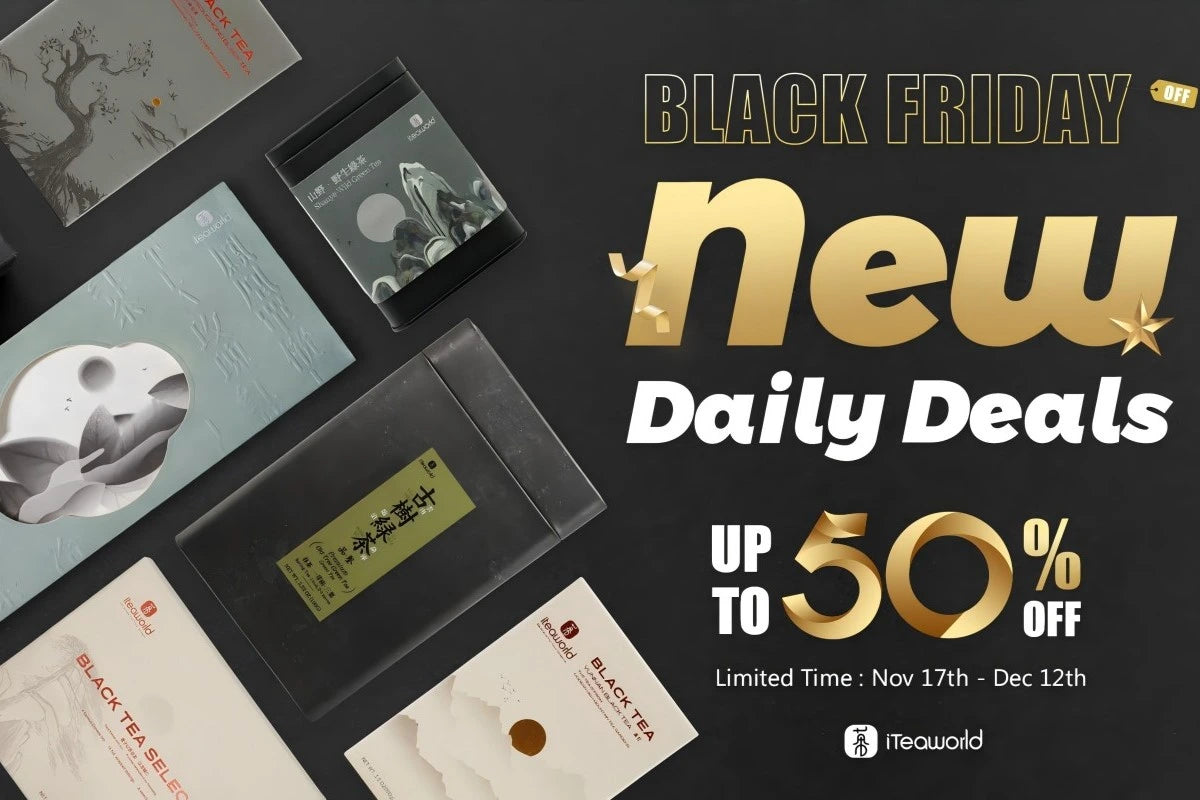
Dear Tea Enthusiasts! As the holiday season approaches and the cold weather sets in, I bet you’re on the lookout for the best way to warm yourself up. Chinese tea is catching the attention of many this season, and you know what that means? It’s time for an exciting Black Friday shopping spree! At iTeaworld, we’re rolling out our Crazy Black Friday promotion, offering a fantastic 25%-30% OFF, so you can stock up on your favorite loose leaf tea and explore new flavors without worrying about breaking the bank. Why Buy Tea This Black Friday? Best Savings of the Year: This is the most cost-effective shopping season. Comfort & Warmth: As temperatures drop, a hot cup of tea is exactly what you need. Healthy Choice: Tea is full of antioxidants and pairs perfectly with your healthy lifestyle. Perfect Gift: Tea makes an excellent, thoughtful gift for friends and family. Exclusive Discounts Await You Here’s the breakdown of our discounts: All orders < $100: Enjoy 25% OFF!! All orders ≥ $100: Enjoy 30% OFF!! Exciting Freebies To enhance your shopping experience, we’ve prepared some exclusive goodies for you: Spend $50: Get an Exclusive Panda Bookmark. It’s the perfect companion for your tea-sipping reading sessions! Spend $100: Receive a Beautiful Hand-Painted Teacup. Elegant and perfect for enjoying your brew.     Daily Deals Plus, don’t forget to check out our daily deals. You can snag up to 50% OFF on select tea products. Make sure to check back regularly! Discounts apply automatically at checkout November 17: Chinese Black Tea Sampler - Originally $19.99, now just $9.99!As of December 12 November 18: Wild Green Tea - Originally $31.43, now just $18.86!As of December 12 November 19: Wild Oolong Tea - Originally $35.88, now just $21.53!As of December 12 November 20: Wild Black Tea - Originally $30.23, now just $21.16!As of December 12 November 21: 3-Scent Jasmine Biluochun - Originally $15.90, now just $11.13!As of December 12 November 22: Chinese Cold Brew Tea Sampler - Originally $29.99, now just $17.99!As of December 12 November 23: Wild Souchong Chinese Black Tea- Originally $29.99, now just $19.49!  As of December 12 November 24: Old Tree Green Tea - Originally $14.99, now just $11.24!As of December 12 November 25: Yunnan Black Tea - Originally $9.99, now just $6.49!As of December 12 November 26: Guangxi Old Tree Black Tea - Originally $39.99, now just $29.99!As of December 12 November 27: Souchong Black Tea - Originally $29.99, now just $17.99!  As of December 12 November 28: Yingde Black Tea - Originally $24.99, now just $14.99!As of December 12 Pro Tip: Strategic ordering = Maximum savings Classic Collection Set: The Ultimate Starter If you’re unsure where to start, our value champion, the Classic Chinese Tea Sampler, is available for $19.99, now just $14.99. This set includes all the teas from our Chinese Black Tea Sampler  and Chinese Oolong Tea Sampler. It’s a fantastic entry option for anyone looking to explore the flavors of Chinese tea. Maximize Your Black Friday Savings Here’s how to truly maximize your savings: Discounts apply automatically at checkout 1. “Tea Lover’s Trio” Pick up: Classic Chinese Tea Sampler($19.99) Chinese Oolong Tea Sampler($19.99) Chinese Black Tea Sampler($19.99) Total Cost: $59.97Enjoy 25% OFF, bringing your total down to $44.98. What a steal! Additionally, you’ll receive the Panda Bookmark! 2. “Ultimate Tea Experience” Buy: Longjing Tea ($55.90) 9-Scent Jasmine Green Tea($39.99) Chinese Oolong Tea Sampler($19.99) Total Cost: $115.88You’ll get 30% OFF, making it just $81.12. Plus, you’ll receive the hand-painted teacup! 3. “Perfect Gift Set” Choose: Huangshan Maofeng ($25.45) Xinyang Maojian ($23.90) Chinese Black Tea Sampler($19.99) Total Cost: $69.34Enjoy 25% OFF, totaling $67.00. You’ll score another adorable Panda Bookmark! If you have some favorite tea varieties, take a look at our specific tea promotions.     Green Tea Picks: Refreshing Choices Looking for something fresh? Our green teas are sure to please. Discounts apply automatically at checkout 1. Longjing (Premium) Original $55.90, now just $41.925. This iconic Chinese green tea is known for its flat leaves and nutty aroma. Tasting Notes: Fresh, smooth, with a hint of sweetness. Health Benefits: Packed with antioxidants, it helps boost metabolism. 2. 9-Scent Jasmine Green Tea Original $39.99, now just $29.99. Ah, the floral wonder! This tea combines delicate white tea with jasmine. Tasting Notes: Light, fragrant, and sweet. Perfect Time: Ideal for relaxing after a long day. 3. Huangshan Maofeng Original $25.45, now just $19.08. Looking for something elegant? Tasting Notes: Delicate floral and grassy notes with a smooth finish. Occasion: Great for afternoon tea or casual gatherings. 4. Xinyang Maojian Original $23.90, now just $13.44. This tea has character! Bold flavor and vibrant green color. Tasting Notes: Rich, refreshing, and invigorating. Perfect Time: A fantastic midday pick-me-up. 5. Taiping Houkui Original $36.90, now just $27.67. Big leaves = bold flavor! Tasting Notes: Sweet, smooth, and aromatic. Enjoy It: Perfect for treating yourself.     Oolong Tea: Flavor Explosion If you want to venture out, give our oolong teas a try! Discounts apply automatically at checkout Chinese Oolong Tea Sampler Original $19.99, now just $14.99. Sample multiple flavors! This sampler includes: Da Hong Pao: Rich and complex with a roasted flavor. Original Price $29.90, now just $22.425. Tieguanyin: Light floral notes—it's a crowd favorite! Original Price $14.99, now just $11.24. Min Nan Shui Xian: Smooth and slightly sweet. Original Price $19.99, now just $14.99. Fenghuang Dancong Oolong tea: A wild taste adventure! Original Price $45.99, now just $34.49.     Black Tea: Bold and Beautiful Craving something bolder? Our red teas are your best bet! Discounts apply automatically at checkout Chinese Black Tea Sampler Original $19.99, now just $14.99. This combo takes you on a flavor journey: Souchong Black Tea : Smoky and rich for nighttime. Original Price $29.99, now just $22.49. Yunnan Black Tea: Malty and easy-drinking. Original Price $9.99, now just $7.49. Yingde Black Tea: Rich and balanced, perfect with snacks. Original Price $24.99, now just $18.74. Wild Souchong Black Tea: For fans of smoky flavors! Original Price $29.99, now just $22.49.     Frequently Asked Questions Q: How do I know which tea to choose?A: Start with our sample packs! They offer a great variety that lets you discover your favorite flavors. Q: Are these teas suitable for beginners?A: Absolutely! Many of our featured teas have mild flavors, making them perfect for newcomers. Q: Can I gift these teas?A: Yes! Our tea gift sets make thoughtful gifts, especially during the holiday season. Now that you have all this information, are you ready to dive into the captivating world of Chinese tea this Black Friday? With amazing discounts and enticing flavors, you’re not just buying tea; you’re getting an experience. Whether it’s enjoying a cozy cup yourself or gifting a thoughtful selection to friends, let this holiday season be special with iTeaworld. Check out iTeaworld.com for all the incredible deals! Happy shopping and happy sipping!  
Halloween Tea: How to Create the Perfect Halloween Afternoon Tea Party

Halloween Tea: How to Create the Perfect Halloween Afternoon Tea Party

Imagine the mysterious atmosphere of Halloween: jack-o'-lanterns flicker eerily, children's laughter echoes outside, and you're seated at an elegantly arranged afternoon tea party. With a warm cup of Loose Leaf Tea in hand, the slightly sweet aroma mingles with the crisp autumn air, bringing a sense of comfort. This afternoon tea not only carries the elegance and warmth of tradition but also adds a fun and unexpected Halloween twist, making the gathering truly unique. Combining ancient Chinese Tea culture with the magical spirit of Halloween can spark creativity for your party. Whether it’s festive tea blends inspired by orange, pumpkin, and blackberry or intricately designed treats alongside mysterious folklore, your guests will be treated to a one-of-a-kind sensory experience. It's not just a feast for the palate but also for the eyes and emotions, filled with fun and memorable moments. Halloween-Themed Tea Drinks On this spooky and playful holiday, carefully crafted festive tea drinks can enhance the atmosphere while offering guests a unique tea experience. Here are a few tea blends that capture the flavors of autumn, adding warmth and surprise to your Halloween afternoon tea party. Orange Yunnan Black Tea: This drink perfectly blends the rich and bold flavor of Loose Leaf Black Tea with the fresh, sweet-tart taste of orange, adding a festive flair to your Halloween celebration. Ingredients: 3g Yunnan black tea 1 fresh orange (juice) Orange zest (a pinch) 1-2 tablespoons honey 1 cinnamon stick (optional) Instructions: Brew the Yunnan black tea with 90°C water for 1 minute. Add fresh orange juice to the tea and stir. Sweeten with honey to taste. Add orange zest for extra aroma. Optionally, garnish with a cinnamon stick and orange slice. Oolong Pumpkin Milk Tea: Combining the rich flavor of Da Hong Pao Loose Leaf Oolong Tea with creamy pumpkin purée, this pumpkin milk tea brings cozy autumn vibes, perfect for a chilly night. Ingredients: 4g Da Hong Pao oolong tea 3 tablespoons pumpkin purée 200ml milk Syrup or maple syrup to taste Cinnamon powder (a pinch) Instructions: Brew the oolong tea with 85°C water for 1 minute and set aside. Heat the milk and pumpkin purée in a pot, stirring until slightly boiling. Combine the pumpkin milk mixture with the tea, sweeten with syrup or maple syrup. Sprinkle with cinnamon powder for decoration. Jasmine Lemon Tea: This refreshing blend of floral Best Jasmine Tea and zesty lemon creates a light and invigorating drink, perfect for your Halloween celebration. Ingredients: 3g Chinese Jasmine Tea 2-3 lemon slices 1-2 tablespoons honey Mint leaves (a few) Instructions: Brew the jasmine tea with 80°C water for 1 minute and set aside. Add lemon slices and honey to the tea and stir well. Garnish with mint leaves for a refreshing touch Apple Green Tea: Fresh apple juice paired with Loose Leaf Green Tea offers a crisp, refreshing autumn flavor that’s both festive and healthy.Ingredients: 3g Bi Luo Chun green tea 100ml fresh apple juice 1-2 apple slices 1 cinnamon stick Instructions: Brew the green tea with 80°C water for 2-3 minutes and set aside. Stir in fresh apple juice. Garnish with apple slices and a cinnamon stick. 5. Blackberry Jasmine Black Tea: The sweet richness of blackberry combined with the fragrance of jasmine creates a mysterious drink that fits perfectly with the Halloween mood. Ingredients: 4g Jasmine Black Tea 2 tablespoons blackberry jam Honey to taste Blackberries (for garnish) Instructions: Brew the jasmine black tea with 90°C water for 4 minutes and set aside. Stir in blackberry jam and sweeten with honey. Garnish with fresh blackberries for a mysterious visual effect. These creative Loose Leaf Tea Sampler drinks will not only provide a visual and taste delight but also elevate the Halloween ambiance. How to Create Halloween Decorations with Tea and Teaware Using tea leaves and teaware creatively can add a festive touch to your Halloween party. Here are some fun ideas: "Ghost" Teacup Lanterns Pumpkin Teapot Decoration "Bloody Tea" Table Decoration "Spiderweb" Teaware Display Tea-Stained "Book of Curses" These easy DIY ideas help create a spooky atmosphere with minimal effort while showcasing your love for iTeaworld Loose Leaf Tea. Tea Recommendations for Fall Fall brings cooler temperatures, making it an ideal time for cozy, warming teas. Here are some tea suggestions to enjoy this autumn: Oolong Tea Known for its balance between freshness and richness, the Best Oolong Tea is perfect for adjusting to fall weather. Pu-erh Tea A warming tea with a deep flavor, perfect for fall's cooler days. Black Tea Enjoy a cup of rich and smooth Loose Leaf Black Tea to help digest hearty autumn meals. Green Tea For milder, warmer fall days, Loose Leaf Green Tea offers refreshing, light flavors. A Halloween tea party isn’t just about enjoying delicious teas and treats. With creative decorations, seasonal teas, and festive fun, you’ll create lasting memories for your guests. From a cup of sweet and tart orange Yunnan black tea to a warm pumpkin-spiced oolong, your themed Tea Gift Sets can become a highlight of your event. Embrace the Halloween season and surprise your guests with personalized spooky charm through iTeaworld's Loose Leaf Tea Sampler. Happy brewing!
How to Pair Mooncakes and Tea?- Best Loose Leaf Chinese Tea | iTeaworld

How to Pair Mooncakes and Tea?

The Mid-Autumn Festival, often compared to the Thanksgiving of the East, is a time for reunion and gratitude. Friends and family gather together to enjoy the beauty of the full moon, celebrate the harvest, and share the warmth of home. The full moon, shining brightly in the night sky, symbolizes people’s hopes for unity and happiness. On this peaceful night, mooncakes—traditional festive pastries—become a quintessential symbol of the Mid-Autumn Festival. What Are Mooncakes? Mooncakes are classic Mid-Autumn Festival pastries, similar to Western apple pies. Like apple pies, mooncakes come with a variety of fillings, offering a wide range of flavors to cater to different tastes. However, mooncakes are often quite rich and sweet, making them ideal to pair with a cup of fragrant loose leaf tea. The tea not only balances the sweetness but also enhances the overall tasting experience. Therefore, finding the perfect mooncake and tea pairing adds a touch of fun and sophistication to moon-gazing during the festival. Now, let’s explore a few classic mooncake and Chinese Tea pairings to savor the unique flavors of the Mid-Autumn Festival. These tea pairings also make for thoughtful tea gift sets, perfect for sharing with loved ones during this festive season. A Guide to Pairing Mooncakes and Loose Leaf Tea ● LongJing Tea & Lotus Seed Paste Mooncake The refreshing notes of LongJing green tea perfectly complement the sweetness of lotus seed paste mooncakes, reminiscent of the balance found in Basque cheesecake. The green tea’s delicate fragrance balances the sweetness of the lotus seed paste, offering a delightful blend of freshness and sweetness. ● Ripe Pu’er Tea & Red Bean Paste Mooncake The rich flavor of ripe Pu’er tea pairs beautifully with the sweetness of red bean paste, akin to the richness of brownies. Pu’er tea aids digestion, making it an ideal choice to enjoy after indulging in red bean paste mooncakes. The tea’s aroma and the smooth texture of the bean paste harmonize, effectively balancing the richness of the filling.Find more dark tea with our Dark Tea Sampler.>>> ● Tieguanyin Tea & Five Nut Mooncake The bold flavor of Tieguanyin oolong tea can cut through the rich, nutty flavors of five nut mooncakes, much like scones paired with a strong brew. The loose leaf oolong tea’s full-bodied flavor perfectly complements the nutty, layered texture of the mooncake, making each bite refreshing while maintaining its richness.Find more oolong tea with our Best Oolong Tea.>>> ● Enshi Yulu Tea & Snow Skin Mooncake The light fragrance of Enshi Yulu green tea intertwines with the smooth texture of snow skin mooncakes, much like the refined flavor of macarons. The green tea’s freshness elevates the delicate texture of the snow skin mooncake, adding a touch of cool elegance to the Mid-Autumn celebration. ● Old Tree Green Tea & Suzhou-Style Mooncake The rich, earthy notes of old tree green complement the crisp, flaky layers of Suzhou-style mooncakes, similar to the pairing of apple pie and tea. The tea’s subtle grassy aroma and sweetness blend harmoniously with the mooncake’s buttery pastry, offering a layered, complex tasting experience. The interplay of the tea and the crisp pastry creates a contrast that is both robust and delicate.Find more green tea with our Chinese Green Tea.>>> These pairings of mooncakes and loose leaf tea create an exquisite tasting experience that can also be beautifully packaged as tea gift sets, offering a thoughtful way to share the festive joy with friends and family. During this festive season of reunion and gratitude, pairing mooncakes and tea is not just a culinary delight, but a way to honor cultural traditions. Each pairing strikes a balance of flavors, while encapsulating the warmth and joy of the Mid-Autumn Festival. As you gather under the full moon, choose a tea and mooncake pairing that suits your taste and savor the unique flavors of the season, celebrating the festival’s spirit of unity and happiness.
Cool and Refreshing: Best Summer Tea to Beat the Heat

Cool and Refreshing: Best Summer Tea to Beat the Heat

In the sweltering summer, tea is not just a beverage but a way to enjoy life. If you're looking for a healthy and refreshing option, Chinese tea is an excellent choice. From aromatic flower teas to refreshing green teas and smooth, sweet loose leaf cold brew tea, Chinese tea offers a wealth of options. Cold Brew Tea: Smooth, Sweet, and Aromatic A must-try in summer is brewing a cup of cold brew tea. The sweetness of iTeaworld's expertly selected loose leaf cold brew tea comes from tea polysaccharides and amino acids, not sugar. The cold brew method enhances the tea's smoothness and brings out a fresher and more pronounced aroma! · Jasmine Green Tea Looking for a refreshing and aromatic cold brew tea? You can't miss this Jasmine Green Tea. The fragrance of this jasmine flower tea is rich and long-lasting, requiring 7 pounds of fresh jasmine flowers to produce 1 pound of tea. The green tea is made from fresh leaves of the Yunnan high mountain large-leaf tea trees, resulting in a brew that is crisp and refreshing. · Rose Black Tea Elegant and fragrant are the perfect descriptors for this Rose Black Tea. Its aroma is exceptionally rich, with 4 pounds of fresh rose petals used to produce 1 pound of black tea. The black tea is made from the fresh leaves of Yunnan Fengqing large-leaf tea trees, resulting in a brew that is full-bodied and sweet. · Fenghuang Dancong Fenghuang Dancong Oolong Tea is known as the "perfume of teas" and is considered one of the best loose leaf tea. The fresh leaves for this Fenghuang Dancong come from hundred-year-old tea trees, making it more durable for multiple infusions, sweeter in taste, and exceptionally refreshing when cold brewed. Find more cold brew tea with our Cold Brew Tea Sampler.>>> Green Tea: Freshness in Various Dimensions China's rich variety of tea plant species and exceptional tea-making craftsmanship have given rise to a diverse array of loose leaf green tea. Whether you prefer a robust, refreshing, or sweet and mellow taste, you can find a corresponding variety in Chinese loose leaf green tea. Imagine experiencing a range of Chinese green tea in summer; you'll discover just how rich and varied freshness can be! · Green Tea Sampler We have curated a collection of some of the most classic Chinese green teas, including Longjing and Biluochun, and created this Green Tea Sampler. With just one box, you can taste green teas from different renowned regions and experience the flavors resulting from various green tea production techniques. · Wild Green Tea This Wild Green Tea stands out for its vibrant and untamed flavor. It comes from the misty high mountain tea regions of Guangxi and is an certified organic loose leaf tea. The initial taste of this Wild Green Tea is slightly bitter, followed by a sweet aftertaste, with a unique and refreshing apple aroma. · Old Tree Green Tea This Old Tree Green Tea is made from the fresh leaves of old tea trees in Yunnan and is highly durable for multiple infusions. It has a sweet and long-lasting taste with a distinctive honey aroma. Jasmine Tea: Summer's Fragrance and Elegance In the summer, it's easy to feel irritable and lethargic. At such times, soothing your mood with the gentle and elegant aroma of jasmine tea is perfect! Jasmine tea also makes delightful tea gift sets for family and friends. · 3 Scented Jasmine Tea As an introductory jasmine tea, this 3 Scented Jasmine Tea has a rich aroma that impresses from the first brew. The green tea base, made from Yunnan high mountain tea, offers a mellow taste. · 9 Scented Jasmine Tea The 9 Scented Jasmine Tea is considered by many to be the best jasmine tea. It is made by infusing green tea with the fragrance of fresh jasmine flowers 9 times. This jasmine tea has a fresh, rich, and long-lasting aroma, with a refreshing, full-bodied taste and a strong, enduring sweet aftertaste. Find more jasmine tea with our Chinese Jasmine Tea Sampler.>>> Other Low Oxidation Tea: A Unique Refreshing Experience In addition to the previously mentioned cold brew tea, green tea, and jasmine tea, there are other low oxidation teas that are perfect for summer, offering a distinctive tasting experience. With a diverse range of low oxidation teas available, we recommend using a loose leaf tea sampler to find the tea that suits you best. · TieGuanyin TieGuanyin is one of China's best oolong tea. Our Light-aroma TieGuanyin comes from the core production area in Anxi, Fujian. This TieGuanyin has a sweet and clear taste with a notable natural orchid fragrance, making it excellent for both hot and cold brews. · Wild White Tea The fresh leaves for this Wild White Tea come from wild tea trees in the core white tea production area of Fuding, hand-made by a white tea master with over 40 years of experience. This Wild White Tea has a refreshing and mellow taste, with intertwined aromas of pekoe, floral and fruity notes, and woody scents. Why Choose iTeaworld Summer Tea?  High-Quality Ingredients: We select high-quality loose leaf tea made from hand-picked, tender buds and leaves.  Refined Processing Techniques: Premium fresh leaves undergo meticulous and complex processing techniques, resulting in rich flavors and aromas. Our loose leaf tea can be steeped multiple times, maintaining their aroma and taste.  Rich Aroma and Flavor: The aroma and flavor of our loose leaf tea come from the fresh leaves and unique processing methods, without added sugar or artificial additives. Whether brewed hot or cold, iTeaworld loose leaf tea offers a more intense aroma and a richer taste. Hot Brewed Tea or Cold Brewed Tea for Summer Cooling down? Both hot brewed tea and cold brewed tea can help cool you down in the summer. In hot weather, drinking hot brewed tea can promote blood circulation and induce sweating. The evaporation of sweat helps carry away heat, cooling the body down. Cold brewed tea provides an immediate cooling sensation, helping the body cool down quickly. In humid weather, where sweat doesn't evaporate easily, drinking cold brewed tea is more effective. Which is Healthier: Hot or Cold Brewed Tea? Whether you choose hot brewed or cold brewed tea, the nutritional content of the tea leaves remains largely unchanged. High-quality loose leaf tea provides significant health benefits regardless of the brewing method. There is a difference in caffeine release between the two methods. Hot brewing tends to extract more caffeine from the tea leaves compared to cold brewing. If you are sensitive to caffeine, you might prefer cold brewed tea to enjoy the flavors of loose leaf tea with less caffeine. Stock Up and Save Big on Summer Tea! Don't miss out on these incredible summer deals at iTeaworld. With discounts of 20% sitewide + an extra 5% off on Summer Teas, it's the perfect time to stock up on all your favorite loose leaf teas, with total savings up to 25% off.Free Wild Tea Sample with All Orders + First Order Free Shipping Code: FIRSTSHIP (Over $9) Indulge your passion for tea exploration with our new Summer Tea Sampler or expand your collection with our refreshing Green, Jasmine, Oolong Tea (Lightly Oxidized) or Cold Brew Tea selections. Whatever your tea tastes, you can enjoy the refreshing and cooling benefits of tea every day while saving money. It's also the ideal opportunity to gift the joy of tea to loved ones this summer.Subscribe For A Chance To Win Ultra-Rare Free Yellow Tea! Wrap your loved ones in the refreshing embrace of tea this summer, adorned with the season's most delightful discounts! Get 20% off on all teas, plus an extra 5% off on summer teas for a total of up to 25% off. Enjoy the perfect summer with loose leaf teas!Please note that 20% OFF Sitewide + 5% OFF Summer Tea Products (Discounts apply automatically at checkout).
Top 6 Reasons to Drink Loose Leaf Green Tea in Summer

Top 6 Reasons to Drink Loose Leaf Green Tea in Summer

The summer sun is bright, but the temperature and the humidity is high. Especially when staying outdoors for a long time, your body may feel uncomfortable. While enjoying the outdoor sunshine, it's also important to take care of your body. At this time, drinking loose leaf green tea is a delicious and beneficial way to achieve physical and mental comfort during the scorching summer. 1. Ensure Adequate Hydration In summer, high temperatures cause the body to lose water quickly. To stay healthy, we need adequate hydration. Drinking plain water can be boring, and you might often forget about it. But loose leaf green tea changes the situation entirely. When you have your favorite green tea, you can't help but take a sip now and then. Chinese green tea comes in a rich variety of types, making it easy to find one you love. We recommend using a loose leaf tea sampler to try different varieties of green tea. 2. Both Iced and Hot Green Tea Can Cool You Down In summer, whether cold-brewed or hot-brewed loose leaf green tea, it can cool you down from the inside out. Cold-brewed loose leaf green tea amplifies its sweetness and aroma, and the icy sensation not only cools you down but also provides a refreshing and clear experience. Hot-brewed green tea is rich and refreshing. The hot tea promotes internal circulation in the body, helping you to sweat and cool down more quickly. 3. Protect Your Skin in the Summer Summer's strong UV rays make the skin more prone to damage and aging. Along with good sun protection measures, drinking loose leaf green tea can be a great supplementary method to help protect your skin. Loose leaf green tea is the only non-oxidized tea among the six major types of Chinese tea. It contains a large number of plant-based antioxidants, which can prevent cell damage and reduce cell aging. 4. Make Weight Loss Easier The polyphenols and caffeine in loose leaf green tea can speed up metabolism and promote the burning of fat and other substances. Studies have shown that proper exercise, supplemented with green tea, can achieve better weight loss results, making weight loss easier for you. 5. Boost Your Immunity The humid and hot summer climate, along with high temperatures, can easily affect your health and bring discomfort, such as bacterial infections, headaches, insomnia, and indigestion. Loose leaf green tea is rich in antioxidants like polyphenols and vitamins, which help boost your immune system and alleviate these discomforts. 6. Care for Cardiovascular Health In the high-temperature environment of summer, blood flow speeds up, and capillaries expand, which can easily cause cardiovascular problems. Studies have shown that loose leaf green tea can help regulate blood sugar, lower blood pressure, and reduce blood lipids, thereby reducing the likelihood of cardiovascular diseases. Therefore, regularly drinking loose leaf green tea in the summer is an excellent way to maintain cardiovascular health. Loose leaf green tea makes wonderful and healthy tea gift sets for family and friends in the summer. Additionally, after brewing loose leaf green tea, the used tea leaves can be used as natural eye masks and face masks. They can help eliminate dark circles and make the skin more delicate. It’s definitely worth a try! Find more loose leaf green tea with our Green Tea Sampler.>>> Loose Leaf Green Tea Recommendations · Longjing (Dragon Well) Longjing tea is one of the most famous Chinese teas and is considered one of the best loose leaf tea. The core production area of Longjing tea is the beautiful West Lake Scenic Area in Hangzhou, China. Longjing tea has a flat and straight appearance with a tender green color. It has a sweet and mellow flavor with a refreshing and fragrant aroma, complemented by a unique bean flower scent. · Biluochun Biluochun is produced in the Taihu region of Jiangsu, China. It is named for its curled shape resembling a snail and its abundant white tips. The uniqueness of Biluochun lies in the tender young buds and compact leaves picked during harvest. Biluochun tea has a bright green color, a fresh and mellow flavor, and a delicate aroma with distinctive floral and fruity notes. · Jasmine Green Tea Jasmine green tea has a very unique production process. Fresh jasmine flowers are layered with high-quality green tea multiple times, allowing the loose leaf tea to fully absorb the floral aroma before the jasmine flowers are removed. Jasmine green tea not only has the refreshing and health benefits of green tea but also combines the fragrance of jasmine flowers. · Huangshan Maofeng Huangshan Maofeng is produced in Huangshan, Anhui. Its uniqueness lies in its tender buds and the exquisite pan-frying technique, which results in exceptional performance in aroma, taste, and aftertaste. Huangshan Maofeng has a delicate appearance. The tea liquor is clear, with a fresh and mellow flavor, and an elegant aroma with hints of orchid. · Enshi Yulu Enshi Yulu is produced in Enshi, Hubei. Its unique steaming process preserves the natural color and rich nutrients of the tea leaves, resulting in a fresh taste with a long-lasting sweetness. Enshi Yulu has a fine and tight leaf shape with a bright green color. After brewing, the tea liquor is clear and bright, with a fresh and delicate aroma. · Old Tree Green Tea (Raw Pu-erh) Old Tree Green Tea (Raw Pu-erh) is made from fresh leaves of ancient tea trees in Yunnan. Due to its high-quality growing environment and tea-making process, it has a unique flavor and notable health benefits. Old Tree Green Tea is very durable when brewed. It has a rich and sweet taste with a long-lasting aftertaste and a distinctive honey-like aroma. If you're new to Chinese tea, the above green teas are great for you to explore. If you have some knowledge of Chinese tea and want to explore more unique green teas, you might try Wild Green Tea. This Wild Green Tea is made from the fresh leaves of wild tea trees, featuring fuzzy leaves and high tenderness, with a unique apple-like aroma. Additionally, this wild green tea is also an organic loose leaf tea. How to Brew Green Tea for the Best Taste? · Grandpa's Brewing Method Grandpa's brewing method is a popular technique loved by both beginners and experienced tea drinkers. All you need is a large cup, with a glass cup being the best choice. Add your loose leaf green tea and hot water to the cup in the appropriate ratio and temperature, then drink it after brewing. When the tea in the cup is almost finished, simply add more hot water. Repeat this process until the tea leaves lose their flavor. · Gongfu Brewing Method The Gongfu brewing method is a traditional Chinese tea preparation technique. It is suitable not only for loose leaf green tea but also for various types of Chinese tea such as loose leaf oolong tea and loose leaf white tea. Some of the best oolong tea, like Da Hong Pao and Fenghuang Dancong, are ideally brewed using this method with a white porcelain Gaiwan. The core of the Gongfu brewing method lies in multiple short infusions. This technique allows for precise control over brewing time and water temperature, bringing out the best flavors of the tea. You can refer to this video for specific steps on Gongfu brewing: https://www.tiktok.com/@iteaworld/video/7392924281056890144 · Cold Brew Method Most loose leaf green teas are excellent for loose leaf cold brew tea. Loose leaf green tea has a low oxidation level, characterized by its freshness, crispness, and aromatic clarity. The cold brew method enhances these qualities and reduces the bitterness of the tea. Cold brewing loose leaf green tea is simple and hard to get wrong. Generally, use 3 grams of green tea with 500 milliliters of water. Mix the tea and water thoroughly in a container, then refrigerate for 4-8 hours.iTeaworld offers a variety of high-quality loose leaf teas, making them perfect for gifting to friends.They are worthwhile best buy Summer Sale.If you're struggling to decide what to buy during the summer sale, consider selecting some loose leaf teas. They are not only healthy and delicious for personal enjoyment but also make excellent choices for staying refreshed in the summer heat.
Enhance Your Tea Drinking Experience with Chinese Tea

How Chinese Tea Enhance Your Tea Drinking Experience?

Abundance in tranquility Chinese tea is an art of abundance in tranquility. To others, you're just drinking tea, but little do they know you're immersed in a wonderful world unknown to outsiders. How does this all happen? When tasting Chinese tea, your tongue, palate, throat, and nose all experience subtle and distinct sensations. Meanwhile, the initial taste upon sipping, the mid-taste, and the aftertaste all vary. These different sensory and momentary experiences are not independent; they interconnect, sometimes in conflict, sometimes in harmony. What can regular drinking of Chinese tea bring? Regular drinking of Chinese tea indeed offers numerous health benefits. Multiple studies have shown that frequent consumption of Chinese tea can improve various diseases or adverse health conditions, including antioxidant effects, aiding in weight loss, improving digestion, boosting immunity, lowering blood pressure, and preventing dental cavities, among others. Moreover, Chinese tea embodies a wisdom about balance, helping individuals adjust their mental and physical states. When exploring Chinese tea, you'll discover there are many recommendations on how to drink it:  Avoid drinking tea on an empty stomach.  Don't brew tea too strong or too weak.  Different types of tea require specific brewing temperatures.  Match teas with appropriate seasons. These suggestions are not strict rules to follow but rather reflections of a lifestyle. These methods and rituals of tea drinking enhance the characteristics of the tea you're drinking, aligning with factors such as the current season, weather, and diet, allowing you to live more fully in the present moment. Why can Chinese tea offer such experiences and benefits? The earliest traces of Chinese tea date back to the time of Emperor Shen Nong, several thousand years ago. Initially, tea leaves were chewed raw. Over the course of history, a diverse array of tea varieties emerged. Incomplete statistics suggest there are now over 2,000 different types of Chinese tea. The main categories of Chinese tea include:  Loose leaf green tea  Loose leaf white tea  Loose leaf yellow tea  Loose leaf black tea  Loose leaf oolong tea  Loose leaf dark tea  Loose leaf flower tea Chinese tea pursues the utmost exploration and highest pursuit in both the quality of fresh leaves and tea-making craftsmanship. It is precisely this dedication that has given birth to renowned Chinese teas such as Biluochun, Longjing, Da Hong Pao, TieGuanyin, Qimen Black Tea, and many others acclaimed as the best loose leaf tea in China. Find more Chinese tea with our Chinese Tea Sampler.>>> How to Explore Chinese Tea? Chinese tea sounds fascinating, but it may seem a bit complex to get started. So how do you begin exploring Chinese tea?  For Beginners If you're just stepping into the world of Chinese tea, it's recommended to start with famous Chinese teas. These teas also make great gifts in tea gift sets for family and friends. There are various lists of famous Chinese teas. Typically, these lists feature well-known teas that most people are familiar with, such as Longjing and Da Hong Pao. If you find that one famous Chinese tea you try doesn't suit your taste, don't worry. Feel free to boldly try other famous teas. Chinese famous teas come in many styles, so there's always one that suits your preference.    For Experienced Chinese Tea Tasters At this stage, most tea enthusiasts have already sampled a variety of Chinese teas and have their favorite loose leaf tea. This phase is ideal for delving deeper into the realm of teas you enjoy. It's recommended to use a loose leaf tea sampler to explore further. If you find yourself enjoying the fresh and tender taste of loose leaf green tea, you can compare and taste various green teas from different regions and with different processing techniques. If you appreciate the aroma of loose leaf oolong tea, then trying the best oolong tea from the 4 famous oolong tea producing regions would be beneficial. Find more loose leaf green tea with our Green Tea Sampler.>>> Through this comparative tasting, you can gain a clearer understanding of the factors that determine the taste, quality, and price of Chinese tea. Your ability to brew and appreciate Chinese tea will further improve. Find more loose leaf oolong tea with our Oolong Tea Sampler.>>>    For Senior Chinese Tea Tasters Pu-erh tea, dark tea, and aged tea are types of teas that highly interest senior tea tasters. Pu-erh tea is particularly popular among senior tea tasters. When a tea lover falls down the rabbit hole, their ultimate destination could very well be Pu-erh tea. Besides ripe Pu-erh tea, other types of dark tea might not be as well-known internationally but are equally worth trying. Aged tea refers to teas that have been aged for a certain number of years, often developing a richer and more flavorful taste profile. In the world of Chinese tea, every cup is a unique experience. Apart from well-known types like green tea, oolong tea, and black tea, there are also lesser-known varieties such as wild tea and ancient tree tea, known for their high-quality fresh leaves. If you're looking for organic loose leaf Chinese tea, exploring ancient tree tea and wild tea would be ideal. Enjoying Chinese tea isn't just about savoring its flavors but also finding solace for the soul. By understanding the types of tea, brewing techniques, and tea etiquette, we can deeply appreciate the profound tea culture and the positive impact it has on our daily lives. Let's embrace tea not just as a beverage but as a ritual, a way to connect with ourselves.
Best Chinese Tea Gift Sets of 2024

Best Chinese Tea Gift Sets of 2025: A Perfect Gift for Tea Lovers

If you're looking to give a healthy and delicious gift, or if you have a friend or family member who loves tea, you should check out these Chinese Tea Gift Sets. These gifts offer a unique tea-drinking experience, perfect for those who appreciate the ceremony and mindfulness that comes with a cup of tea. Chinese tea is especially suited for those who seek inner peace and aspire to live healthier and happier lives. If the person you're gifting has any of these preferences, choosing Chinese Tea Gift Sets would be a thoughtful and meaningful choice.   1. Jasmine Tea - A Fragrance of Tranquility Chinese Jasmine Tea is a tea that almost everyone finds irresistible, with no learning curve required. It is fresh and light, offering an aromatic experience that feels like being in a garden. Did you know there are many varieties of jasmine tea? Entry-level three-scented jasmine tea has a rich and intense aroma, while top-grade nine-scented jasmine tea has a fresh and lingering fragrance. If you want to give a unique jasmine tea gift box, you should take a look at this Chinese Jasmine Tea Sampler. 2. Wild Tea - The True Taste of Nature If you're looking to give a truly special tea gift, consider the Wild Tea series. Wild tea refers to tea made from fresh leaves of tea trees grown wild in unmanaged natural environments. Wild tea impresses with its robust flavor and uplifting aroma. Whether it's wild green tea or wild black tea, each variety has a distinct personality that leaves a lasting impression. Want to experience the raw vitality and natural wildness? Give wild tea a try! If you're looking to buy organic loose leaf tea, you can also explore within the range of wild teas. 3. Fenghuang Dancong (Mi Lan Xiang) - A Classic Oolong Delight Some may say tea is just hot water. Fenghuang Dancong can change their perception. It's a tea that even non-tea drinkers find delicious. Fenghuang Dancong is renowned as one of the best oolong teas. Fenghuang Dancong comes in many aromas, with Mi Lan Xiang being a classic favorite. The fragrance of Mi Lan Xiang Fenghuang Dancong is neither too light nor too overpowering, making it a very comfortable and elegant aroma. Find more loose leaf oolong tea with our Oolong Tea Sampler.   4. Yunnan Black Tea (Dian Hong) - Rich and Robust For anyone who enjoys robust tea flavors, we always recommend Yunnan Black Tea. It has a classic smooth and sweet taste. Whether enjoyed on its own or with milk, Yunnan Black Tea is exceptionally delicious. Find more loose leaf black tea with our Black Tea Sampler. 5. Ripe Pu-erh - The Tea for Enthusiasts Ripe Pu-erh has a rich and deep flavor that is cherished by seasoned tea enthusiasts. If you steep ripe Pu-erh in a thermos, it can yield an exceptionally mellow and sweet taste. Additionally, ripe Pu-erh is known for its digestive benefits and its ability to help lower cholesterol levels. Find more loose leaf dark tea with our Dark Tea Sampler. 6. Chinese Tea Sampler - The Perfect Introduction If you've looked at many tea varieties and still aren't sure how to choose, this Chinese Tea Sampler might be perfect for you. This Chinese Tea Sampler includes the six most classic teas among the six major types of Chinese tea. We've gathered these universally recognized best loose leaf teas into this box. With just one box, you can taste and compare the different styles of Chinese tea. Whether you prefer fresh, robust, or aromatic teas, you'll find them all in this box. 7. Green Tea Sampler - Fresh and Invigorating When you think of green tea, what comes to mind? Perhaps a fresh taste like springtime. Imagine your spring experience. Do you see the surprise of early spring greenery? Or the leisurely feeling of late spring? Chinese green tea is much the same. Though all are loose leaf green tea, each variety offers a unique experience. For example, Longjing provides a mellow taste with hints of chestnut and a floral aroma, while Biluochun offers a refreshing taste with floral and fruity notes. Find more loose leaf green tea with our Green Tea Sampler. 8. Cold Brew Tea Sampler - Refreshing and Delicious Do you crave a cold brew tea on a hot day? Then you might want to try this Cold Brew Tea Sampler made from high-quality Chinese teas. These loose leaf cold brew teas offer both robust flavors and delightful directions. They provide you with a healthy, sugar-free beverage that's perfect for hot weather. Chinese tea is not only delicious but also provides a tranquil and elegant tea-drinking experience. Even within the same type of loose leaf tea, there is a wide variety of choices available for you to explore. It's like a palette of colors within the same hue—belonging to the same series yet each type leaves a distinct impression. By using a loose leaf tea sampler for tasting and comparing, you'll gain a richer and more enjoyable tea-drinking experience. We hope this article provides you with useful information and inspiration to help you choose the perfect tea gift.
The Delicate Balance of Loose Leaf Oolong Tea

The Delicate Balance of Loose Leaf Oolong Tea

What's the Delicate Balance of Loose Leaf Oolong Tea? Loose leaf oolong tea is a famous type of Chinese tea. It is characterized by its deliciousness and high fragrance, and is loved by many tea enthusiasts. The characteristics of loose leaf oolong tea lie between loose leaf green tea and loose leaf black tea, possessing multiple features such as freshness and richness. Within the characteristics of loose leaf oolong tea, there are various delicate balances, which give off an exceptionally charming beauty.  The Balance of Oxidation Level: The oxidation level of loose leaf oolong tea ranges from 15% to 70%, hence oolong tea is also known as semi-oxidized tea.  The Balance of Production Process: The core production process of loose leaf oolong tea is called Yaoqing. This process involves shaking and resting phases. Yaoqing is quite challenging; tea masters need to control the intensity and duration of Yaoqing and strive to achieve a delicate balance between motion and stillness. The key to producing the best oolong tea lies in this process.  Green Leaves with Red Edges: If you unfold steeped oolong tea leaves, you'll notice a mix of red and green colors, sometimes resembling green leaves with red edges. The green parts of the leaves are unoxidized, while the red parts are highly oxidized. The coexistence of different oxidation levels on the same leaf is an interesting balance.  The Balance of Taste and Aroma: The taste of loose leaf oolong tea is not overly light or too strong but rather rich with a refreshing touch, accompanied by a delightful aroma. Perhaps this is where the charm of loose leaf oolong tea lies. If you want to delve into oolong tea and brew a delicious cup of tea, a thorough understanding of oolong tea's characteristics will be significantly helpful. This delicate balance is indeed part of the notable features of oolong tea. Understanding the balance can enhance our appreciation and enjoyment of loose leaf oolong tea. Oolong Tea Recommendations  Light Aroma TieGuanyin: The Light Aroma TieGuanyin is produced in Anxi, Fujian, with a clear and elegant fragrance, offering a natural orchid aroma after brewing.  Zhangping Shuixian: Originating from Zhangping, Fujian, this tea boasts a rich traditional flavor and a high and lingering aroma.  Minnan Shuixian: Hailing from Yongchun, Fujian, Minnan Shuixian is durable, with a rich taste, high sweetness, and an elegant floral fragrance.  Fenghuang Dancong: From Chaozhou, Guangdong, Fenghuang Dancong is renowned as the "perfume of teas," with a lasting fragrance, rich and fresh taste, and a refreshing aftertaste.  Da Hong Pao: Grown in Wuyi Mountain, Fujian, Da Hong Pao is known as the "king of teas," with a smooth and sweet taste and a unique "rock charm."  Dongfang Meiren: Originating from Taiwan, Dongfang Meiren offers a mellow and sweet taste, with natural honey notes and ripe fruit aromas. Find more loose leaf oolong tea with our Oolong Tea Sampler.>>> The oxidation levels of the above oolong teas generally range from light to heavy, resulting in a transition in taste from refreshing to rich. You can use a loose leaf tea sampler to compare and taste different oolong teas, experiencing how variations in the shaking and withering process can create such a diverse range of flavors and aromas.  How to Brew Oolong Tea for the Best Flavor?  Recommended Method: Gongfu Brewing It's certain that oolong tea brewed using the Gongfu brewing method tastes the best. While other methods may produce decent oolong tea, it's essential to use Gongfu brewing to extract the essence of oolong tea.    Recommended Teaware: White Porcelain Gaiwan Using a white porcelain Gaiwan helps gather the aroma of oolong tea effectively. When you brew, you'll notice that the aroma in the Gaiwan and on the lid is particularly charming, and there will be delicate differences in the aromas from these two places.  Key Brewing Tips: Short Steeps Multiple Times Loose leaf oolong tea is best brewed with water between 95-100 degrees Celsius, using short steeps multiple times. During the first one or two steeps, the aroma of oolong tea begins to emerge. In subsequent steeps, the taste of oolong tea gradually becomes fuller and richer. After steeping up to 7 times, the concentration of the tea soup will decrease appropriately, but it will still retain a good aftertaste. The taste changes during multiple steeps vary depending on the type of oolong tea, so it's recommended to explore using a tea sampler. The fascinating flavor changes of oolong tea during multiple steeps make the brewing process very enjoyable. Additionally, multiple steepings can fully gauge the quality of Chinese tea. High-quality oolong tea can withstand multiple steeps at high temperatures. Find more Chinese tea with our Chinese Tea Sampler.>>> Storing Oolong Tea: Key Points to Note 1. Core Points for Storing Oolong Tea The aroma and taste of oolong tea are very susceptible to dissipating during storage. Especially the aromatic compounds in oolong tea, if stored improperly, are highly prone to oxidation. Therefore, the core points for storing oolong tea involve isolating it from air and keeping it in well-sealed packaging. 2. Other Conditions for Storing Oolong Tea In addition to proper sealing, storing oolong tea requires ensuring that the storage environment is free from direct sunlight, high temperatures, and any odors. 3. What to Consider When Storing Heavily Roasted Oolong Tea? Some heavily roasted loose leaf oolong teas, such as Da Hong Pao, tend to absorb moisture more easily. Therefore, when storing these oolong teas, it's best to place desiccants, dehumidifiers, etc., inside sealed bags to help maintain their quality. What are the Health Benefits of Oolong Tea? Like other Chinese loose leaf tea, oolong tea is not only delicious but also has various health benefits. Below are some of the main health benefits of oolong tea. Loose leaf oolong tea is suitable as a tasty and healthy daily beverage, as well as tea gift sets for family and friends.  Refreshes and Sharpens Mind: Oolong tea contains moderate levels of caffeine, which can help refresh and sharpen the mind, improve focus, and alertness without causing excessive stimulation like coffee does.  Promotes Weight Loss: Oolong tea contains catechins and caffeine, both of which can boost metabolism, aid in burning fat, and thus help with weight loss.  Antioxidant Properties: Oolong tea is rich in antioxidants, especially polyphenolic compounds, which help neutralize free radicals in the body, reduce cell damage, and slow down aging.  Improves Heart Health: Studies show that oolong tea can lower cholesterol levels in the blood, reducing the risk of heart disease and stroke. Additionally, oolong tea can improve vascular function and promote blood circulation.  Protects Dental Health: Oolong tea contains fluoride, which helps prevent tooth decay and other oral diseases. Moreover, the polyphenols in tea have antibacterial properties, inhibiting the growth of oral bacteria. We hope this article helps you appreciate the art and beauty of the delicate balance of loose leaf oolong tea. Apart from loose leaf oolong tea, there are many other best loose leaf tea worth exploring, such as loose leaf green tea, loose leaf black tea, and loose leaf dark tea, among others. In addition to these common types of tea, there are also niche varieties of Chinese tea like wild tea. If you're looking for Chinese organic loose leaf tea, you can explore in the realm of wild tea. Tasting Chinese tea is a delicate, tranquil art that can help us discover more inner peace and joy. We hope that enjoying Chinese tea can help you find a moment of peace and reflection in your busy life. Tasting Chinese tea is a delicate, tranquil art that can help us discover more inner peace and joy. We hope that enjoying Chinese tea can help you find a moment of peace and reflection in your busy life.
Chinese Tea - wild tea | iTeaworld

The 5 Best Chinese Wild Tea in 2025

  If you are looking for healthy and delicious loose leaf tea, you might want to check out Chinese wild tea. Chinese wild tea is made from fresh leaves of tea trees that grow in the wild, offering a unique flavor. Ready to Try Your Favorites? We have recently introduced a new batch of wild tea, which is delicious and diverse. Here are the main features of these wild teas:  2025 New Tea: This batch of wild tea was harvested in the spring of 2025. We bring you the freshest wild tea.  Variety of Choices: We offer a variety of wild green tea, wild black tea, and wild dark tea. Whether you prefer a rich or refreshing taste, you can find your perfect match here.  Delicious Taste: Wild tea is characterized by its high fragrance and rich taste, making it well worth tasting.  Suitable for: Wild tea is suitable for tea enthusiasts who pursue quality and taste. Wild tea also makes great healthy and delicious tea gift sets for family and friends. Wild Green Tea (40g $24.99) This wild green tea is characterized by its freshness and briskness. Even after multiple infusions, the aroma remains fresh and pleasant. This tea has a rich fragrance with a unique apple scent. Its taste is mellow and refreshing, slightly bitter at first, but quickly followed by a sweet aftertaste. The tea has a complex flavor profile and a long-lasting aftertaste.  Origin: This wild green tea comes from Kaishan Town, Hezhou City, Guangxi. The tea-producing area is surrounded by mountains on three sides, shrouded in mist all year round, at an altitude of about 1000 meters.  Tea Master: Chen Shangren has lived for generations in Dongnan Village, the most famous tea-producing area for Kaishan white hair tea. He specializes in processing these wild white hair teas (wild green tea). Wild Black Tea (40g $24.99) This wild black tea has an exceptionally rich flavor with a deep and lasting sweetness that is truly enjoyable. The tea has a strong floral aroma that infuses into the water. Its taste is rich and distinctly tea-flavored, with a complex and layered profile. Some of China's best loose leaf tea, like ripe Pu-erh and Yingde Black Tea, are renowned for their rich taste and complex layers. If you enjoy teas with a robust flavor, this wild black tea is not to be missed.   Origin: This wild black tea comes from the Daming Mountain area in Shanglin County, Nanning, Guangxi. The tea-producing area is at an altitude of about 900 meters.  Tea Master: Huang Jiamei's family has lived for generations at the foot of Daming Mountain in Shanglin County, Nanning. She has been drinking and making tea since childhood and is skilled in making Daming Mountain wild black tea and wild green tea. Wild Oolong Tea (40g $29.99) This wild oolong tea is characterized by its distinct aroma. When you hold the tea in your mouth, you will feel the aroma rush through your senses. Some famous oolong tea, such as Fenghuang Dancong and TieGuanyin, are considered the best oolong tea because of their fragrance. Therefore, this wild oolong tea is well worth tasting. The tea has a floral and fruity aroma that infuses into the water. Its taste is rich and refreshing, inducing salivation and leaving a clear, lingering aftertaste in the throat.  Origin: This tea comes from Lijiang Village, Longsheng County, Guilin, Guangxi. The area is surrounded by mountains, rich in organic soil, with strong sunlight and frequent rain, at an altitude of about 1000 meters.    Tea Master: Liu Hai's ancestral home is in Wuyi Mountain, the origin of Wuyi rock tea. He learned to make Wuyi rock tea and black tea from his elders since childhood. He is skilled in handcrafting traditional-style Wuyi rock tea. Wild White Tea (40g $24.99) This wild white tea stands out for its delicate tea liquor and rich floral aroma. It is a tea meant to be savored slowly. The tea has a distinct floral fragrance with a hint of bud aroma. Its taste is fresh, mellow, and sweet, with a long-lasting aftertaste.  Origin: This tea comes from Diantou Town, Fuding City, Ningde, Fujian Province. The tea-producing area shares the same geographic coordinates as the “golden latitude" for wine, known as the “golden latitude" for Fuding white tea. The average altitude here is over 600 meters.  Tea Master: Zhu Naihan has lived for generations in Guanyang Village, Diantou Town, Fuding City. He specializes in the traditional production of Fuding white tea. Wild Dark Tea (40g $24.99) This wild dark tea is shaped like ancient copper coins, with a glossy, dark appearance. The tea has a unique pine smoke aroma that is pure and long-lasting. Its taste is mellow, sweet, and soft, with a rich texture and a long-lasting aftertaste.  Origin: This tea comes from Anhua County, Yiyang City, Hunan Province, which is also the birthplace of Anhua dark tea. The tea-producing area is at an altitude of about 1000 meters.  Tea Master: Luo Gaoyang's family has been making tea for generations, with 13 generations involved in dark tea processing since the mid-Qing Dynasty. He started helping his elders with tea picking and processing at the age of ten. After reaching adulthood, in addition to inheriting his family's tea-making skills, he attended several dark tea-making workshops and earned the title of Senior Tea Master. What to Look for When Purchasing Wild Tea? Check for Detailed Origin Information Compared to other Chinese tea, the production of wild tea is very limited. The reasons for the low yield of wild tea include the small number of wild tea trees, the need for manual harvesting, and the high difficulty in processing wild tea. As a result, there are instances where plantation tea is sold but claimed to be wild tea. Before purchasing wild tea, be sure to check for detailed origin information and photos of the tea plantations. This will help ensure you are buying authentic, high-quality wild tea.  Check for Relevant Testing and Certification Wild tea trees grow without human management, so generally, no pesticides or fertilizers are involved in the growth of wild tea. If you are looking for organic loose leaf tea from China, you can consider looking within the range of Chinese wild tea. Before purchasing, check for organic testing and certification from professional organizations to ensure you are buying qualified organic loose leaf tea.  Consider Purchasing Samples Before Buying Full Packages Wild teas of different varieties have very different taste profiles. It's not advisable to buy large packages of tea until you are sure which type of loose leaf tea you prefer. You can start by trying samples using a loose leaf tea sampler. Once you've determined your preferred taste, then purchase full packages, which is more economical and practical. These 5 best Chinese wild teas not only showcase nature's bounty but also highlight the richness and diversity of wild teas. While tasting these teas, we not only experience the wonders of nature but also appreciate the exquisite craftsmanship of Chinese tea making. Shop 5 Wild Varieties all in one box, only $5.9 Let's raise our cups together and savor the endless charm of these wild teas.
 Chinese Tea tasting guide

Tasting Guide: Why Does Chinese Tea Offer a Superior Sipping Experience?

Chinese Loose Leaf Tea vs. Bagged Tea If you have the opportunity to compare the taste of Chinese loose leaf tea and bagged tea, you can clearly feel that Chinese loose leaf tea offers a better and more memorable taste. Why is this so? Here are some reasons: Tea Leaf Quality: If you cut open a bag of tea leaves, you'll get a pile of tea leaf fragments. In contrast, the dry leaves of Chinese loose leaf tea are mostly intact. From the appearance of steeped Chinese loose leaf tea, you can easily imagine what these tea leaves looked like when they were picked. Tea Leaf Source: The source of tea leaves for bagged tea prioritizes convenience and speed, far from being as strict as Chinese loose leaf tea. Chinese loose leaf tea adheres to various standards such as garden quality and picking time, thus offering higher quality and taste. Brewing: Bagged tea generally loses its flavor after one or two brews. On the other hand, Chinese loose leaf tea can be brewed multiple times, with high-quality Chinese tea often able to be brewed 7 times or more. An Ancient Chinese Tea Experience The above content only covers the basic aspects of Chinese tea. In reality, the wonderful experience provided by Chinese tea goes far beyond these. Among Chinese tea enthusiasts, there is a poem from the Tang Dynasty poet Lu Tong called "Seven Bowls of Tea." This poem beautifully and accurately describes the experience of tasting Chinese tea. 七碗茶诗 Seven Bowls of Tea 卢仝 By Lu Tong 一碗喉吻润,二碗破孤闷。 One bowl moistens the throat, the second breaks the solitude. 三碗搜枯肠,唯有文字五千卷。 Three bowls search the intestines, only finding words five thousand scrolls. 四碗发轻汗,平生不平事,尽向毛孔散。 Four bowls cause a slight sweat, life's injustices, all dissipate through the pores. 五碗肌骨清,六碗通仙灵。 Five bowls cleanse the flesh and bones, six bowls connect with the immortal spirit. 七碗吃不得也,唯觉两腋习习清风生。 Seven bowls, unable to eat anymore, only feeling the refreshing breeze under both armpits. Where Do Tea Leaves Grow? Chinese Tea Provides the Info. High-quality Chinese loose leaf tea generally provides clear information about the source of the tea leaves, including the tea garden from which they were harvested and the specific picking time. Just as the deliciousness of food is largely determined by the quality of the ingredients, the taste of Chinese tea is closely related to the quality of the fresh leaves. Chinese tea with clear, high-quality sources is very suitable as tea gift sets for family and friends. China has many tea-producing regions, some of which are famous. These tea-producing regions have superior soil, rainfall, climate, and other conditions, producing unique and delicious teas that are highly sought after by many people. Here are two examples: Pu'er: Pu'er tea is mainly produced in the southwestern region of Yunnan Province, China, where the climate is rainy and characterized by misty mountain landscapes. There are numerous rivers, such as the Lancang River and Nu River, forming steep gorge terrain. In this superior geographical environment, a large number of tea trees grow, including ancient tea trees several hundred or even thousands of years old. Nowadays, Pu'er tea enthusiasts can be found all over the world. The popularity of Pu'er tea is closely related to its place of origin. Da Hong Pao: The famous loose leaf oolong tea Da Hong Pao is produced in Wuyi Mountain, Fujian Province, China, and is one of the best oolong tea in China. Besides being a famous tea-producing region, it is also a AAAAA tourist attraction in China. Wuyi Mountain has a complex terrain with steep slopes and a variety of rocks such as volcanic rock, granite, and limestone, forming a unique landscape. Moreover, Wuyi Mountain is located in a subtropical zone with a mild and humid climate, which is very suitable for tea tree growth. The core production area of Da Hong Pao is collectively referred to as the "San Keng Liang Jian" (Three Gorges and Two Streams). Tea produced from these areas is particularly high-quality and expensive, known as authentic Yan Cha (rock tea). Find more loose leaf Chinese tea with our Chinese Tea Sampler.>>> China's Exquisite Tea-making Techniques Behind every famous Chinese tea, there is a unique tea-making technique that has often been refined and passed down for hundreds of years. It's recommended that everyone explores the taste of different Chinese teas using a tea sampler. Experienced tea masters are familiar with the state of tea leaves at each stage and know how to fully bring out the deliciousness of fresh leaves. Let's explore China's exquisite tea-making techniques through two examples. Longjing (Dragon Well) The tea-making process of the famous loose leaf green tea Longjing involves meticulous steps such as withering, rolling, and frying, all of which require skilled tea artisans with rich experience. Especially in the frying process, mastery of heat control, technique, and other technical requirements is necessary to ensure the color, aroma, and taste of the tea leaves. Experienced Longjing tea fryers apply different production techniques to different fresh leaves, such as "tender leaves with old firing, old leaves with tender firing." It is these techniques that produce the delightful taste of the famous Chinese green tea Longjing. Discover more loose leaf green teas with our green tea sampler. Find more loose leaf green tea with our Green Tea Sampler.>>> Fenghuang Dancong One of the core production techniques of the famous loose leaf oolong tea Fenghuang Dancong is the Zuoqing process, which is the key to this tea's enchanting aroma. The Zuoqing process of Fenghuang Dancong needs to be adjusted based on the daily weather conditions. If the sun is strong on the day of sun-drying the fresh leaves, then the shaking of the fresh leaves should be gentle; if the sun is milder, then the shaking motion should be more vigorous. This is a delicate balance that contributes to the tea's exquisite aroma. Find more loose leaf oolong tea with our Oolong Tea Sampler.>>> China's Long History of Tea Production and Diverse Tea Varieties According to research, tea trees first grew in the southwestern region of China, and the history of tea can be traced back to around 3000 BC. Initially, people might have boiled tea leaves to make a soup, and later, the techniques for tea processing gradually developed. Over thousands of years of development, the tea-making craftsmanship in China has continuously evolved and improved, giving rise to different types of teas such as green tea, yellow tea, white tea, black tea, oolong tea, black tea, and dark tea. Each major type of tea has its unique flavor and characteristics. Moreover, each major type of tea includes numerous renowned varieties. This is why many people who enter the world of Chinese tea are deeply captivated by it. Feel free to use a loose leaf tea sampler to explore the rich world of Chinese tea and discover the best loose leaf tea that suit your taste. How to Brew Chinese Tea for Better Taste? The high-quality nature of Chinese tea is fundamental, but the appropriate brewing conditions and methods are also crucial in bringing out the deliciousness of Chinese tea. Here are some key points to help you brew Chinese tea better: Use Gongfu Cha brewing method: Using the Gongfu Cha brewing method allows you to easily control the tea-to-water ratio and brewing time, enabling you to better unleash the potential of Chinese tea. Follow brewing instructions: Each type of Chinese tea requires different brewing conditions. Generally, the packaging of tea will provide information such as tea-to-water ratio, brewing water temperature, brewing time, and number of brews. Please try to follow these instructions as closely as possible, and you will be amazed by the delicious tea you produce. Choose high-quality water: Choosing high-quality water such as spring water or mineral water can greatly enhance the taste of Chinese tea. Pay attention to brewing sequence: Generally, pouring in a small amount of hot water to preheat the teaware first can enhance your brewing experience. For certain types of tea leaves, such as Pu'er tea and oolong tea, multiple brews can be done, with each brewing time gradually increasing, allowing you to taste different flavors of tea liquor.
Know About Chinese Tea: Is It Good to Drink Chinese Tea Every Day?

Know About Chinese Tea: Is It Good to Drink Chinese Tea Every Day?

Some people might wonder, can people drink Chinese tea every day? The answer is yes. Just as coffee enthusiasts start their day with a cup of coffee, Chinese tea lovers also begin their day with a cup of tea. Benefits of Drinking Chinese Tea Every Day Chinese loose leaf tea contains no sugar and is rich in substances beneficial to health. Many people drink Chinese loose leaf tea every day because they personally experience how it can make the body more comfortable, the mind sharper, and overall mood happier. Therefore, Chinese tea is suitable as healthy tea gift sets for family and friends. Below are some of the health benefits that Chinese tea may bring: Mental alertness: Most Chinese teas contain a certain amount of caffeine. The caffeine in tea can help people improve alertness and attention, enabling them to better navigate daily life and work. Chinese tea contains much less caffeine compared to coffee. If you want to reduce caffeine intake but still maintain mental clarity, Chinese tea is a good choice. Antioxidants: Chinese tea contains various types of antioxidants such as catechins and vitamin C. Regular consumption of Chinese tea helps resist damage from free radicals and slows down the aging process of cells. Beauty and skincare: The various components in Chinese tea have anti-inflammatory and antibacterial effects, helping to purify the skin and eliminate toxins, keeping your skin in better condition. Cardiovascular health: Several studies have shown that long-term consumption of Chinese tea is helpful in lowering blood sugar, blood pressure, and blood lipids, which positively impacts cardiovascular health. Chinese tea not only offers numerous health benefits but also comes in many varieties and is very delicious. When you're ready to embark on a journey with Chinese tea, it's recommended to start with a loose leaf tea sampler for convenience and affordability. Understanding Chinese Tea Ceremony The Chinese tea ceremony has a long history, dating back to the pre-Qin and Wei-Jin periods, roughly 2,000 years ago. The Chinese tea ceremony is about appreciating the beauty of tea, involving aspects such as brewing, tasting, appreciating, and cultural significance. During the process of brewing tea, people carefully experience the aroma and taste of the tea, expressing reverence for tea and cherishing life through meticulous actions and a sense of ceremony. The Chinese tea ceremony emphasizes not only the taste of tea but also the relationship between tea and people, interpersonal communication, and the connection between tea and nature. Find more loose leaf Chinese tea with our Chinese Tea Sampler.>>> How Do Chinese People Drink Tea Everyday? Many might be curious, do Chinese people usually sit at a tea tray and follow specific tea brewing steps when drinking tea in daily life? In some regions, such as certain parts of southern China, you might observe people using traditional Gongfu tea brewing methods in their daily tea rituals. However, more often than not, Chinese tea brewing and consumption are quite flexible and diverse. In rural areas of China, where people are busy with work, there isn't always the luxury of time to meticulously brew tea. Instead, people might quickly brew a large quantity of tea with hot water in the morning, leaving it on the table to drink throughout the day or taking it along while working outdoors. In certain mountainous areas of Guangxi, people even use tea leaves in cooking. They stir-fry the tea leaves with oil, add other ingredients, then boil and consume the mixture. During work hours, if Chinese people drink tea, it's likely in a large cup where they add tea leaves and hot water for brewing, or they use a kettle to boil the tea leaves. In reality, a complete set of Gongfu tea utensils is not commonly seen in Chinese offices. On the streets of China, you'll find more milk tea shops than traditional tea rooms. Milk tea has become a popular way for young Chinese people to enjoy tea. You'll find various types of Chinese teas in these shops, such as famous loose leaf oolong teas like TieGuanyin and Da Hong Pao, as well as fragrant flower teas like Chinese jasmine tea. These teas are combined with milk, fruits, and other ingredients to create refreshing beverages. However, it's worth noting that while daily consumption of Chinese tea is perfectly fine, indulging in these milk teas daily is not advisable and can even be harmful to health. Fine more loose leaf oolong tea with our Oolong Tea Sampler.>>> What Types of Tea Do Chinese People Typically Drink? Generally speaking, the types of tea consumed by Chinese people vary across different regions. Chinese people have stable consumer groups for the six major types of tea (green tea, white tea, yellow tea, oolong tea, black tea, and dark tea), as well as processed flower teas. Typically, people in a region consume the tea that is locally produced. For example, in Guangdong Province, which produces Fenghuang Dancong, many locals love to drink Fenghuang Dancong, which is also considered one of the best oolong tea. Similarly, Zhejiang, Anhui, Hubei, and other regions produce loose leaf green tea. If you visit a friend's house in these areas, it's highly likely that they will serve you loose leaf green tea. However, there is one type of tea that seems to transcend regional boundaries and is considered one of the best loose leaf tea by many, and that is Pu'er tea. Whether in southern or northern China, you will find enthusiasts of Pu'er tea. How to Drink Chinese Tea Healthily Every Day While it's possible to drink Chinese tea every day, it doesn't mean there are no guidelines to follow. Paying attention to certain key points can help you enjoy delicious Chinese tea in a healthier and more relaxed manner. Daily Tea Intake: Although Chinese tea is beneficial for health, it's not recommended to drink it limitlessly. A daily intake of approximately 500-1000 milliliters of tea is suitable. Avoid Drinking Tea on an Empty Stomach: Drinking tea on an empty stomach can potentially affect gastrointestinal health, leading to digestive irritation and overstimulation of the nervous system. Avoid Drinking Extremely Hot Tea: Consuming tea that is too hot can pose risks of oral and esophageal burns. Long-term consumption of extremely hot tea may increase the risk of esophageal disorders such as esophageal ulcers and esophageal cancer. Avoid Drinking Strong Tea Before Bed: Strong tea contains high levels of catechins and caffeine, which may affect sleep quality and duration. Therefore, it's not recommended to drink strong tea before bedtime. When to Drink Chinese Tea? There is no specific time to drink Chinese tea; as long as you are not on an empty stomach and it does not affect your sleep, you can enjoy tea whenever you like. It is generally more comfortable for the body to drink some Chinese tea after meals, such as after breakfast (around 9-10 AM) and after lunch (around 1-3 PM). If conditions allow, you can drink different types of tea at different times of the day. For example, you can have some green tea after breakfast and some black tea after lunch. Want to experience how Chinese tea enriches your day? Build Your Own Tea Gift Box – Choose 20 Flavors from 42 samples>>  
Discover Types of Chinese Tea

Discover Types of Chinese Tea: From Green to Oolong to Dark Tea

Let's Start with the Color of Tea Soup Black tea and green tea are probably names everyone is familiar with. You might have also heard of white tea and dark tea. In fact, among the six major types of tea in China, only one type of tea (oolong tea) is not named based on color. Therefore, it's a good idea to start understanding the types of Chinese loose leaf tea from the perspective of color. However, please consider color only as a starting point, because once you have enough knowledge about Chinese tea, you will realize that merely judging tea by its color is far from sufficient. What determines the color of tea soup? The core change during the tea-making process—oxidation—determines the color of the tea soup. Here's a simple principle: the higher the degree of oxidation, the darker the color of the tea soup. Oxidation is too abstract. I want to know what it actually means! The degree of oxidation actually determines the taste of tea. The lower the degree of oxidation, the more substances are retained in fresh tea leaves, resulting in a fresher and more refreshing taste in the produced tea. The higher the degree of oxidation, the more changes occur in the substances within fresh tea leaves, resulting in a richer and more robust taste in the produced tea. Here is a summary: Green Tea (Oxidation: 0) - Fresh and Tender White Tea (Oxidation: 5%~10%) - Light and Sweet Yellow Tea (Oxidation: 10%~20%) - Delicate and Mellow Oolong Tea (Oxidation: 15%~70%) - Lasting Aroma and Rich Flavor Black Tea (Oxidation: 70%~90%) - Rich and Full-bodied Dark Tea (Oxidation: 100%) - Mellow and Lingering After-taste Advanced Understanding of the 6 Major Types of Chinese Tea Chinese tea is a rich and vivid world, and summarizing it in words alone is too superficial. All of this information serves as an introduction, similar to signposts that can help you quickly find the best loose leaf tea that suits you. The real journey begins when you taste the tea. Green Tea Loose leaf green tea is the earliest type of tea to appear in China and also has the most varieties among the six major teas. People pursue freshness and tenderness in green tea, and many production techniques for green tea have developed based on this. For example, the best fresh leaves for green tea are full buds, followed by one bud and one leaf, and then one bud and two leaves, and so on. Characteristics of Green Tea: Clear Soup, Green Leaves Production Process: Killing Green → Rolling → Drying RepresentativeTeas: >Biluochun Tea >Longjing Tea >Huangshan Maofeng Find more loose leaf green tea with our Green Tea Sampler.>>> White Tea White tea has the fewest production steps among the six major teas. Many people may find white tea too mild at first, but a deeper taste reveals its richness and beauty. White tea is distinguished between new tea and aged tea. New tea is fresher and more fragrant, while aged tea is richer and more flavorful. Characteristics of White Tea: Clear Soup, Green Leaves with White Hair Production Process: Withering → Drying Representative Teas: >White Peony Tea >White Hair Silver Needle >Shou Mei Yellow Tea Yellow tea is the rarest type among the six major teas. How rare is it? Some seasoned tea enthusiasts may not have even tried yellow tea. Yellow tea shares many characteristics with green tea, but it has a yellowish color and a mellower taste compared to green tea. Characteristics of Yellow Tea: Yellow Soup, Yellow Leaves Production Process: Killing Green → Rolling → Moist Yellowing → Drying Representative Teas: >Junshan Silver Needle >Mengding Huangya >Huoshan Huangya Oolong Tea A notable characteristic of loose leaf oolong tea is its strong fragrance. While other types of tea like green tea and black tea also have pleasant aromas, none are as prominent and rich as oolong tea. Furthermore, many characteristics of oolong tea lie between those of green tea and black tea. You might taste a tea and think it's black tea, only to find out it's actually oolong tea. To determine if a tea is oolong, one must look at the production process rather than relying solely on taste. Characteristics of Oolong Tea: Yellow or Red Soup, Green Leaves with Red Edges Production Process: Withering → Bruising → Killing Green → Rolling → Drying Representative Teas: >Fenghuang Dancong >TieGuanyin >Da Hong Pao Find more loose leaf oolong tea with our Oolong Tea Sampler.>>> Black Tea Black tea is a well-known type that many people are familiar with. Its tea soup is reddish and it has a strong taste. The earliest black tea in the world originated in China, and now the cultivation and production of black tea have expanded to many countries, resulting in the development of various varieties. Characteristics of Black Tea: Red Soup, Red Leaves Production Process: Withering → Rolling → Oxidation → Drying Representative Teas: >Yunnan Black Tea >Lapsang Souchong >Jin Jun Mei Find more loose leaf black tea with our Black Tea Sampler.>>> Dark Tea Dark tea is cherished by many seasoned tea enthusiasts. An interesting phenomenon is that no matter which type of Chinese tea one starts with, they might end up appreciating dark tea. Dark tea is famous for its post-fermentation process, resulting in a taste that is rich and enduring. Characteristics of Dark Tea: Red or Brown Soup, Brown Leaves Production Process: Killing Green → Rolling → Wet Piling (Post-fermentation) → Drying Representative Teas: >Ripe Pu'er >Anhua Dark Tea >Liubao Tea You can try through a loose leaf tea sampler to explore diverse Chinese teas. A tea sampler is a collection of small packets containing different types of tea, making it more economical and convenient. Why Are There So Many Types of Tea? Some tea types were born accidentally! The production processes of some teas were discovered accidentally or were once considered failed production methods. For example, there was a mistake in the production of green tea that caused the leaves to turn yellow. This led to the creation of the earliest yellow tea. The birth of dark tea is even more interesting. Early on, people transported green tea to regions like Tibet, a journey that took 2-3 months. During the long transportation, the green tea would get repeatedly wet from rain and then dried in the sun, completely changing its appearance and taste. Eventually, people discovered that these tea leaves were unique and tasted great, leading to the exploration of the production process for dark tea under conditions simulating long-distance transportation. The wisdom of Chinese people making full use of tea The earliest type of tea was only green tea, which required using the youngest buds and leaves. So what about the other slightly mature leaves on the tea tree? Later on, during exploration, people discovered that these slightly mature fresh leaves produced teas with different flavors. These flavors were not the fresh and tender ones of green tea but were richer in taste or easier to develop aromas. Now, oolong tea and black tea are made using slightly more mature fresh leaves. The well-known aromas of some of the best oolong tea (such as Fenghuang Dancong, Da Hong Pao, etc.) are closely related to the corresponding fresh leaves of the tea tree. This wisdom of making full use of fresh leaves at different stages indirectly contributed to the birth of a wide variety of teas in China. Find more Chinese tea with our Chinese Tea Sampler.>>> Frequently Asked Questions: What type of tea is Pu'er? Pu'er tea is a general term for a type of tea produced in Yunnan Province, China. Pu'er tea is divided into raw Pu'er (sheng Pu'er) and ripe Pu'er (shu Pu'er). Raw Pu'er (sheng Pu'er) belongs to the category of green tea because it does not undergo post-fermentation during production. Raw Pu'er (sheng Pu'er) is often mistakenly thought to be dark tea. Pu'er (shu Pu'er) is the true form of dark tea. What type of tea is Chinese flower tea? You may have heard of some Chinese flower teas, including jasmine flower tea, osmanthus flower tea, and magnolia flower tea. These flower teas are fragrant and delicious, making them perfect as tea gift sets. Chinese flower tea is made by allowing dried tea leaves to absorb the aroma of fresh flowers. Strictly speaking, Chinese flower tea does not belong to the six major types of tea; it is a type of processed tea. Find more loose leaf jasmine tea with our Chinese Jasmine Tea Sampler.>>> What is Lapsang Souchong? Why does it have a smoky flavor? Lapsang Souchong is a type of black tea. Only traditional Lapsang Souchong made with traditional methods has a smoky flavor. This smoky flavor comes from two special processes during production: the pine wood smoking during the withering stage and the pine wood drying during the drying stage. Modern Lapsang Souchong made with modern methods no longer has a smoky flavor. At this point, you likely have some understanding of the types of Chinese tea. There may still be areas where you feel you need more information and want to learn more. Indeed, there is much more to explore about Chinese tea. The development of Chinese tea encompasses complex, accidental, exploratory, pursuit-driven, skilled, cultural, and heritage aspects, making it difficult for us to fully understand it from a singular perspective. However, this is perfectly fine and actually quite an interesting process. Let's enjoy this journey of exploration together.
chinese tea for Beginner

Diving Into Chinese Tea: How Can a Beginner Get Started?

When you click into this article, you must have an interest in Chinese tea. Are you looking to explore a richer tea experience than tea bags offer? Or perhaps you've received Chinese tea as a gift and are curious to try? However it began, here we are at the doorstep of Chinese loose leaf tea. Below are some simple and practical suggestions to help you get started! What Kind of Chinese Tea Is Suitable for Beginners? Instead of diving into complex tea knowledge, it might be better to start with a few delicious teas! Additionally, a tea sampler is also a good choice. Below are several teas with different styles but all delicious, and easy for beginners to fall in love with. When beginners first start exploring Chinese loose leaf tea, they may prefer teas with a mild taste and pleasant aroma, while not enjoying teas with a pronounced bitterness. Therefore, we have labeled these 3 dimensions (for reference only, actual experiences may vary from person to person) to help beginners make better choices. When giving tea gift sets to novice tea lovers, these 3 dimensions can also be considered. Longjing (Dragon Well) As a famous Chinese green tea, Longjing has a smooth taste without a pronounced bitterness, making it easily accepted by beginners. Longjing also boasts a pleasant and elegant aroma reminiscent of fresh beans. Aroma ★★★☆☆ Taste ★★★★★ Low bitterness ★★★★★ Find more loose leaf green tea with our Green Tea Sampler.>>> Shou Mei Among white teas, Shou Mei has a rich tea aroma and a sweet taste, making it a very enjoyable tea. Additionally, Shoumei offers excellent value for money, making it very suitable for beginners. Aroma ★★★☆☆ Taste ★★★★★ Low bitterness ★★★★★ Yunnan Black Tea (Dian Hong) Yunnan Black Tea embodies the classic, enjoyable flavor of black tea, with a rich and smooth taste. Its sweet aroma is also very charming. Aroma ★★★☆☆ Taste ★★★★★ Low bitterness ★★★★☆ Jasmine Green Tea The most distinctive characteristic of Jasmine green tea is its fresh and lively aroma, which captivates you from the very first sip. Aroma ★★★★★ Taste ★★★☆☆ Low bitterness ★★☆☆☆ Find more loose leaf jasmine tea with our Chinese Jasmine Tea Sampler.>>> Brewing Methods Suitable for Beginners Gongfu Brewing Method Tea Ware You Needed: Gaiwan, fairness cup, small tea cups Gongfu tea brewing method can involve various tea wares. When beginners start experimenting, it's best to begin with the 3 essential wares (Gaiwan, fairness cup, small tea cups). The Gaiwan is used for brewing and filtering the tea leaves. The fairness cup is used to mix the tea soup evenly. The small tea cups are the vessels in which you and your friends will enjoy the tea. Why Recommend Gongfu Brewing Method? Because Gongfu tea brewing method can brew various types of Chinese teas, adapting to different needs! You can use a loose leaf tea sampler to try brewing different teas using the Gongfu method, which can be very interesting. Basic Brewing Steps: > Rinse Tea Wares: Rinse all tea wares with hot water. The purpose is to clean the wares and bring them to a certain temperature. > Wash Tea Leaves: Put the tea leaves into the Gaiwan, pour in hot water, let it steep for about 3 seconds, then quickly pour out the tea. > Brewing: Pour hot water into the gaiwan, steep for a few seconds, then pour the tea into the fairness cup. Pour the tea from the fairness cup into the small tea cups and enjoy. > Multiple Brews: Chinese loose leaf teas can be brewed multiple times. When the brewed tea becomes noticeably lighter, it indicates that the tea leaves have been fully utilized. Do You Need to Purchase a Thermometer and Scale? A thermometer and scale are not necessary. If you want to brew tea more precisely, these two tools can be very helpful. Usually, the Chinese teas you buy will come with information about brewing water temperature and tea-to-water ratio. As a beginner, following this information can help you brew tea more deliciously, and that's where the thermometer and scale come in handy. Find more loose leaf Chinese tea with our Chinese Tea Sampler.>>> Grandpa Style Brewing Tea Wares Needed: One large cup Why Recommend Grandpa Style Brewing? The Gongfu tea brewing method might be too complex for beginners. The Grandpa style brewing is a simpler approach that still yields delicious tea. Basic Brewing Steps: > Simply add tea leaves to the large cup, then pour in hot water. Once the tea soup cools a bit, it's ready to drink. > When there's about 1/3 of the tea soup remaining in the cup, add more hot water. > Repeat this process until your tea leaves lose their flavor. What to Note? It's important to note that the Grandpa style brewing is more suitable for teas with lower oxidation levels (loose leaf green tea, white tea, and yellow tea). The Longjing, Shou Mei, and Jasmine Green Tea recommended earlier are all perfect for the Grandpa style brewing. Isn't that fantastic? In addition to the two methods recommended above, cold brewing is also a relatively simple brewing method that doesn't require any specific tea wares. If you're interested in cold brewing, feel free to try it out with a loose leaf cold brew tea sampler. What Price Range of Tea Is Suitable for Beginners? The price range of Chinese tea varies greatly, ranging from very expensive to very cheap. Beginners should not start with overly expensive teas. On one hand, most expensive teas require corresponding brewing techniques to fully extract their flavor and aroma; on the other hand, the difference in taste between expensive and moderately priced teas of the same kind is very subtle, and beginners without enough tea experience may not be able to appreciate it well. It is also not advisable for beginners to start with too cheap teas. This may close the door to Chinese loose leaf tea for you. Recommended Price Range for Teas Beginners to Try: The recommended price range for teas beginners should try is approximately $10 to $50 per 100g of tea. Within this range, Chinese teas priced between $10 and $15 per 100g are more economical choices. Beginners can try within this price range without making significant errors. Chinese teas priced between $15 and $50 per 100g offer a variety of good quality options without being too expensive. When purchasing teas in this price range, it's advisable to seek suggestions from experienced tea friends.   Now that you have both the tea and brewing methods, let's get started! Welcome to the rich and fascinating world of Chinese tea.
Choose Best Chinese Tea

Get These Tips to Help You Choose Best Chinese Tea

There are many types of tea in China, with various classifications. The most basic classification is based on different processing techniques, dividing Chinese loose leaf tea into six major categories: green tea, white tea, yellow tea, oolong tea, black tea, and dark tea. Faced with the diverse types of Chinese tea, it is recommended to sample them in the form of loose leaf tea sampler to economically and conveniently discover the best loose leaf tea that suits you. In addition to this, there are also Chinese flower teas. Chinese flower tea refers to teas made by using dry tea leaves to absorb the fragrance of fresh flowers. Finished flower teas usually do not contain actual flowers but retain the charming aroma of fresh flowers. How to Choose Different Types of Tea? How to Choose Green Tea: When selecting loose leaf green tea, pay attention to the appearance. Check if the dry tea leaves are evenly shaped, if the raw materials are tender, and if the leaves are tightly rolled. Green tea is prized for its freshness and tenderness, so new tea with visible white hairs is preferred. When tasting green tea, the tea liquor should be fresh, refreshing, with a lingering sweetness. If the tea liquor is slightly astringent at first but leaves a refreshing aftertaste, it indicates a high-quality green tea. Find more loose leaf green tea with our Green Tea Sampler.>>> How to Choose White Tea: For loose leaf white tea, it is preferred to select those with abundant and plump buds and tender leaves. If you see white tea with small, sparse buds and unevenly aged leaves when selecting loose leaf white tea, it is best not to purchase it. When tasting white tea, the tea liquor should be fresh, mellow, and sweet. If the tea liquor of a particular white tea tastes rough, thin, and lacking in flavor, then the quality of this white tea is not very good. How to Choose Black Tea: There is a distinction between large leaf and small leaf varieties of loose leaf black tea, and the appearance of these two types differs. When selecting loose leaf black tea, for large leaf varieties, it is preferable to choose those with plump and tightly rolled leaves; for small leaf varieties, it is preferable to choose those with slender and tightly rolled leaves. The taste of loose leaf black tea should be sweet, mellow, and refreshing. Find more loose leaf black tea with our Black Tea Sampler.>>> How to Choose Yellow Tea: Among the six major types of tea, loose leaf yellow tea is relatively less common. When selecting loose leaf yellow tea, it is preferable for the dry leaves to be straight and uniformly shaped, with visible fuzz. Good quality loose leaf yellow tea should have a mellow and lingering sweet aftertaste. How to Choose Oolong Tea: When selecting loose leaf oolong tea, if the dry leaves are in strip form, it is preferable for them to be tightly rolled; if the dry leaves are in granular form, it is preferable for them to be tightly curled. The taste of loose leaf oolong tea should be rich and mellow, with a lingering sweetness and a pleasant aftertaste that lingers on the palate. Find more loose leaf oolong tea with our Oolong Tea Sampler.>>> How to Choose Dark Tea: In terms of appearance, high-quality dark tea cakes should have intact surfaces, clear textures, and distinct edges, without any cracks when viewed from the side. Loose dark tea should have evenly shaped leaves and a certain amount of stems. The taste of dark tea is best when it's rich and mellow with a lingering sweet aftertaste. If drinking a particular dark tea leaves one's throat feeling dry or uncomfortable, then the quality of that dark tea is not very good. How to Choose Flower Tea: High-quality Chinese flower tea should have a uniform appearance without any admixture of broken tea leaves. When brewed, good flower tea should have a mellow and sweet taste, with a faint floral aroma lingering on the palate for a long time. Find more loose leaf jasmine tea with our Chinese Jasmine Tea Sampler.>>> Suitable Groups for Different Types of Tea Different types of loose leaf teas have varying effects. Understanding these aspects can help you discover teas that are more suitable for yourself and assist you in selecting appropriate tea gift sets for your family and friends. Green TeaLoose leaf green tea contains relatively high levels of tea polyphenols, which have excellent anti-radiation effects. Suitable groups for loose leaf green tea: Those who work frequently in front of computers, individuals with hypertension, hyperlipidemia, arteriosclerosis, diabetes, and those who consume greasy foods regularly. White TeaLoose leaf white tea contains essential enzymes for the body, which promote fat metabolism, balance blood sugar, and improve cognitive function and eyesight. Suitable groups for loose leaf white tea: Individuals with hypertension, hyperlipidemia, arteriosclerosis, and children. Yellow TeaDuring the production process, loose leaf yellow tea generates a large amount of digestive enzymes, which are beneficial for the spleen and stomach. Suitable demographics for loose leaf yellow tea: Individuals with digestive problems, loss of appetite, and sedentary obese individuals. Oolong TeaLoose leaf oolong tea has beneficial effects on reducing blood lipids, lowering cholesterol, and aiding digestion. Suitable groups for loose leaf oolong tea: Individuals who are overweight. Black TeaLoose leaf black tea has a mild nature, can protect the gastric mucosa, and also has a vasodilatory effect. The caffeine and aromatic substances in it are conducive to diuresis. Suitable groups for loose leaf black tea: Individuals with urinary tract obstruction, gastric discomfort, and heart disease. Dark TeaLoose leaf dark tea can reduce fat and blood pressure, and eliminate greasiness. The "Fusarium solani var. tricinctum fermentation liquid" contained in loose leaf dark tea can promote the hydrolysis of amylase, protease, and pancreatic protease, improving the intestinal function of the human body. Suitable groups for loose leaf dark tea: Individuals who are overweight, have hypertension, hyperlipidemia, and poor digestion. Flower TeaLoose leaf flower tea can help to soothe the liver, moisten the lungs, and protect the internal organs. It has a good relieving effect on symptoms caused by insufficient qi and blood. Suitable groups for loose leaf flower tea: Individuals with insufficient qi and blood and hormonal imbalances. In the process of selecting Chinese tea, we have delved into the rich content of Chinese tea culture. From the types of tea to their health benefits, we have together experienced the endless charm brought by Chinese tea. In our busy lives, it's worth taking a pause, brewing a pot of tea, and savoring the warmth and tranquility within. Choosing your favorite Chinese tea is choosing to care for your inner self and embracing a love for life.
best tea sampler

The Best Tea Samplers Under $50

Green Tea Sampler - Fresh and Refreshing Chinese green tea is unfermented tea, characterized by its clear soup and green leaves. Loose leaf green tea is of the highest quality in spring, as there are fewer bitter substances and more fresh flavor substances in spring tea, resulting in a refreshing taste with a sweet aftertaste and a fragrant aroma. iTeaworld's Green Tea Sampler offers a variety of famous loose leaf green teas from China, including Longjing, Biluochun, and Huangshan Maofeng. Allow yourself to fully explore the rich variations in freshness and flavor among different green teas, and experience the refreshing taste and sweet aftertaste characteristic of loose leaf green tea. Oolong Tea Sampler - Rich Aroma, Long-lasting Flavor Chinese oolong tea is a semi-fermented tea, characterized by its moderate nature without being too cold, combining the sweet richness of black tea with the fragrance of green tea, offering a strong taste with freshness and a lasting aftertaste. The notable feature of loose leaf oolong tea is its ever-changing aroma, with the most prominent aspect being its rich and uplifting fragrance, often dominated by a complex floral and fruity aroma. The diverse aroma variations of loose leaf oolong tea surpass those of other types of tea. iTeaworld's oolong tea sampler carefully selects classic loose leaf oolong teas from different regions, including floral, fruity, honeyed, and clean aromas, allowing you to experience the flavors of best oolong tea. For beginners and enthusiasts alike, iTeaworld's basic version of the Oolong Tea Sampler is highly suitable. For seasoned tea aficionados, iTeaworld's advanced version of the Oolong Tea Sampler is an excellent choice. Black Tea Sampler - Rich, Bold, and Refreshing Black tea is fully fermented tea, characterized by its red liquor and leaves. Black tea resembles a ripe fruit, warm and sweet. It offers a strong, bold, and refreshing taste with a bright red color, indicative of its high concentration of soluble substances and excellent quality. The aroma of black tea is primarily floral with sweetness, followed by a complex blend of fruity and honeyed aromas. id you know that the earliest black tea originated in China? iTeaworld's Black Tea Sampler takes you on a journey to explore the flavors of both the oldest and youngest black teas from China. Whether you prefer smoky or robust flavors, you can find your favorite black tea here. Jasmine Tea Sampler - Fresh and Fragrant Jasmine tea is a unique category of Chinese tea, combining the freshness of green tea with the aroma of jasmine flowers. Chinese jasmine tea is renowned for its exquisite craftsmanship. The most essential technique involves allowing dried tea leaves to absorb the fragrance of fresh jasmine flowers, resulting in jasmine tea with a fresh and lively aroma. iTeaworld's Chinese Jasmine Tea sampler includes a selection of jasmine teas with different numbers of scenting sessions, allowing you to experience the pinnacle of jasmine tea craftsmanship through one box. Chinese Tea Spectrum - A Classic Choice If you're still unsure about what type of tea you enjoy, it's well worth exploring the Chinese Tea Sampler offered by iTeaworld. Chinese tea can be divided into six main categories: green tea, white tea, yellow tea, oolong tea, black tea, and dark tea. These teas undergo different processing techniques, varying in fermentation levels, resulting in distinct colors and flavors. iTeaworld's Chinese Tea Spectrum features one of the most representative and classic teas from each of the six categories. With just one box, you can experience the flavor characteristics of different types of Chinese tea. The Chinese Tea Spectrum also can be excellent tea gift sets, offering health and deliciousness to family and friends. Cold Brew Tea Sampler - Gentle and Sweet If you enjoy teas with a sweeter and cooler sensation, then iTeaworld's Cold Brew Tea Sampler will surely delight you. The Cold Brew Tea Sampler from iTeaworld features four teas renowned for their fragrance: Jasmine Green Tea, Jasmine Black Tea, Rose Black Tea, and Phoenix Dancong. Compared to hot tea, cold brew tea offers a cooler and sweeter taste, with a unique flavor profile and a fragrant infusion. When sipping cold brew tea, the impact of tea aroma isn't as strong initially, but it leaves a lingering aftertaste, gradually filling the palate with tea essence, creating a memorable experience. In this article, we've introduced a series of the best loose leaf tea sampler under $50, ranging from green tea to black tea, and from oolong tea to floral tea. iTeaworld loose leaf tea aims to provide a diverse selection, helping you discover the best Chinese teas that suit your preferences. With these samplers, you can easily explore and taste various flavors and styles of tea, enriching your tea journey. Whether you're a novice or a tea enthusiast, we believe these samplers will bring you surprises and satisfaction. Thank you for reading, and we hope you enjoy this tea journey and find your favorite varieties among iTeaworld's teas.
best oolong tea

Tips for Drinking Ooong Tea

Key Points to Make Oolong Tea Taste Better! Good tea, good water, and good tea ware are needed. "Water is the mother of tea, and the vessel is the father of tea." In addition to good Chinese tea, good water and tea ware are equally essential. Only in this way can the charm of loose leaf Oolong tea be fully expressed. It is best to use purified water or mineral water, and if not available, filtered tap water is acceptable. For tea ware, "Yixing pottery" (pottery from Yixing and porcelain from Jingdezhen) is preferred. Pay attention to the shape of the teapot and the amount of tea leaves. Select the shape of the teapot and the capacity of the teapot according to the number of people drinking tea to determine the amount of loose leaf Oolong tea to be used. There are many types of loose leaf Oolong tea, so it is recommended to discover the best loose leaf tea for oneself through a loose leaf tea sampler. If the loose leaf Oolong tea is relatively loose, such as Fenghuang Dancong, then the amount of tea should fill about half of the teapot. If the tea leaves are tightly rolled into semi-ball shapes, then the amount should fill about one-third to one-fourth of the teapot's capacity. Water Temperature Requirements Due to the presence of certain special aromatic substances in loose leaf Oolong tea, they need high temperatures to fully develop. Therefore, it is necessary to use hot water (95-100 degrees Celsius) for brewing. However, not all loose leaf teas with obvious aromas require high-temperature brewing. Some loose leaf flower teas, such as Chinese jasmine tea, are more suitable for brewing with slightly milder water temperatures. Brewing Time Loose leaf Oolong tea should not be steeped for too long; generally, steeping for about ten seconds is sufficient. After brewing three to four times, the steeping time can be extended slightly. Number of Brews For most loose leaf tea, the majority of the substances within the tea leaves are extracted by the first brewing. By the third brew, most of the substances are generally completely extracted, so the tea leaves are usually changed after three brews. However, for loose leaf Oolong tea, especially for teas with high durability such as TieGuanyin, they can be brewed for 4-5 times. High-quality varieties can be brewed for more than six times. Therefore, there is a saying that loose leaf Oolong tea has "more than seven brews with lingering fragrance." Find more loose leaf oolong tea with our Oolong Tea Sampler.>>> What Should You Pay Attention to When Drinking Oolong Tea? Avoid drinking loose leaf Oolong tea on an empty stomach: Because loose leaf Oolong tea contains a certain amount of caffeine and theine, drinking it on an empty stomach can stimulate the digestive tract strongly, leading to symptoms such as abdominal pain, loss of appetite, nausea, and vomiting. It is not advisable to drink cold Oolong tea: Warm Oolong tea can make you feel refreshed and revitalized. Cold Oolong tea can cause side effects such as cold dampness and increased phlegm. Avoid steeping loose leaf Oolong tea for too long: The steeping time of loose leaf Oolong tea is crucial. If steeped for too long, the tea polyphenols, lipids, aromatic components, etc., in the tea leaves will oxidize automatically, diminishing their enjoyment value. The oxidation-reduction of vitamin C, vitamin P, and amino acids in the tea leaves greatly reduces the nutritional value of the tea soup. What are the health benefits of Oolong tea? Loose leaf Oolong tea not only tastes delicious but also offers many excellent health benefits. Therefore, loose leaf Oolong teas can be very healthy tea gift sets to give to family and friends. Mental alertness and refreshing effects The caffeine in loose leaf Oolong tea can stimulate the central nervous system, enhance the excitement process of the cerebral cortex, and have the effect of refreshing the mind and clearing the heart. Diuretic and fatigue-relieving effects The caffeine in loose leaf Oolong tea can stimulate the kidneys, promote the rapid excretion of urine, increase the filtration rate of the kidneys, and reduce the retention time of harmful substances in the kidneys. Caffeine can also eliminate excess lactic acid in urine, helping the body to eliminate fatigue as quickly as possible. Slowing Down Aging Loose leaf Oolong tea contains a high level of tea polyphenols. Tea polyphenols possess strong antioxidant and physiological activities, serving as scavengers for free radicals in the human body. Studies conducted by relevant authorities have shown that the efficacy of 1 milligram of tea polyphenols in eliminating excess free radicals harmful to the human body is equivalent to 9 micrograms of superoxide dismutase (SOD), significantly higher than other similar substances. Therefore, Oolong tea has a good antioxidative effect and can help delay aging. Inhibiting Cardiovascular Diseases The tea polyphenols in loose leaf Oolong tea play an important role in human fat metabolism. High levels of cholesterol and triglycerides in the body lead to fat deposition in the blood vessel walls, proliferation of vascular smooth muscle cells, and the formation of atherosclerotic plaques, leading to cardiovascular diseases. Tea polyphenols, especially catechins such as ECG and EGC, and their oxidation product, theaflavins, help inhibit the formation of these proliferative plaques, reduce the elevation of fibrinogen, which enhances blood coagulability, and promote antithrombotic effects, thereby inhibiting atherosclerosis. Loose leaf Oolong tea is not only healthy but also delicious. Tasting Oolong tea requires a quiet mind, savoring each sip slowly. This way of drinking can better appreciate the unique characteristics brought by the different flavors and aromas of Oolong tea. Through careful tasting, one can discern the liveliness, sweetness, charm, and aroma in each brew of Oolong tea, which is also a great pleasure.
How to Choose the Best Tea Sampler for Your Beloved 2024

How to Choose the Best Tea Sampler for Your Beloved 2024

There are many different types of Chinese tea, with one common classification being the division into six major categories. Additionally, there is the special category of flower tea. Understanding the characteristics of different categories of Chinese tea, along with considering the selection criteria below, can help you better choose a loose leaf tea sampler for your loved one. Choose Based on Taste The taste of different types of tea varies significantly. It can be said that the taste of a particular tea, such as Pu'er tea, is loved by enthusiasts who may miss it if they go a day without drinking it, while those who dislike it wouldn't touch it. In general, the best loose leaf tea for each person varies. Therefore, understanding the taste characteristics of different categories of tea and selecting a corresponding loose tea sampler based on your loved one's taste preferences generally ensures a good choice! Loose Leaf Green Tea: Green leaves with a clear soup. It has a clean, fragrant, mellow, and refreshing taste. Loose Leaf White Tea: White with hints of green, with a yellowish-white soup color. It is fresh, mellow, and sweet. Loose Leaf Yellow Tea: Yellow leaves with a yellow soup, bright golden color. It has a sweet, fragrant, and mellow taste. Loose Leaf Oolong Tea: Green with golden yellow. It has a clear, fragrant, and mellow taste. Loose Leaf Black Tea: High aroma, vibrant color, and rich flavor, with red leaves and red soup. It is thick, rich, and mellow. Loose Leaf Dark Tea: Coarse black-brown color. It has a rich, aged, and mellow taste. Loose Leaf Flower Tea: Various types, each with its own characteristics. The common feature is the strong fragrance. For example, if your loved one enjoys fragrant tea, a box of Chinese Jasmine Tea would make him/her very happy. If he/she prefers a rich taste, then a Black Tea Sampler would be an excellent choice. Choose Based Oxidation Level The division of the six major categories of tea is based on the different levels of oxidation during processing. The degree of oxidation affects both the taste and the efficacy of the tea. That's why understanding the oxidation levels of different loose leaf tea can help you better choose the right tea for your loved one. Teas with higher levels of oxidation have milder properties. For example, loose leaf black tea and loose leaf dark tea are suitable for people with weaker stomachs. Conversely, teas that are Unoxidized or lightly oxidized have cooler properties, suitable for clearing heat and dryness, but should be consumed in moderation by those with weaker digestive systems. The oxidation levels of the six major categories of tea, from low to high, are as follows: Loose Leaf Green Tea → Loose Leaf White Tea → Loose Leaf Yellow Tea → Loose Leaf Oolong Tea → Loose Leaf Black Tea → Loose Leaf Dark Tea The oxidation level of loose leaf flower tea is determined by the dry tea used to make the flower tea. For example, if the dry tea used to make a loose leaf jasmine tea is green tea, then the caffeine content of this jasmine flower tea is the same as that of loose leaf green tea, which is relatively low. Choose Based on Efficacy Due to the unique production processes of the six major categories of tea, each has different efficacy. For example, if your loved one values antioxidant effects, then loose leaf green tea samplers would make fantastic tea gift sets. Efficacy of Loose Leaf Green Tea: Loose leaf green tea is an unfermented tea with the highest content of catechins. It has a slightly cool nature, a mild bitterness, and a sweet aftertaste. Loose leaf green tea has excellent antioxidant effects, clears heat, and refreshes the mind. It is not suitable for those with weak digestive systems. Efficacy of Loose Leaf White Tea: Loose leaf white tea is a lightly fermented tea with a cool nature. It has a light flavor and a sweet aftertaste. Rich in tea polysaccharides, it is suitable for those with a need to reduce sugar intake. Efficacy of Loose Leaf Yellow Tea: Loose leaf yellow tea is lightly fermented, with a refreshing and mellow taste. It is rich in catechins, refreshing the mind and aiding digestion. Efficacy of Loose Leaf Oolong Tea: Loose leaf oolong tea is a semi-fermented tea with properties between green tea and black tea. It has the efficacy of refreshing the mind but should not be consumed on an empty stomach. Efficacy of Loose Leaf Black Tea: Loose leaf black tea has a warm and gentle nature without irritation. It has a sweet and mellow taste, regulating digestive function and suitable for those with digestive issues. Efficacy of Loose Leaf Dark Tea: Loose leaf dark tea is characterized by its red, strong, aged, and mellow qualities. It belongs to the post-fermented tea category, mainly relying on microbial fermentation. It improves intestinal environment and regulates fat metabolism. Efficacy of Loose Leaf Flower Tea: Loose leaf flower tea comes in various types, each with varying efficacy. In general, flower tea has a fragrant aroma and offers aromatic healing effects. Find more Chinese loose leaf tea with our Chinese Tea Sampler.>>> Other Things You Need to Know: How to Store Different types of tea have different characteristics, so there are certain differences in storage methods. Generally, the principles of storing loose leaf tea are: dryness, avoiding light, and sealing. Loose leaf green tea and loose leaf yellow tea should be sealed and stored in the refrigerator. Loose leaf white tea and loose leaf oolong tea are suitable for sealed storage at room temperature. If certain types are not consumed for a long time, refrigeration is suitable. Loose leaf black tea should be stored sealed at room temperature, ensuring moisture is avoided. Loose leaf dark tea should be stored at room temperature, in a cool, ventilated place, avoiding direct sunlight. Loose leaf flower tea should be stored at room temperature, avoiding moisture, in a cool, dry place, free from odors.
tea for Beginner

Classic Tea Samplers: A Beginner's Guide to Navigating Chinese Tea

A tea sampler is a simple start for beginners. You can easily discover the taste of Chinese tea that you like, and then try individual teas from the corresponding types. For Chinese tea beginners, we recommend starting with our Wild Tea Sampler ($5 with free shipping). The teas in this sampler cover 5 major types of Chinese tea. Facts You Need to Know About Chinese Tea Origin of Tea: Tea originated in China. The earliest records about tea appear in the first Chinese pharmacological treatise, the "Shennong Ben Cao Jing," which states: "Shennong tasted hundreds of herbs, encountered seventy-two poisons, and found tea to counteract them." The history of tea consumption among the Chinese people can be traced back to the Qin Dynasty, as noted by Gu Yanwu in his "Ri Zhi Lu": "It was only after the Qin people took Shu that the custom of drinking tea began." The Chadao and Chayi: The Chadao (Way of Tea) is a comprehensive cultural phenomenon that encompasses not only the art of brewing and drinking tea but also a lifestyle etiquette mediated by tea. In Chinese culture, the Chadao is deeply regarded as a way of cultivating one's character and nurturing one's inner self. The content of Chayi (Tea Art) includes aspects such as selecting tea leaves, choosing water, tea brewing techniques, the art of tea utensils, and creating a suitable environment. Chayi not only involves the appreciation of tea tasting techniques and artistic operational methods but also encompasses the appreciation of the pleasant environment for tea drinking. The Chadao and Chayi emerged during the Jin and Sui Dynasties before the Tang Dynasty, and they have continued to evolve and spread in later generations. The Six Major Types of Chinese Tea: China boasts a diverse array of loose leaf tea, which can be categorized into six major types based on oxidation levels and production techniques. These are loose leaf green tea, loose leaf yellow tea, loose leaf white tea, loose leaf blakc tea, loose leaf oolong tea, and loose leaf dark tea. Each type of tea possesses its unique charm and value. Initially, it is recommended to explore the multitude of Chinese teas through the use of a tea sampler. Apart from loose leaf green tea, the other major types undergo a certain degree of oxidation during the production process. The oxidation levels of the six major teas, from low to high, are as follows: loose leaf green tea, loose leaf white tea, loose leaf yellow tea, loose leaf oolong tea, loose leaf black tea, and loose leaf dark tea. Correspondingly, as the oxidation level increases, the tea liquor of each type also undergoes a shift from light to dark. Classic Tea Sampler: A Great Beginning If you want to embark on your journey into Chinese tea, it's best to start with some easily approachable tea categories and some of the most classic varieties. iTeaworld's Classic Tea Sampler is an excellent starting point, providing a convenient and accessible way to experience the flavors of the best loose leaf tea. Black Tea Part:   The rich and robust taste of black tea is familiar to most people. Starting with Chinese black tea is a foolproof choice. If you enjoy English breakfast tea or Indian black tea, then you might want to try Yunnan Black Tea and Yingde Black Tea, two varieties of Chinese black tea that are sure to leave a lasting impression. If you feel inclined to explore some more unique black teas, the Souchong Black Tea and Wild Souchong Black Tea in the iTeaworld Classic Tea Sampler are well worth trying. Wild Souchong Black Tea stands out with its smoky characteristics, providing a glimpse into the charm of the earliest black teas in the world. Souchong black tea retains the core characteristics of the world's earliest black tea but omits the smoking process, resulting in a sweeter taste with a distinct floral aroma. Oolong Tea Part: When it comes to Chinese oolong tea, the names TieGuanyin and Da Hong Pao are undoubtedly familiar to you. As a starting point for exploring oolong tea, these two renowned Chinese oolong teas are a must-try. While TieGuanyin and Da Hong Pao are both famous and produced in Fujian Province, China, their styles are quite different. Understanding TieGuanyin and Da Hong Pao will lay the foundation for your knowledge of Chinese oolong tea. Oolong tea is known for its rich aroma, and two teas, Fenghuang Dancong and Minnan Shuixian, exemplify this well. Fenghuang Dancong is renowned for its fragrance, with Honey Orchid Fenghuang Dancong being well-balanced in all aspects of aroma, making it suitable for beginners. Additionally, Minnan Shuixian is a highly aromatic oolong tea, particularly favored by women. There are many fascinating aspects to explore about Chinese black tea and oolong tea. The following will share some insights in this regard, adding more enjoyment to your tea-tasting journey. The earliest Black Tea originated in China   Origin of Black Tea: It is generally believed that black tea originated in the late Ming and early Qing dynasties, making it a history of several hundred years. There is a legend about the birth of black tea: During the turbulent times of the late Ming and early Qing dynasties, a Jiangxi military force passed through Tongmu Village and occupied a tea factory. The soldiers slept on freshly picked tea leaves. After the army left, the tea farmers discovered that the color of the tea leaves had turned red. To salvage their losses, the tea farmers kneaded the tea leaves, dried them with locally abundant pine wood, specifically from the Pinus massoniana. The dried tea leaves became glossy black, exuding a rich pine fragrance when brewed. Characteristics of Black Tea: Loose leaf black tea belongs to fully oxidized tea. The quality characteristics of loose leaf black tea can be summarized as "red liquor, red leaves, with high fragrance and a sweet taste." The tea leaves of loose leaf black tea are glossy black, and the infusion has an orange-yellow or orange-red color. The leaf base shows a reddish-brown hue, generally presenting floral and fruity aromas with a rich and sweet taste, leaving a pleasant aftertaste. Sweetness in Black Tea: Black tea emphasizes sweetness, but it's not just about sweetness. If someone says that the sweeter the black tea, the better, this statement is too one-sided. High-quality black tea should be clean, sweet, and refreshing, avoiding excessive sweetness. Its sweetness primarily comes from the presence of theanine and sugar compounds in the tea leaves. Upon tasting, it resembles consuming flower nectar crafted from fresh petals or the abundant juice of just-picked fruits, delivering a mouthful of freshness and sweetness. Of course, if black tea is found to be excessively sweet to the point of cloying, it is undoubtedly an abnormal situation. Those who truly understand black tea do not assess its quality solely based on sweetness. Oolong Tea: Renowned for its Aroma The Key Feature of Oolong Tea Is Its High Aroma: The high aroma characteristic of oolong tea is the result of various factors. On one hand, oolong tea is often made from fresh leaves of tea trees that possess high aroma qualities. On the other hand, the unique process of oolong tea, known as the "making green" process, not only creates green leaves with red edges but also facilitates the smooth drainage of water within the tea leaves and the formation of the tea's aroma. Thus, oolong tea exhibits a distinctive feature of high aroma, with an unforgettable fragrance filling the room when brewed with boiling water. Oolong Tea is Semi-Oxidized: The term "semi-oxidized" in oolong tea refers to the partial oxidation of tea polyphenols in the fresh leaves during the oolong tea production process. The specific oxidation ratio is determined by the core production process, "making green," of oolong tea. The degree of oxidation varies significantly among oolong teas from different regions and varieties. For example, TieGuanyin has an oxidation level of around 30%, almost resembling green tea, while Dongfang Meiren can reach up to 70%, leaning towards black tea. The degree of oxidation in oolong tea cannot be solely determined by observing the color of the infusion, as the roasting process in oolong tea has a significant impact on the color. Oolong Tea is the Most Complex among the Six Tea Categories: Oolong tea emphasizes aroma, flavor, and aftertaste, showcasing the characteristics of tea-making techniques, the variety of raw materials, and the environment of the tea gardens. Understanding any dimension requires in-depth exploration and study in the production areas and tea factories. The formation of aroma and flavor in oolong tea involves a complex process, where natural substances undergo intricate transformations under human influence. Chinese tea culture is profound, and in recent years, more people have been eager to explore it. We hope that iTeaworld's Classic Tea Sampler serves as a delightful starting point for your journey into exploring Chinese tea, making it easy for you to discover the beauty of more Chinese teas.