Guide
What’s White Tea? Let’s Learn Some Famous White Tea!
The first written records of white tea appeared in Tian’s Zhuquan Xiaopin in 1554: “Making tea with fire is second best. It is far more natural to make tea with sun. Pure and bright. Lovely to drink.” As we can see in the written records, the processing progress of white tea does not include green killing. White tea is only processed by the sun. The major techniques of white tea are picking, withering and drying. The main types of white tea are Silver Needle, White Peony, Tribute Eyebrow, Noble Eyebrow, Aged White Tea, etc.
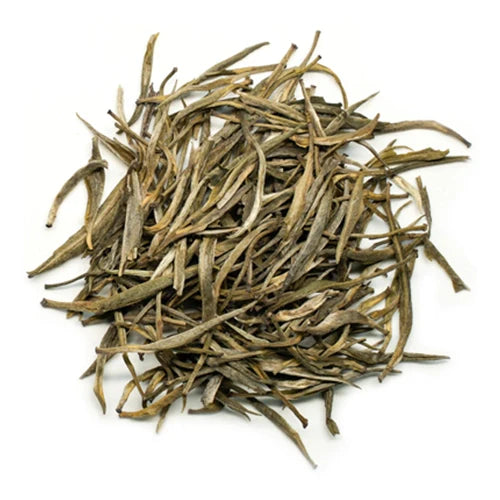
Silver Needle
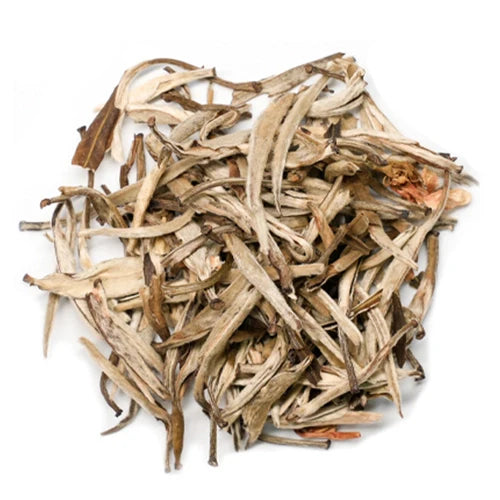
In 1857, the Fuding Dabai tea plant, native to Fuding’s Taimu Mountain, was successfully cultivated. Its enormous buds and white hairs make it ideal for making Silver Needle. In 1885, Silver Needle production started in Fuding County. It instantly began selling for 10 times more than its predecessor. Now the Silver Needle is twice the size of the product produced in previous times and it is downier. Silver Needle is processed from all bud materials.
White Peony
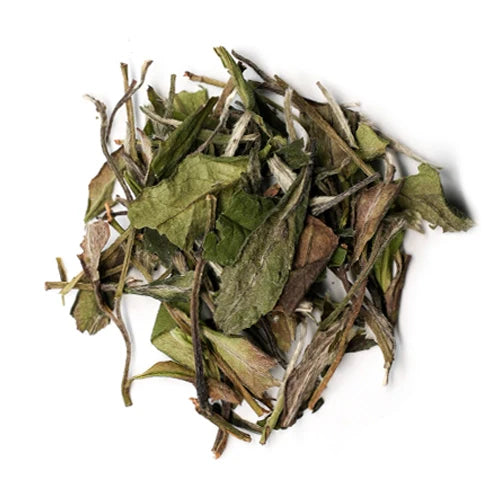
White Peony is made from buds with two leaves on one bud. It is harvested in mid-April after the buds with one leaf on one bud have been gathered for Silver Needle. It is fruitier and darker than Silver Needle and it is not as strong as Noble Eyebrow. The White Peony of the finest quality should have a shimmering clear infusion with a delicate lingering fragrance and a fresh, mellow, sweet taste devoid of astringency and grassy flavors. White Peony is often preferred by white tea drinkers for its fuller flavor and greater potency than the Silver Needle.
Tribute Eyebrow / Noble EyebrowBoth Tribute Eyebrow and Noble Eyebrow are processed from leaves harvested after White Peony. These leaves are deemed unsuitable to be processed as Silver Needle or White Peony. The difference between the two is that Tribute Eyebrow is processed from leaves of a higher grade than Noble Eyebrow. Because they are both more oxidized, due to being harvested later in the season, they take on a darker color and bolder flavor. They are both often used in compressed white tea cakes.
Aged White TeaWhite tea continues to oxidize very nicely during storage. The longer they are stored, the richer and mellower they will be. There is a famous saying about aged white tea in China: one-year tea, three-year medicine, seven-year treasure.
Some text and pictures are from other sources. If there is any infringement, please contact us.
What’s Green Tea? Green or Fresh Tea?
Green tea, as the name suggests, has a main feature of green color. The green tea, the tea soup and the brewed tea leaves are all green. The major tea-making techniques of green tea are green killing, kneading and twisting, drying. Among the techniques, green killing is the most important technique. The purpose of green killing is to deprive the activity of enzymes in fresh tea leaves. Thus, the fermentation progress in fresh leaves is prevented and the green color of tea leaves is kept. Due to the lack of fermentation, more substances in fresh leaves (tea polyphenol, caffeine, chlorophyll, etc.) are kept. For the same reason, green tea is more stimulating compared with other fermented tea. The main types of green tea are Dragon Well, Green Snail Spring, Melon Seed, Anji White, etc.
Dragon Well
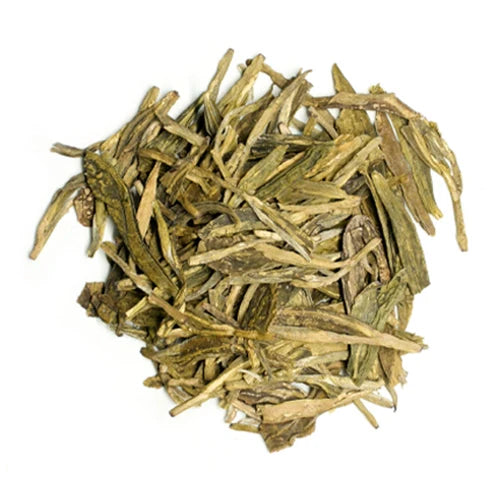
Dragon Well was an Imperial Tribute Tea to the Qing Dynasty. It was originally produced in the West Lake region of Zhejiang province. Dragon Well is shaped and dried by hand using a heated pan. Tea makers use their flat hands to move the bud sets around the pan to produce the signature Longjing shape with each tea bud flat, shiny and yellow-green. The brew has a distinct roasted bean and orchid-like flavor. The legend of Long Jing says that the emperor visited the Hu Gong Temple in West Lake one day and was presented with a bowl of the tea. He was so impressed by the delicious taste and aroma that he gave imperial status to the 18 tea bushes growing in front of the temple.
Green Snail Spring
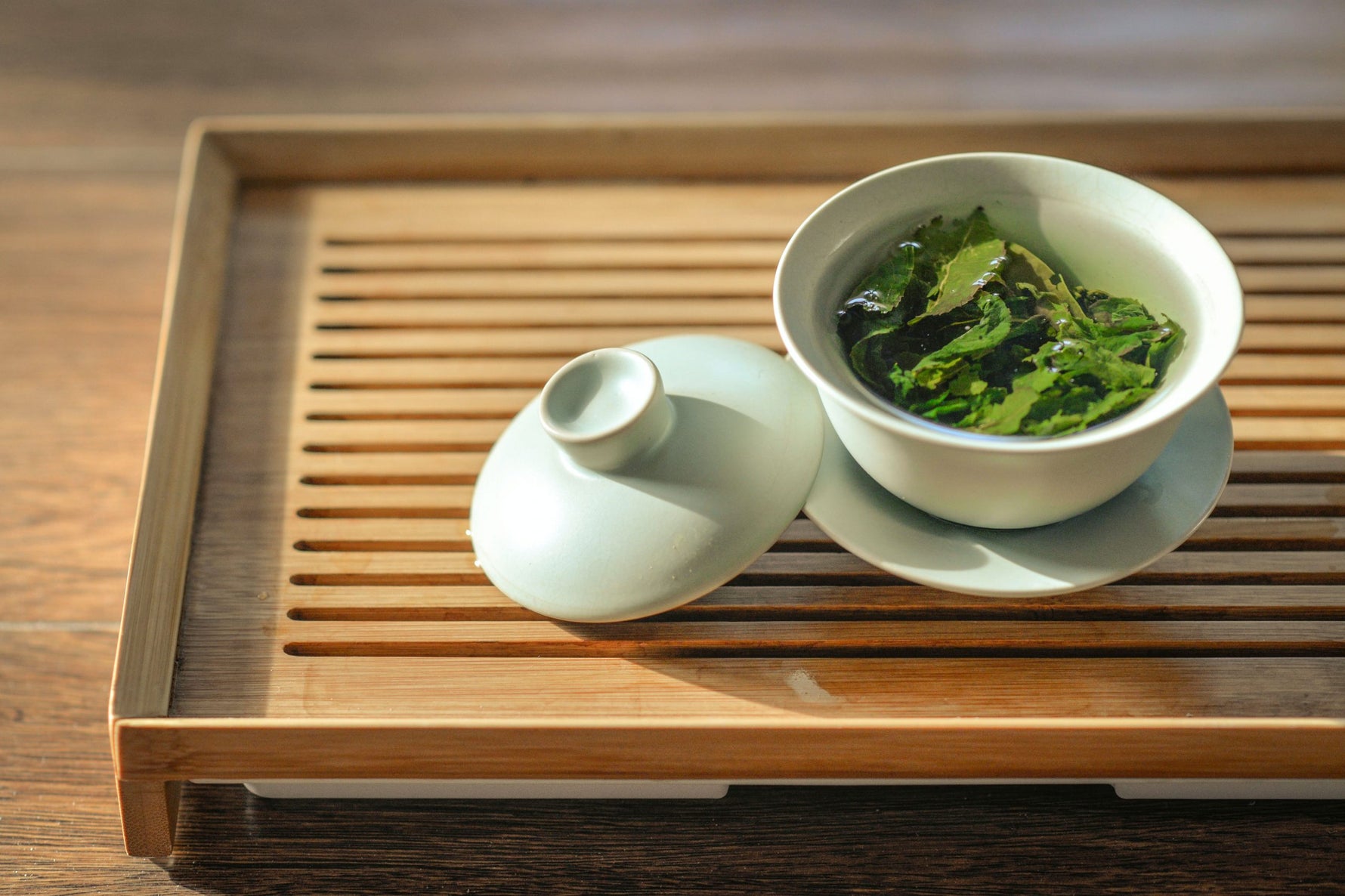
Green Snail Spring was an Imperial Tribute Tea to the Tang Dynasty and is still on the list of the Chinese Famous Top 10 Teas. Originally it was produced in the Dongting Mountains near Lake Tai in Suzhou, Jiangsu Province. The ingredients of Green Snail Spring are buds with one leaf on one bud. Green Snail Spring is hand-picked and shaped. It is harvested in late March to Early April and it is the one of the earliest harvested green teas of the spring. Green Snail Spring is traditionally brewed by placing the leaves into water, as opposed to pouring water over the leaves. The leaves slowly float to the bottom like falling snowflakes.
Melon Seed
Melon Seed is a kind of green tea from Lu’an, Anhui Province. It is named for its tightly rolled seed-like processed leaves, which are flat and resemble a melon seed. Melon Seed does not contain any buds or stems. The tea trees of Melon Seed grow in the Dabie Mountains in Anhui Province. Melon Seed is harvested in mid-April, allowing the buds to open up. The first documented evidence of Melon Seed dates back to the Tang Dynasty. It was designated as a tribute tea during the Qing Dynasty.
Anji White
Anji White is produced in Anji County, Huzhou Prefecture, Zhejiang Province. Anji White has a history of nearly a thousand years. Although Anji White is called white tea, it is not a white tea, it is a green tea. The name is derived from the pale green color of the baiye yihao cultivar leaves used to produced Anji White. It is a specialty of Anji County and is a national geographical indication product of China.
Some text and pictures are from other sources. If there is any infringement, please contact us.
Do You Know the History of Black Tea and Famous Black Tea?
1. Souchong Black Tea
2. Kung Fu Black Tea
3. Broken Black Tea
Research has concluded that the earliest black tea was produced in the early 16th century. In 1610, Lapsang Souchong black tea was produced in Wuyishan City, Fujian Province in China and it was transported from Shanghai to the Netherlands for the first time. It was the preclude of production and trade of black tea in the world. In the second half of the 19th century, black tea production techniques were innovated and kung fu black tea of more refined techniques was produced. The kung fu black tea sold well in the international market. In the 1920s, broken black tea was developed in India. Then the broken black tea gradually replaces kung fu black tea and becomes the mainstream of black tea.
1. Souchong Black Tea
Souchong black tea is a unique type of tea in Fujian Province, China. It is the originator of black tea. Souchong black tea was produced in Tongmu Area, Wuyishan City. According to the differences of production places and production techniques, Souchong black tea is divided into 2 types: Lapsang Souchong (core production areas) and Waishan Souchong (surrounding production areas). During the baking stage, pine wood is used to smoke and dry the tea. As a result, Souchong black tea has a smoky pine fragrance and a longyan flavor. Typical Souchong black tea is Lapsang Souchong, Jinjunmei, Yinjunmei and Tongjunmei.
A Typical Representative—Jinjunmei
Jinjunmei is the top tea of Souchong black tea. The reason why Jinjunmei is so valuable is that it is produced by the first batch of leaf buds picked in spring. These tea trees are only picked once every year. Also, only tea trees in Wuyi Mountain National Nature Reserve can produce authentic Jinjunmei. Jinjunmei is hand-made by tea makers. Every 500g Jinjunmei needs raw materials of tens of thousands of fresh leaf buds.
2. Kung Fu Black Tea
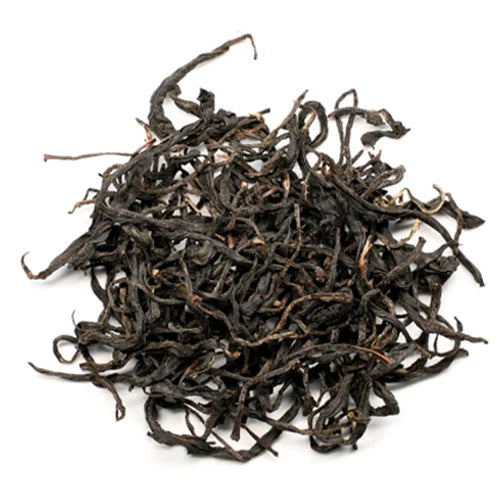
The representative of Chinese black tea is kung fu black tea. Kung fu black tea gets its name from the elaborated tea-making techniques. During the production, buds and leaves are kneaded and twisted to form strip shapes, while the integrity of the buds and leaves is kept. Consequently, Kung fu black tea not only looks neat and beautiful, but also has an elegant quality and flavor.
A Typical Representative—Keemun Black Tea
Keemun black tea is produced in the branch ranges of Yellow Mountain in Anhui Province. Keemun black tea, Assam black tea, Darjeeling black tea and Ceylon highland black tea are the four great black tea in the world. In 2022, Keemun black tea was included in the UNESCO’s Representative List of the Intangible Cultural Heritage of Humanity. The fragrance of Keemun black tea is clean and high, which lasts for a long time. The fragrance is like fruit fragrance or orchid fragrance. In the international tea market, the unique fragrance of Keemun black tea is called Keemun fragrance. The tea soup of Keemun black tea is red and transparent. After being mixed with milk, the mellow flavor of the tea is still obvious.
3. Broken Black Tea
During the production of broken black tea, the fresh tea leaves are broken into small grains, slices, etc. Broken black tea is produced all over China and the majority of the tea is exported overseas. Broken black tea can be divided into 4 types: leaf black tea, shredded black tea, slice black tea and powder black tea.
Some text and pictures are from other sources. If there is any infringement, please contact us.
Which Oolong Teas Are Most Popular in China?
1. Minnan Oolong Tea
2. Minbei Oolong Tea
3. Guangdong Oolong Tea
4. Taiwan Oolong Tea
Oolong tea is famous all over the world, and China is the place of origin of Oolong tea. In China, Oolong tea is mainly produced in Fujian Province (Minbei and Minnan), Guangdong Province, and Taiwan Province. In addition, Sichuan Province and Hunan Province also have a small amount of oolong tea production.According to the place of origin, oolong tea can be divided into four types of oolong tea.The four types are Minnan Oolong Tea, Minbei Oolong Tea, Guangdong Oolong Tea, and Taiwan Oolong Tea.Let's explore the difference between these four types of Oolong Tea and the loose leaf Oolong Tea provided by iTeaworld.
1. Minnan Oolong Tea
According to the degree of Zuoqing, Fujian oolong tea is divided into Minnan oolong tea and mini oolong tea. Minnan oolong tea is lightly sun-dried, heavily kneaded twisted, and lightly fermented. Consequently, Minnan oolong tea has a feature of green leaves with red edges. Minnan oolong tea has an obvious flower fragrance and a clean and mellow flavor. The tea soup of Minnan oolong tea is gold. Minnan oolong tea is mainly known for its fragrance. Among various types of Minnan oolong tea, Anxi Tie Guanyin has the most elegant fragrance. The main types of Minnan oolong tea are Anxi Tie Guanyin, Huangjingui, Yongchun Buddha hand, and Minnan Narcissus.
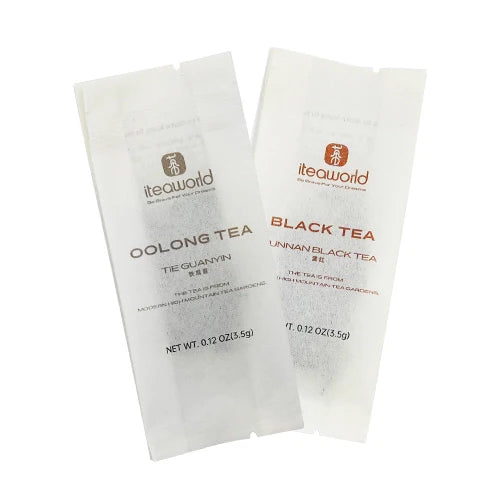
The Tieguanyin offered by iTeaworld is from the core production area, Anxi. It is a good Tieguanyin. With a creamy and floral aroma, it has a mild, smooth flavor without any bitterness and a buttery feel in the mouth.Besides, iTeaworld also offers minnan narcissus Oolong Tea, which is an oolong tea with a perfect balance of floral and natural sweetness, with a pleasant and delicate taste. The first sip reveals a light charcoal roasted flavor with a long-lasting floral note that lingers on the finish.
2. Minbei Oolong Tea
Minbei Oolong Tea is heavily sun-dried, heavily kneaded twisted, and heavily fermented. The fragrance of Minbei Oolong belongs to a ripe fragrance. The tea soup is bright orange and the flavor is a mellow and sweet aftertaste. After being brewed, the tea leaves are 30% red and 70% green, with clear red edges. Wuyi Yan tea is a category of Minbei oolong tea. The tea trees of Wuyi Yan tea grow on the rock and soil layers in Wuyishan City. Thus, Wuyi Yan tea has a special feature of Yan flavor. Wuyi Yan tea is rich in fragrance. The main types of Wuyi Yan tea are Minbei Narcissus, Wuyi Narcissus, and Wuyi Cassia.
The Minbei oolong tea offered by iTeaworld is the famous Dahongpao with a distinct roasted aroma and a flavor similar to that of a peach's drupe. This is great Wuyi tea.
3. Guangdong Oolong Tea
Guangdong oolong tea is produced on high mountains over 1000 meters in eastern Guangdong Province. Guangdong oolong tea is heavily sun-dried, heavily kneaded twisted, and heavily fermented. The tea soup of Guangdong
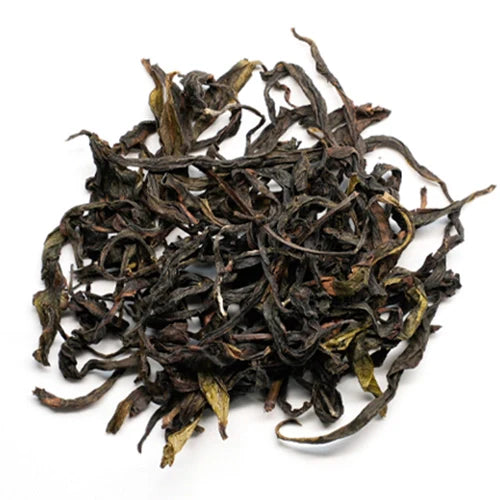
The Guangdong Oolong tea offered by iTeaworld is fenghuang dancong, a tea that has been reviewed by most tea lovers. When you open the package, the incredibly rich peach aroma hits you. This is a milanxiang single fir, and when you finish the tea, it leaves a long-lasting honey aftertaste on your mouth, which tends to evoke the nectar of blooming orchids.
4. Taiwan Oolong Tea
Taiwan oolong tea originated in Fujian Province. After being transported to Taiwan, the tea-making techniques of Fujian oolong tea changed and gradually developed into Taiwan oolong tea techniques. The typical types of Taiwanese oolong tea are Tung-ting oolong tea, Jinxuan oolong tea, and honey-scented oolong tea (oriental beauty).
If you are interested in Oolong tea, then you can start by trying the Oolong Tea Selection, which allows you to taste four different loose leaf Oolong tea at once at a low cost. This is also perfect as a gift for someone.Oolong teas from different regions, with their own regional characteristics, are a wonderful gift from nature. iTeaworld has selected three of these regional classic oolong teas, which allow you to experience a wide range of flavors in a single box, whether you like fresh floral notes, distinctive rocky notes, or rich fruity notes!
Some text and pictures are from other sources. If there is any infringement, please contact us.