





























Sort by:
171 products
171 products
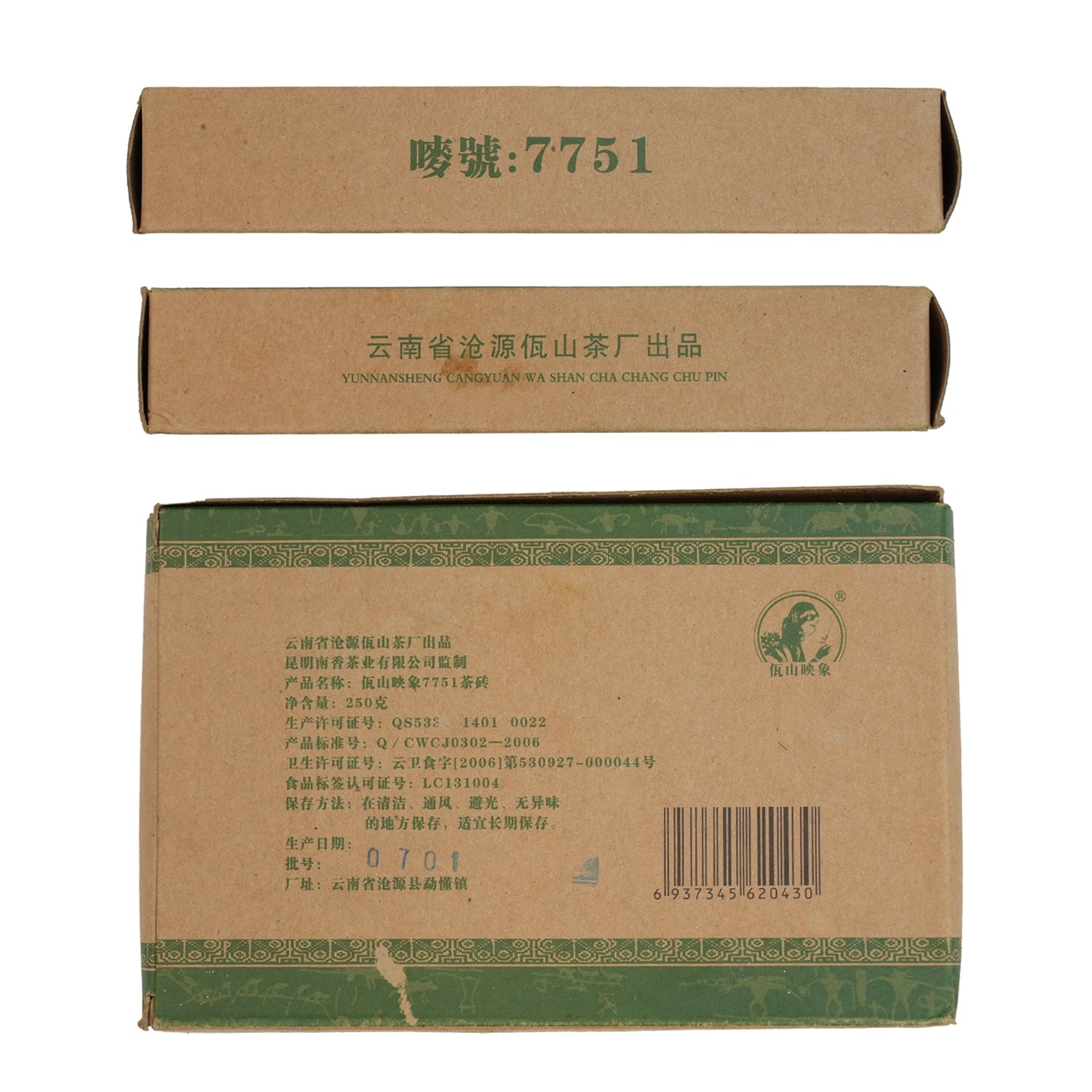
During the aging and transportation process of aged tea, the packaging and the tea itself may get damaged. Please be cautious when purchasing if you mind this.
Recommended Purchase
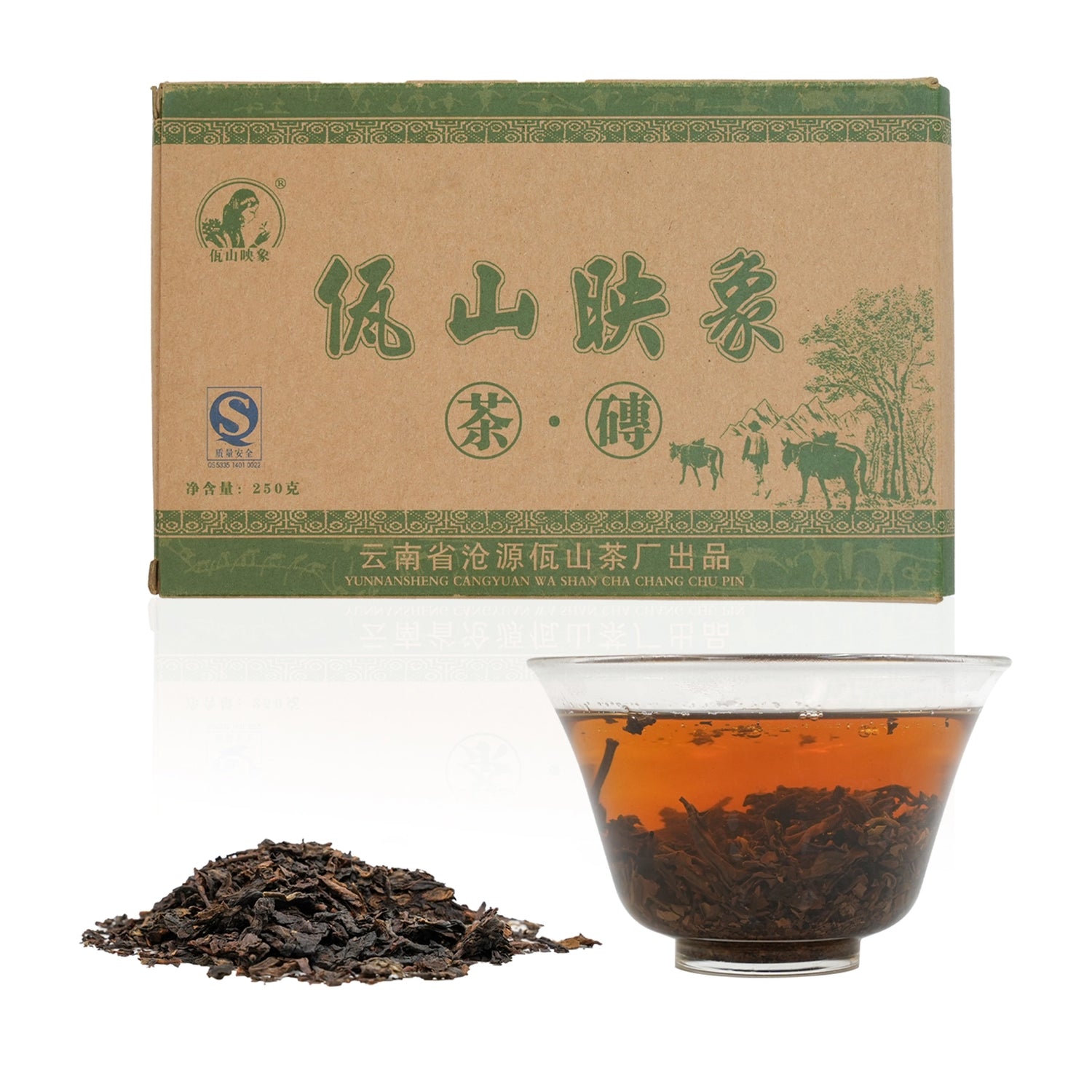
This 2007 Wa Mountain Impression "7751" Raw Pu-erh Tea Brick is supervised by Ms. Tan Mei, a former senior engineer and quality inspection section chief of the Kunming Tea Factory. Following traditional recipes, it selects high-quality sun-dried green materials from tall arbor trees in the Lancang River basin of Yunnan and is meticulously processed and pressed using the original Kunming Tea Factory's brick-making techniques. The tea inherits the essence of the Kunming Tea Factory's brick tea, with a uniform and neat brick shape, clear and even strips, exposed buds and hairs, bright orange-yellow soup color, fresh and high aroma, mellow and refreshing taste, and obvious returning sweetness and salivation. It is an excellent choice for daily drinking and collection.
Key Details about 2007 Wa Mountain Impression Tea Brick
- Origin: Cangyuan Wa Mountain Tea Factory, Yunnan Province, China
- Production Date: 2007
- Grade: Second Grade
- Tea Cultivar: Yunnan Large-Leaf Tea
- Craftsmanship: Traditional Kunming Tea Factory brick-making technique, sun-dried green tea, pressed into bricks
- Flavor Highlights: Bright orange-yellow soup color, fresh and high aroma, mellow and refreshing taste, obvious returning sweetness and salivation, rich, authentic flavor, reminiscent of the taste of aged raw tea from around 1995.
- Storage: Naturally stored in Dongguan with slight dryness, no off-flavors
What is Wa Mountain Impression Tea Brick?
Wa Mountain Impression Tea Brick is a Pu-erh tea product produced by Yunnan Cangyuan Wa Mountain Tea Factory. The tea factory owns over 6,000 acres of pollution-free high mountain ecological tea gardens, with the main tea garden base located in Tuanjie Dazhai, Yanshuai Town, Cangyuan County, at an altitude of over 1,800 meters. The climate is mild, rainfall is abundant, and the area is shrouded in clouds and mist, far from pollution, making it an ideal place for tea cultivation. The tea factory strictly manages the tea gardens according to international organic agriculture movement federation (IFOAM) technical specifications, ensuring the excellent quality of Wa Mountain Impression tea sources.
Recommended Brewing Methods
-
Gaiwan Brewing
- Tea-to-water ratio: 1:20
- Water temperature: 95°C-100°C
- Infusions: 6-8 times
- Steeping time: 10-20 seconds
-
Thermos Brewing
- Tea-to-water ratio: 1g per 100ml water
- Water temperature: 100°C (boiling water)
- Steeping time: 1-2 hours
- Tool: Insulated thermos
-
Boiling Method
- Tea-to-water ratio: 1g per 100ml water
- Boiling time: 1-2 minutes, then let sit for 2-3 minutes
- Rebrew: Extend boiling time by 3 minutes for each additional infusion
- Best with: Ceramic or glass teapot
- Steeping times: 3-4 brews
Storage Guidelines
To maintain the tea's optimal aging process, store it in a dry and cool environment with humidity below 45% and temperature under 25°C. Keep it away from strong odors, direct light, and air exposure. Proper storage ensures that the tea retains its aged aroma and continues to mature gracefully over time.
Weight & Packaging
- Net Weight: 250g (8.8oz)
- Packaging: Original paper box packaging
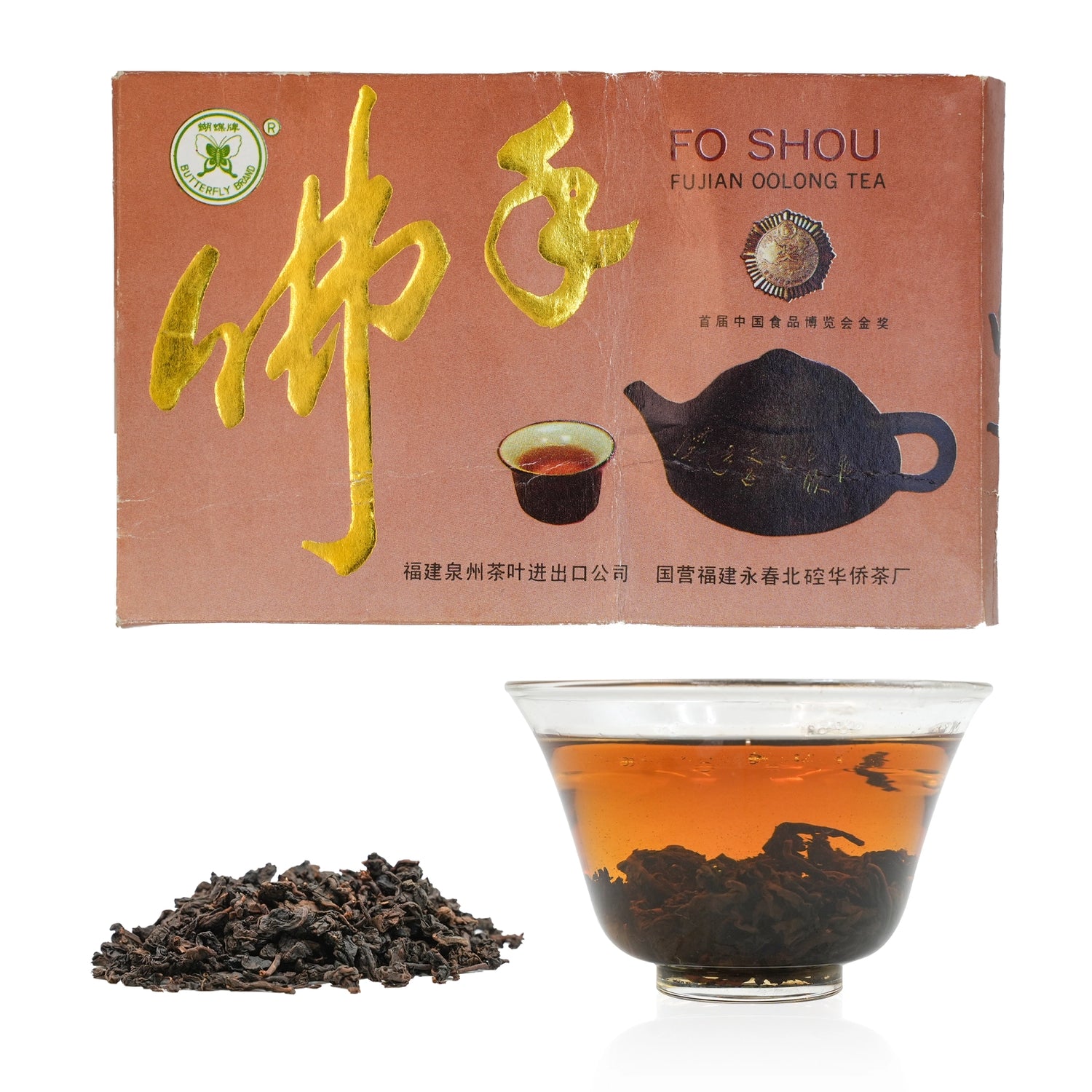
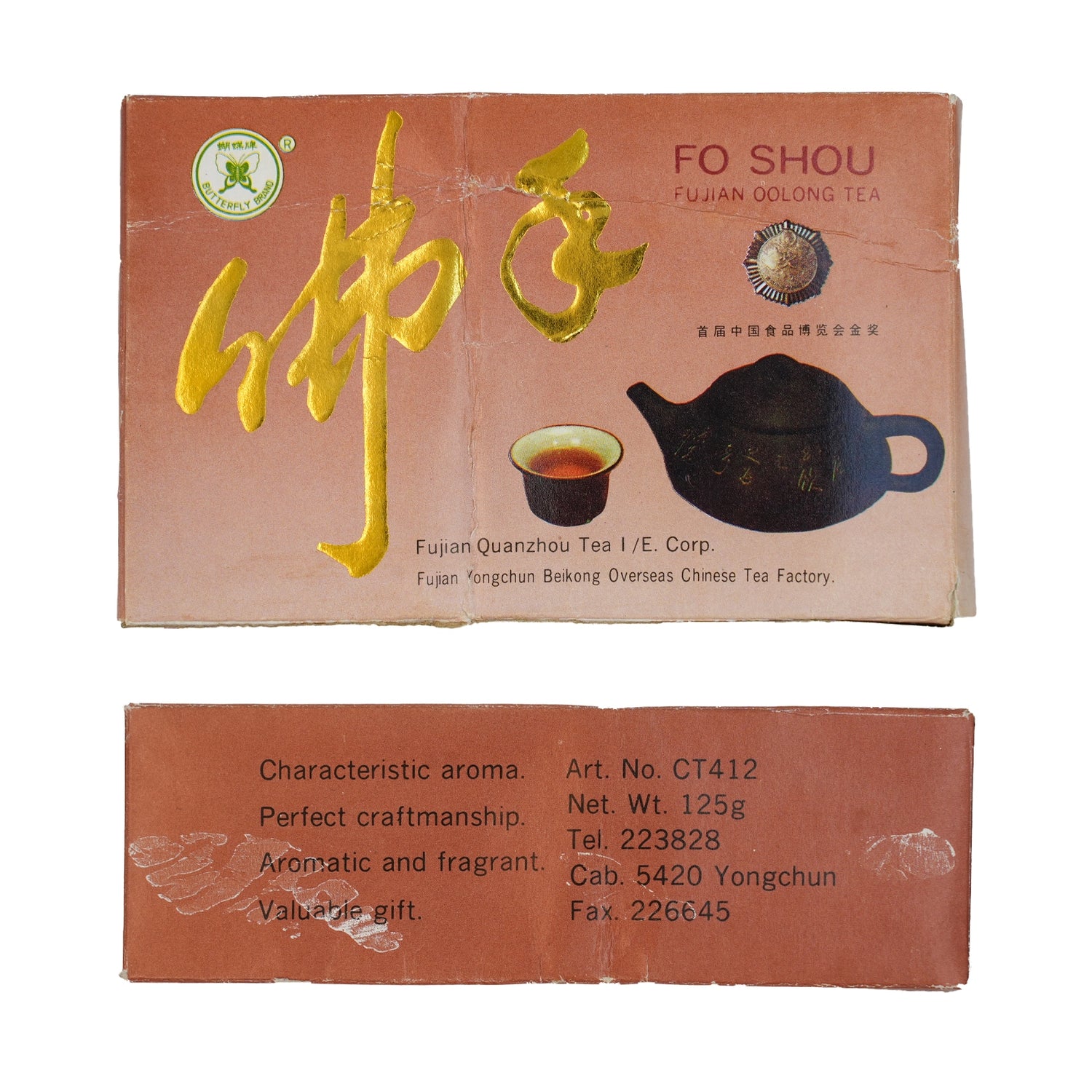
During the aging and transportation process of aged tea, the packaging and the tea itself may get damaged. Please be cautious when purchasing if you mind this.
Recommended Purchase
This Yongchun Fo Shou Oolong tea, produced in 1993 and naturally aged in dry storage for 33 years, is made from the Yongchun Fo Shou variety, a well-known tea type from Yongchun, Fujian Province. It was crafted by the Yongchun Beikong Overseas Chinese Tea Factory, established in 1917. This tea is handcrafted with traditional full-heat roasting and comes in its original packaging. No longer available on the market, it features a unique "aged aroma", rich sweetness and smooth texture, making it a cherished choice for lovers of aged Oolong tea.
Key Details about 1993 Yongchun Fo Shou
- Origin: Yongchun, Fujian Province, China
- Production Date : 1993
- Grade: Special Grade
- Tea Cultivar: Yongchun Fo Shou
- Craftsmanship : Traditional high-fire roasting with medium fermentation, followed by 33 years of natural dry storage in sealed outer box with an inner foil bag.
- Flavor Highlights: Warm "aged aroma" with notes of roasted nuts, complex layers of aged flavors.
What is Yongchun Fo Shou Oolong Tea?
Yongchun Fo Shou, also known as "Buddha’s Hand," is a premium variety of oolong tea grown in Yongchun, Fujian. Named after its leaves that resemble a Buddha’s hand, Yongchun Fo Shou is celebrated for its fragrant aroma, smooth taste, and exceptional aging potential. The tea is lightly twisted into a "dragonfly head" shape, with dark blackish-brown leaves indicative of traditional craftsmanship.
Brewing and Enjoyment Tips
This tea is a testament to the transformative effects of time, offering a rich, smooth, and slightly tangy flavor profile. Best enjoyed with long steeping times or simmering to fully release its aged characteristics.
Recommended Brewing Methods:
-
Gaiwan Brewing:
- 100ml Gaiwan
- 95℃-100℃
- 5-7 times
- 1:15 to 1:25
- 10~20 seconds
-
Thermos Brewing:
- 1g tea per 100ml (3.4oz) water.
- Use boiling water (212°F).
- Steeping Time: 1-2 hours.
- Tool: Insulated thermos.
-
Boiling Method:
- Add 1g tea per 100ml (3.4oz) water.
- Boil for 1-2 minutes, then let sit for 2-3 minutes.
- Rebrew by boiling 3 minutes longer with each steeping.
- Use a ceramic or glass teapot for optimal flavor.
- Enjoy up to 3-4 brews.
Storage Guidelines
Store this tea in a dry, cool environment with a humidity level below 45% and temperature below 25°C (77°F). Keep it away from strong odors, light, and air exposure. Proper storage ensures the tea retains its flavor and continues to age gracefully over time.
Weight
- 4.4oz (125g)
- Packing Type : Sealed Paper Box with Internal Foil Bag
About Yongchun Beikeng Overseas Chinese Tea Factory
Founded in 1917, the Yongchun Beikeng Tea Factory has a rich history of producing high-quality teas. Once a bustling hub of innovation and craftsmanship, the factory was home to over 1,000 tea workers at its peak, producing millions of pounds of tea annually. Its products, including Yongchun Fo Shou, were highly sought after in Hong Kong, Taiwan, Japan, and Southeast Asia.
Just as many state-owned old factories have experienced ups and downs, in the 1990s, the tea factory once fell into a slump, and the once bustling factory area gradually became desolate. The former factory director, Huang Shenghou, who had created its greatest glory and witnessed its decline, was deeply saddened by its decline and took over the factory himself after privatization.
Today, this aged Yongchun Fo Shou tea stands as a flavorful tribute to the factory's storied past and the enduring legacy of traditional Chinese tea-making.


Buying Recommendation:
This 2021Gongmei White Tea is crafted from tender shoots of the Fuding Qunti tea variety using traditional sun-drying methods. It offers a rich, full-bodied flavor profile with notes of dried fruit and honey, making it an excellent choice for those who enjoy white teas with deeper, nutty undertones. However, if you prefer a lighter, fresher, or more delicate tea experience, you might want to explore other white tea options. This tea is made from whole loose leaves compressed into small 5g cakes. There’s no need to measure—perfect for quick and convenient brewing.
2021 Gongmei Basic Info:
Origin: Fuding, Fujian, China
Harvest Date: April 2021
Grade: Premium Gongmei
Tea Variety: Fuding Qunti
Crafted By: Li Shengyuan, a skilled tea artisan
Flavor Profile: Bold and satisfying with hints of dried fruit and honey
What Makes It Special: A traditional sun-dried white tea made from mature leaves and buds, offering a uniquely rich and nutty flavor
About Gongmei Tea:
Gongmei, a type of white tea defined by the GB/T 22291-2017 National Standard, is made exclusively from the Qunti tea variety. Unlike Baihao Yinzhen or Bai Mudan, Gongmei is crafted from slightly more mature leaves, typically one bud and two to three leaves, giving it a more robust and layered taste. It’s perfect for those who enjoy a richer white tea experience, with deep, nutty flavors and subtle dried fruit and honey notes.
Storage Tips:
To maintain freshness:
Keep tea dry, with moisture below 8.5%.
Store at a temperature around 77°F (25°C) and relative humidity under 45%.
Avoid light, odors, and exposure to air.
White tea aged three years or more can be classified as "aged white tea," offering even more complex flavors for collectors and enthusiasts.
How to Brew Fresh Gong Mei White Tea:
Gaiwan Brewing:
5g tea in a 110ml gaiwan.
Rinse: 10 seconds with boiling water, discard.
Brew: 30 seconds for the 2nd, add 5 seconds per brew.
How to Brew Aged Gong Mei White Tea:
Gong Mei Thermos Brewing
1g tea per 100ml (3.4oz) water.
Boiling water (212°F).
Steeping Time: 1-2 hours.
Recommended Tool: Insulated thermos.
Boiling Method:
Add 1g of tea per 100ml (3.4oz) water.
Boil for 1-2 minutes, then let it sit for 2-3 minutes.
For each rebrew, boil 3 minutes longer.
Use a glass or ceramic teapot.
Enjoy up to 3 brews.

Why We Made This Tea:
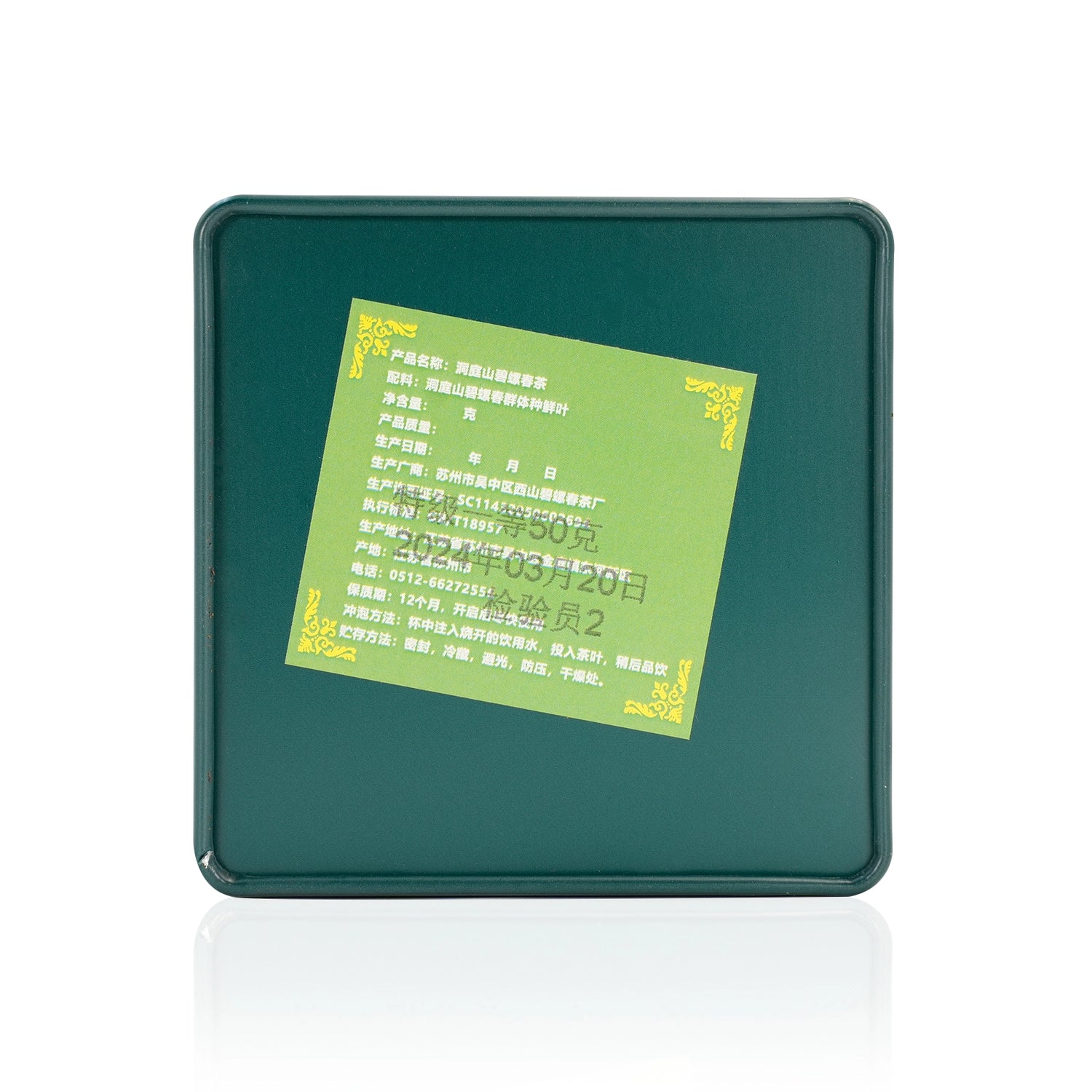
Biluochun is one of China's most famous green teas, cherished by tea enthusiasts worldwide for its unique flavor and aroma. However, many people often feel confused when choosing Biluochun: Is a higher grade more suitable, or is a lower grade enough? To help you better understand this, we have introduced this set of nationally recognized Biluochun teaching samples.
Product Introduction:
This Biluochun grade series includes five grades: Special Grade One, Grade One, Special Grade Two, Grade Two, and Grade Three. Each tea has been certified by the China Tea Association and is a nationally recognized Biluochun grade teaching sample. By tasting Biluochun of different grades, you will be able to systematically understand their characteristics and flavor differences, thus finding the tea that best suits your taste and needs. In addition, this series of products comes from the Biluochun Tea Factory in West Mountain, Wuzhong District, Suzhou City. The tea leaves grow in an environment with distinct seasons and a suitable climate, ensuring their authenticity in origin, variety, and flavor, as well as high quality and unique natural floral and fruity aroma.
We hope that through this series, we can help tea friends who wish to delve into Biluochun to provide a comprehensive tasting experience. It's not just a taste enjoyment, but also an in-depth exploration of Chinese tea culture.
Reasons to Recommend This Tea:
This series is designated by the China Tea Science Society as a teaching sample.
It is the most authentic Biluochun, coming from the core area of Biluochun in West Mountain, Taihu Lake, Suzhou City, Jiangsu, which is the core origin of the authentic Dongting Biluochun, surrounded by Taihu Lake on all sides.
Excellent natural environment: Taihu Lake surrounds West Mountain, where both tea and fruit are grown. The island is planted with loquat trees, plum blossom trees, and plum trees, giving the tea a unique natural flavor all year round. Geese are raised on the island, forming natural fertilizer.
The most authentic Biluochun tea plant varieties are used, which are local to Dongting Mountain, including "Jiang Ban Tou," "Liu Ye Tiao," and "Chu Ye Zhong."
Each tea goes through a strict selection and production process, including hand-picking and hand-firing, making it a pure handcrafted tea.
Suitable for:
Those who like Biluochun and want to experience the authentic flavor.
Those who want to delve into the flavor differences of different grades of Biluochun.
Those who want to systematically understand the Chinese green tea system.
Not suitable for:
Those who don't care much about subtle flavor differences.
Those who don't like the elegant and delicate flavor of green tea.
Groups sensitive to tea prices.


A graceful jasmine tea made with spring-picked Sichuan small-leaf tea (one bud with one to two leaves) and fresh jasmine blossoms from Jianwei, Sichuan. Each batch is scented four times, requiring nearly 200 pounds of fresh jasmine flowers for every 100 pounds of finished tea. The liquor is bright and refreshing, with floating white petals that create a striking visual display. Flavor is smooth, brisk, and sweet—fresh green-tea notes balanced by a lingering jasmine aroma.
Origin: Jianwei County, Sichuan Province
Base Tea: Sichuan small-leaf, one bud with 1–2 leaves
Scenting: Four-time scenting with fresh jasmine blossoms
Master: Song Yejing 宋业镜
Shelf Life: 18 months
How to Brew?
Water: Purified, 80 °C | 176 °F
Gaiwan: 2g per 100ml · 10–15 sec · add 5–7 sec each steep · up to 6 infusions
Glass cup: 1g per 100ml · 1st: 40s | 2nd: 60–90s | 3rd: 90–120s
Cold brew: 5g per 500ml · steep 2–3 hrs at room temp · refrigerate up to 10 hrs · or brew hot and pour over ice


As the days grow shorter and a chill fills the air, we crave a cup of tea that warms us from the inside out. It’s more than just heat; it's about the comfort and satisfaction that comes from rich, soothing flavors.
The "Cozy Winter Warmers" collection was created for exactly this moment. We've carefully curated ten distinct Chinese teas, each chosen for its ability to comfort and delight. Like a crackling fireplace, a soft blanket, or a warm hug, these teas are your perfect companions to melt away the winter chill.
Why We Chose These Teas
When winter arrives, we turn to teas that are inherently warming, rich, and sweet. The philosophy behind this collection is all about comfort, body, and natural sweetness.
The Direct Sweetness of Black & Flowering Teas:
Lapsang Souchong Black Tea: Offers a signature sweet, smoky aroma with notes of dried longan.
Sticky Rice Scented Black Tea: Known for its unique, toasty aroma of glutinous rice, providing a mild and comforting sweetness.
Rose Black Tea (Scented x3): A romantic and warming blend of honeyed black tea and fragrant rose petals.
These teas are smooth, approachable, and deliver immediate, delightful flavors that are easy to love.
The Toasty Warmth of Rock Oolongs:
Wuyi Shui Xian (Ban Yan): A robust, mineral tea with floral notes and a warm, toasty finish from roasting.
Wuyi Rou Gui (Ban Yan): Known for its warming, spicy cinnamon character and a rich, baked aroma.
Wuyi Da Hong Pao (Blend): The ultimate expression of a complex, toasty, and deeply satisfying Rock Oolong.
Osmanthus Oolong (Scented x3): The toasty base of the oolong is beautifully brightened by the sweet, apricot-like fragrance of osmanthus flowers.
These teas provide a solid, grounding warmth that lingers, perfect for a cozy afternoon.
The Smooth & Earthy Depth of Dark Teas & Aged White Tea:
Liupao Dark Tea: Exceptionally smooth and mellow, with earthy, woody, and sometimes date-like notes. Known for its digestive comfort.
Ripe Pu-erh Dark Tea: Deeply rich and earthy with a smooth, velvety texture and a warm, soothing character.
Gong Mei White Tea (Aged): While young white tea is fresh, this aged version has matured into a warmer, sweeter cup with honey and herbal notes.
These teas are the definition of cozy—soft, earthy, and incredibly soothing on a cold day.
Together, these teas share a common theme: they are warming, full-bodied, and feature inviting aromas of wood, natural sugar, and baked goodness. They are chosen not just to warm your hands, but to comfort your soul, making them perfect for sharing with loved ones during the holiday season and beyond. This collection is expertly curated to suit the American palate's desire for comforting and robust flavors in winter.


This Osmanthus Black Tea was freshly scented this autumn, using autumn-harvested black tea paired with autumn-blooming Bao Xin osmanthus. Through careful scenting, it carries a rich osmanthus aroma with a gentle sweetness.
Bao Xin osmanthus is often called the “royalty of osmanthus” for its exceptional quality, has layered petals and a full, rounded center. Compared with regular osmanthus, its blossoms are larger, thicker, and more fragrant. A single round of scenting is enough to infuse the tea with a strong aroma, and dried flowers are often kept in the final product to enhance the flavor.
The tea tastes warm and smooth, almost silky, with a sweet, full-bodied profile. The richness of the black tea and the clean sweetness of osmanthus complement each other, leaving a long-lasting aroma and a clear, pleasant aftertaste. It’s an excellent choice for autumn and winter, offering comforting warmth to both body and stomach.
Origin: Fengshan Township, Fengqing County, Yunnan Province
Tea Base / Number of Scenting Rounds: Yunnan Black Tea (Dianhong)/one round of scenting
Tea Master: Zhang Guo'an张国安
Processing Date: 2025 October
Shelf Life: 24 months
Brewing
Vessel: Porcelain gaiwan / glass cup / mug
Water: Purified, 95-100°C | 203-212°F
Gaiwan / Teapot:
5g per 100ml · 1-3 steeps:10-15 sec , add 5-7 sec after · Up to 7 infusions
Mug Brew:
1g per 100ml · 1st: 40s | 2nd: 60–90s | 3rd: 90–150s
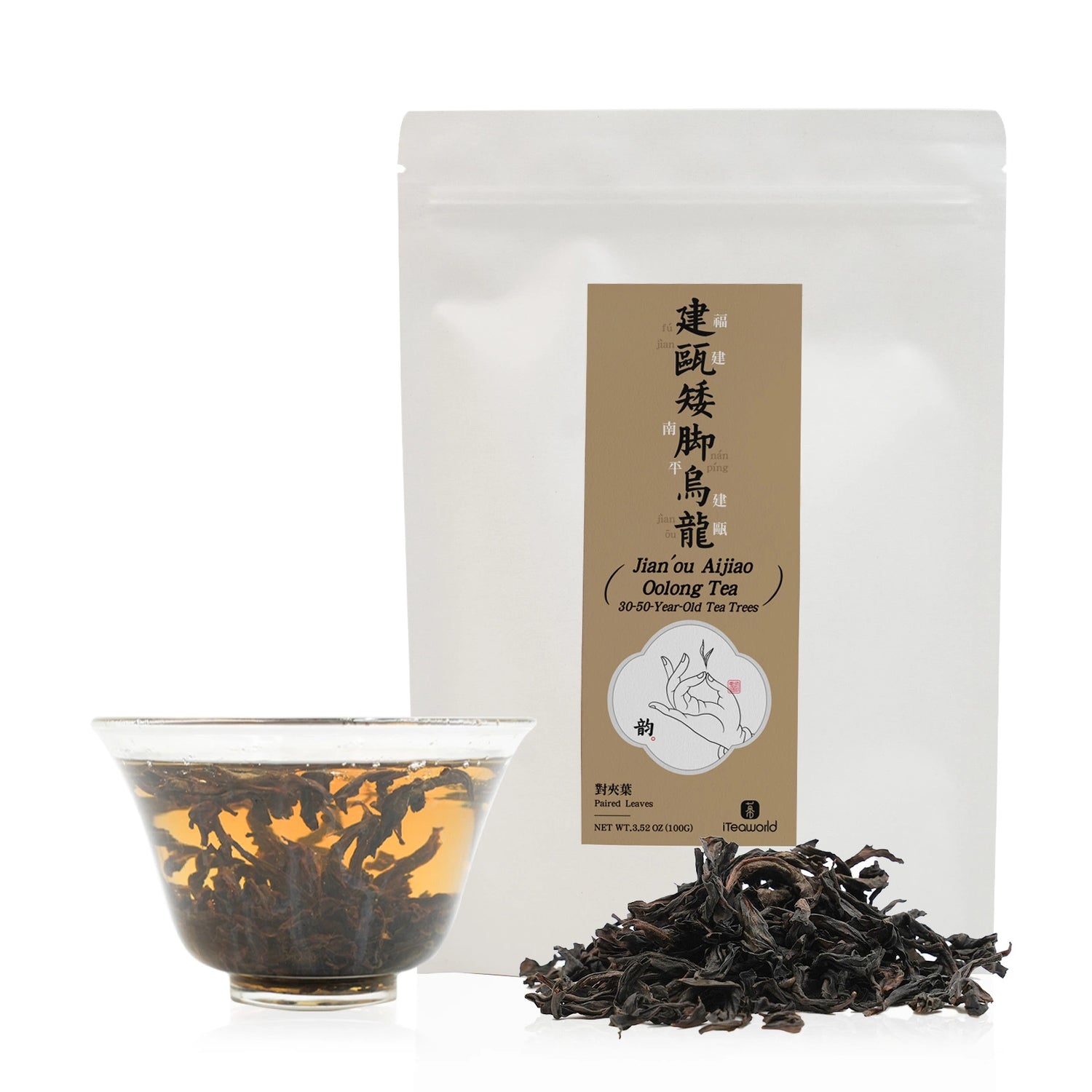
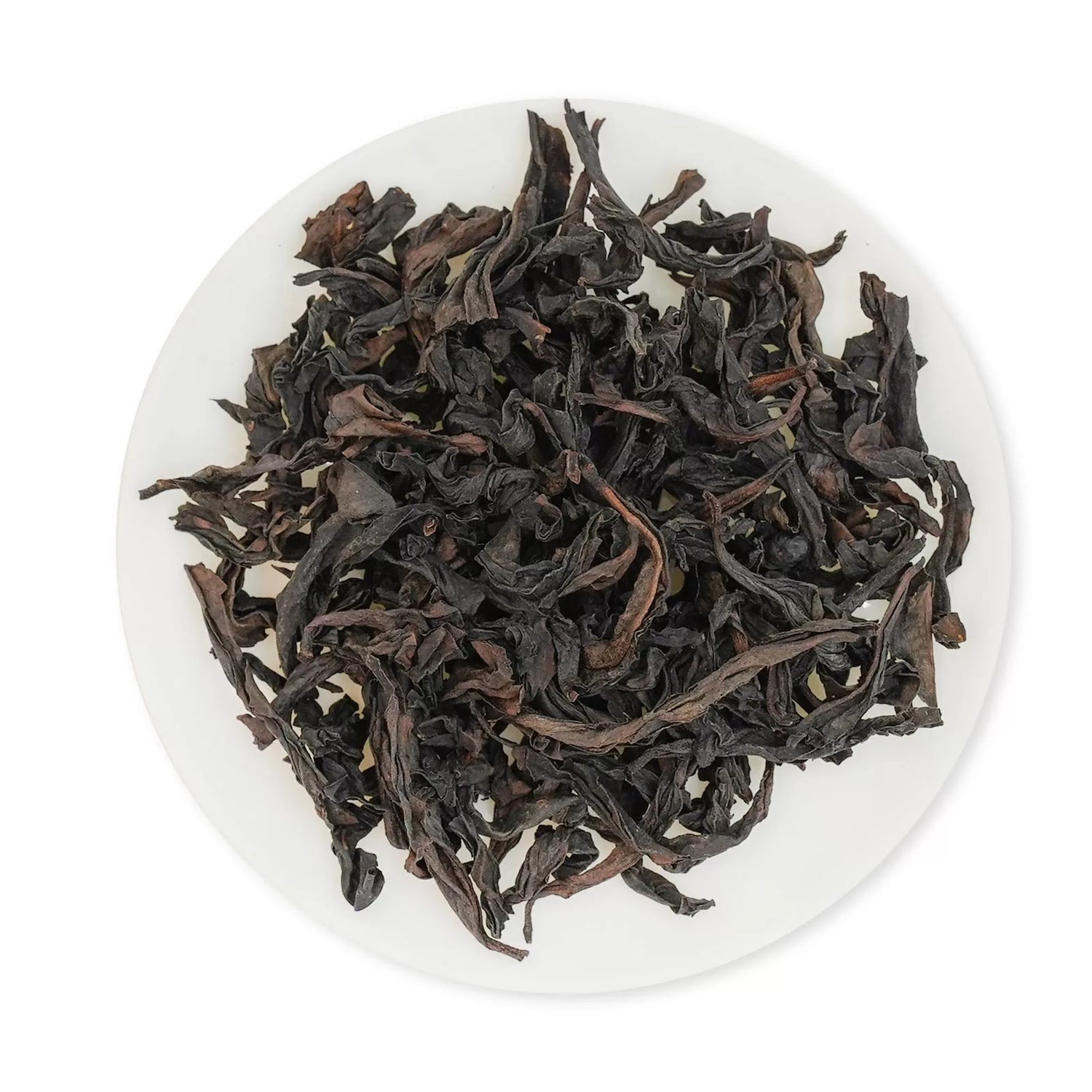
Dwarf Oolong, also known as Small Leaf Oolong or Soft Branch Oolong, originates from Dongfeng Town in Jian'ou City. It is the ancestral tea tree variety of the Beiyuan Tribute Tea, with a cultivation history tracing back to the Song Dynasty. During the Qing Dynasty, it was introduced to Taiwan and developed into the famous Qingxin Oolong and Dong Ding Oolong. Its unique flavor continues to be highly appreciated by local tea connoisseurs.
This tea comes from the original Dwarf Oolong plantations in Dongfeng Town. It offers a delicate, lingering aroma with distinctive notes of honey peach or osmanthus. The fragrance is long-lasting, the taste rich, mellow, and refreshing, with a clear golden liquor. Even after multiple infusions, both the aroma and color remain stable.
Origin:
Dongfeng Village, Dongfeng Town, Jian'ou City, Fujian Province, China
Elevation:
500–600 m
Soil Type:
Yellow Soil
Tea Variety:
Dwarf Oolong
Tea Master:
Ye Jiansheng
Harvest Season:
November 2024
Shelf Life:
36 months
Brewing Guidelines
Water Temp: 100°C (212°F)
Brewware: Gaiwan, Yixing Clay Teapot
Tea-to-Water Ratio: 5-7g per 100ml
1–3 infusions: 8-15 sec
Later infusions: Add 5–10 sec
Total brews: 8-10 times
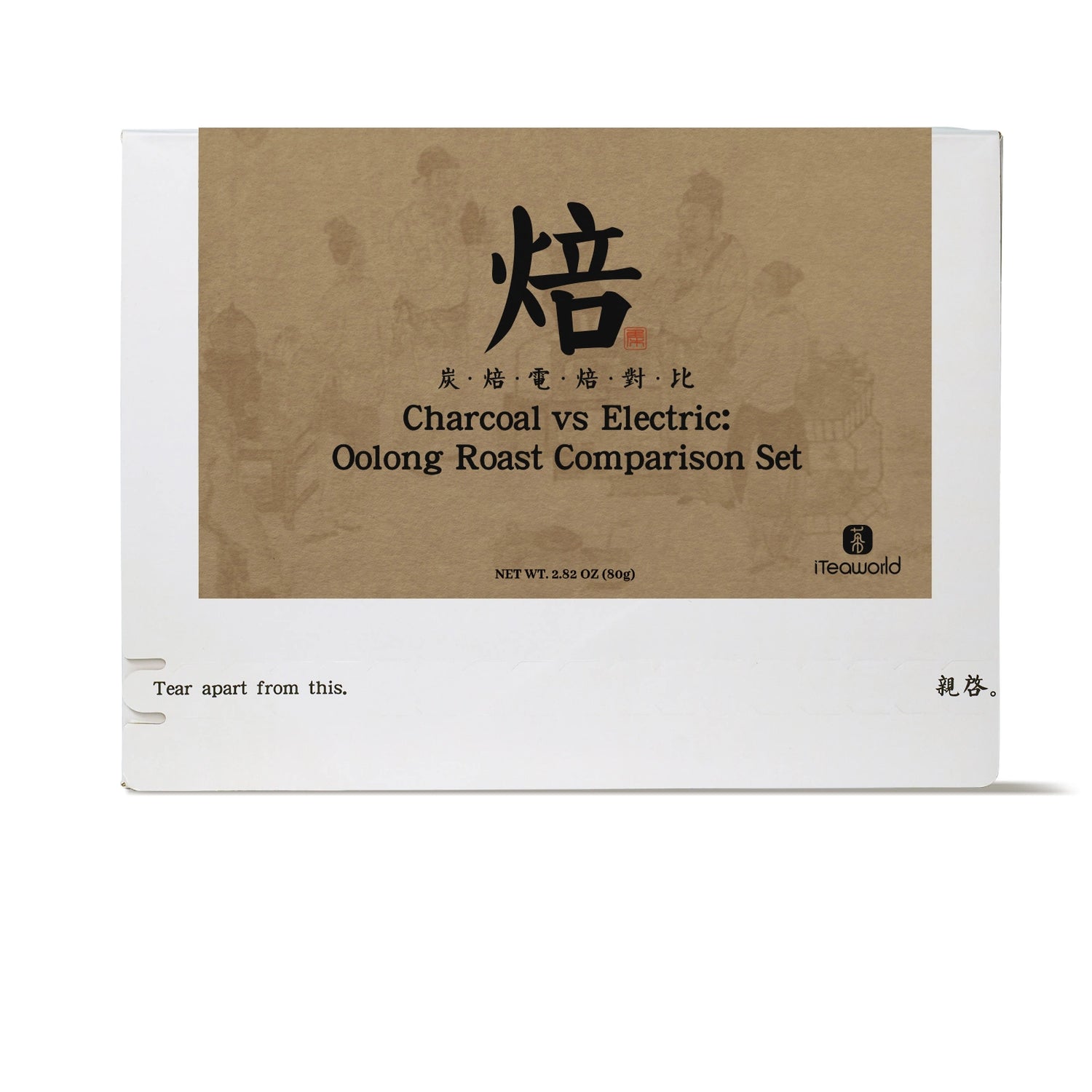
A Journey of Fire and Technology
"For centuries, Chinese oolong tea masters have debated: the slow dance of charcoal fire or the precision of electric heat? This kit invites you to explore two roasting philosophies through Phoenix Dancong and Wuyi Rock Tea – one shaped by ancestral wisdom, the other refined by technology."
Product Contains:
Charcoal-Roasted Wuyi Rougui* 20 g
Electric-Roasted Wuyi Rougui* 20 g
Charcoal-Roasted Mi Lan Xiang Dancong* 20 g
Electric-Roasted Mi Lan Xiang Dancong* 20 g
Product Information (Wuyi Rougui)
Type: Semi-Rock (Ban Yan)
Origin: Jingshui Village, Xingcun Town, Wuyishan City, Fujian Province, China
Altitude: 400m
Producer: Chen Hui
Processing Timeline: Maocha: April 2024; Initial Roasting: August 2024; Final Roasting: November 2024
Product Information (Mi Lan Xiang Dancong)
Origin: Fengxi Village, Fenghuang Town, Chaozhou City, Guangdong Province, China
Altitude: 600–800m
Tree Age: ~30 years
Producer: Lin Zhiqiang
Processing Timeline: Maocha: April 2024; Initial Roasting: August 2024; Final Roasting: November 2024
Charcoal Roasting: The Art of Traditional Oolong
Charcoal roasting is the soul of traditional oolong tea. Using slow, low heat from wood like longan or lychee, it transforms the leaves, creating a rich flavor profile with caramel sweetness, mineral notes, and a smoky depth.
This method is perfect for Wuyi Rock Tea and Phoenix Dancong, turning grassy flavors into smooth, complex profiles and bringing out caramel and fruit-like sweetness.
Compared to modern electric roasting, charcoal roasting offers:
Better texture — glossy dark brown leaves vs. greenish-brown
Richer aromas — smoky and natural tea fragrances vs. a single roasted flavor
More infusions — over 8 brews vs. 5
Longer shelf life — improves over 5+ years vs. needing to be consumed within the year
Despite challenges like higher carbon emissions, charcoal roasting is essential for high-end oolong, much like oak barrels for fine wine. It elevates tea from "fresh leaves" to a living, evolving art.
Electric Roasting: The Modern Approach to Oolong Tea
Electric roasting is a key technique in modern oolong tea production, offering significant advantages in efficiency and consistency. Using electric heating elements, the temperature is precisely controlled between 70-130°C, with roasting time typically ranging from 2-5 hours. This process improves production speed compared to traditional charcoal roasting.
One of the standout features of electric roasting is its digital temperature control, maintaining a stable temperature within ±5°C. This eliminates the uneven heat fluctuations common in charcoal roasting, making it ideal for light-fermented oolongs that preserve fresh floral and fruity aromas.
In terms of flavor, electric-roasted teas shine with vibrant floral notes and a refreshing taste. The tea is clear and bright in color. While it lacks the rich depth of charcoal-roasted teas, it meets the demand for light, refreshing tea that modern consumers crave.
How to Brew?
Teaware: Yixing teapot (preferably zhuni clay) or thick-walled gaiwan
Water Quality: Spring water or soft water (hardness < 50 mg/L)
Tea-to-Water Ratio: 5g tea / 100ml water
Water Temperature: 100°C (boiling)
Rinse: Quick rinse with boiling water (under 5 seconds); discard the first infusion
Steeping Times:
Infusions 1–3: 15 seconds each
Infusions 4–10: Mi Lan Xiang: increase by 5 seconds per infusion
Wuyi Rougui: increase by 5–10 seconds per infusion
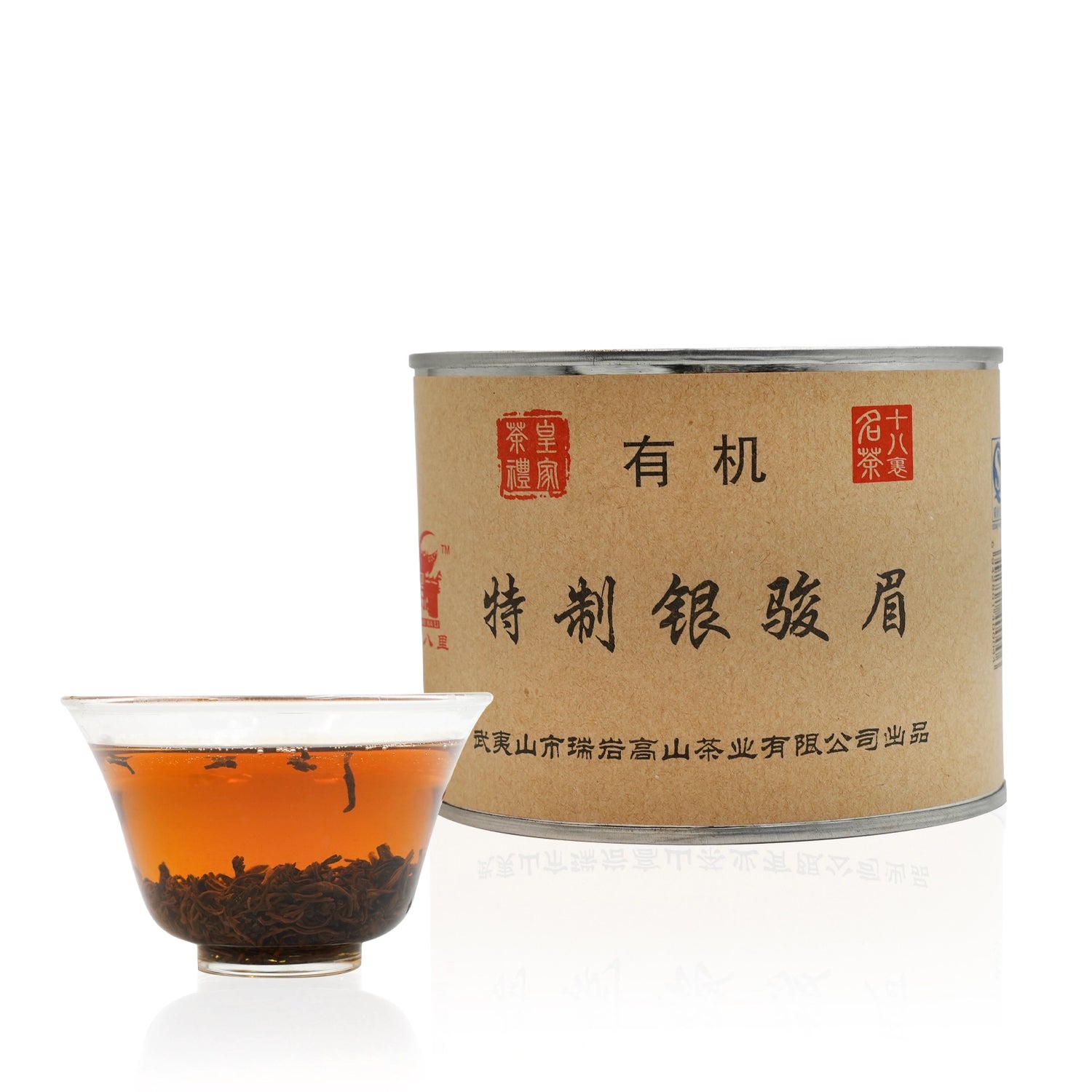
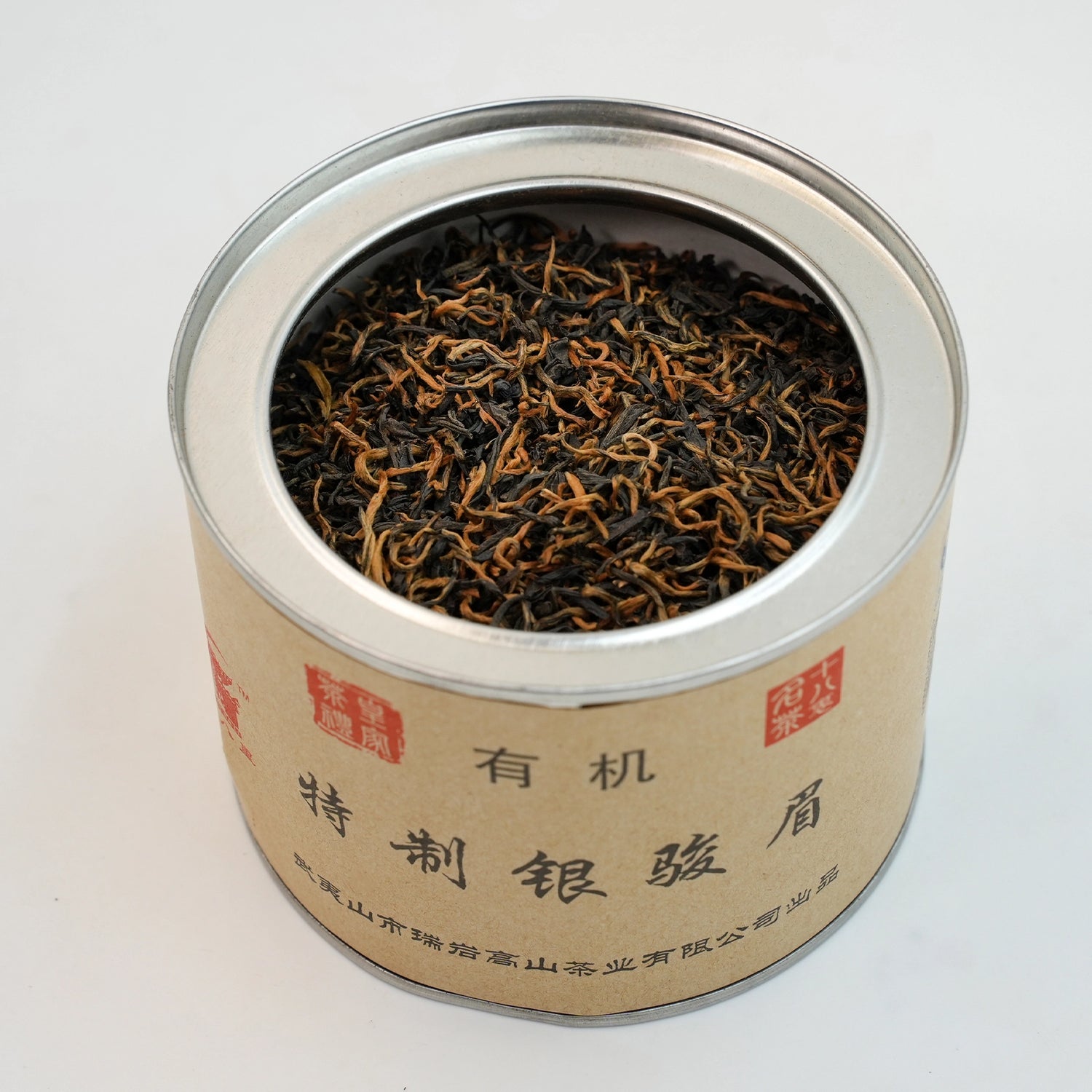
Recommended Purchase
This Organic Silver Junmei, produced in 2007 and aged for 18 years in a sealed dry northern warehouse, is crafted from local group varietals harvested in Tongmu Village, a primary tea-growing area in Wuyi Mountain. It is produced by Wuyishan Ruiyan High Mountain Tea Co., Ltd. The tea is made from carefully selected tender buds using the traditional handmade techniques of Lapsang Souchong, ensuring the tea leaves remain intact and well-preserved. This tea is no longer available on the market.
The tea offers a long-lasting floral aroma, a rich, refreshing flavor, and a high sweetness. While it is in a transitional aging phase and may have a slightly tangy note, it remains an excellent choice for drinking and a treasured item for collectors.
Key Details about Organic Silver Junmei black tea
- Origin:Mount Wuyi, Fujian, China
- Production Date:2007
- Grade: special grade
- Tea Cultivar:Tongmu Village Local Group Varietals
- Craftsmanship:Silver Junmei is meticulously crafted using one bud and one leaf, following the traditional handmade techniques of Lapsang Souchong. The process includes picking, withering, rolling, fermenting, and drying, with a strong emphasis on precision and care. The tea is then naturally aged in a dry storage environment for 18 years, allowing it to develop its unique character and depth.
- Flavor Highlights:The tea offers a long-lasting floral aroma, a rich, refreshing flavor, and a high sweetness, though it may have a slight tanginess due to its transitional aging phase.
What is Silver Junmei black tea ?
Silver Junmei, born in 2005, is a premium-grade masterpiece among Lapsang Souchong black teas, often referred to alongside Golden Junmei as the "Twin Jewels of Black Tea." Sourced from wild tea trees growing at 1500-1800 meters above sea level in Wuyi Mountain, it is made exclusively from one bud and one leaf plucked before Grain Rain (Guyu). It takes 50,000 tender buds to produce just one pound of tea, making the raw material as rare as gold.
Crafted using traditional handmade techniques without smoking or sifting, the tea leaves are tight, slender, and eyebrow-shaped, with a silvery-gray hue and subtle golden tips. The aroma is elegant and refined, with notes of flowers and fruits. When brewed, the liquor is golden and translucent, offering a fresh, mellow, and sweet flavor with a harmonious blend of honeyed sweetness and longan aroma. The brewed leaves are even and coppery, and the tea remains flavorful even after ten infusions.
Due to its demanding production process and limited yield, Silver Junmei embodies both the wild essence of nature and the precision of masterful craftsmanship.
Brewing and Enjoyment Tips
This tea embodies the unique transformation brought by time. For the first rinse, use boiling water to quickly wash the tea leaves for no more than 5 seconds, then discard the water. This step helps awaken the tea and remove any storage-related odors. For the best experience, it is recommended to use traditional brewing methods to fully release its aged characteristics.
Recommended Brewing Methods
Gaiwan Brewing :
- Capacity:110ml Gaiwan
- Water:Mineral Water or Purified Water
- Water Temperature:95-100℃
- Brewing Times:8-10 times
- Tea Water Ratio:Around 1:22(Adjust according to your own taste)
- Brewing Time Once:For the first three infusions, steep the tea for 5-10 seconds and pour out immediately. For each subsequent infusion, increase the steeping time by 5 seconds.
Storage Guidelines
To ensure the best quality of tea, the ideal way to store it is in vacuum-sealed packaging, kept in a cool, dark, and dry place. Avoid exposure to strong odors and air. For sealed storage, using a tin can or a double-lidded metal can is recommended. For even better results, you can store the sealed tea in the refrigerator or a dry storage container.
Weight & Packaging:
Weight : 100g (3.5oz)
Packing Type : Original canned seal
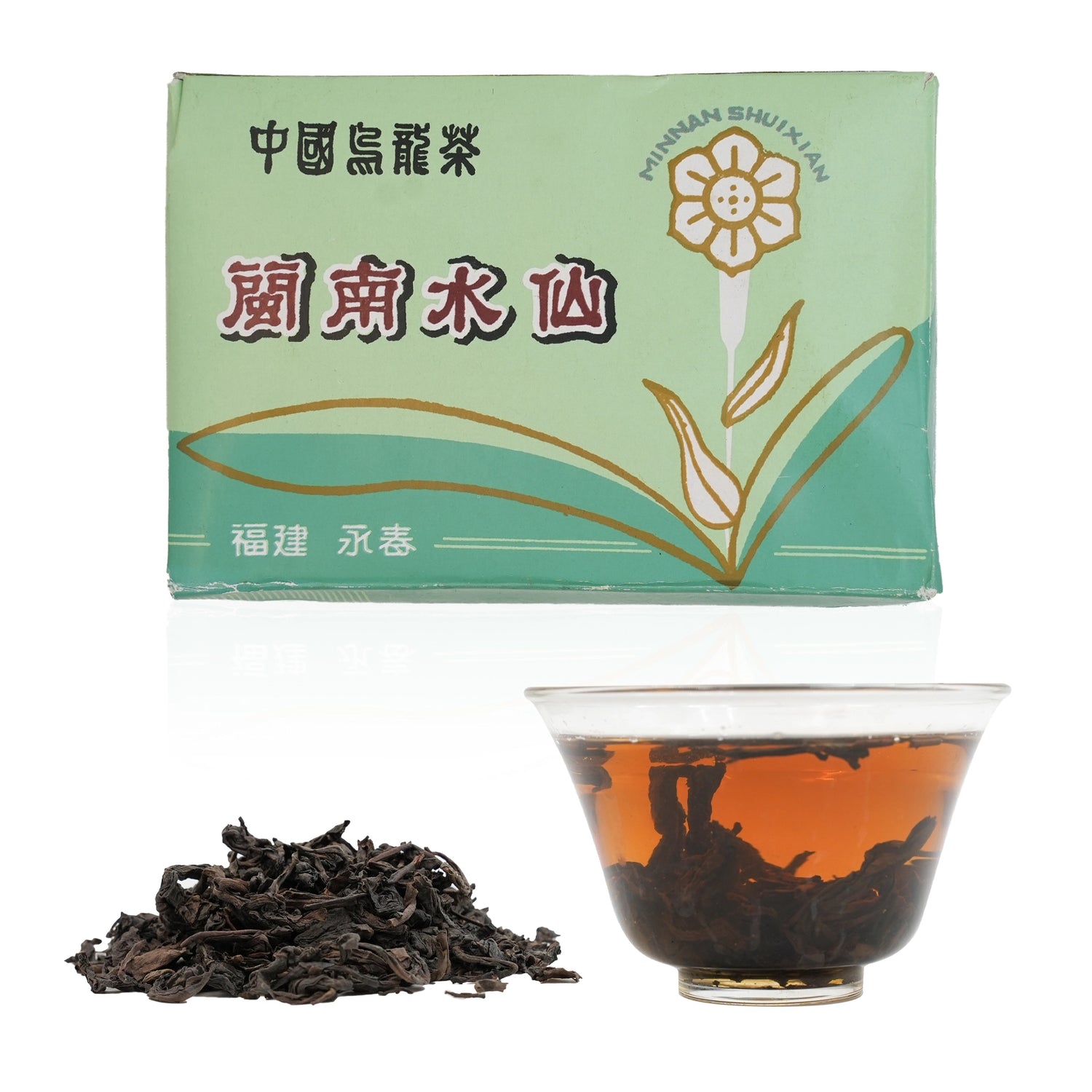
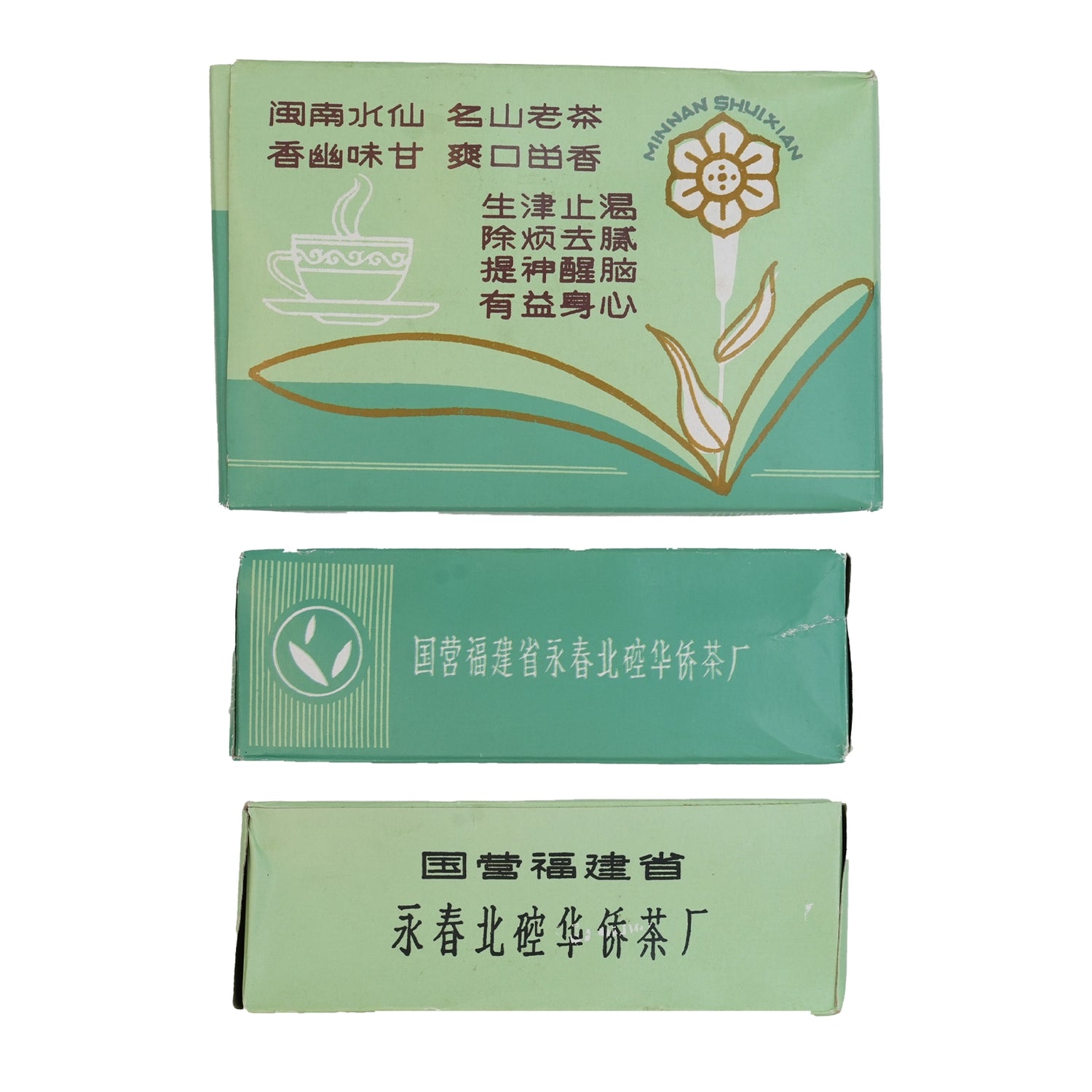
Recommended Purchase
This 1993 Aged Min Nan Shui Xian Oolong Tea is crafted from the Shui Xian tea cultivar, grown in Fujian, China. Produced by the renowned Yongchun Beikeng Overseas Chinese Tea Factory, which was established in 1917. This tea has been naturally aged in dry storage for 33 years, developing a unique blend of sweet aged aroma and medicinal fragrance. With a smooth, thick mouthfeel and a lingering sweetness, it is ideal for those who appreciate the depth of aged teas. The traditional high-temperature roasting and medium oxidation enhance its warming characteristics. This product is in its original packaging and is no longer in circulation on the market.
Key Details about 1993 Aged Min Nan Shui Xian
Origin: Yongchun, Fujian Province, China
Production Date: 1993
Grade: Second Grade
Tea Cultivar: Shui Xian
Craftsmanship: Traditional high-fire roasting, medium oxidation, light rolling
Flavor Highlights: Sweet aged aroma with medicinal fragrance, thick and smooth taste, long-lasting aftertaste
Storage: Naturally dry-aged, sealed packaging for optimal preservation
What is Min Nan Shui Xian Oolong Tea?
Min Nan Shui Xian is a Southern Fujian-style Oolong tea, known for its rich fragrance, mellow body, and lasting sweetness. Compared to Wuyi Shui Xian, it undergoes less oxidation, resulting in a softer and smoother profile. After decades of aging, this 1993 batch has developed an aged sweetness, medicinal notes, and a thick, velvety texture, making it a highly sought-after selection among aged tea connoisseurs.
Recommended Brewing Methods:
Gaiwan Brewing:
100ml Gaiwan
95℃-100℃
5-7 times
1:15 to 1:25
10~20 seconds
Thermos Brewing :
1g tea per 100ml (3.4oz) water.
Use boiling water (212°F).
Steeping Time: 1-2 hours.
Tool: Insulated thermos.
Boiling Method :
Add 1g tea per 100ml (3.4oz) water.
Boil for 1-2 minutes, then let sit for 2-3 minutes.
Rebrew by boiling 3 minutes longer with each steeping.
Use a ceramic or glass teapot for optimal flavor.
Enjoy up to 3-4 brews.
Storage Guidelines
Store this tea in a dry, cool environment with a humidity level below 45% and temperature below 25°C (77°F). Keep it away from strong odors, light, and air exposure. Proper storage ensures the tea retains its flavor and continues to age gracefully over time.
Weight & Packaging
Net Weight: 100g (3.5oz)
Packing Type: Original sealed paper box with inner aluminum foil bag
About Yongchun Beikeng Overseas Chinese Tea Factory
Founded in 1917, the Yongchun Beikeng Tea Factory has a rich history of producing high-quality teas. Once a bustling hub of innovation and craftsmanship, the factory was home to over 1,000 tea workers at its peak, producing millions of pounds of tea annually. The factory's products, including Min Nan Shui Xian, were highly sought after in Hong Kong, Taiwan, Japan, and Southeast Asia.
Just as many state-owned old factories have experienced ups and downs, in the 1990s, the tea factory once fell into a slump, and the once bustling factory area gradually became desolate. The former factory director, Huang Shenghou, who had created its greatest glory and witnessed its decline, couldn't bear to see it and took over the factory personally after its privatization.
Today, this aged Min Nan Shui Xian Oolong tea stands as a flavorful tribute to the factory's storied past and the enduring legacy of traditional Chinese tea-making.
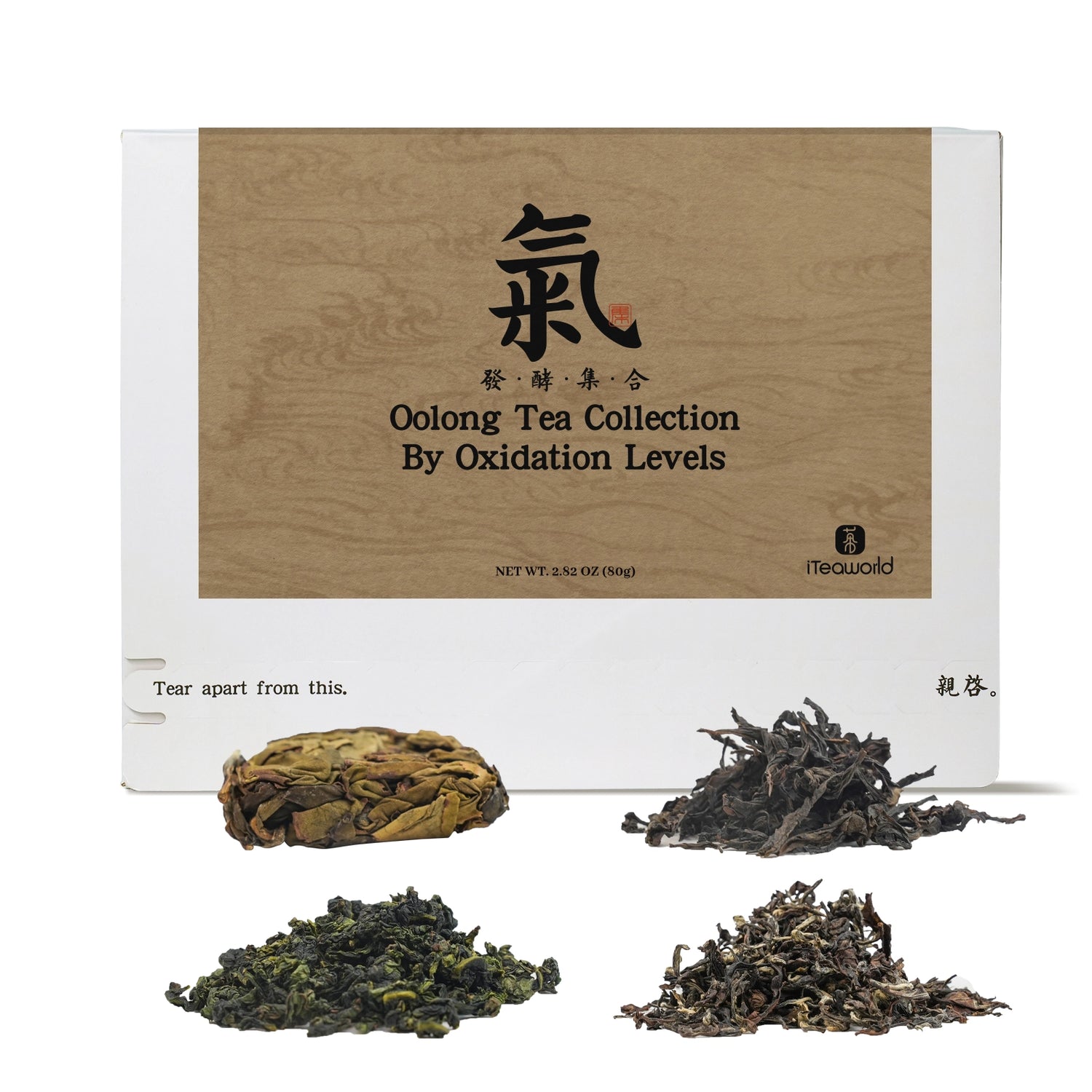
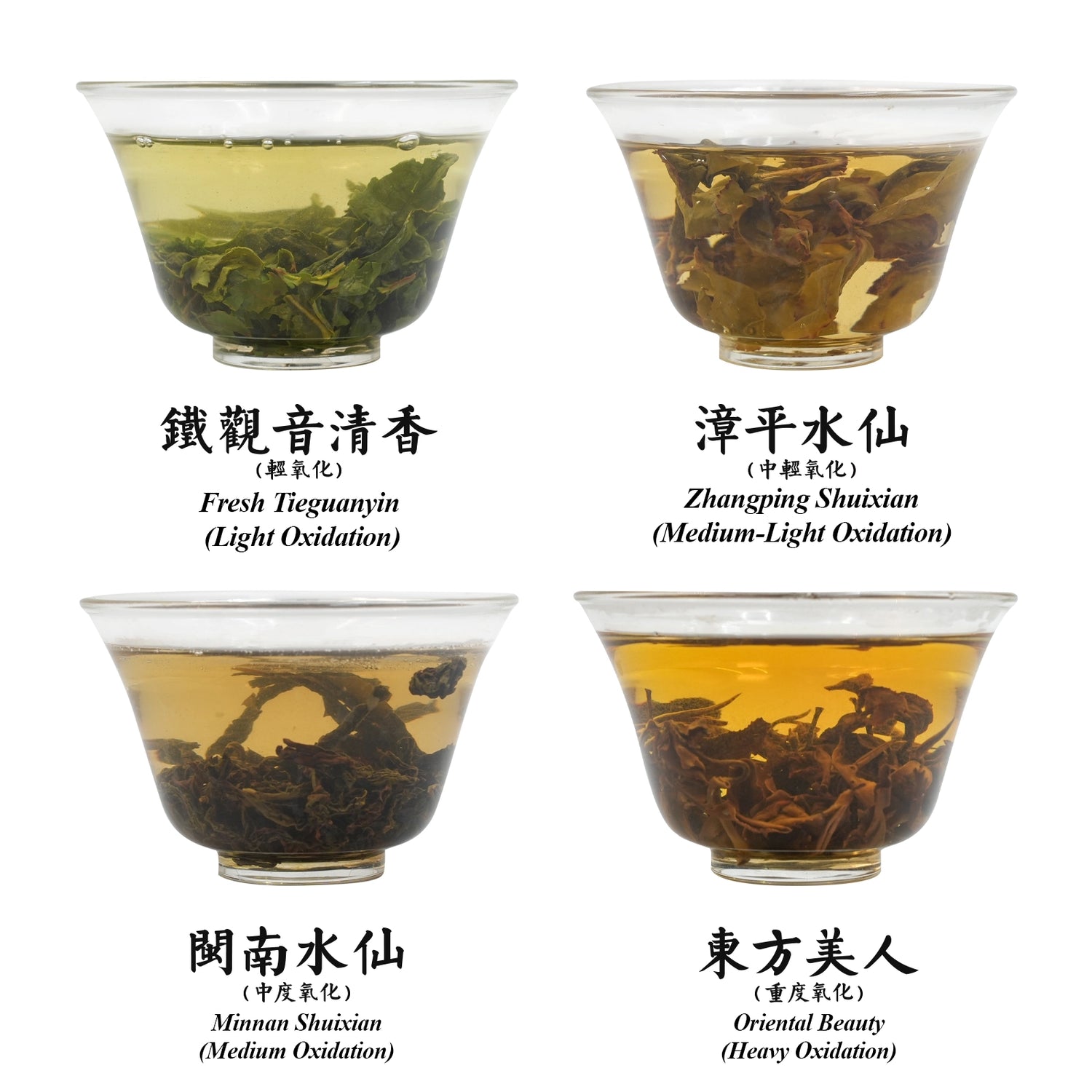
Oolong Tea Comparison Set: 4 Oxidation Levels (Tieguanyin to Oriental Beauty) 80g
$34.99 USD
Unit price perOolong Tea Comparison Set: 4 Oxidation Levels (Tieguanyin to Oriental Beauty) 80g
$34.99 USD
Unit price perOolong Tea: The Balance of Oxidation
Oolong tea is a partially oxidized tea, with oxidation levels ranging from 10% to 70%. Oxidation plays a key role in shaping the tea's aroma and the brightness of its flavor. Light oxidation creates fresh floral and fruity notes, while higher oxidation brings out richer, more mature fruit or honey-like aromas.
Lightly Oxidized Oolong (10%–25%): Examples like Wen Shan Baozhong and light-roast Tieguanyin showcase fresh floral and fruity scents.
Moderately Oxidized Oolong (25%–50%): Teas such as Phoenix Dan Cong and medium-roast Tieguanyin have a balanced profile, combining floral notes with hints of honey, fruit, or roasting, resulting in a complex aroma.
Heavily Oxidized Oolong (50%–70%): Classics like Da Hong Pao, Wuyi Rougui, and Oriental Beauty deliver mature fruit aromas, roasted or caramel-like notes, and a smooth, full-bodied brew.
This product includes four renowned oolong teas, all lightly roasted but with varying oxidation levels. It’s the perfect way to explore how different oxidation levels influence the flavor and aroma of oolong tea.
Products Included:
- Fresh Tieguanyin (Light Oxidation) 20g
- Zhangping Shuixian Oolong Tea (Medium-Light Oxidation) 20g
- Minnan Shuixian (Medium Oxidation) 20g
- Oriental Beauty (Heavy Oxidation) 20g
Origin:
- Fresh Tieguanyin: Longjuan Village, Longjuan Township, Anxi County, Fujian Province, China
- Zhangping Shuixian:Beiliao Village, Nanyang Town, Zhangping City, Fujian Province, China
- Minnan Shuixian:Wuxi Village, Wufeng Town, Yongchun County, Quanzhou City, Fujian Province, China
- Oriental Beauty:Neiyang Village, Pingshan Township, Sanming City, Fujian Province, China
Master Blender:
- Fresh Tieguanyin: Chen Qizhi
- Zhangping Shuixian:He Meiqing
- Minnan Shuixian:Xu Yongyuan
- Oriental Beauty:Li Jianmin
Processing Time:
- Fresh Tieguanyin: November 2024
- Zhangping Shuixian:June 2024
- Minnan Shuixian:December 2024
- Oriental Beauty:early June 2024
Best Before Date:24months
Tea Variety:
- Tieguanyin: Tieguanyin Varieties
- Zhangping Shui Xian: Minnan Shuixian Varieties
- Minnan Shuixian: Jianyang Shui Xian Varieties
- Oriental Beauty: Jin Xuan variety
Altitude:
- Tieguanyin: 800-900 meters
- Zhangping Shui Xian: 400-500 meters
- Minnan Shuixian:900-1000 meters
- Oriental Beauty:1100 meters
Soil Type:
- Tieguanyin: red soil
- Zhangping Shui Xian: yellow and red soil
- Minnan Shuixian: red soil
- Oriental Beauty:Red soil
Oxidation Level:
- Tieguanyin: Light oxidation (10-20%)
- Zhangping Shui Xian: Mild-light oxidation (25-30%)
- Minnan Shuixian: Medium oxidation (40-50%)
- Oriental Beauty:Heavy oxidation (60-70%)
Roasting Level:
- Very light roast, 70-80°C (158-176°F)
Roasting Method (Charcoal or Electric):
- electric roasting
Brewing Recommendations:
Chinese-Style Oolong Brewing
Teaware: Gaiwan or clay teapot
Water Temp: 212°F (100°C)
Tea-to-Water Ratio: 1g per 0.7 oz (20ml)
Steep Time: 10-15 sec (1-3 steeps), add 5-10 sec after
Re-Steep: Up to 7 times
Western-Style Oolong Brewing
Teaware: Teapot, infuser, or French press
Water Temp: 90-100°C (194-212°F)
Tea-to-Water Ratio: 1 tsp (2-3g) per 8 oz (240ml)
Steep Time: 3-5 minutes
Re-Steep: Up to 3 times, adding 1-2 minutes each time


Pearl Orchid, also known as Zhenzhulan or Cha Lan, gets its name from the way its tiny golden blossoms cluster along the stem like strands of pearls. In She County of Anhui, the flower was originally grown for ornamental purposes, but over time it became treasured for scenting tea. The region’s warm, humid climate and fertile soil provide ideal conditions for cultivating Pearl Orchid. Large-scale production of Pearl Orchid–scented tea began during the Xianfeng period of the Qing Dynasty, and by around 1890, it had already become one of China’s major scented tea varieties, especially loved in northern China and among scholars and literati.
There is an old Chinese saying about seasonal tea drinking: “In winter drink black tea, in summer drink green tea, and in the second and eighth lunar months, drink Pearl Orchid tea.” These months mark the shift between warmer and cooler seasons, when humidity is higher. Pearl Orchid tea was believed to help dispel dampness and support the body during seasonal transitions.
This tea comes from She County in Anhui, using spring-picked Huangshan Maofeng green tea as the base. The addition of Pearl Orchid blossoms gives the tea a cleaner, brighter character. The liquor is smooth and sweet, without the bitterness sometimes found in green tea.
Its aroma is elegant and serene, with a soft, cooling sweetness—reminiscent of orchids blooming in a quiet valley. Compared with the lively, expressive fragrance of jasmine tea, Pearl Orchid tea is more subtle and deep, yet wonderfully long-lasting.
Origin: Baohuan Village, Huicheng Town, She County, Huangshan City, Anhui Province.
Tea Base / Number of Scenting Rounds: Huangshan Maofeng/Second scenting
Tea Master: Mr Yu.
Processing Date: June 2025
Shelf Life: 18 months
Brewing Method:
Water: Purified, 80 °C | 176 °F
Gaiwan: 2g per 100ml · 10–15 sec · add 5–7 sec each steep · up to 7 infusions
Glass cup: 1g per 100ml · 1st: 40s | 2nd: 60–90s | 3rd: 90–150s


Pinghe County in Fujian is not only the core growing region for Bai Ya Qi Lan but also famous for its Guanxi honey pomelos. Every April, the mountains are filled with blooming pomelo flowers. Tea makers pick the buds just before they open and scent them with Bai Ya Qi Lan, creating the region’s unique Pomelo Blossom Bai Ya Qi Lan. Since the pomelo blossom season lasts only about 20 days, production is very limited.
This Pomelo Blossom Oolong comes from that origin. Its aroma blends the orchid-like fragrance of Bai Ya Qi Lan with the delicate sweetness of pomelo flowers. The tea is fresh, smooth, and naturally sweet, offering both the richness of Oolong and the light, cooling sweetness of citrus blossoms. You’ll notice the gentle sweetness of pomelo flowers at the first sip, followed by the unfolding depth of Oolong. The texture is silky, the aftertaste lingers, and the finish carries a refreshing hint of pomelo blossom.
Origin:Daqin Mountain, Qiling Township, Pinghe County, Zhangzhou, Fujian, China
Tea Base / Number of Scenting Rounds:Bai Ya Qinlan Oolong tea / Second scenting
Tea Master:Cai Xiaohong
Processing Date:2025/4
Shelf Life:36 months
Brewing
Vessel: White porcelain gaiwan / Yixing clay teapot
Water: Purified, 100°C | 212°F
Steeping Time:
5g per 100ml · 1-3 steeps:10-15 sec , add 5-7 sec after · Up to 7 infusions


This Pu-erh tea comes from Bulang Mountain, the core production area of Pu-erh tea. The region enjoys abundant rainfall and ample sunlight, creating ideal natural conditions for tea growth. Bulang Mountain is home to several renowned tea-producing villages, such as Lao Banzhang, Lao Man’e, and Xin Banzhang. Teas from these areas are famous for their powerful “cha qi” (tea energy), long-lasting sweetness, and strong wild mountain character, making them true classics among Pu-erh teas.
This raw Pu-erh tea was produced in the year 2000, made from a blend of leaves harvested from old tea trees and pressed into a column shape. It has been carefully stored in a dry warehouse for 25 years, allowing for slow and natural aging. The resulting tea liquor reveals distinct smoky and aged aromas, with a rich, mellow body and a lingering sweet aftertaste.
Origin: Bulang Mountain, Menghai County, Xishuangbanna Dai Autonomous Prefecture, Yunnan Province
Production Date: 2000
Tea Cultivar: Yunnan Large-Leaf Tea
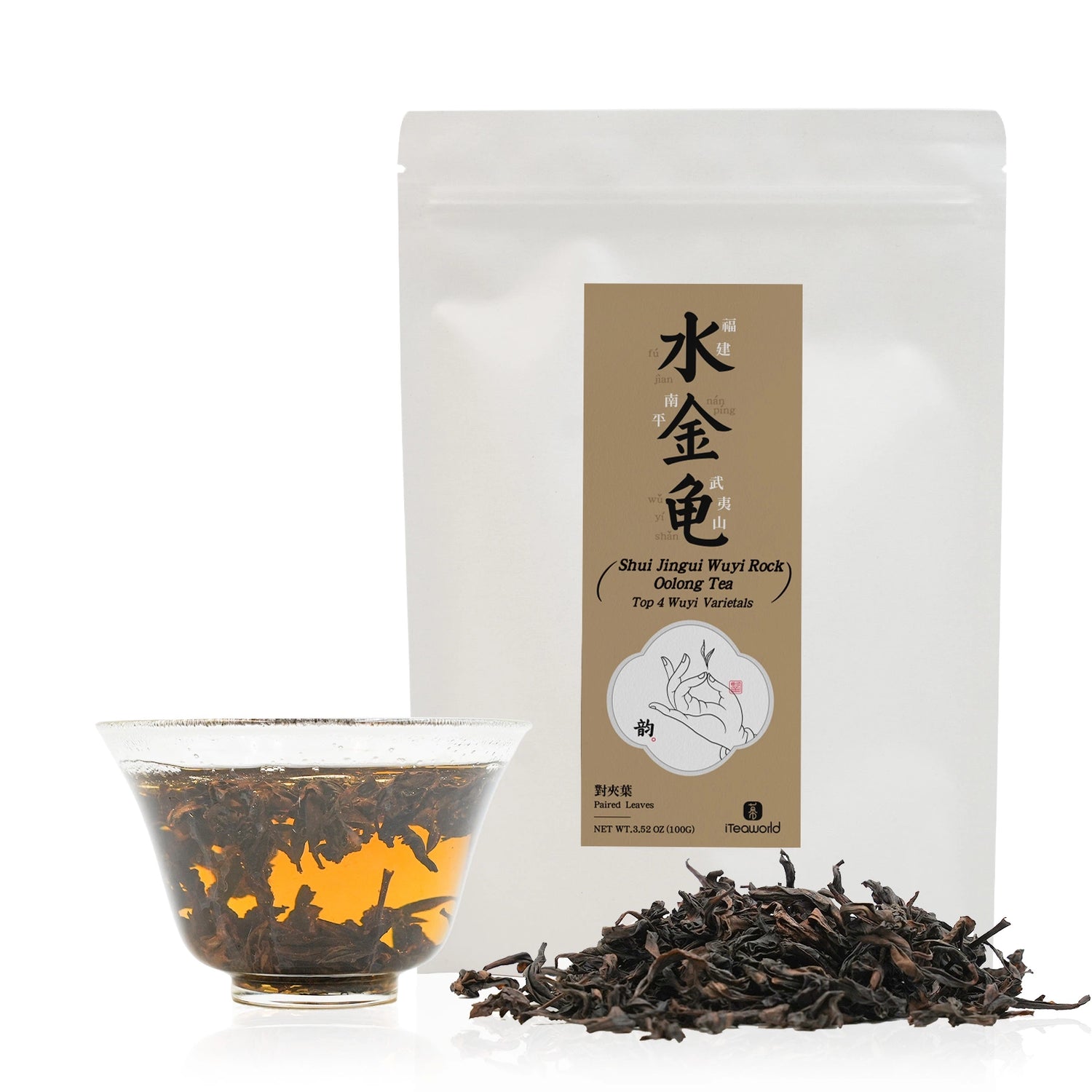
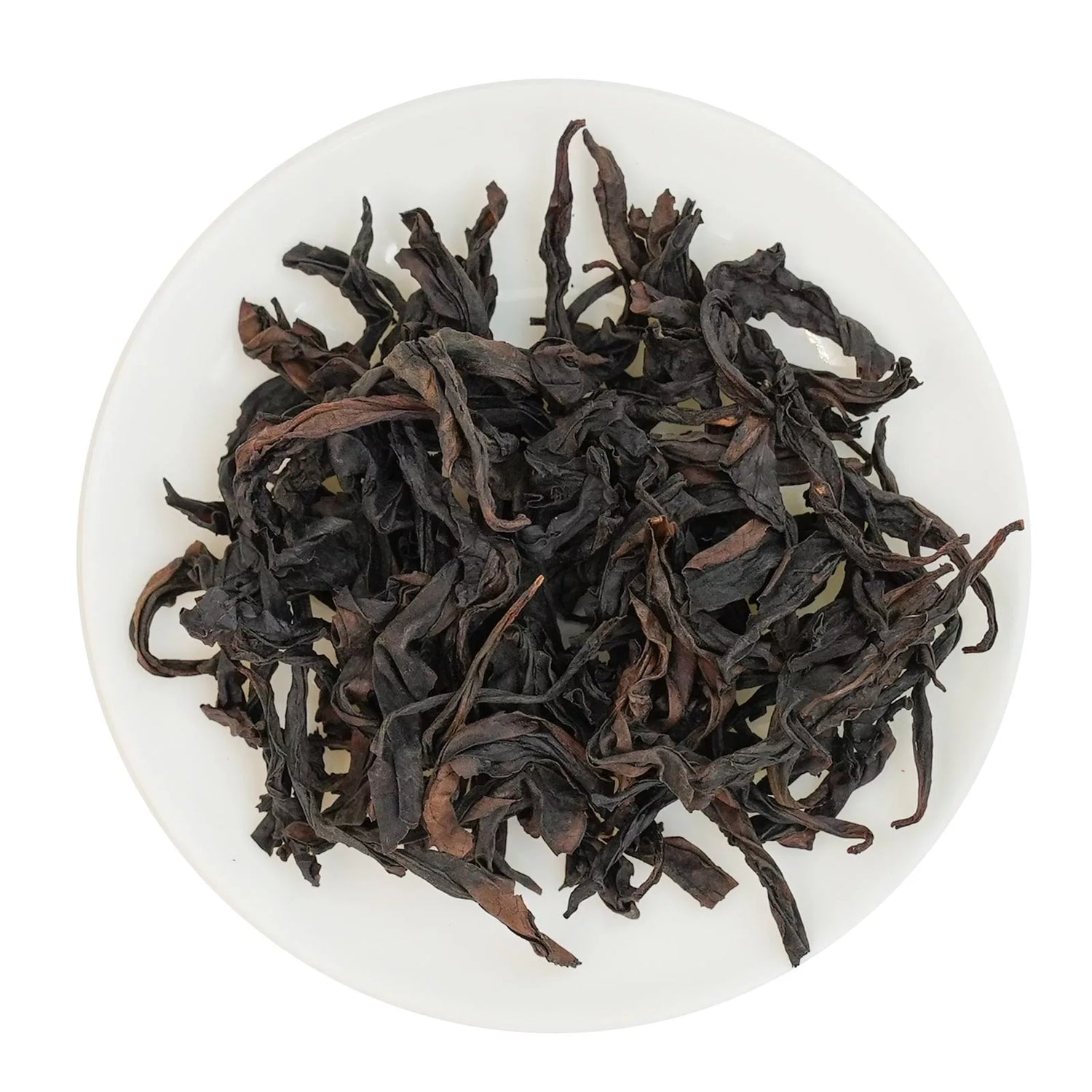
One of Wuyi Mountain's four most famous teas, Shui Jin Gui gets its name from the way its tea bushes look like giant golden turtles basking in the sun. These rare plants grow on the steep cliffs of Ox Pen Ravine beneath Dugeshe Peak.
This tea strikes the perfect balance - gentle yet complex, without the overpowering intensity of other rock teas. Its signature winter plum blossom fragrance is hauntingly beautiful, like plum flowers blooming through snow. The flavor is naturally sweet and smooth, with zero bitterness even when brewed strong.
Tea lovers appreciate its sophisticated yet approachable nature, making it perfect for both connoisseurs and those new to Wuyi oolongs.
Origin: Jingshui Village, Xingcun Town, Wuyishan City, Fujian Province, China
Category: Ban Yan (mid-mountain, 400–600 m)
Soil: Gravel soil
Variety: Shui Jin Gui
Producer: Chen Hui
Harvest Time: November 2024
Shelf Life: 36 months
Brewing Guide
-
Water Temperature: 100°C (212°F)
-
Brewware: Gaiwan, Yixing clay teapot
-
Tea-to-Water Ratio: 5–7 g per 100 ml
-
1st–3rd Infusions: 8–15 seconds
-
Later Infusions: Add 5–10 seconds each time
-
Total Brews: Up to 10 infusions
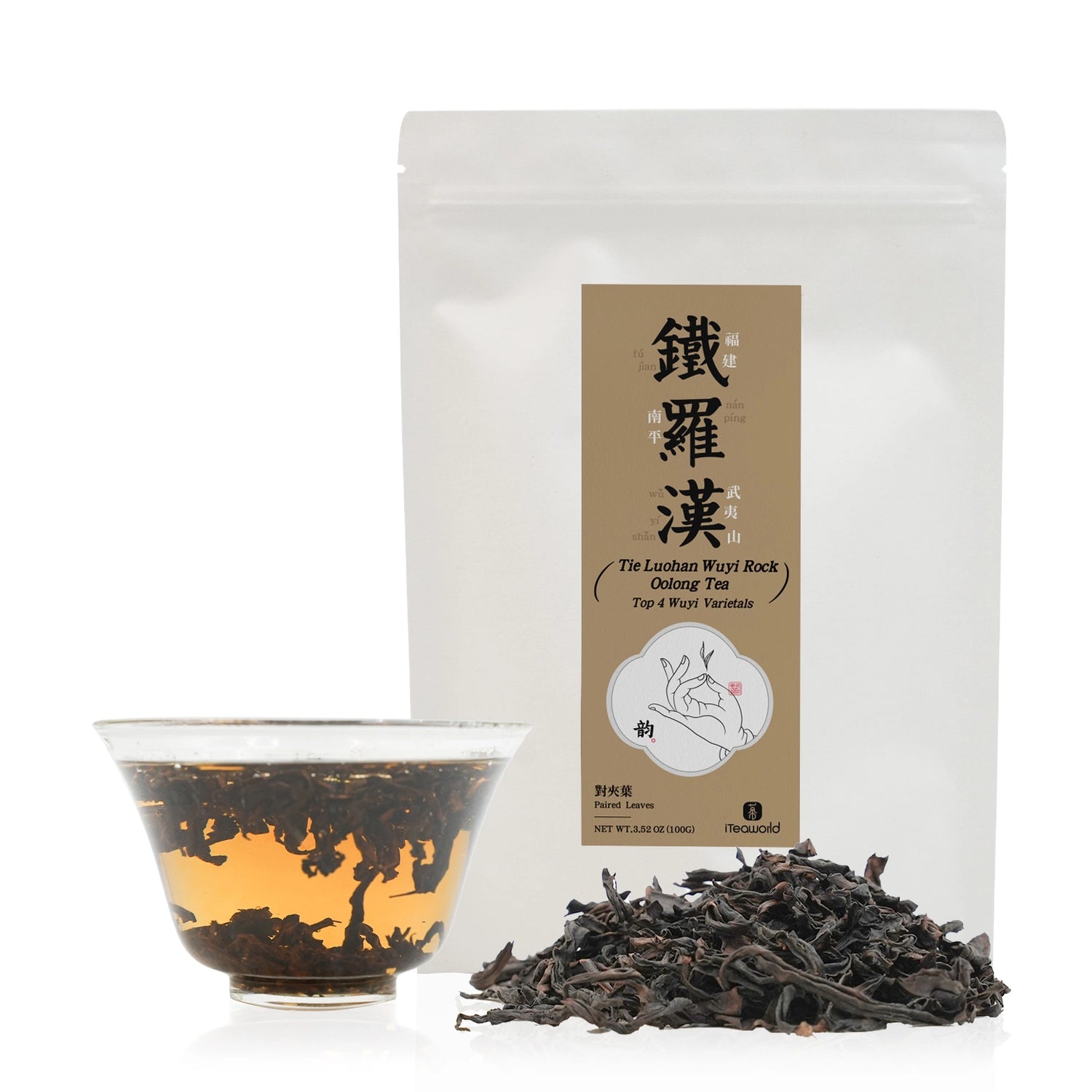
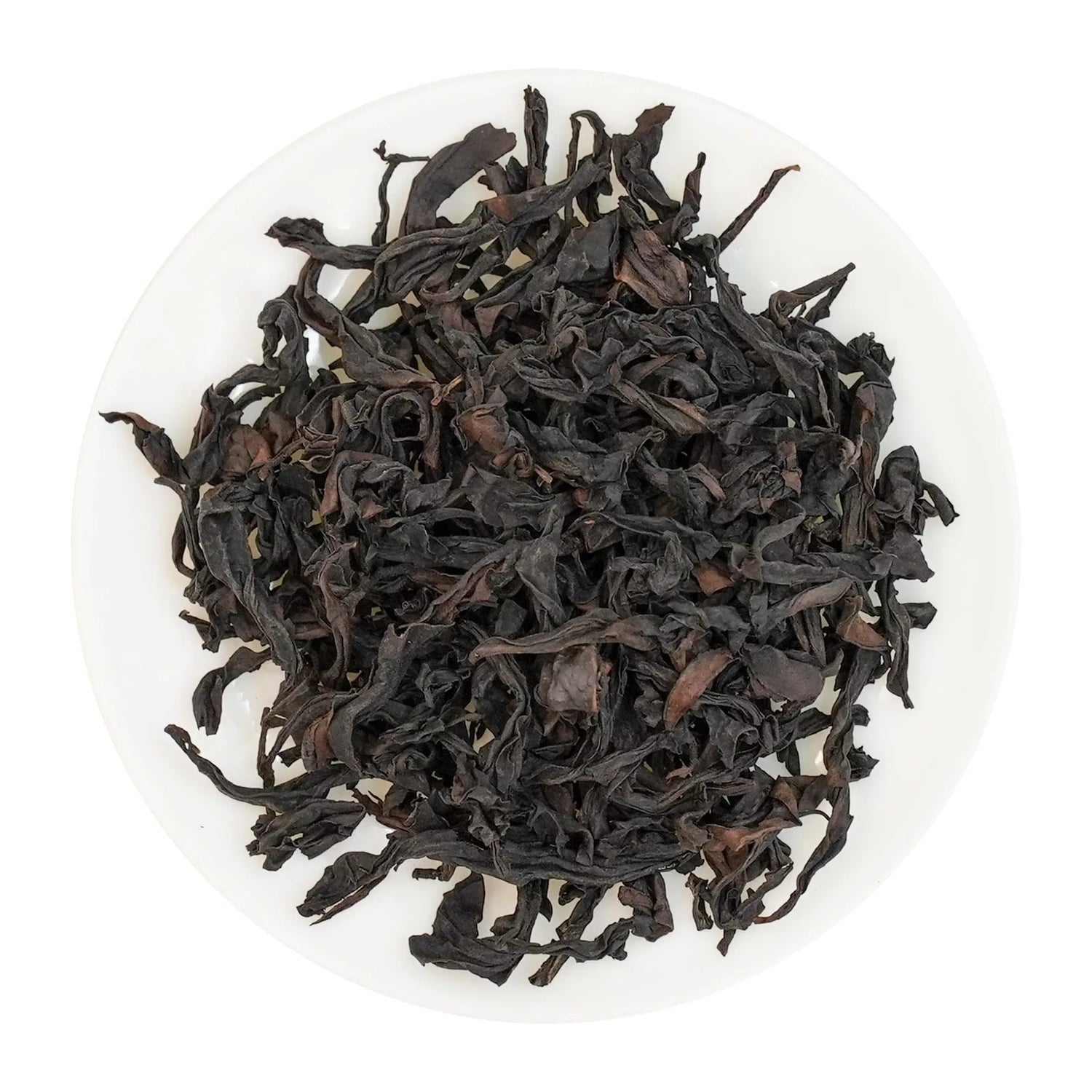
Tie Luo Han is one of the four famous Wuyi Rock Tea cultivars. Its origin is said to be either Guidong or Zhuke, both located in the core Zhengyan areas of the Wuyi Mountains. In Southeast Asia, many experienced tea lovers highly esteem Tie Luo Han, sometimes even above Da Hong Pao.
This Tie Luo Han is crafted using traditional Wuyi Rock Tea techniques. The liquor opens with a rich floral aroma, followed by a subtle herbal note in the finish. The flavor is full-bodied and mellow, with a smooth, rice-like texture. Its rock character is pronounced, offering distinct mineral notes and a unique warmth. Ideal for tea enthusiasts looking to explore the depth and variety of Wuyi Rock Teas.
Origin: Jingshui Village, Xingcun Town, Wuyishan City, Fujian Province, China
Category: Ban Yan (mid-mountain, 400–600 m)
Soil: Gravel soil
Variety: Tie Luo Han
Producer: Chen Hui
Harvest Time: November 2024
Shelf Life: 36 months
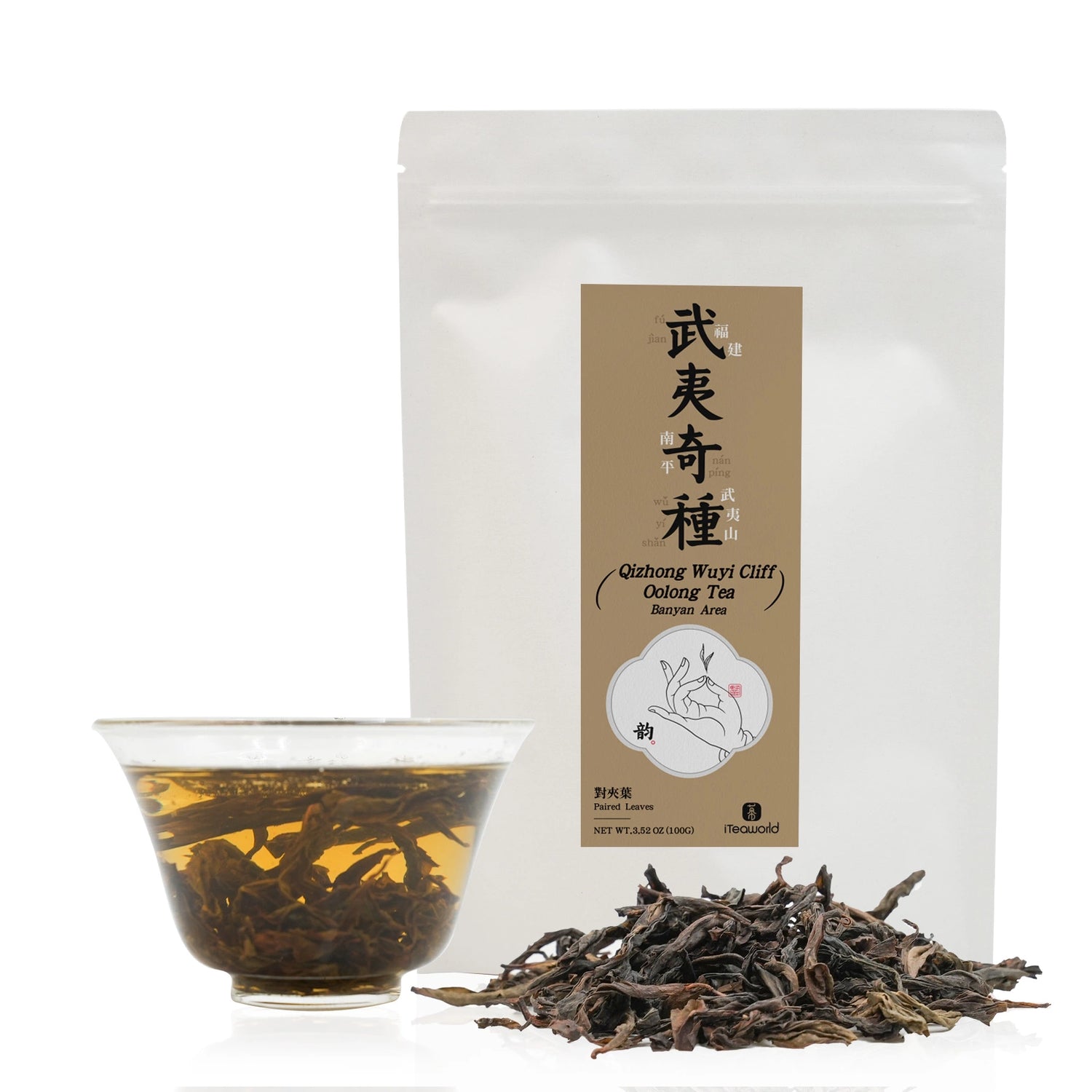
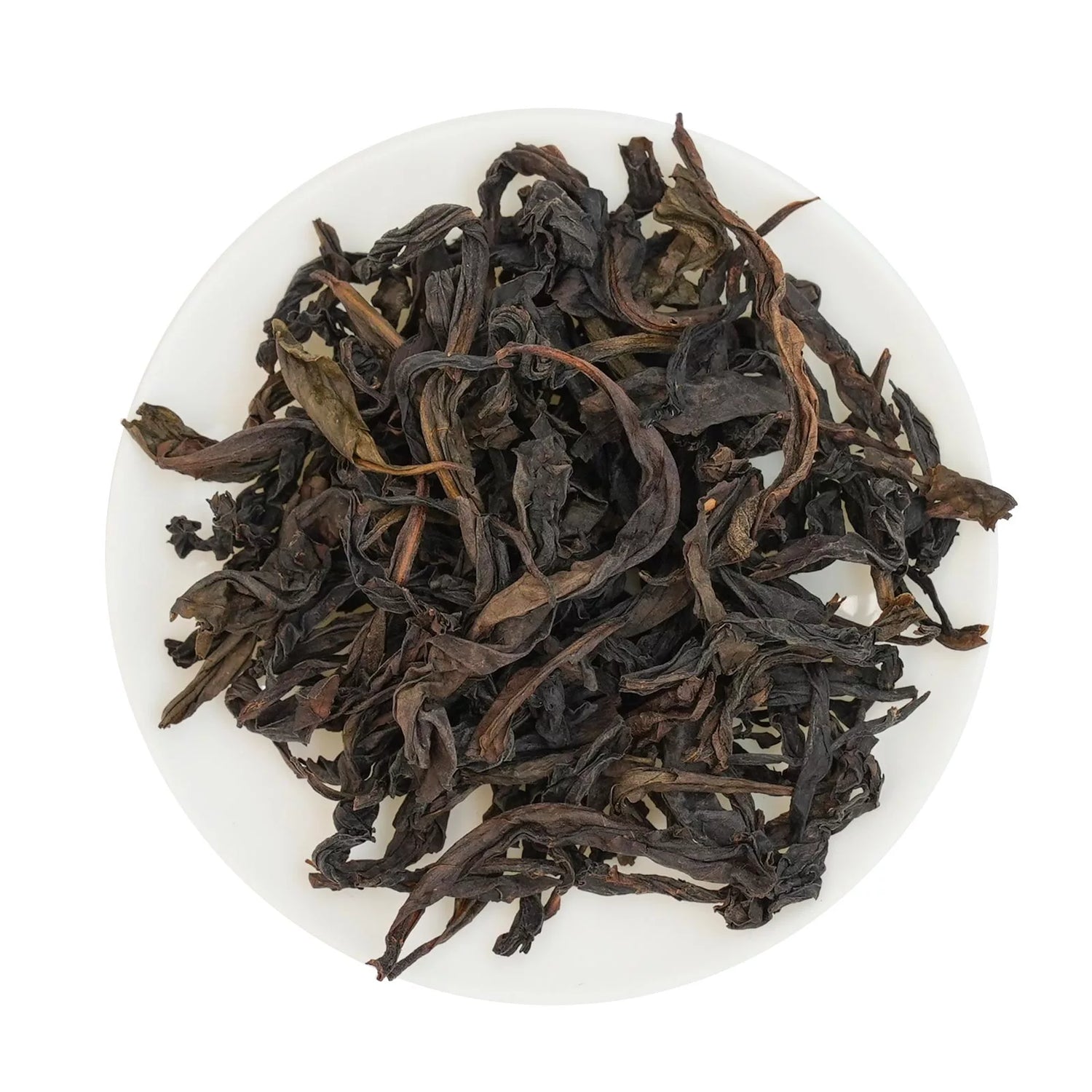
Wuyi Qizhong, locally called "Cai Cha," refer to the indigenous tea tree varieties naturally growing in Wuyi Mountain. They are a sexually propagated group of plants and among the most ancient varieties in Wuyi. Famous Wuyi oolong teas such as Bai Jiguan and Tie Luo Han were selected from these rare varieties, making them the "gene pool" and a "living fossil" of Wuyi Rock Tea.
Due to the significant individual differences among these plants, the brewed tea presents diverse aromas, ranging from floral notes (orchid), fruity notes (honey peach, snow pear), woody notes, to creamy notes; older bushes may even carry a wild character.
This tea belongs to the Ban Yan (Half-Rock) category. It opens with a floral fragrance, develops fruity aromas, and carries a unique mineral character known as "Yan Yun" (rock rhyme). The taste is rich and full-bodied, with a smooth, lingering sweetness, pronounced throat finish, and strong durability for multiple infusions.
Origin: Jingshui Village, Xingcun Town, Wuyishan City, Fujian Province, China
Tea Region: Ban Yan (半岩)
Elevation: 400–600 m
Soil Type: Yellow Soil
Tea Variety: Wuyi Mountain indigenous group varieties
Tea Master: Chen Hui
Harvest Season: November 2024
Shelf Life: 36 months
Brewing Guidelines
Water Temp: 100°C (212°F)
Brewware: Gaiwan, Yixing Clay Teapot
Tea-to-Water Ratio: 5-7g per 100ml
1–3 infusions: 8-15 sec
Later infusions: Add 5–10 sec
Total brews: 7-8 times
Recently viewed products
Shop with Confidence at iTeaworld

Not satisfied? Get a full refund within 30 days — no return needed

Free tea samples with tea order
Buy 1 get 1 sample. Buy 2 get 2. Buy 3+ get 3 free sample