

Sort by:
61 products
61 products


Collection Introduction
As winter's palette turns muted, we turn to the spectrum of flavor for comfort. This season invites more than just roasted warmth and floral notes—it calls for the sun-drenched sweetness of fruit, naturally captured in the tea leaf.
Presenting Orchard Hearth, a journey into the heart of China's naturally fruit-scented teas. We've consciously moved beyond strong floral scents or heavy roast profiles to curate leaves that whisper of ripe berries, honeyed orchards, and sun-warmed citrus. These are pure teas, needing no added flavors, that brew into cups brimming with the essence of a cozy, sun-kissed grove. They are the vibrant accent in the quiet winter months, a refreshing and uplifting warmth that brightens any day.
Why We Chose These Teas
Fruitiness is a universal language of delight. We selected these teas precisely because their natural, approachable flavors speak directly to the global palate, offering a welcoming gateway to the world of premium Chinese tea.
Sunshine & Nectar: Winter's Sweet Embrace
Featured Teas: Mi Lan Xiang Dan Cong, Yunnan Golden Buds, Keemun Black Tea (Red Fruit Note), Yongchun Fo Shou.
The Experience: These teas deliver the sweet, radiant warmth we crave in winter. Whether it's the iconic honeyed aroma of Mi Lan Xiang, the ripe mango-like sweetness of Yunnan Golden Buds, or Keemun's elegant notes of red wine and apple (the celebrated "Keemun Aroma"), they are like liquid sunshine—immediately comforting, satisfying, and uplifting.
The Crisp Accent: A Spark of Freshness
Featured Teas: Qing Xiang Bai Ya Qi Lan, Gong Mei White Tea, Bi Luo Chun Green Tea.
The Experience: Who says winter can't be refreshing? These teas offer a bright, clean counterpoint to heavier flavors. Bai Ya Qi Lan presents a delicate fruitiness alongside orchid notes, Gong Mei White Tea evokes gentle honey and melon, and the precious Bi Luo Chun holds the fresh, subtle fruitiness of spring. They cut through the staleness of heated rooms, bringing a burst of mental clarity and revitalization.
Mellow Comfort: The Daily Cup of Serenity
Featured Teas: Zhangping Shui Xian (Soft Fruit Note), Shou Mei White Tea, Lingtou Dan Cong.
The Experience: These are your reliable companions for a peaceful winter afternoon. They are mellow, smooth, and incredibly approachable. Zhangping Shui Xian is softly soothing, aged Shou Mei develops a warm, date-like sweetness over time, and Lingtou Dan Cong is known for its straightforward honeyed charm. Their fruit notes are not bold but are woven deeply into the liquor, offering a lasting sweetness and profound relaxation.
In Summary, the Orchard Hearth collection is our gift to those seeking unique, approachable, and delightfully flavorful teas. It proves that warmth can come from sun-kissed fruitiness and comfort from vibrant clarity. It's the perfect answer to the winter monotony, creating a sunny, inner orchard with every sip.


As the days grow shorter and a chill fills the air, we crave a cup of tea that warms us from the inside out. It’s more than just heat; it's about the comfort and satisfaction that comes from rich, soothing flavors.
The "Cozy Winter Warmers" collection was created for exactly this moment. We've carefully curated ten distinct Chinese teas, each chosen for its ability to comfort and delight. Like a crackling fireplace, a soft blanket, or a warm hug, these teas are your perfect companions to melt away the winter chill.
Why We Chose These Teas
When winter arrives, we turn to teas that are inherently warming, rich, and sweet. The philosophy behind this collection is all about comfort, body, and natural sweetness.
The Direct Sweetness of Black & Flowering Teas:
Lapsang Souchong Black Tea: Offers a signature sweet, smoky aroma with notes of dried longan.
Sticky Rice Scented Black Tea: Known for its unique, toasty aroma of glutinous rice, providing a mild and comforting sweetness.
Rose Black Tea (Scented x3): A romantic and warming blend of honeyed black tea and fragrant rose petals.
These teas are smooth, approachable, and deliver immediate, delightful flavors that are easy to love.
The Toasty Warmth of Rock Oolongs:
Wuyi Shui Xian (Ban Yan): A robust, mineral tea with floral notes and a warm, toasty finish from roasting.
Wuyi Rou Gui (Ban Yan): Known for its warming, spicy cinnamon character and a rich, baked aroma.
Wuyi Da Hong Pao (Blend): The ultimate expression of a complex, toasty, and deeply satisfying Rock Oolong.
Osmanthus Oolong (Scented x3): The toasty base of the oolong is beautifully brightened by the sweet, apricot-like fragrance of osmanthus flowers.
These teas provide a solid, grounding warmth that lingers, perfect for a cozy afternoon.
The Smooth & Earthy Depth of Dark Teas & Aged White Tea:
Liupao Dark Tea: Exceptionally smooth and mellow, with earthy, woody, and sometimes date-like notes. Known for its digestive comfort.
Ripe Pu-erh Dark Tea: Deeply rich and earthy with a smooth, velvety texture and a warm, soothing character.
Gong Mei White Tea (Aged): While young white tea is fresh, this aged version has matured into a warmer, sweeter cup with honey and herbal notes.
These teas are the definition of cozy—soft, earthy, and incredibly soothing on a cold day.
Together, these teas share a common theme: they are warming, full-bodied, and feature inviting aromas of wood, natural sugar, and baked goodness. They are chosen not just to warm your hands, but to comfort your soul, making them perfect for sharing with loved ones during the holiday season and beyond. This collection is expertly curated to suit the American palate's desire for comforting and robust flavors in winter.


Winter invites us to enjoy richer, heartier meals and cozy comforts. But these indulgences can often leave us feeling heavy and sluggish. Now, more than ever, your body craves a gentle aid to restore balance and lightness.
The "After-Meal Digestive Picks" collection is your essential winter wellness ritual. We've curated seven teas renowned in Chinese tradition for their digestive benefits. Instead of simply ending a meal, let these teas be your warm, soothing companion to ease discomfort, cut through richness, and leave you feeling comfortably light and settled.
Why These Teas Are Perfect for Winter
Winter's hearty diets and less active lifestyle make mindful digestion key. This collection is rooted in centuries of Chinese culinary wisdom, focusing on two categories celebrated as natural digestive aids:
1. Rock Oolongs: The Natural "Grease Cutter"
Featured Teas: Wuyi Rou Gui (Ban Yan), Wuyi Rock Tea 'Golden Peony', Wuyi Rock Tea 'Rui Xiang 305'.
The Winter Reason: In regions like Fujian, a pot of robust, warmed Rock Oolong is the traditional answer to rich, celebratory winter feasts. Their baking process creates a toasty, warm character that perfectly complements the season, while their complex profiles are known to help metabolize fats and relieve that overstuffed feeling.
2. Dark Teas & Aged White Tea: The Soothing "Gut Harmonizer"
Featured Teas: Liupao Dark Tea, Ripe Pu-erh, Anhua Dark Tea, Jasmine Liupao, 2014 Aged Shou Mei.
The Winter Reason: In Northern China and border regions where winter diets rely on meat and rich foods, Dark Tea (Pu-erh, Liupao, Anhua) is a daily staple for good reason. Through post-fermentation, these teas become exceptionally mellow and warming. They are prized for gently soothing the stomach and aiding digestion, making them ideal for managing heavier winter meals. The 2014 Aged Shou Mei, having matured into a warm and sweet profile, offers similar gentle comfort. The Jasmine Liupao adds a unique floral lift, cutting through winter's richness with a refreshing aroma.
In summary, this collection focuses on teas that are warming, smooth, and traditionally used to support digestion. They are not just a beverage, but a practical and comforting wellness practice for the winter season, helping you feel your best even while enjoying the coziness of the season.

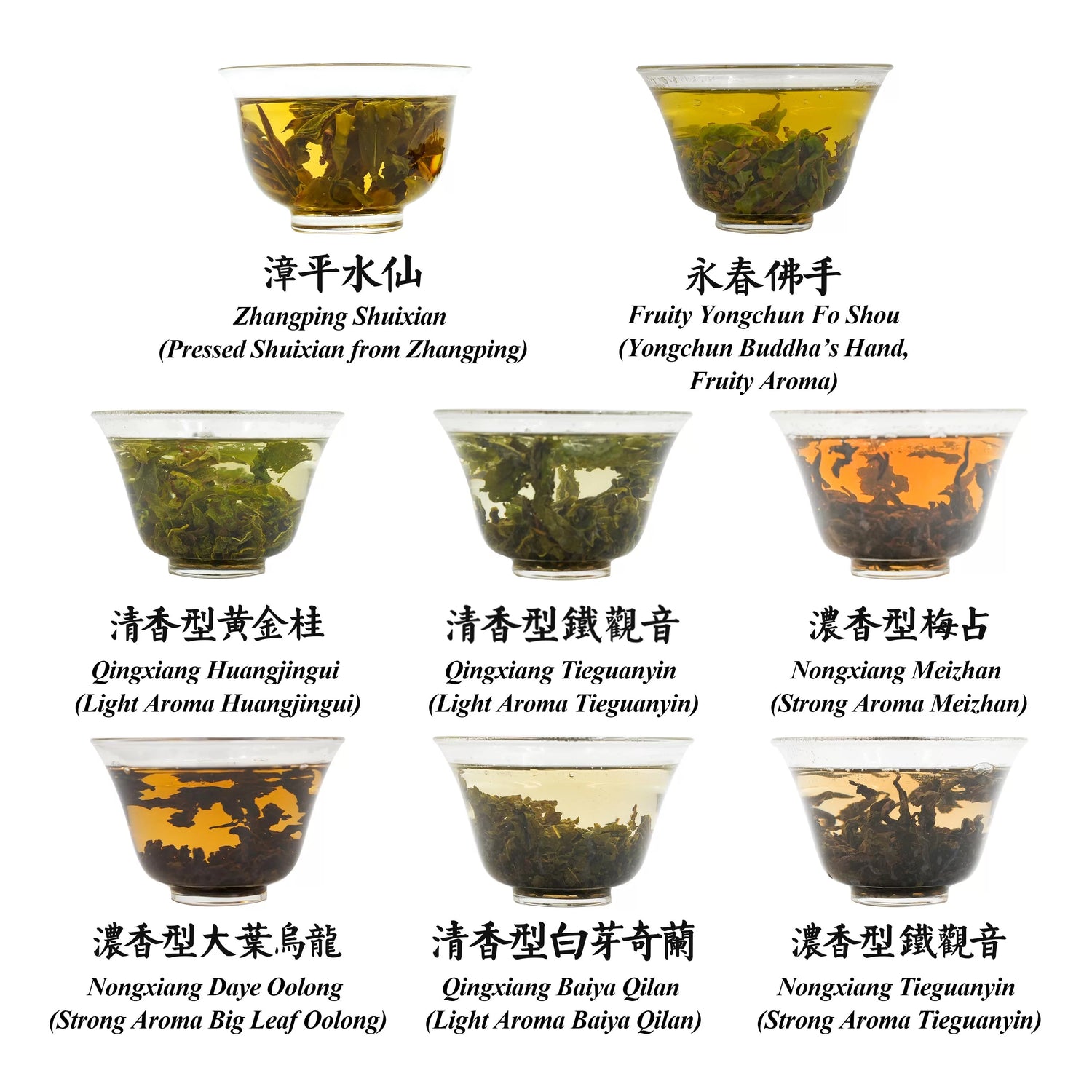
Explore the rich legacy of Southern Fujian oolong teas — home to the iconic Tie Guan Yin and Zhangping Shui Xian, both recognized as part of China’s Intangible Cultural Heritage. Since the 17th century, this region has pioneered the art of high-aroma oolongs, known for their floral, fruity, and gently roasted notes. Crafted with time-honored techniques like light oxidation, layered roasting, and meticulous leaf shaping, these teas capture the essence of Minnan tradition. Whether you're a seasoned tea drinker or just beginning your journey, this curated collection offers a true taste of oolong history.

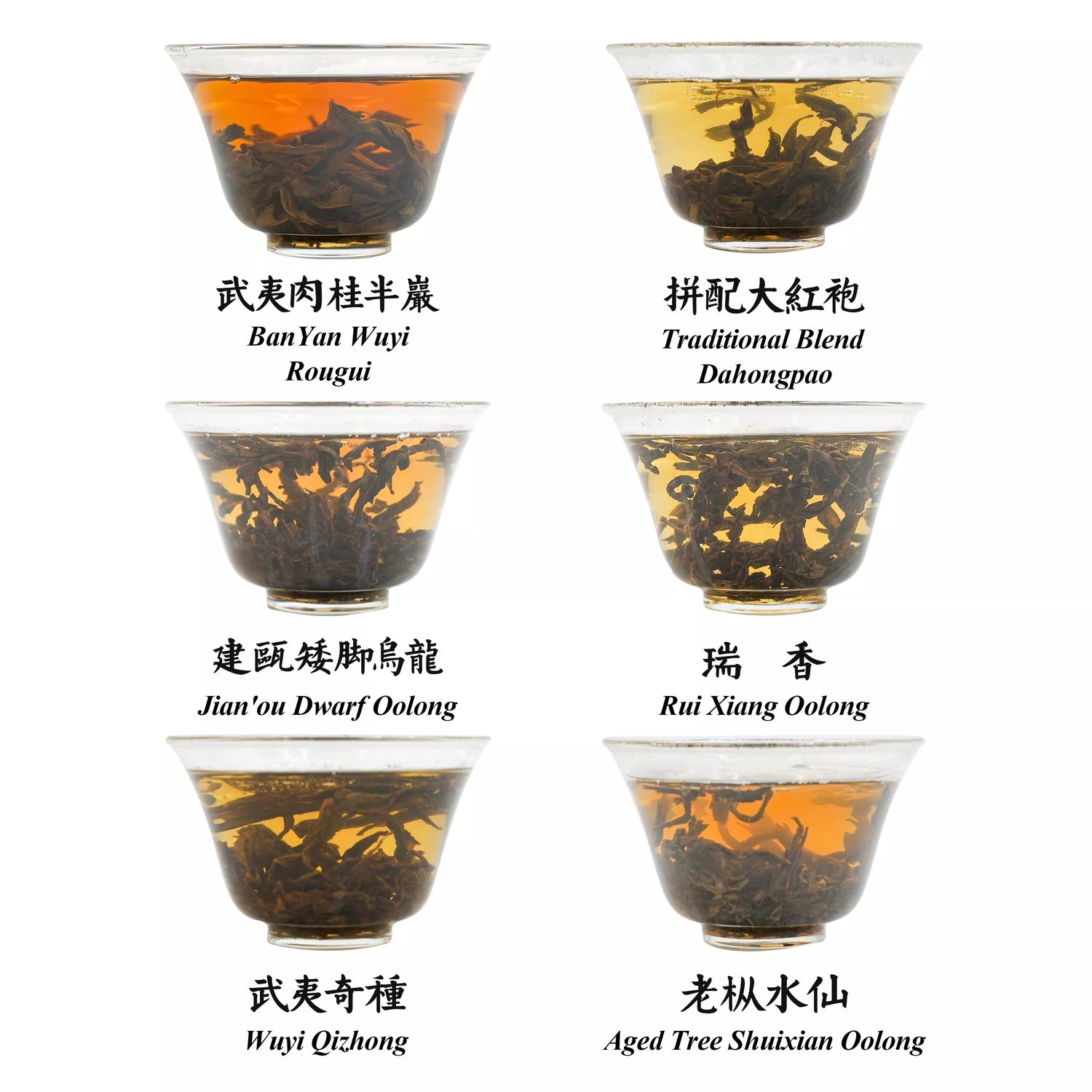
The Northern Fujian region is considered the birthplace of Oolong tea, and the traditional crafting methods of Wuyi Rock Tea have been recognized as part of China’s intangible cultural heritage. This collection brings together iconic oolong varieties from the Song Dynasty (Wuyi Qizhong and Jian'ou Dwarf Oolong) to today (Blended Da Hong Pao, Wuyi Rougui, Aged Tree Shuixian Oolong ), along with emerging cultivars with great future potential (Rui Xiang Oolong). Each tea carries the unique craftsmanship of the region, with its own distinct story and flavor. We hope this collection will allow you to explore the diverse flavors and rich cultural heritage of Northern Fujian (Minnan) Oolong tea.


A Boxed Journey into the Essence of Guangdong Oolong
From the ancient Shiguping oolong crafted by the She ethnic group over 1,500 years ago to today’s highly aromatic Dancong teas, this curated set brings together six signature teas from Chaozhou, Meizhou, and Raoping—the three core regions of Guangdong. A flavorful journey through 500 years of tea-making heritage.
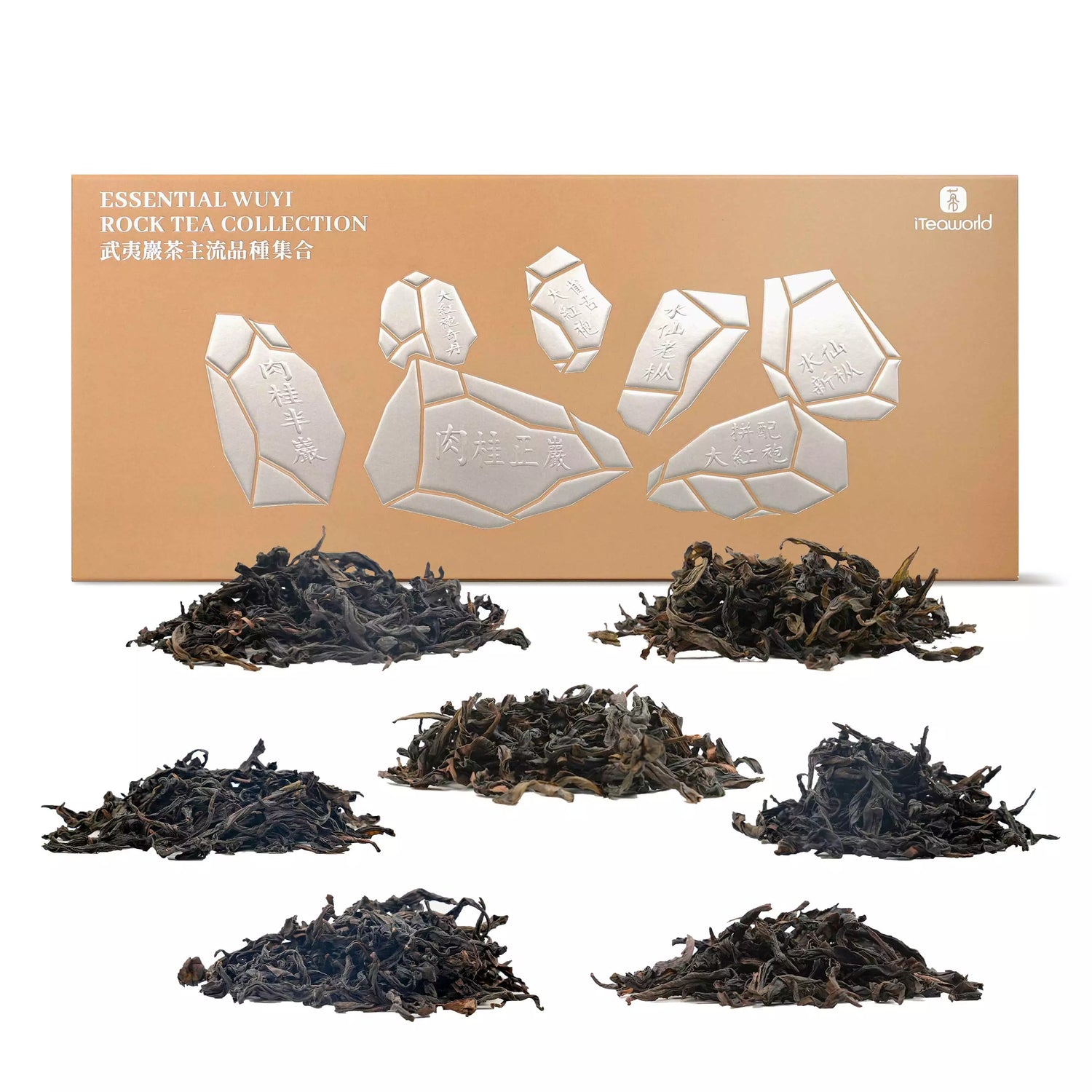
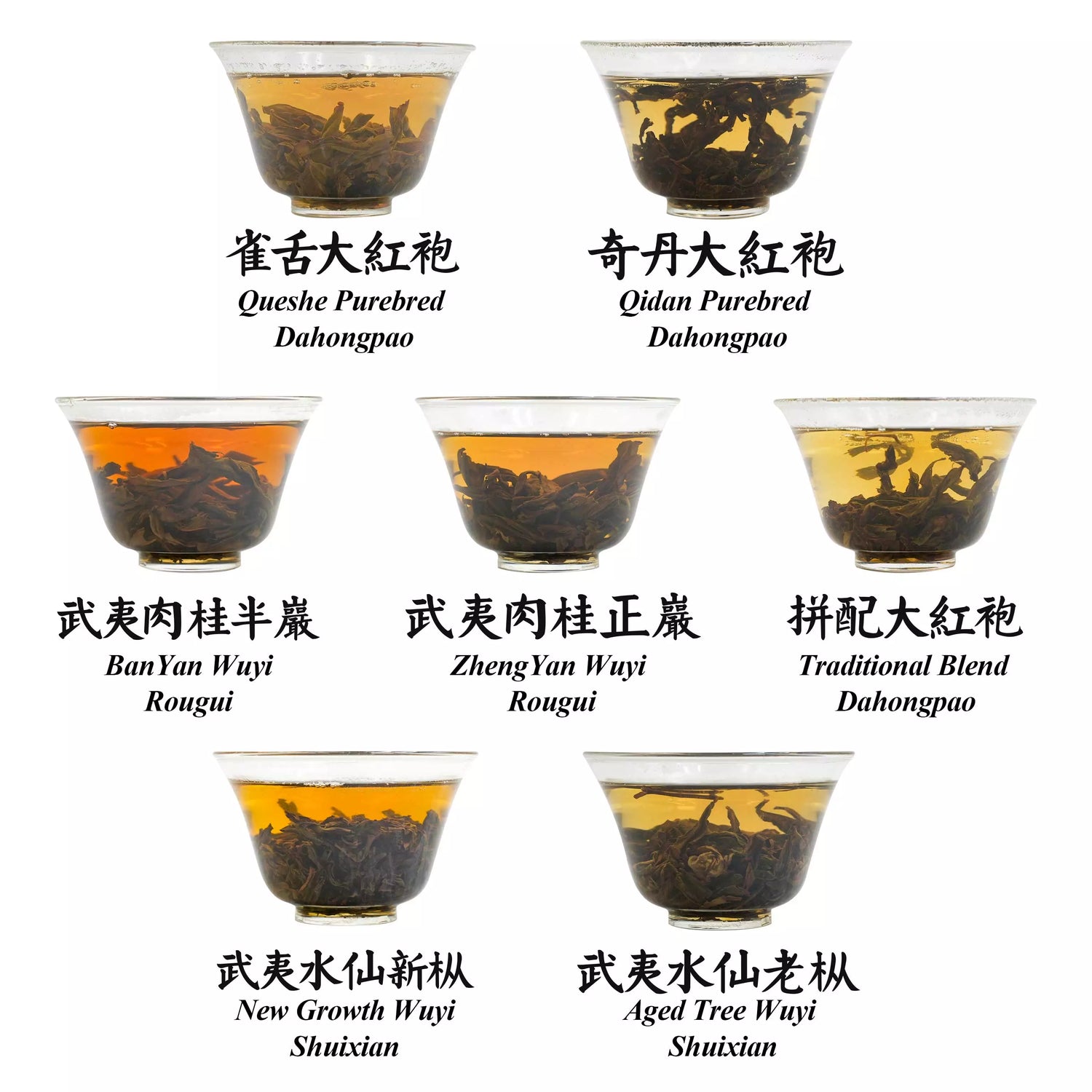
A semi-fermented oolong tea grown in the rocky crevices of Fujian’s Wuyi Mountain, renowned for its unique "rock bone floral aroma" (Yan Yun). Only tea cultivated within Wuyi City’s protected region can bear this name. Other areas (e.g., Anxi) do not produce Rock Tea.
This collection features the three most iconic Wuyi rock teas—Da Hong Pao, Shuixian, and Rougui—along with their key variations. You’ll taste the difference between blended and purebred Da Hong Pao, young and old Shuixian trees, and core vs. semi-core Rougui. A guided journey into the depth and complexity of Wuyi rock tea.
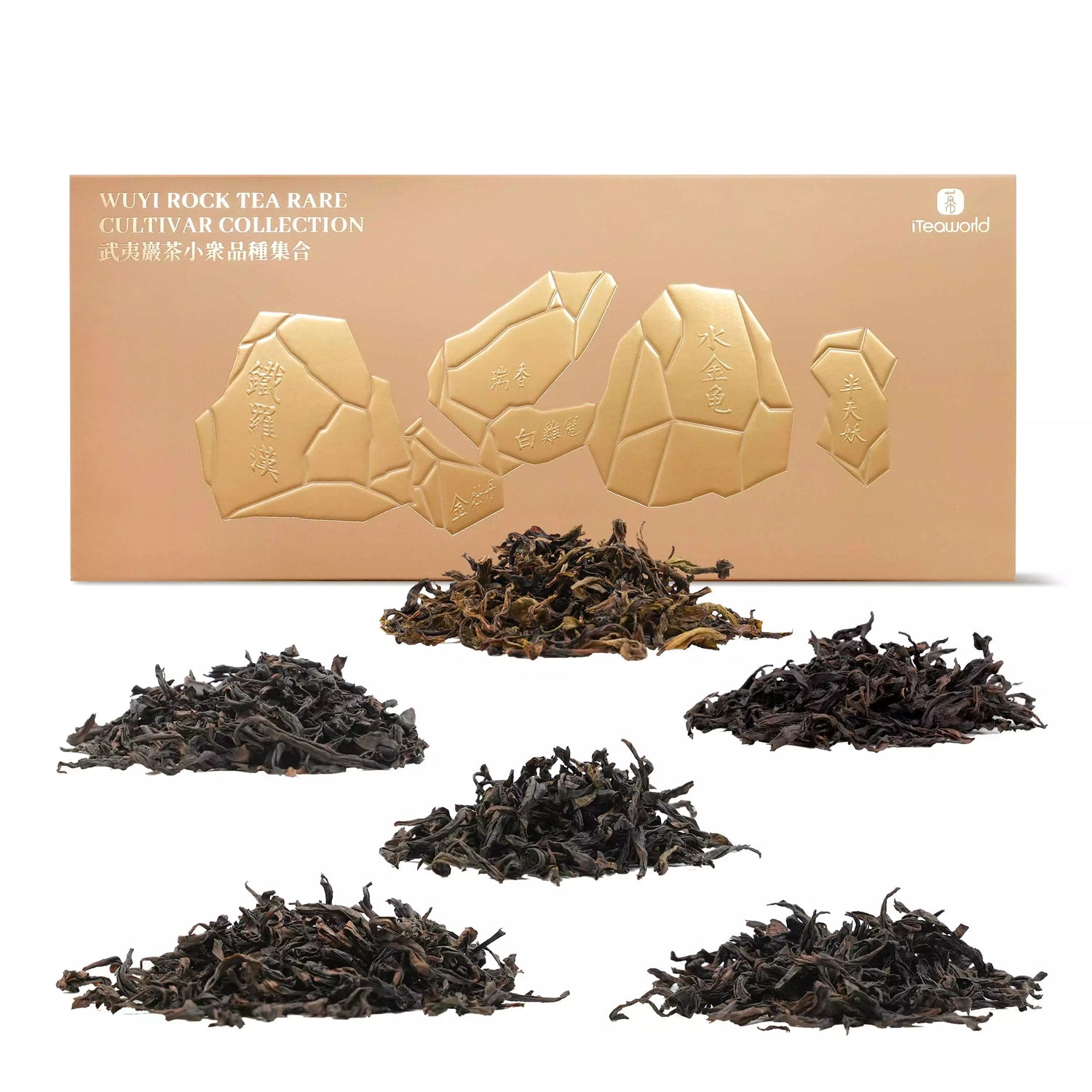
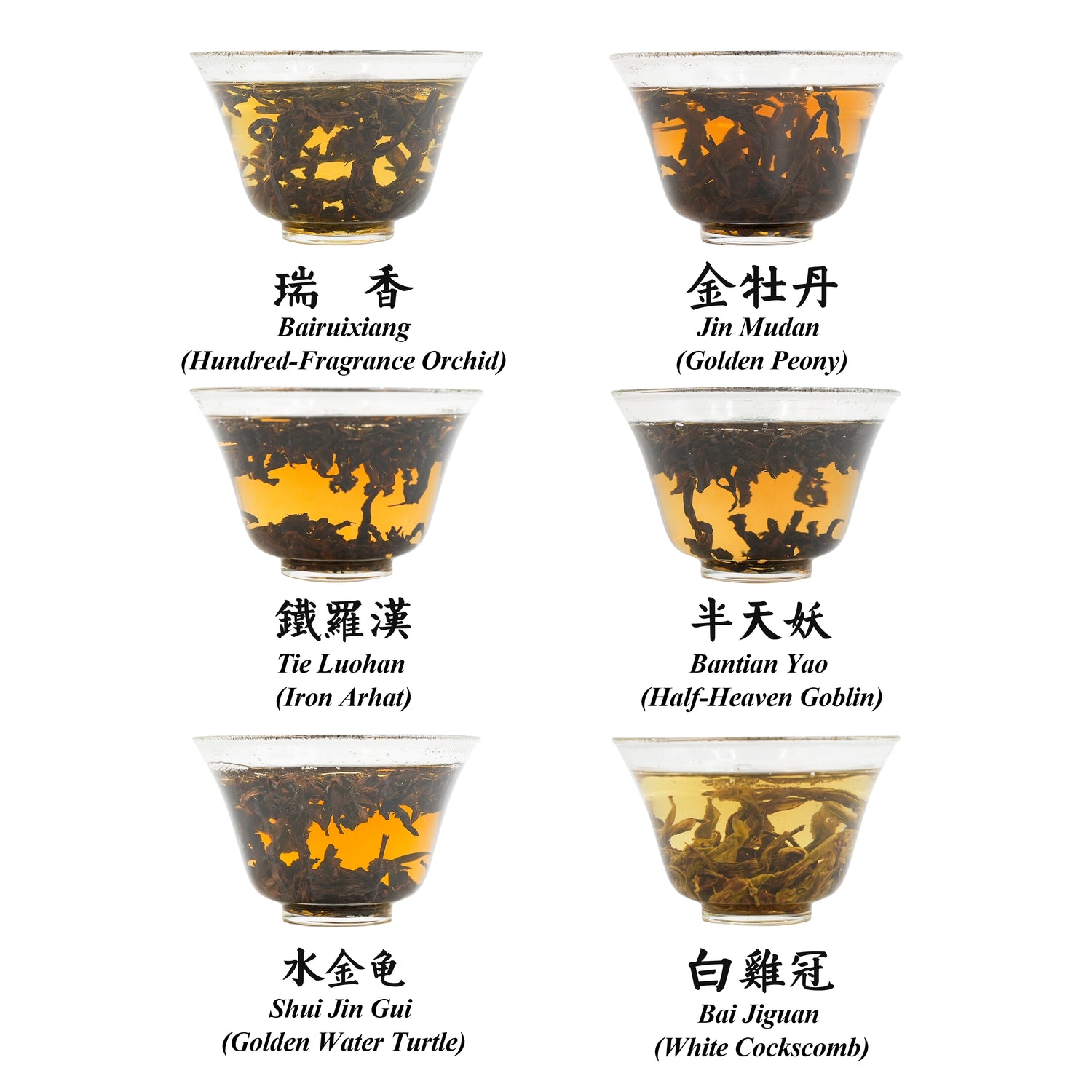
Rare Wuyi Rock Tea Cultivars: Hidden Gems from the Core of Zhengyan
While teas like Da Hong Pao, Rou Gui, and Shui Xian have become well-known representatives of Wuyi Rock Tea, the rare cultivars—such as Tie Luo Han, Bai Ji Guan, Shui Jin Gui, and Ban Tian Yao—tell a deeper, more authentic story. These teas originate from wild, heirloom tea trees that have grown for centuries in the heart of the Wuyi Mountains, shaped by natural selection and careful cultivation. They embody the original genetic heritage of Wuyi rock tea.
Grown on remote cliffs and craggy ledges in the Zhengyan core production zone—places like Guidong Cave and Sanhua Peak—these tea trees sink their roots deep into rocky crevices, drawing in rare minerals. The result is a flavor profile marked by the elusive and unmistakable "Yan Yun" (rock rhyme) that connoisseurs revere.
Who would enjoy this tea?
This collection is perfect for those who have explored the classic Wuyi rock teas and are ready to dive deeper into its rare and distinctive varieties. It includes historically renowned teas like Tie Luohan, Bàn Tiān Yāo, Bai Ji Guan, Shui Jin Gui, and Bai Rui Xiang, along with newer, highly sought-after cultivars like Rui Xiang and Jin Mudan. A journey through the diverse flavors and craftsmanship of Wuyi rock tea.
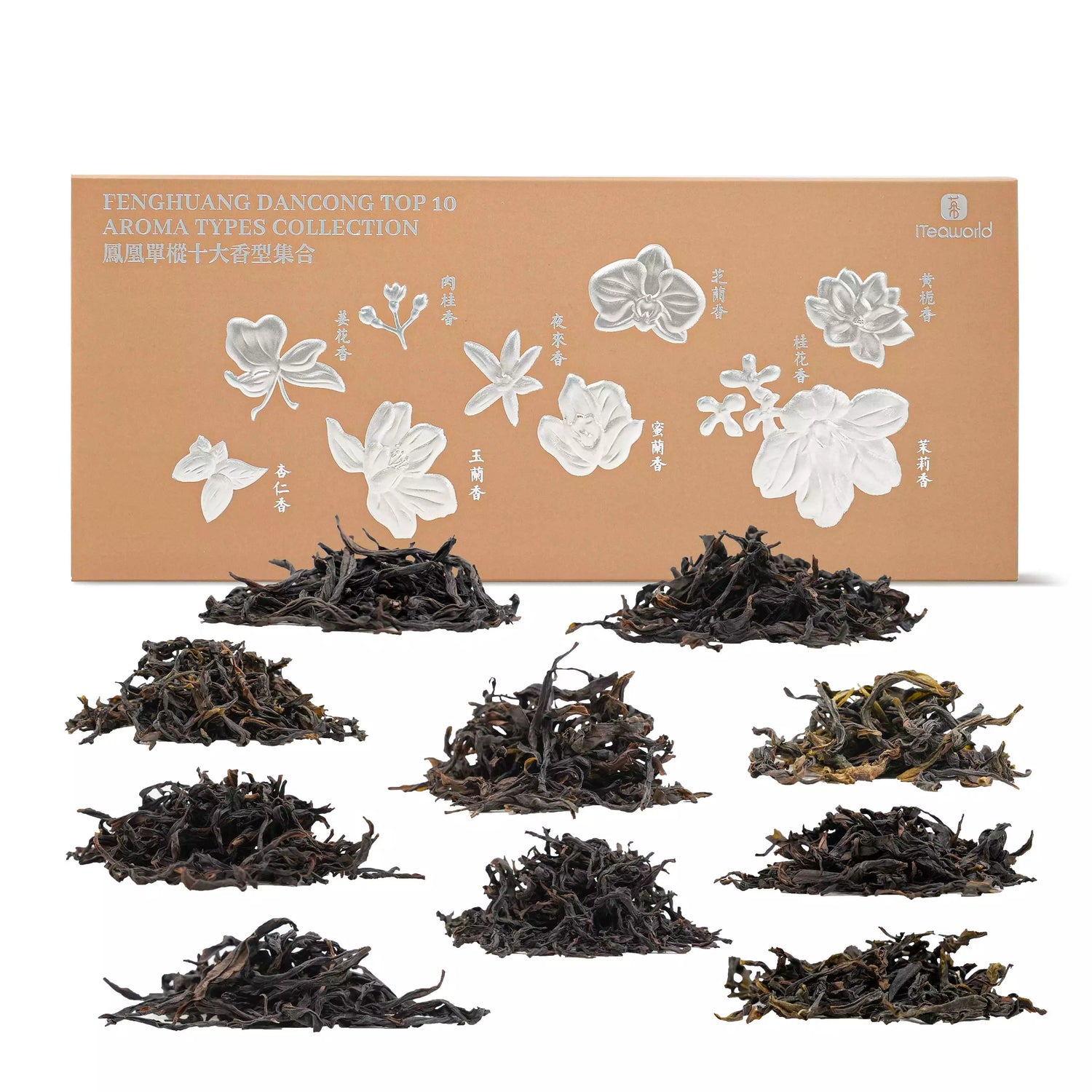
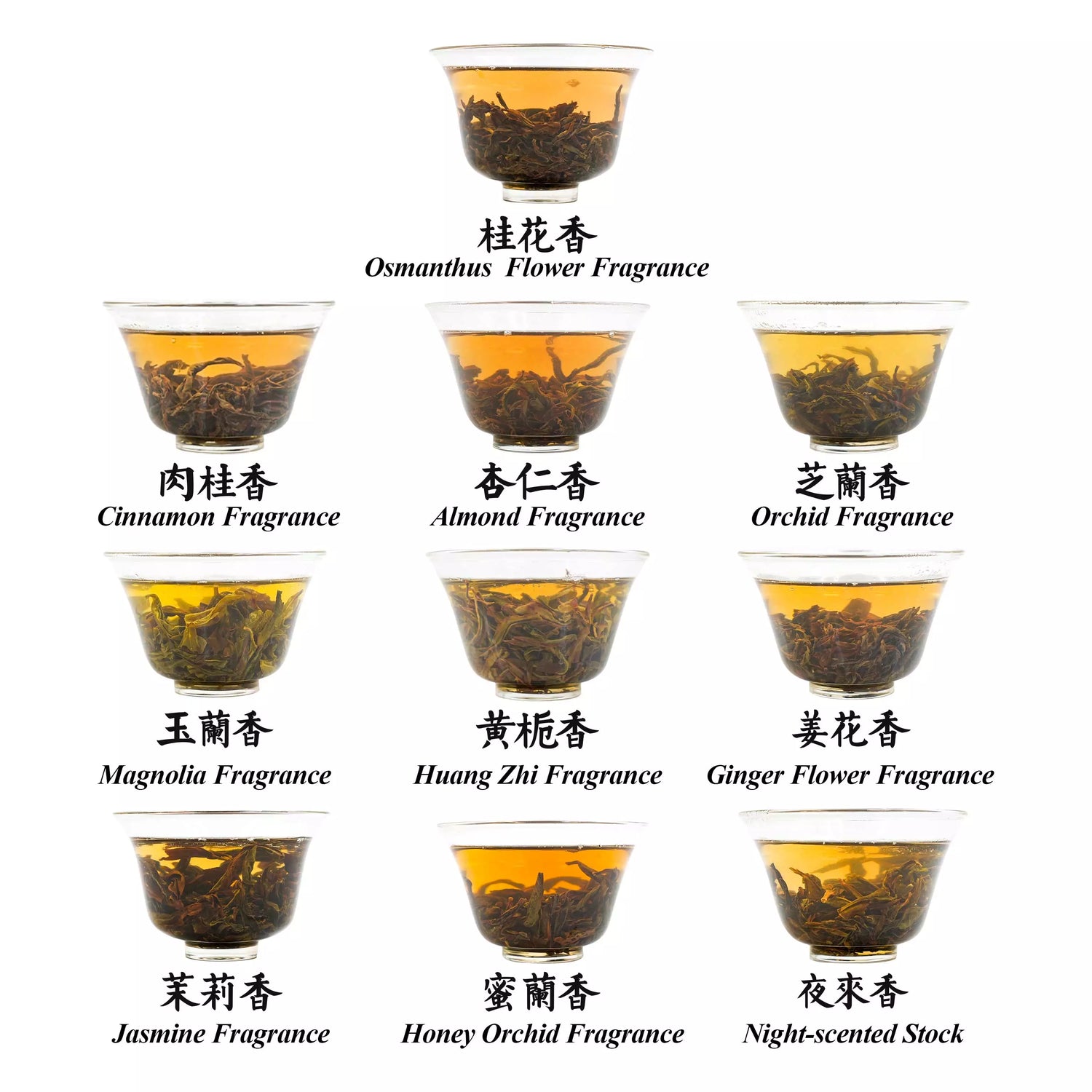
Fenghuang Dancong Oolong comes from the Phoenix Mountains in Chaozhou, Guangdong, China.
What makes it truly unique is that different tea cultivars naturally develop completely different aromas—from floral and fruity notes to rich honey-like scents.
Over time, tea makers identified ten classic aroma profiles, now known as the “Ten Signature Aromas of Fenghuang Dancong.”
This collection brings them together in one tasting set, allowing you to explore the full spectrum of its natural fragrance.
Often called “the perfume of tea,” Fenghuang Dancong is a rare experience for anyone who loves natural floral aromas and sensory exploration.


Discover the Hidden Diversity of Longjing
Most tea lovers know Longjing (Dragon Well) for its signature roasted chestnut aroma, smooth texture, and refreshing sweetness. But behind this familiar profile are different tea cultivars — each bringing its own character to the cup.
This Longjing Cultivar Comparison Set features four representative varieties: Longjing #43, Wu Niu Zao, Longjing Qunti, and Baiye No.1.
By tasting them side by side, you can explore how different tea trees shape the aroma, body, sweetness, and overall personality of Longjing — and discover which cultivar creates the style you love most.
A perfect tasting experience for Longjing enthusiasts who want to go beyond one classic flavor and understand the diversity behind Dragon Well green tea.

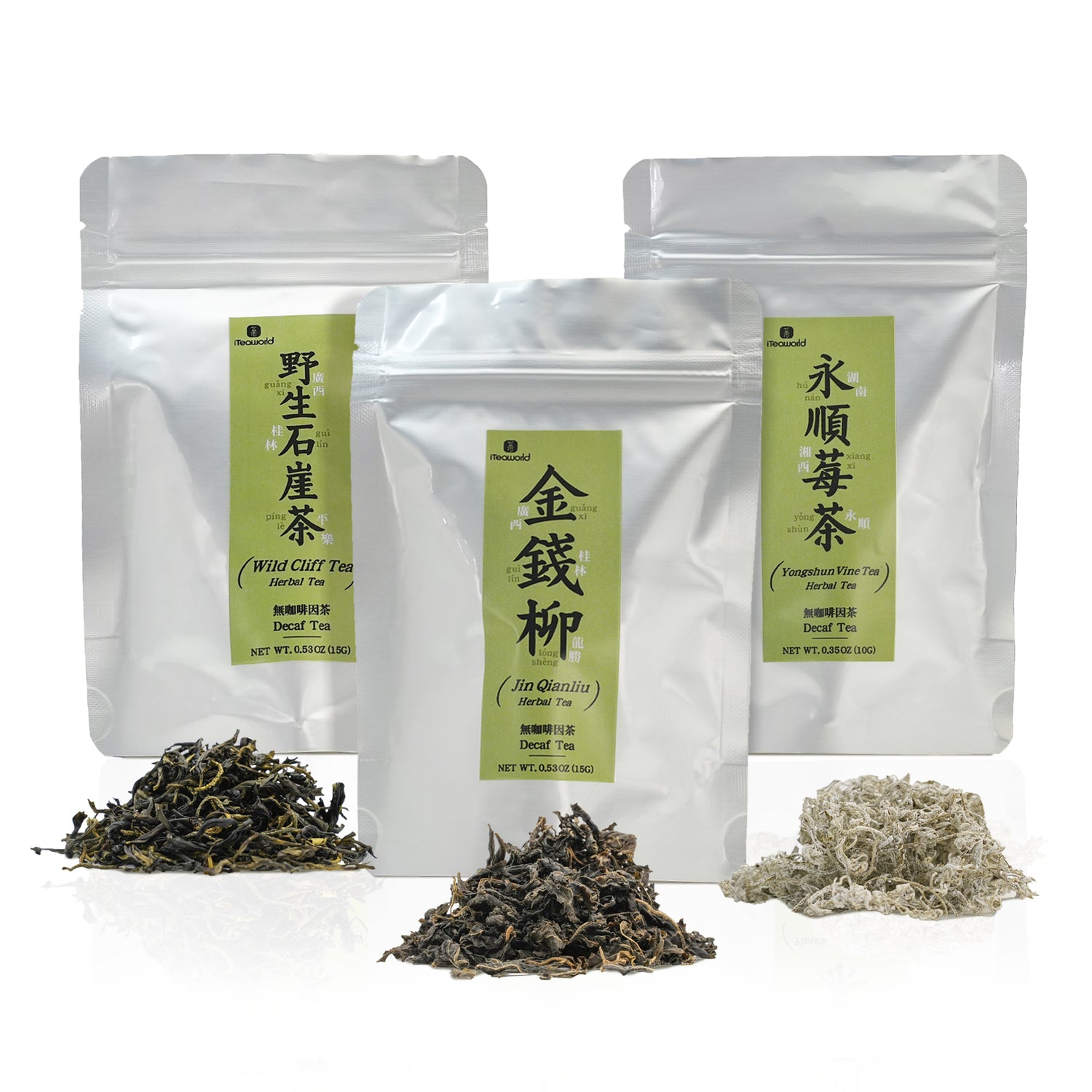
Looking for a Caffeine-Free Green Tea Alternative?
While we don’t offer caffeine-free green tea, we’ve carefully selected three herbal teas processed in a similar way to green tea—offering comparable freshness and aroma. These unique teas have been valued in traditional Chinese tea culture for centuries.
Jin Qian Liu – Sweet Tea Tree (Cyclocarya Paliurus)
Grown in the lush regions of southern China, this naturally sweet herbal tea is made from the leaves of the Cyclocarya Paliurus tree. Its smooth, mellow flavor makes it a perfect choice for anyone looking for a gentle, caffeine-free infusion. Traditionally, it has been appreciated for its balance and calming taste.
Wild Cliff Tea (Shi Ya Cha)
Harvested from wild tea trees on the rocky cliffs of Guangxi, this rare herbal tea delivers a robust, aromatic experience. With a rich profile and sweet finish, it’s known as “tea of the immortals” in local folklore. It is naturally high in flavonoids, which contribute to its full-bodied taste.
Vine Tea – Zhangjiajie Mei Tea (Ampelopsis grossedentata)
Thriving in the misty highlands of Zhangjiajie, Vine Tea is celebrated for its vibrant, refreshing flavor. Known as the “King of Flavonoids,” this herbal infusion contains a naturally high concentration of flavonoids, offering a satisfying, clean finish with every sip.
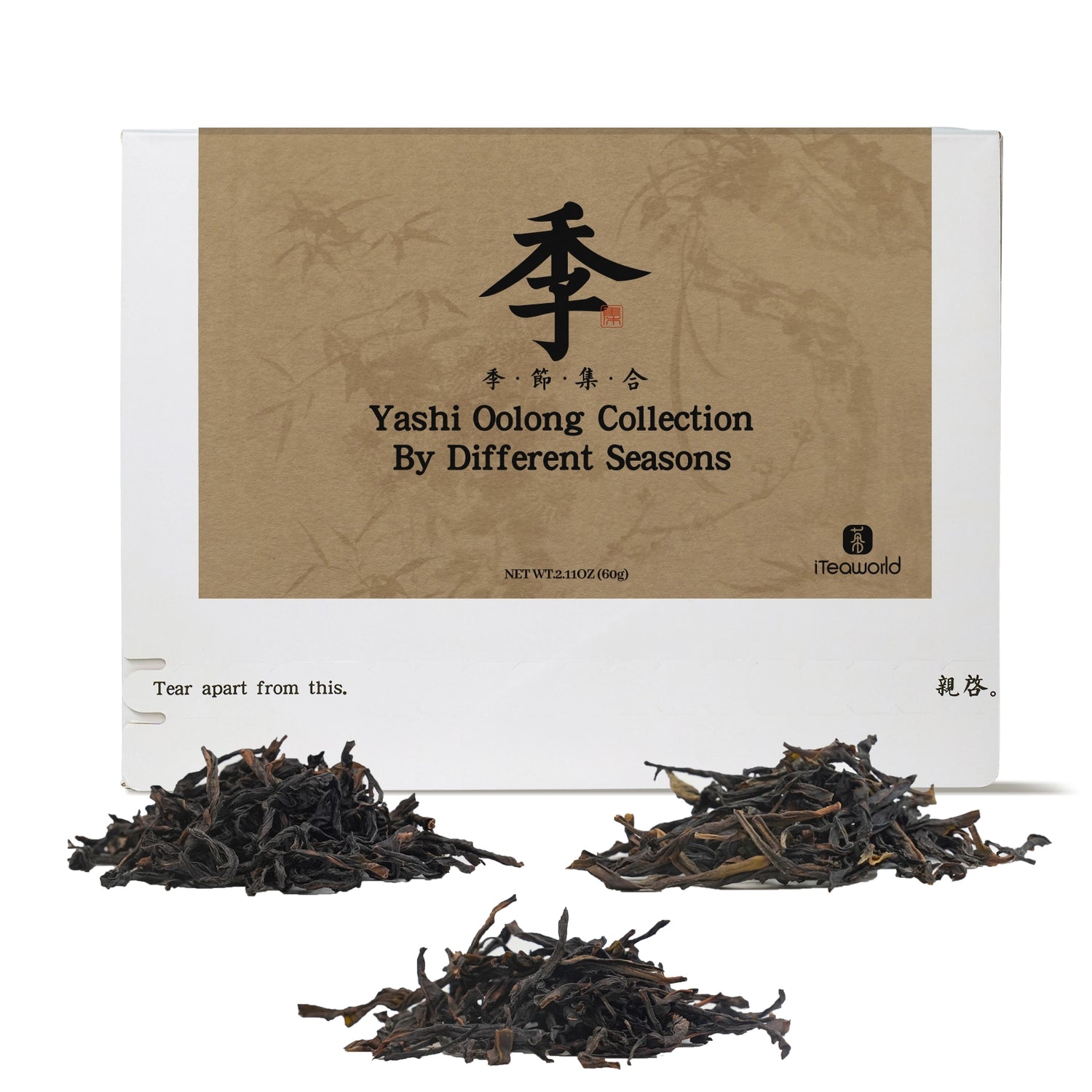
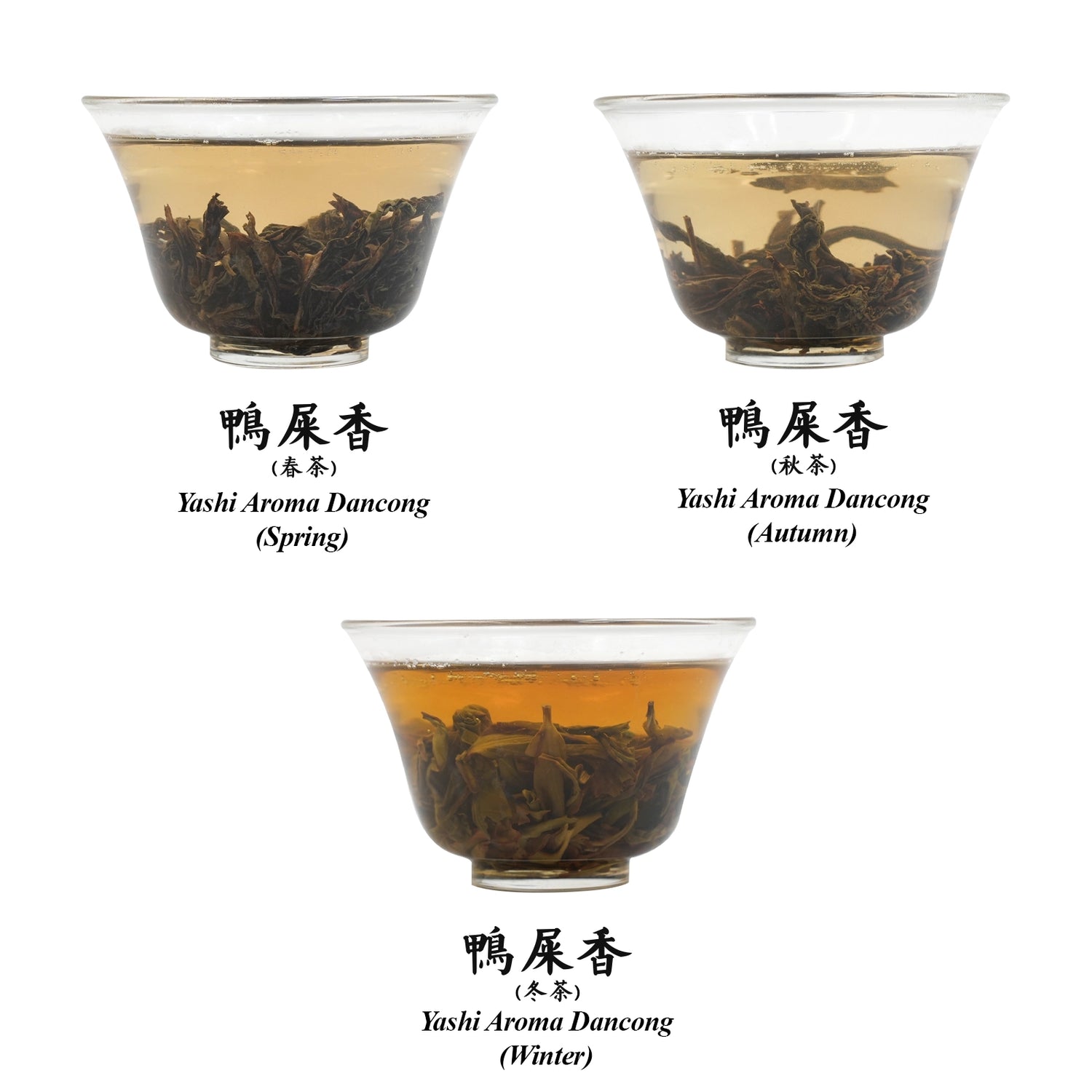
Ya Shi Xiang is one of the most aromatic Dancong oolong teas from the Phoenix Mountains in Chaozhou, China, known for its naturally rich floral fragrance and remarkable aromatic complexity.
This collection invites you to experience how the same tea changes across different harvest seasons. All three teas come from the same village and are crafted by the same tea master, ensuring that only nature—the season of harvest—creates the difference.
Spring, fall, and winter each reveal a unique expression of the same tea. Spring is soft and floral with gentle sweetness. Fall is smooth and rounded with warm aromatic depth. Winter is crisp and vibrant with a clean, lingering finish.
Rather than a single tea, this set offers a guided tasting experience that lets you explore how season shape aroma, texture, and flavor in real time.
Taste them side by side and discover how one tea can express three completely different seasonal personalities.
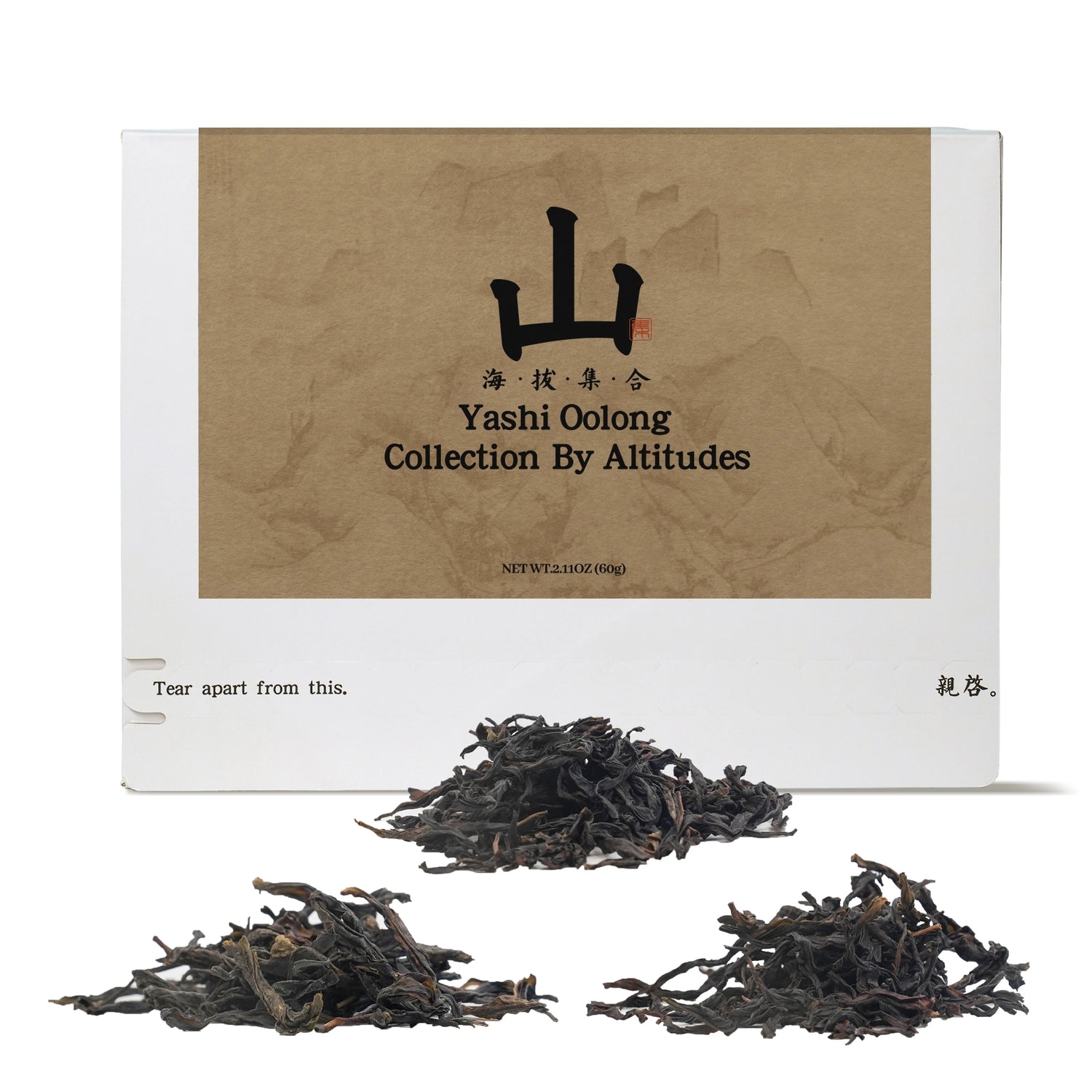
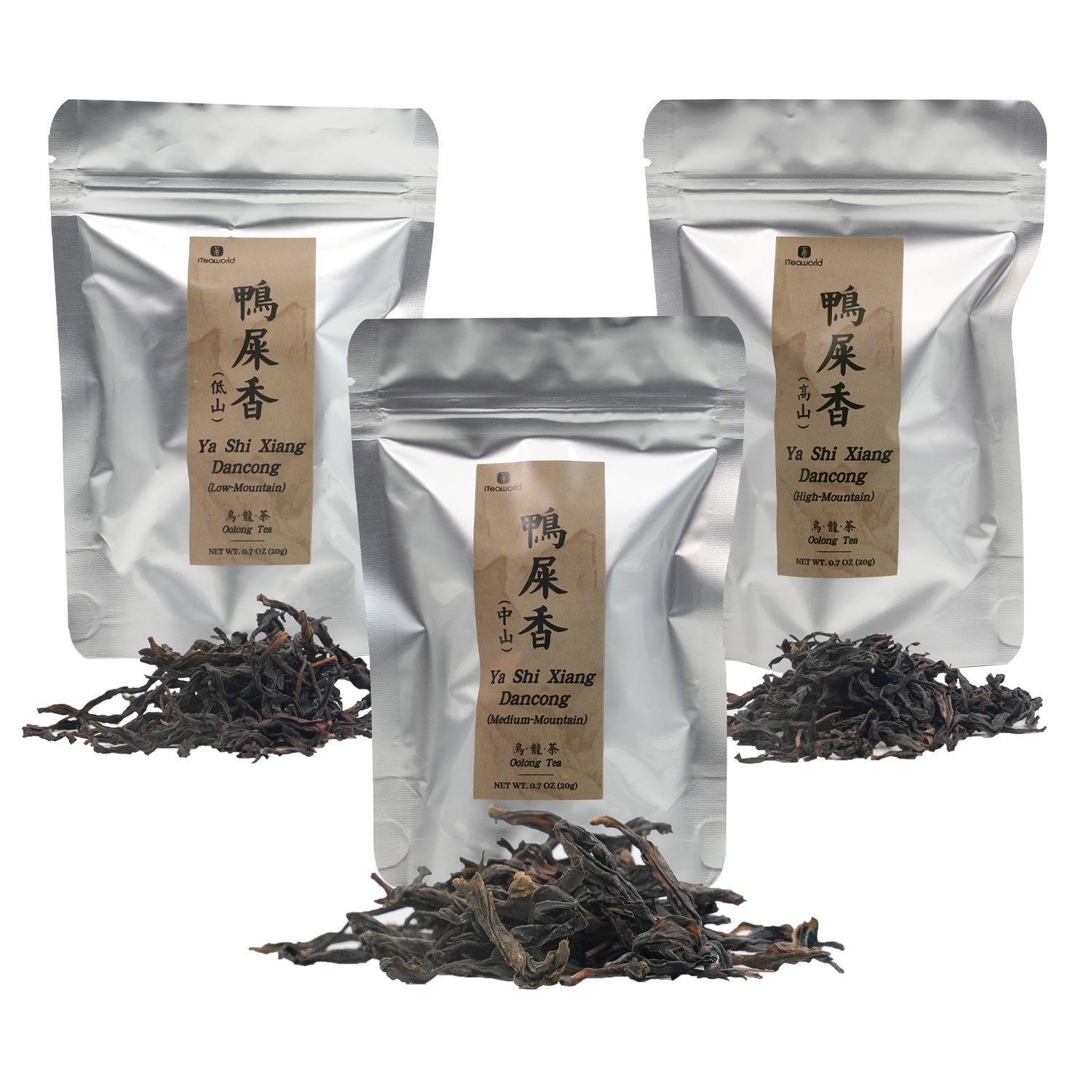
Ya Shi Xiang is one of the most aromatic Dancong oolong teas from Fenghuang Town in Chaozhou, Guangdong, China, known for its naturally expressive floral fragrance and layered complexity.
This collection explores how elevation shapes the character of the same tea. All teas are made from the same Ya Shi Xiang cultivar and crafted by the same tea master, but sourced from different altitudes within the Phoenix Mountains.
As elevation increases, temperature, sunlight exposure, and growing conditions naturally shift, creating subtle yet noticeable differences in aroma intensity, structure, and mouthfeel.
Rather than a single expression, this set offers a guided tasting experience that reveals how geography influences the personality of the same tea in different environments.
Taste them side by side and experience how altitude transforms aroma, texture, and finish.
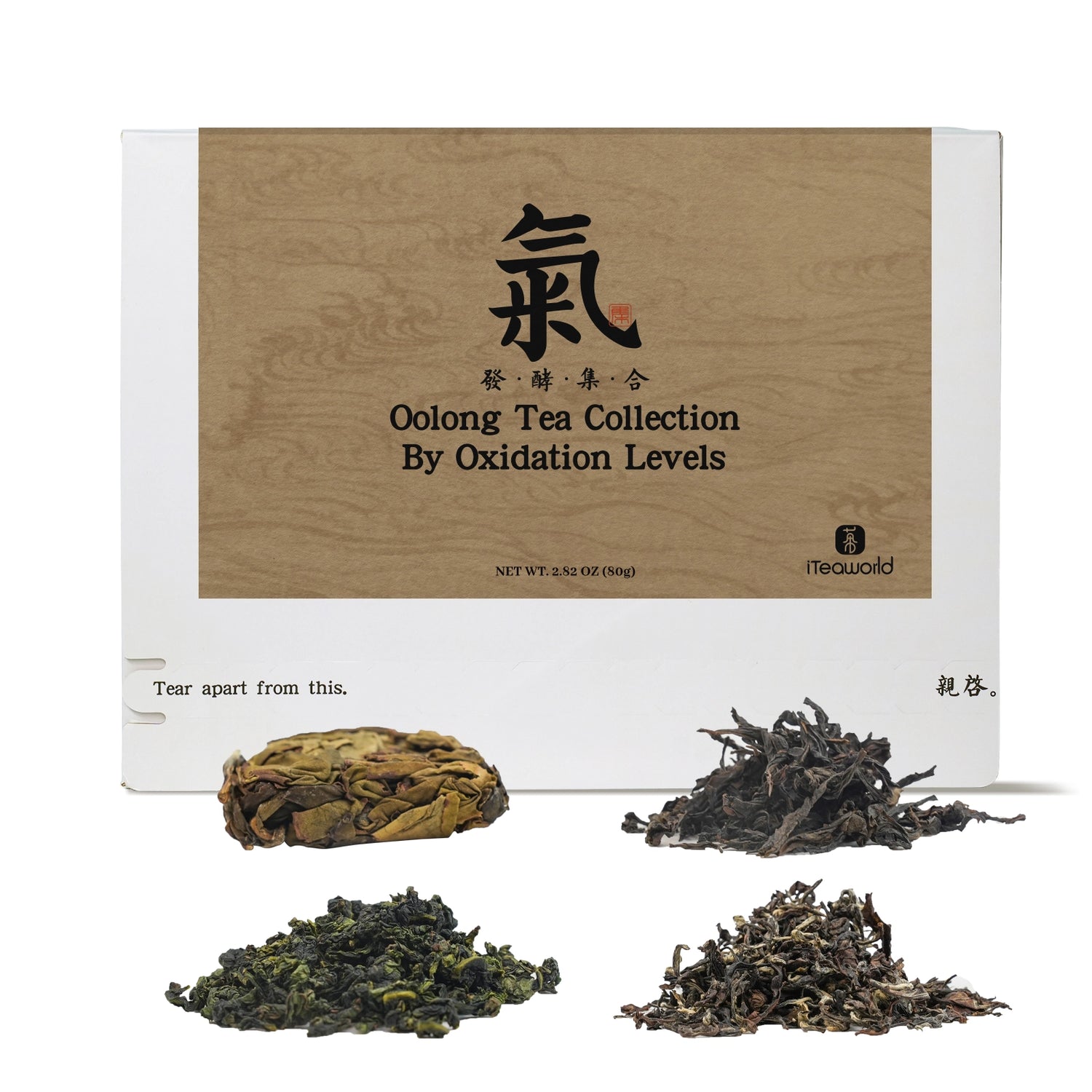
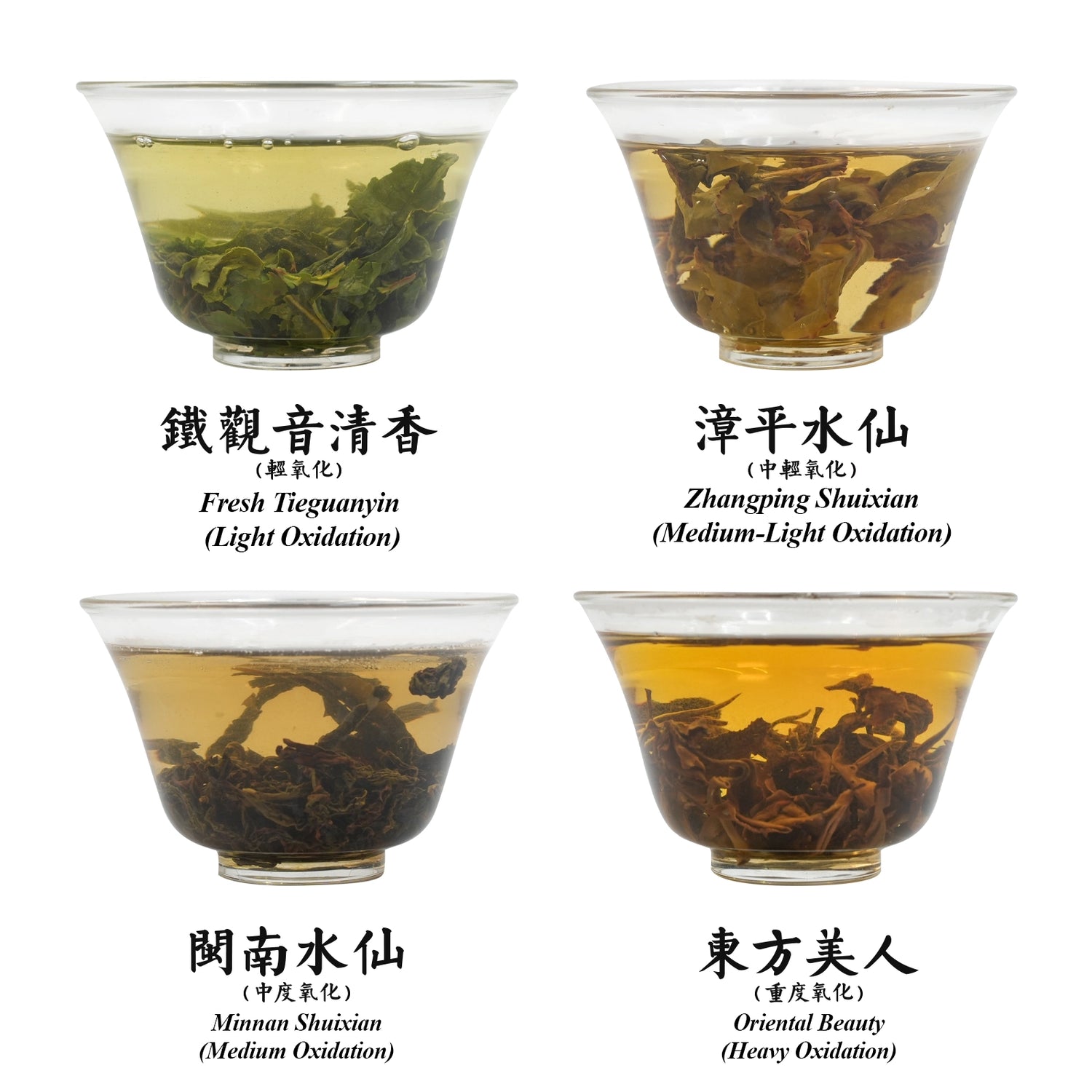
Oolong tea sits between green and black tea, and its character is shaped primarily by oxidation level—a natural process that transforms aroma, flavor, and texture.
This collection explores how oxidation changes the same tea category across four iconic oolongs from Fujian and Guangdong. Each tea represents a different stage of oxidation, from light and floral to rich and fully developed.
Lightly oxidized teas like Tieguanyin highlight fresh floral and fruity notes. Medium oxidation brings balance and complexity. Higher oxidation develops deeper fruit, honey, and roasted characteristics, culminating in the rich, aromatic profile of Oriental Beauty.
Rather than a single style of tea, this set offers a guided tasting experience that reveals how oxidation defines the core identity of oolong tea.
Taste them side by side and discover how natural enzymatic change shape flavor from light to deep.
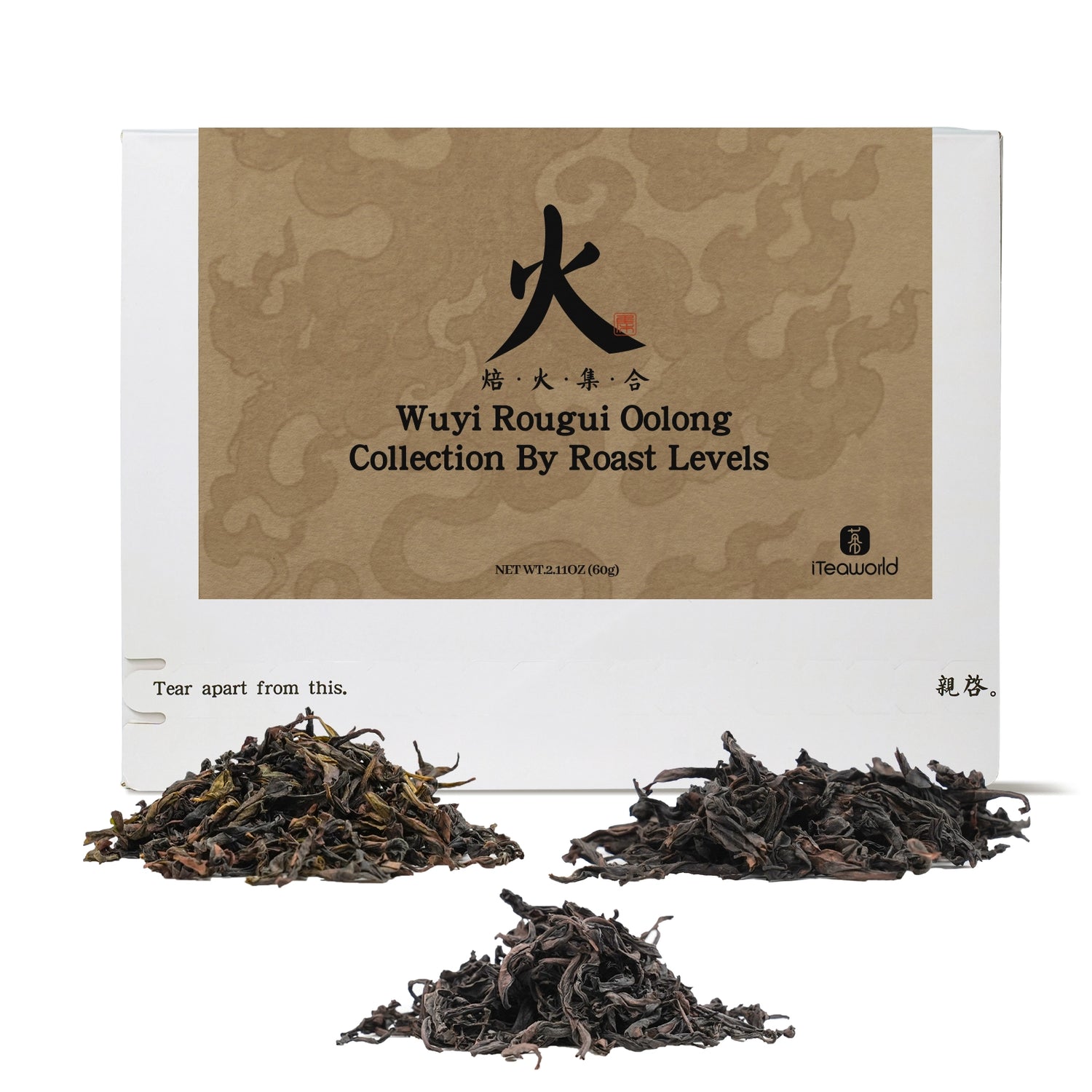
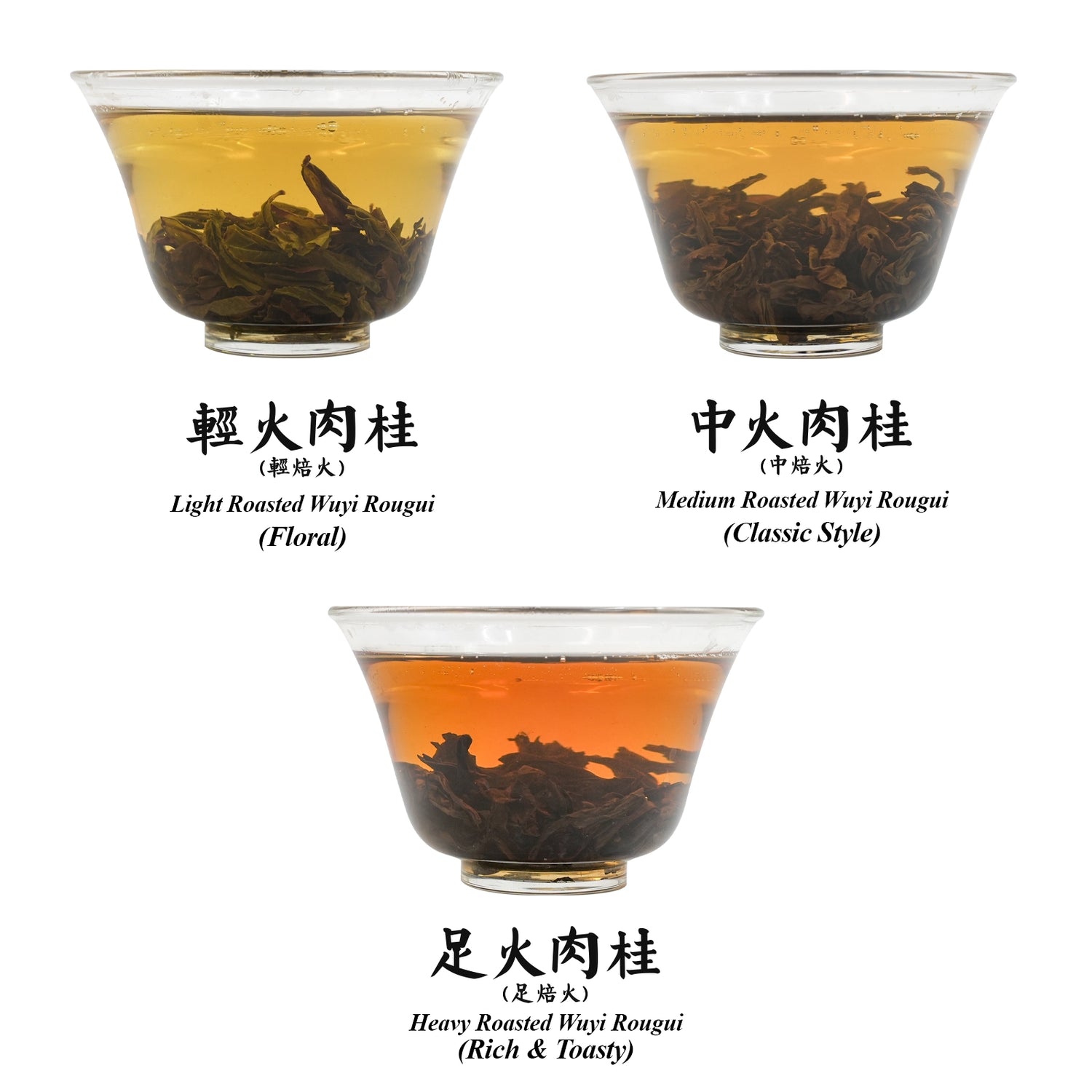
Wuyi Rougui is one of the most iconic rock oolong teas from the Wuyi Mountains in Fujian, China, known for its distinctive cinnamon-like aroma, mineral depth, and rich roasted character.
This collection explores how fire transforms the same tea. All teas are made from the same Rougui cultivar, sourced from the same origin, and crafted using traditional Wuyi rock tea methods—the only variable is roasting level.
Light roast highlights the tea’s floral brightness and mineral clarity. Medium roast brings balance between aroma, body, and roast depth. Heavy roast develops deeper, more intense roasted notes with a richer and more structured finish.
Rather than a single tea, this set offers a side-by-side tasting experience that reveals how roasting shapes aroma, texture, and overall flavor in Wuyi rock tea.
Taste them together and discover how fire defines the personality of Rougui.
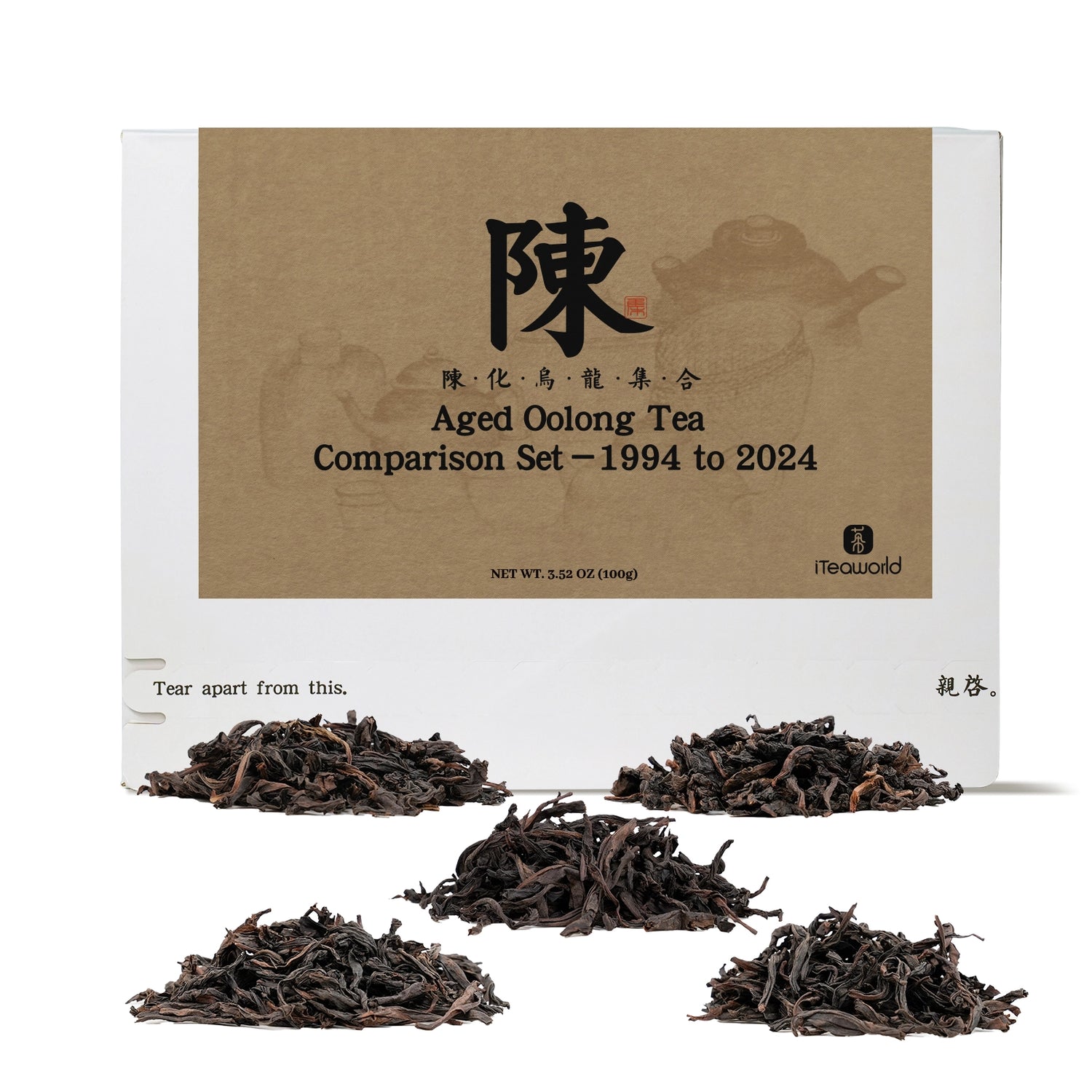
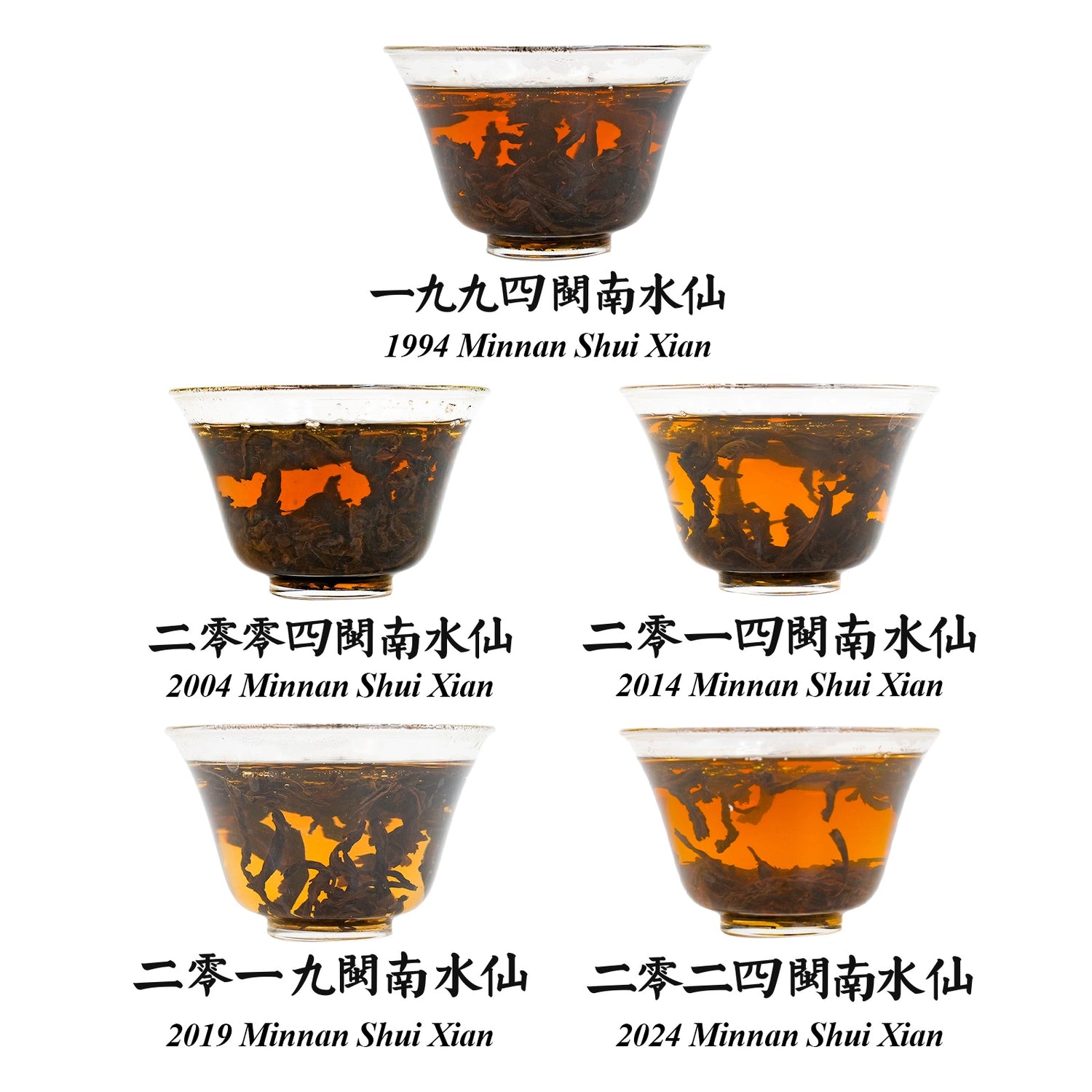
Aged oolong tea reveals a unique dimension of tea character—how time transforms aroma, texture, and depth.
This collection brings together five vintages of traditionally charcoal-roasted Minnan Shui Xian, spanning from 1994 to 2024. All teas come from the same tea-making lineage, allowing time—not origin or craftsmanship—to be the only variable.
Fresh teas express bright orchid aroma and lively sweetness. As the tea ages, floral notes gradually fade, giving way to deeper woody, honeyed, and herbal tones. With decades of transformation, the tea develops a smoother texture, thicker body, and a long, lingering finish.
Rather than a single flavor, this set offers a journey through time—revealing how oolong tea evolves across 30 years of natural aging.
Taste them side by side and experience how time becomes a flavor.
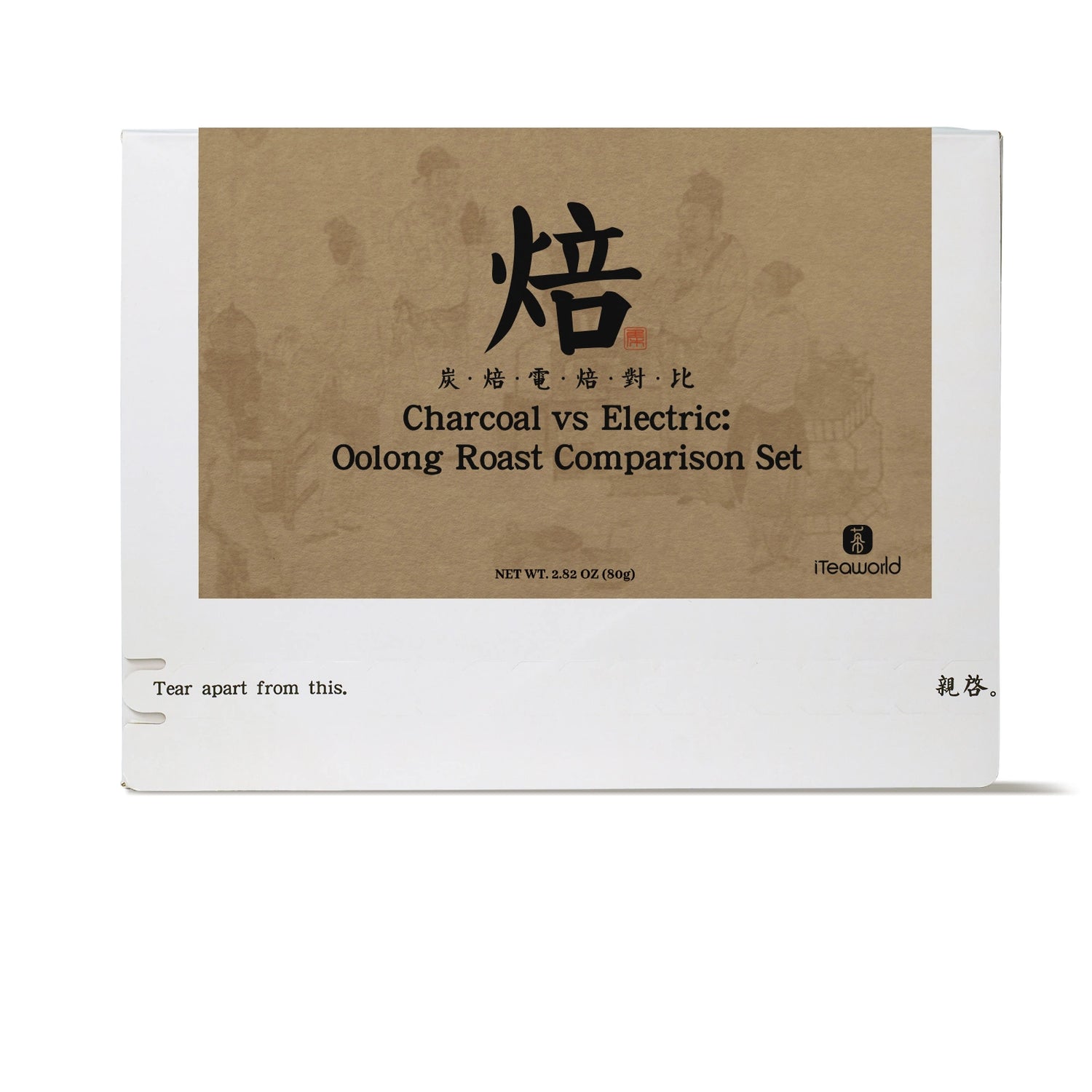
Oolong tea roasting is where tradition and modern technique diverge. For centuries, tea masters have relied on slow charcoal fire to shape depth and complexity. Today, electric roasting offers precision, consistency, and a cleaner aromatic profile.
This collection compares both roasting philosophies through two iconic oolong teas—Wuyi Rougui from Fujian and Phoenix Dancong from Guangdong. Each tea is prepared in two versions: charcoal-roasted and electric-roasted.
Charcoal roasting enhances depth, body, and complexity, while electric roasting highlights freshness, clarity, and floral brightness. Together, they reveal how fire alone can transform the same tea into two completely different experiences.
Taste them side by side and explore how roasting defines the soul of oolong tea.
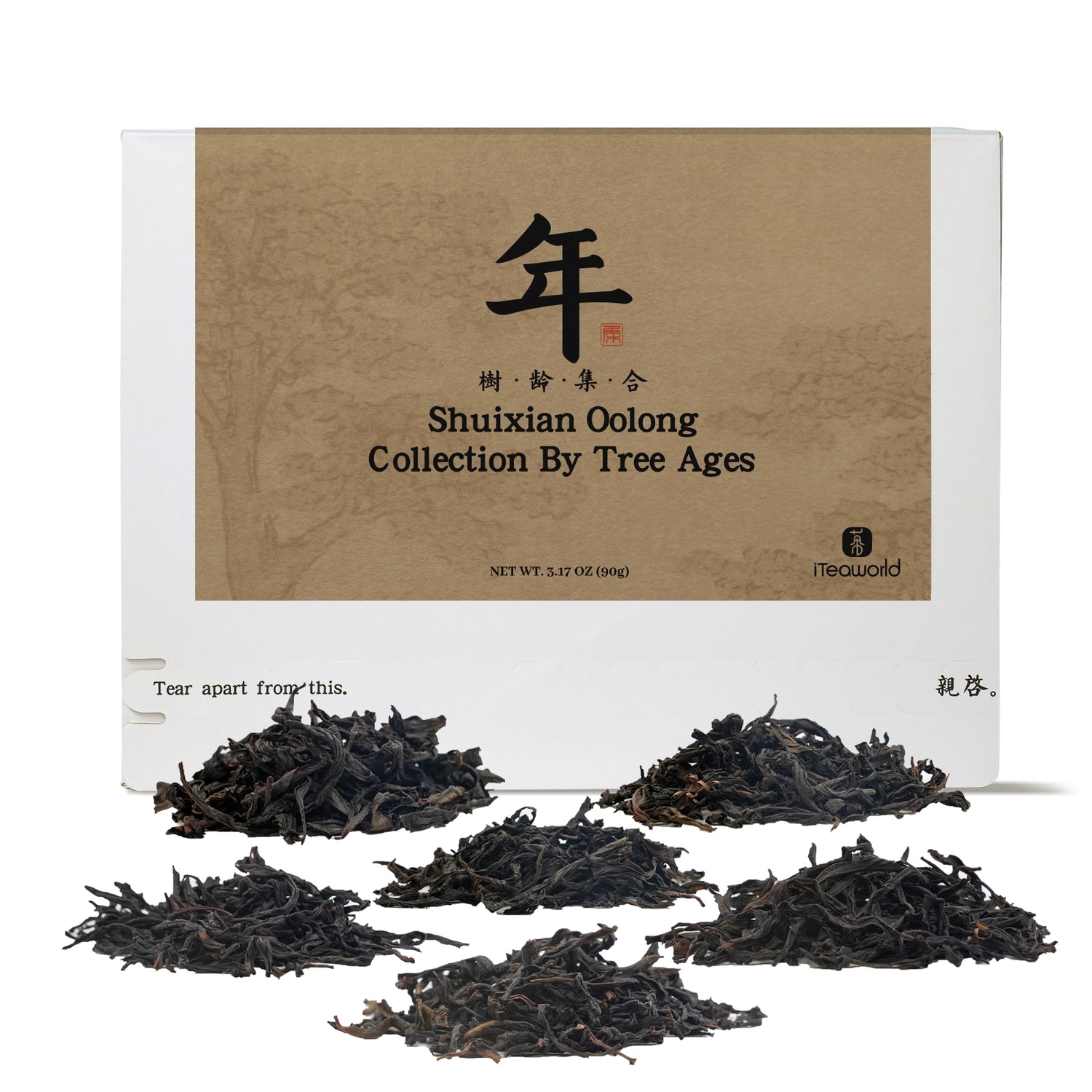
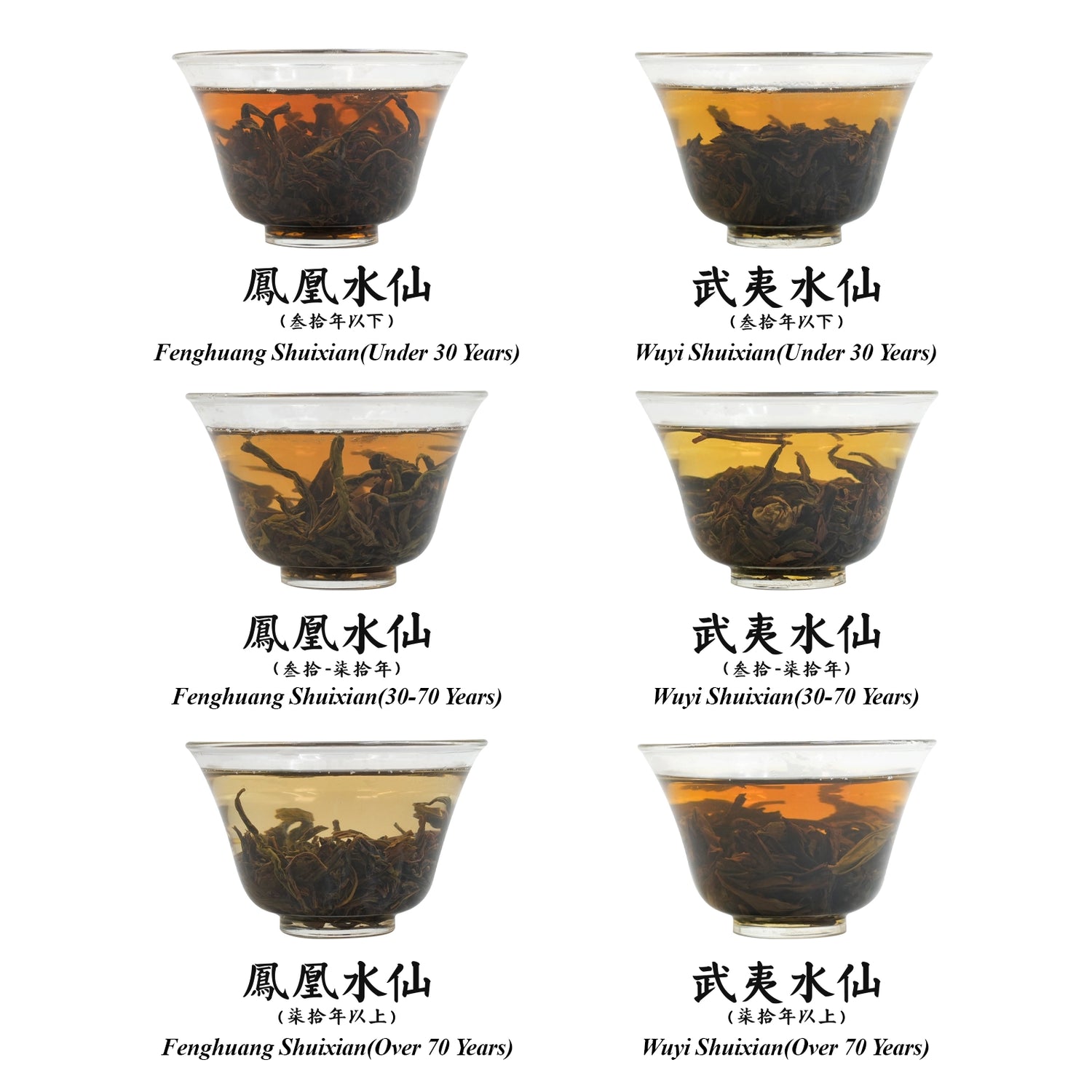
Tea tree age is one of the most important but often overlooked factors in oolong tea. As tea trees grow older, their root systems deepen, mineral absorption changes, and flavor structure becomes more complex.
This collection explores how tree age shapes oolong tea character. It brings together Shui Xian teas from both Fenghuang (Guangdong) and Wuyi (Fujian), comparing young, mature, and old tea trees from the same cultivars and production methods.
Younger trees tend to produce lighter, fresher teas with bright floral notes. Mature trees develop more body, sweetness, and aromatic depth. Older trees offer richer structure, deeper minerality, and a longer, more lingering finish.
Rather than focusing on origin alone, this set reveals how time in the ground influences flavor in the cup.
Taste them side by side and experience how tree age becomes taste.
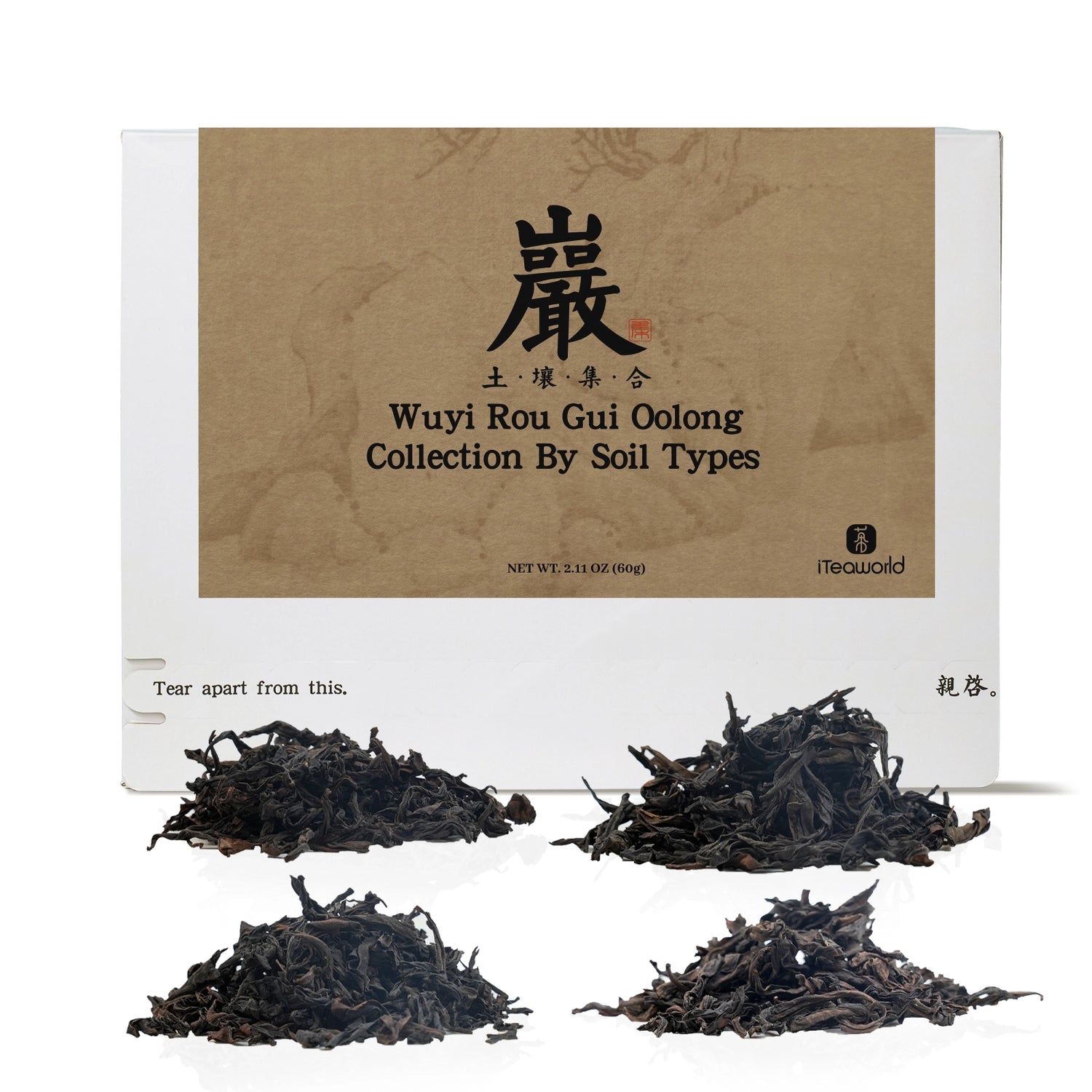
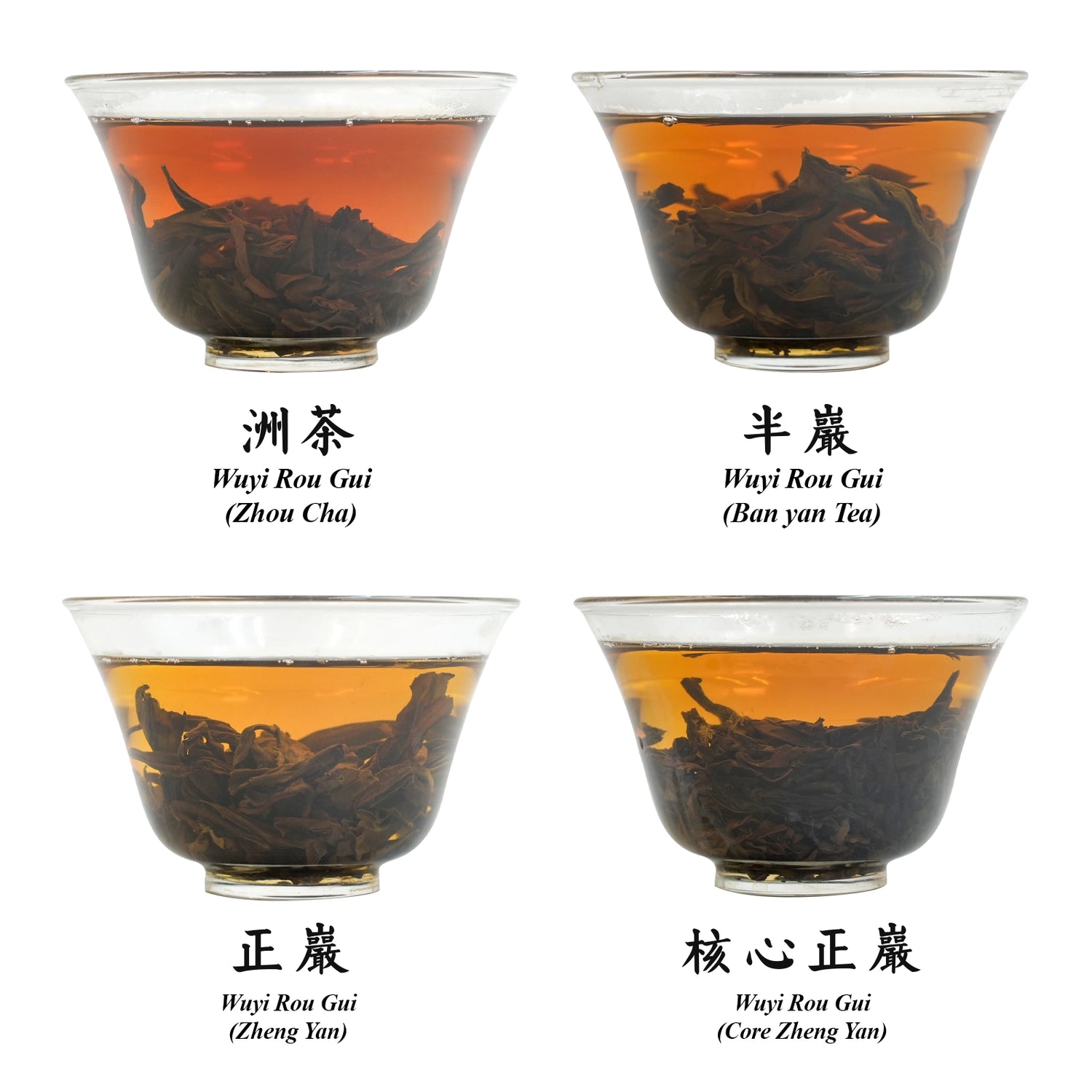
Soil is one of the most fundamental factors shaping the character of Wuyi Rock Tea. In the Wuyi Mountains, tea trees grow in dramatically different soil environments—from mineral-rich rocky ground to looser red and yellow earth—each shaping aroma, texture, and depth in the cup.
This collection explores how soil influences the same Wuyi Rougui cultivar. All teas are made from the same tea variety and crafted using traditional Wuyi rock tea processing, with soil type as the only key variable.
Gravel soil produces deeper minerality and structure. Red soil brings balance and smoothness. Yellow earth results in a lighter, simpler expression with a softer body.
Rather than comparing different teas, this set reveals how terroir beneath the ground defines what we taste in the cup.
Taste them side by side and discover how soil becomes flavor.

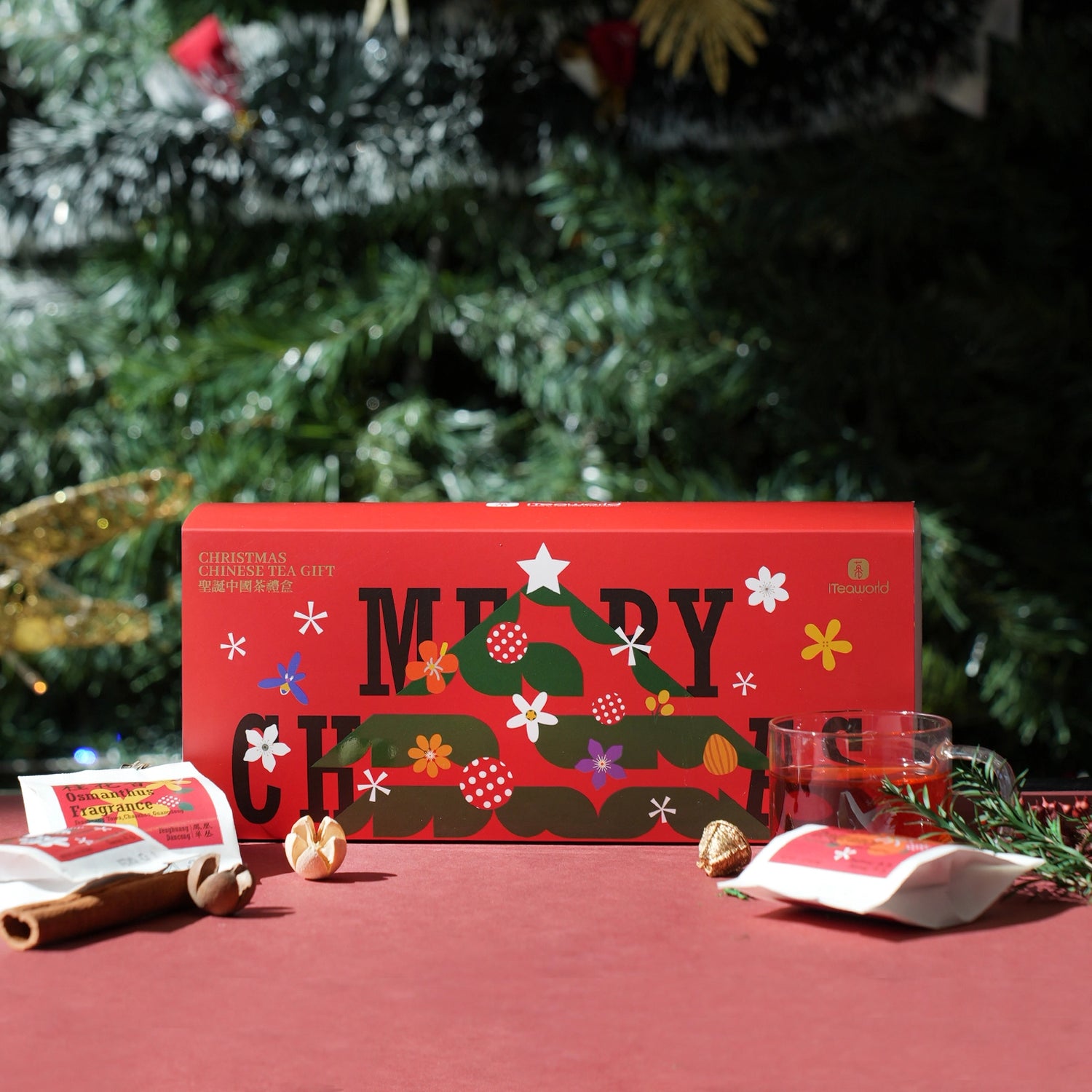
Fenghuang Dancong Oolong Tea – Christmas Gift Set, 10 Natural Aromas (100g)
$79.99 USD
Unit price perFenghuang Dancong Oolong Tea – Christmas Gift Set, 10 Natural Aromas (100g)
$79.99 USD
Unit price perFenghuang Dancong Oolong Tea Christmas Gift Set is a festive edition of one of China’s most aromatic teas, beautifully curated for the holiday season. Sourced from the Phoenix Mountains in Chaozhou, Guangdong, this collection features ten naturally distinct aroma profiles, ranging from floral and orchid-like notes to honey, fruit, and warm spice. Each tea is carefully selected to create a guided tasting journey that feels both luxurious and personal. Often called “the perfume of tea,” Fenghuang Dancong offers a rare sensory experience, making it an elegant and thoughtful Christmas gift for tea lovers and anyone who enjoys discovering new flavors.
Why this product?
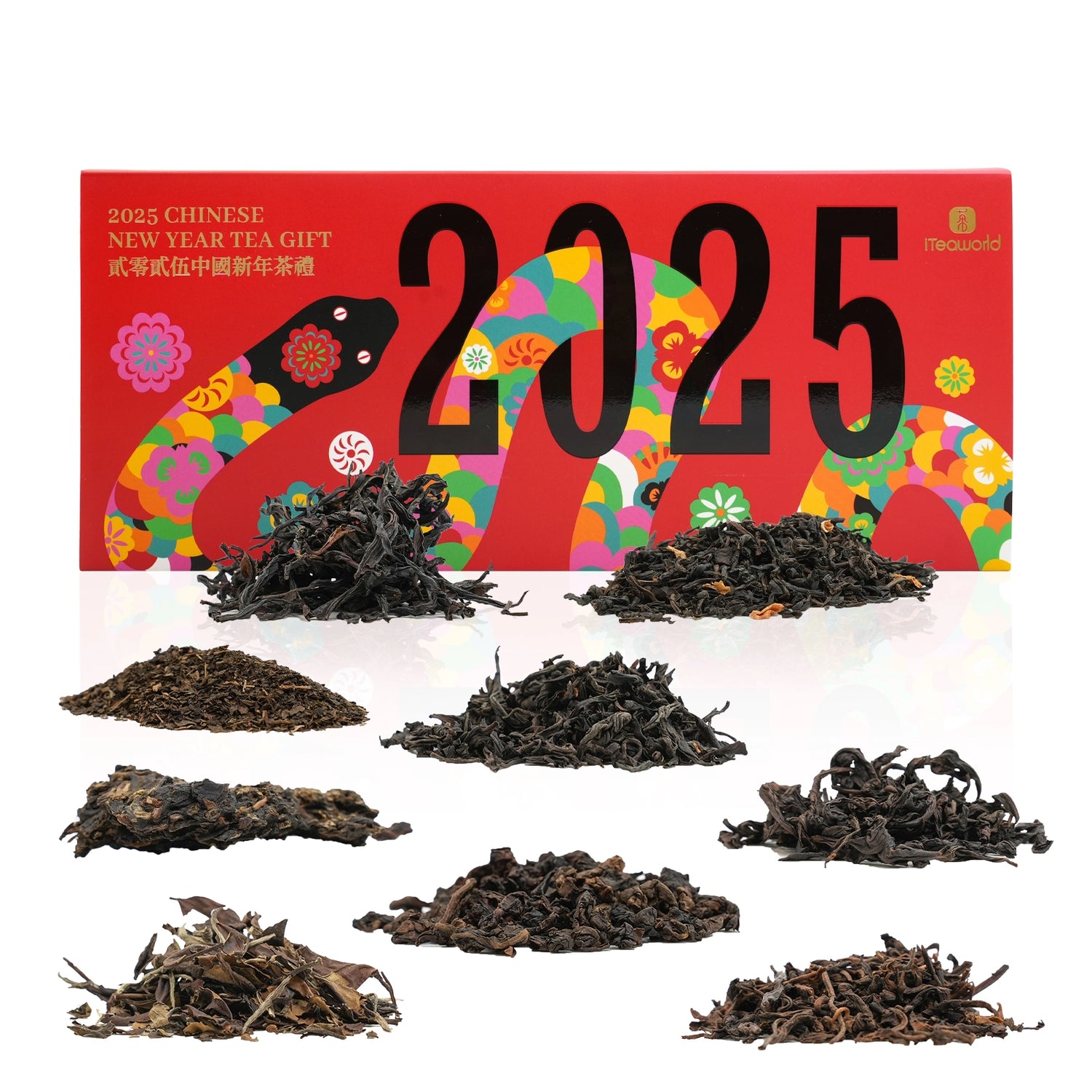
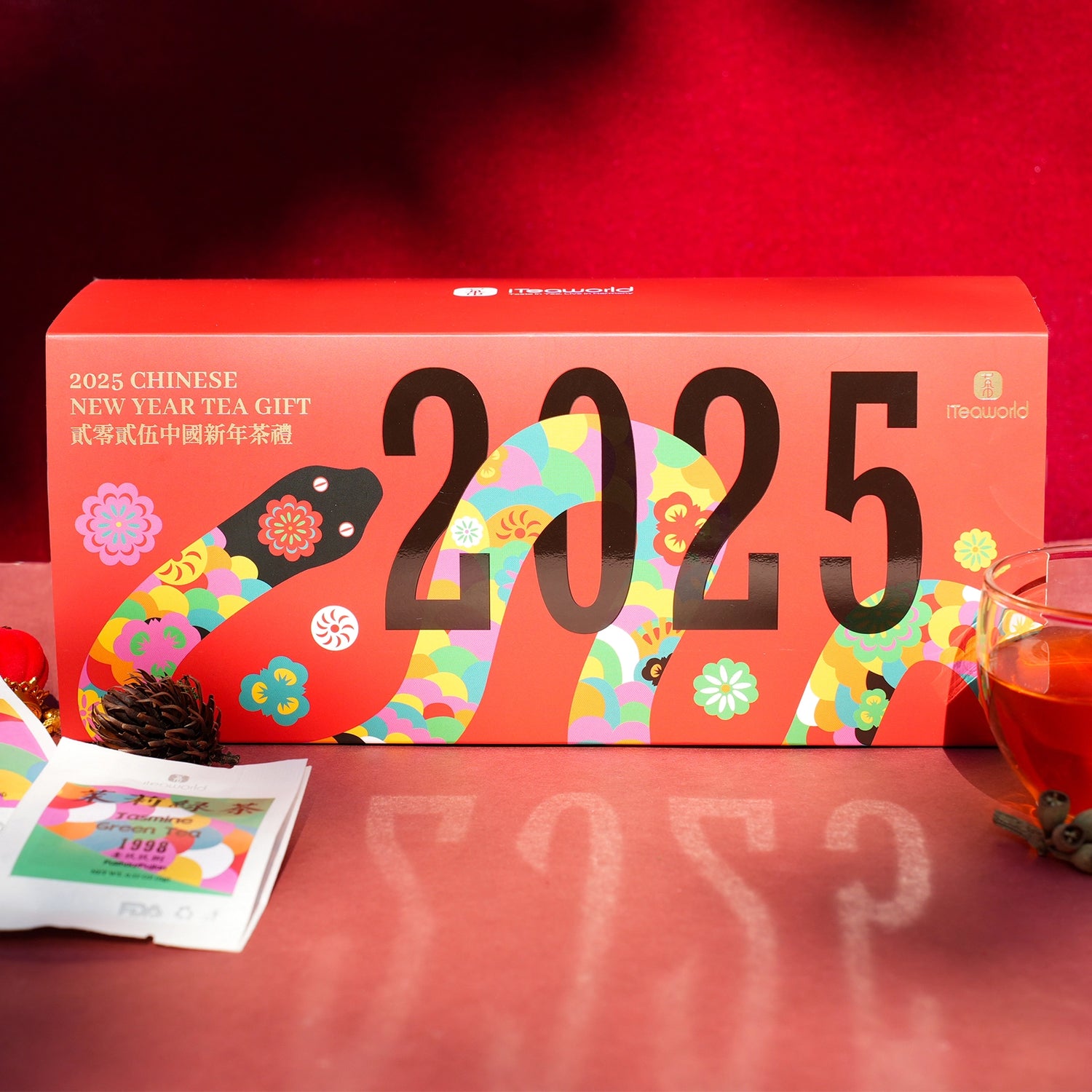
Many people are unclear about what qualifies as aged tea and how to tell the age of tea. iTeaworld has been working with aged tea in the Chinese market for 20 years. We believe that for tea to be considered "aged," it should meet these three criteria: 1. It should have an aged or woody aroma. 2. The tea liquor should be smooth, rich, and sweet. 3. There should be a noticeable warm sensation in the body, especially in the hands and feet, after drinking.
Based on this standard, we’ve selected 10 aged teas, including Oolong, black tea, white tea, dark tea, Pu-erh, and green tea, to help tea lovers understand what aged tea really is.
The product includes:
1995 Shui Xian Oolong Tea: 2 packs of 5g each
1998 Tie Guan Yin Oolong Tea: 2 packs of 5g each
1995 Fenghuang Dancong Oolong Tea: 2 packs of 5g each
1998 Raw Pu-erh Tea : 2 packs of 5g each
2003 Ripe Pu-erh Tea : 2 packs of 5g each
2008 Shuangzheng Liu Bao Dark Tea: 2 packs of 5g each
2014 Shou Mei White Tea: 2 packs of 5g each
2014 Lapsang Souchong Black Tea: 2 packs of 5g each
1998 Jasmine Green Tea: 2 packs of 5g each
1980s Aged Fu Brick Dark Tea: 2 packs of 5g each
How to brew:
Brewing utensils: White porcelain Gaiwan or Zisha teapot.
Water temperature: 95°C-100°C
Tea-to-water ratio: 1:15-25
Brewing time: 10-20seconds
Number of brews: 5-7 times
Why Aged Tea is Still Drinkable:
The reason aged tea can still be consumed safely lies in the unique chemistry of tea leaves and traditional storage methods. Tea contains powerful antioxidants like catechins and polyphenols, which naturally help slow oxidation, keeping tea consumable for extended periods. Dried tea absorbs only minimal moisture and oxygen, meaning it doesn’t provide the damp environment that bacteria need to grow. As long as tea is stored properly—dry, cool, and sealed against odors—it won’t spoil easily, and you can enjoy it without worries if there’s no mold or strange smells.
How Different Types of Tea Age:
Dark Tea (Hei Cha)
Dark tea, when properly aged, undergoes microbial transformations that mellow its flavor. Over time, compounds like caffeine and polyphenols break down, shifting the taste from bitter to smooth and rich. Dark tea requires specific storage conditions: dry, airy, and cool, to support this mellowing process.
White Tea
In China, there’s a saying about white tea: "One-year tea, three-year medicine, seven-year treasure." Aging for three years or more brings out richer flavors and enhances its perceived medicinal value. As white tea ages, the leaves soften in flavor and aroma, creating a more layered drinking experience.
Black Tea
Black tea generally maintains its natural sweetness and fragrance over time, and since its flavor doesn’t improve with aging, most black teas are best enjoyed fresh. However, certain types of compressed black teas, like Hunan's Fu Brick, can develop deeper flavors with storage due to gradual microbial changes.
Oolong Tea
Roasted Oolong teas like Wuyi Rock Tea (Yan Cha) gain complexity as they age. The roasted notes soften, and the tea develops a distinctive “aged aroma,” adding richness and hints of sweetness. Proper storage is essential to preserve its unique characteristics: keep it dry, away from direct sunlight, and sealed to maintain freshness.
Jasmine Green Tea
Jasmine Green Tea, infused with fresh jasmine flowers, has a unique floral aroma that is best enjoyed within one or two years. Over time, the green tea component oxidizes, leading to a darker color and a softer floral note. To preserve the jasmine aroma and freshness, it’s ideal to store it sealed, in a cool, dry place, or even refrigerate it if possible.


Scenting Discovery: Feel the Intensity.
Compare Aroma Levels. Taste the progression from a light floral hint to a deep, lingering fragrance. Compare 3, 5, and 7-scented jasmine teas side-by-side to find the specific aroma concentration that suits your palate.


Shape Discovery: Witness the Art.
Compare Leaf Shapes & Unfurling. Observe how Spiral, Strip, Needle, and Ring forms change the way tea dances in your cup. Each shape influences the brewing speed and texture, offering a unique visual and mouthfeel experience.


Origin Discovery: Taste the Land.
Compare Regional Terroirs. Explore the distinct characters of Fuzhou, Hengzhou, Yunnan, and Sichuan. Discover how different soils and climates naturally influence the base tea and the way it carries the jasmine scent.


Leaf Grade Discovery: Discover the Texture.
Compare Leaf Tenderness. Experience the contrast between Full Buds and Multi-leaf grades. See how the picking standard defines the natural sweetness, body, and overall balance of the jasmine tea.


Seasonal Discovery: Savor the Time.
Compare Harvest Seasons. Taste the subtle shifts between Spring, Summer, and Autumn jasmine teas. Discover how the time of year changes the tea’s freshness, strength, and how long the floral aroma lingers.


Three cups a day, a seasonal ritual for autumn renewal.
Inspired by traditional Chinese seasonal wellness, this September & October box features six floral, tea, and herbal blends crafted to support moments of calm, comfort, and balance as summer fades into autumn.
From refreshing daytime sips to soothing evening brews, create a simple daily tea ritual to reconnect with yourself and embrace the changing season.


A seasonal tea collection crafted for spring.
Discover six unique herbal and flower teas, designed for three cups a day—morning, afternoon, and evening.
Inspired by traditional seasonal wellness wisdom, each cup brings a moment of freshness, balance, and gentle renewal.


A seasonal tea collection crafted for early summer.
Discover six unique herbal and flower teas, designed for three cups a day—morning, afternoon, and evening. Enjoy three cups a day of refreshing herbal flower teas designed to keep you cool, calm, and balanced as summer begins—inspired by traditional seasonal wellness wisdom.
Recently viewed products
Chat with fellow tea lovers, ask questions, and share your tea moments.
FAQs
A Tea Sampler is a curated collection of diverse tea varieties, allowing you to explore different flavors. Our Loose Leaf Tea Sampler offers a selection of premium loose leaf teas. It's the perfect introduction to discover your favorite blends or to gift a tea enthusiast.
Our Loose Leaf Tea Sampler is crafted with care, featuring a variety of handpicked loose leaf teas. Each sampler is designed to showcase the richness of our tea collection, providing a delightful experience for tea lovers. It's an ideal way to enjoy the quality and diversity of our teas.
Absolutely! Our Chinese Tea Sampler makes delightful gifts for any occasion. Whether it's a birthday, holiday, or special event, sharing the joy of unique tea blends is a thoughtful and appreciated gesture.
iTeaworld takes pride in offering a diverse range of Tea Samplers to cater to various preferences. Our collection includes Loose Leaf Tea Sampler sets featuring premium varieties of Oolong Tea, Black Tea, and Green Tea. Additionally, we offer specialized Tea Samplers for Cold Brew Teas, providing a refreshing twist on traditional brewing methods. Explore our selection to discover the rich tapestry of flavors in each category.
Tea sampler can bring convenience to your life. You can enjoy the tea provided by iTeaworld at any time. You don't need to set up and clean your tea set.
A Chinese loose leaf tea sampler can brew 1-2 cups of tea. You can adjust it to your taste and habits. Don't let the tea sample steep for too long or it will taste bitter.
iTeaworld offers an extensive selection of tea gifts to satisfy all your Chinese tea needs!
Chinese Tea Sampler: Ideal for newcomers to Chinese tea, this sampler features the classic representative teas of the six major types of tea in China.
Classic Tea Sampler: Featuring four oolong teas and four black teas, perfect for those new to tea tasting.
Black Tea Sampler: Explore the rich flavors of classic black teas with four varieties in one box.
Oolong Tea Sampler: Delve into premium oolong teas with four carefully selected varieties.
Green Tea Sampler: Discover the diversity of Chinese green teas with six exquisite options.
Cold Brew Tea Sampler: Enjoy four top-notch teas specially curated for cold brewing.
Dark Tea Sampler: Venture into the world of dark teas with ripe Puerh, Six Burger Tea, and four other black tea varieties included!
Explore our tea samplers today and embark on a flavorful journey through the world of Chinese tea!"
Absolutely! Our Tea Sampler sets make excellent tea gift options for friends or loved ones who appreciate the rich flavors of Chinese tea. With a variety of sampler options to choose from, including Chinese tea varieties, you can select the perfect set that matches their preferences and introduces them to the diverse world of tea. Whether they're new to tea tasting or seasoned enthusiasts, our Tea Samplers are sure to delight and make for a thoughtful and memorable gift.
Shop with Confidence at iTeaworld

30-Day Return & Satisfaction Policy
Not satisfied? Get a refund within 15 days for taste concerns, or return unopened products within 30 days.

Free tea samples with tea order
Buy 1 get 1 sample. Buy 2 get 2. Buy 3+ get 3 free sample